

10 Benefits of Hiking for Physical and Mental Well-Being

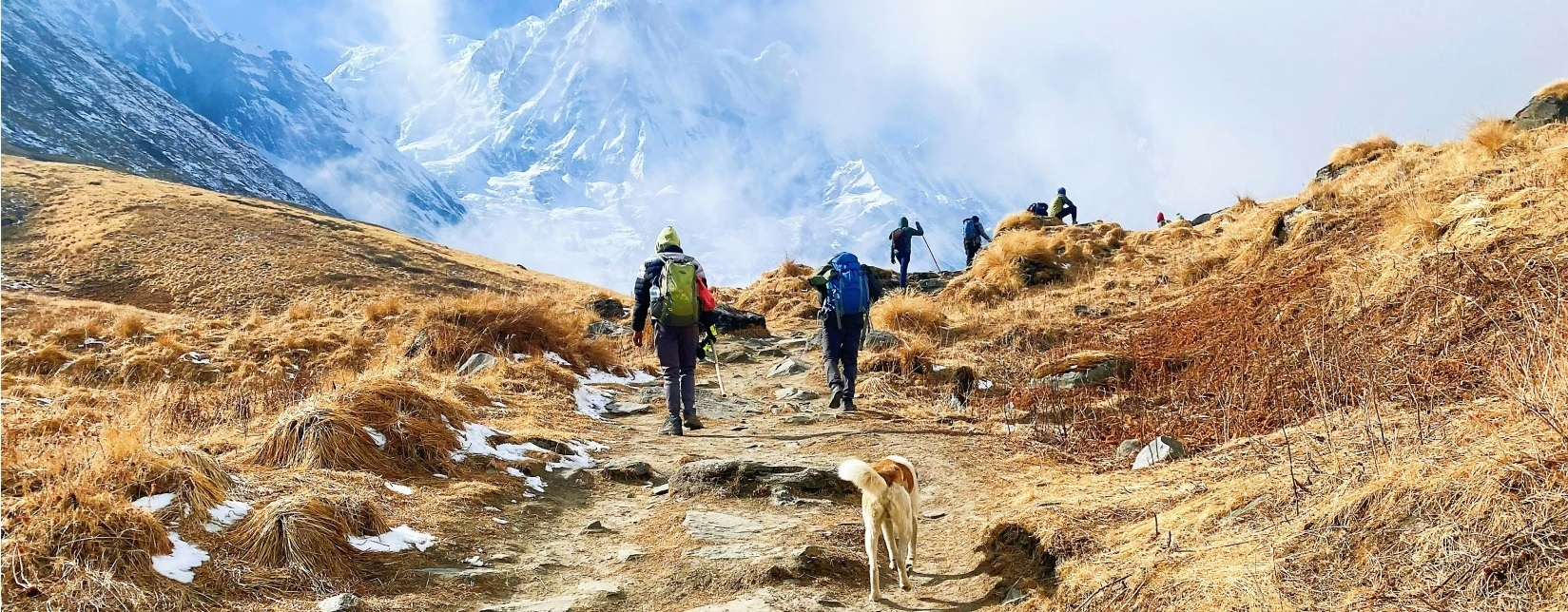
Hiking is a form of outdoor walking on natural terrain that combines aerobic exercise, weight-bearing movement, elevation changes, uneven surfaces, and sustained exposure to nature. The benefits of hiking extend well beyond burning calories: regular trail walking can strengthen cardiovascular fitness, legs and core, improve balance and coordination, build stamina, support healthy weight management, and promote better sleep.
The physical demands of climbing, descending, carrying a day pack, and adapting to changing trail surfaces also develop functional strength and body awareness in ways that ordinary walking on flat pavement may not. For mental well-being, time outdoors can help reduce everyday stress, ease mental fatigue, improve mood, strengthen confidence through achievable challenges, and create a deeper connection with natural environments.
Research increasingly supports hiking and nature-based walking as an accessible form of physical activity, while also showing that the strength of evidence varies across different outcomes and that no universal hiking dose has been established. The health effects depend on factors such as duration, intensity, elevation, terrain, fitness level, and consistency, with moderate hiking commonly fitting within the broader recommendation of 150 to 300 minutes of aerobic activity per week.
This guide examines 10 benefits of hiking through the mechanisms behind each benefit, relevant research findings, practical numbers, and real-world applications, from local trail walks to multi-day treks in Nepal's Everest, Annapurna, Manaslu, and Langtang regions. It also explains how progressive training, responsible trail use, acclimatization, and experienced trekking support can help hikers gain these physical and mental benefits while managing the demands and risks of longer mountain journeys.
1. Improves Cardiovascular Fitness
Hiking improves cardiovascular fitness by holding your heart rate in the moderate zone for 30 to 120 minutes at a time. Regular hikers gain higher aerobic capacity, a lower resting heart rate, and lower blood pressure, which cuts long-term heart disease risk.
How Does Hiking Strengthen Heart and Lung Function?
Hiking strengthens heart and lung function by keeping you at roughly 50 to 70% of maximum heart rate for long stretches. The heart pumps more blood per beat. The lungs move more air per minute. According to the Hanson and Jones meta-analysis of walking groups, published in the British Journal of Sports Medicine in 2015 and cited in the 2026 Frontiers review, regular group walking lowered systolic blood pressure by 3.72 mmHg, diastolic pressure by 3.14 mmHg, and resting heart rate by 2.88 beats per minute.
It also raised VO2max by 2.66 mL/kg/min. VO2max is the maximum oxygen your body uses per minute for each kilogram of body weight, and it is the standard marker of aerobic fitness. Walking groups are the closest pooled data to hiking.
How Does Uphill Hiking Increase Cardiovascular Capacity?
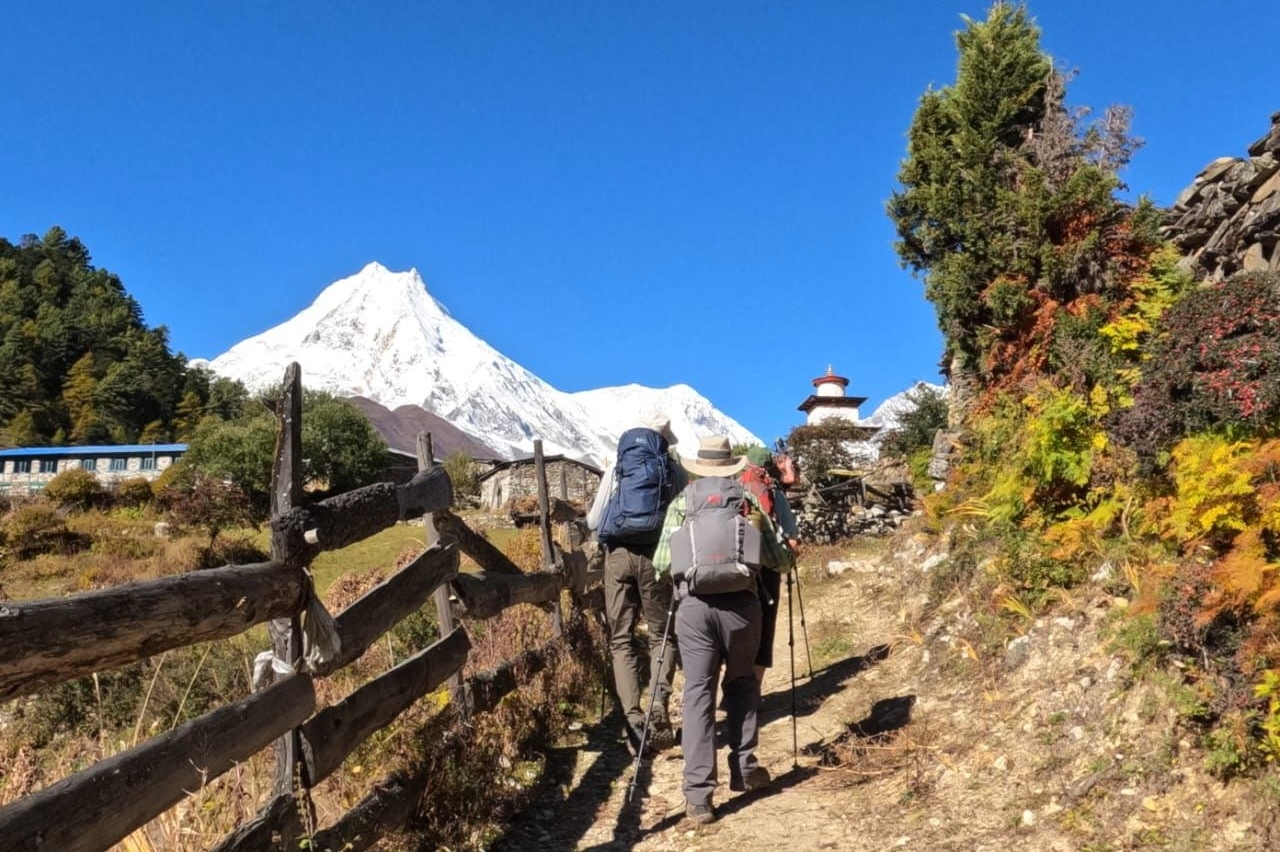
Uphill hiking increases cardiovascular capacity by multiplying the energy cost of each step. The American College of Sports Medicine walking equation shows the scale. At 4.8 km/h, flat ground costs about 3.3 METs. A 10% grade at the same speed costs about 7.4 METs. One MET is the energy your body burns at rest. So a steady climb demands more than double the effort of a flat walk at the same speed. The pre-dawn climb to Poon Hill, a 3,210 m viewpoint above Ghorepani, makes that visible within 10 minutes. Use the talk test to pace it: full sentences mean the intensity is right, gasping means you started too fast.
How Often Should You Hike for Better Cardiovascular Fitness?
WHO's 2024 global inactivity findings show that 31% of adults, roughly 1.8 billion people, missed the recommended weekly activity level in 2022, and two or three weekly hikes totaling 150 minutes can close that gap on their own. Beginners reach that total with 45 to 60 minute sessions. Midweek 30-minute trail loops count, and so does a long weekend hike. Consistency beats heroics.
Three steady hikes outperform one exhausting 6-hour trek followed by six idle days. Adults with heart disease, uncontrolled high blood pressure, or chest pain on exertion get medical clearance before raising intensity.
2. Strengthens the Legs and Core
Hiking strengthens the quadriceps, glutes, hamstrings, and calves, and trains the abdominal and lower-back muscles that stabilize the trunk. Uphill sections load the lifting muscles. Downhill sections load the braking muscles. A loaded pack adds resistance to the whole chain.
Which Leg Muscles Does Hiking Strengthen?
Hiking strengthens 5 leg muscle groups: the glutes, quadriceps, hamstrings, calves, and tibialis anterior. The glutes and hamstrings drive you up each step. The calves push off the ground. The quadriceps carry the heaviest load on descents, where they lengthen under tension to brake your body weight. That braking work explains the thigh soreness 24 to 48 hours after a long downhill.
The tibialis anterior, the shin muscle, lifts your toes on every stride and tires heavily from eccentric braking on steep descents. Weight-bearing impact also loads the bones of the legs and hips, which supports bone density. Trekking poles share the load with your arms and ease knee stress on descents.
How Does Hiking Engage the Core Muscles?
Hiking engages the core muscles by forcing the trunk to resist tipping and twisting on every uneven step. The core includes the transversus abdominis, the obliques, the multifidus, and the erector spinae, which wrap the spine like a corset. A backpack pulls your center of mass backward, and the abdominal wall and lower back counter that pull with each stride.
Packs of 10 to 20% of body weight, the range most guides recommend, add load without wrecking posture. A hip belt moves part of the weight onto the pelvis. A sore lower back at the end of day one usually points to a poorly fitted pack, not weak muscles.
Can Hiking Improve Functional Strength and Stability?
Hiking improves functional strength and stability because it trains movements you use daily: stepping up, stepping down, carrying a load, and catching yourself on a slope. Functional strength is the ability to perform everyday tasks with control. Stone staircases in villages across Nepal's trekking regions teach the lesson fast.
Hikers who practice step-ups at home climb them with visibly less effort. Add 2 short strength sessions per week, such as squats, lunges, and step-ups, to match the World Health Organization recommendation of muscle-strengthening work on at least 2 days weekly.
3. Supports Healthy Weight Management
Hiking supports healthy weight management by burning roughly 360 to 680 calories per hour for most adults and by being easy to repeat every week. Steady hiking lowers body fat and body mass index modestly, and works best alongside sensible eating.
How Many Calories Can Hiking Burn?
Hiking burns about 6 calories per kilogram of body weight per hour on moderate trails. Using the 2024 Adult Compendium's measured hiking values, cross-country hiking rates 6.0 METs while hiking with a daypack rates 7.8 METs, so a 70 kg hiker burns roughly 420 to 546 kcal per hour. The formula is simple: calories per hour equal METs multiplied by body weight in kilograms. Steep grades and heavy packs push the rating toward 8 METs. The table below applies that formula to four body weights.
Body weight | Moderate trail (6 METs) | Steep trail with pack (8 METs) |
60 kg | 360 kcal/hour | 480 kcal/hour |
70 kg | 420 kcal/hour | 560 kcal/hour |
85 kg | 510 kcal/hour | 680 kcal/hour |
100 kg | 600 kcal/hour | 800 kcal/hour |
These are estimates. Fitness watches vary by 20% or more, so treat them as ballpark figures.
How Does Hiking Support a Sustainable Active Lifestyle?
Hiking supports a sustainable active lifestyle because it feels like recreation, not training. Adherence decides results, and people repeat what they enjoy. Hiking needs no gym membership, no athletic baseline, and no gear beyond sturdy footwear, water, and a layer for weather.
The 2026 Frontiers review describes hiking as a low-barrier, flexible activity that adapts to age and fitness. A common mistake we see: planning a punishing 8-hour Sunday hike, then skipping two weeks with sore legs. A 90-minute loop every Saturday does more for your body than one heroic day.
Can Hiking Help Maintain a Healthy Body Composition?
Hiking helps maintain a healthy body composition by lowering body fat while keeping muscle working. In the Hanson and Jones data, walking groups cut body fat by 1.31 percentage points and body mass index by 0.71 points. Oja and colleagues, in a 2018 meta-regression in the British Journal of Sports Medicine, linked walking programs to lower body fat and fasting glucose in inactive adults.
The changes are modest, and honesty matters here. One kilogram of body fat holds about 7,700 kcal. A weekly 3-hour hike at 420 kcal/hour burns about 1,260 kcal, which equals 0.16 kg of fat. The real gain comes from the combination of hiking, 2 strength sessions, and meals that do not cancel the deficit. The trailhead snack bar counts.
4. Reduces Everyday Stress
Hiking reduces everyday stress by combining aerobic exercise with time in natural settings, which lowers cortisol, calms the nervous system, and quiets rumination. Measurable stress relief appears after 20 to 30 minutes outdoors.
Why Can Time Outdoors Help Reduce Stress?
Time outdoors reduces stress because natural settings lower the activity of the body's stress system. Cortisol is the main stress hormone, released through the hypothalamic-pituitary-adrenal (HPA) axis. A 29-study forest therapy meta-analysis found lower systolic (-3.44 mmHg) and diastolic (-3.07 mmHg) blood pressure and lower salivary cortisol than urban controls, with sessions of 20 minutes or longer working better than shorter ones.
The 2026 Frontiers review adds that forest hiking lowers cortisol and shifts the body toward parasympathetic activity, the rest-and-recover mode. A 2022 brain imaging study by Sudimac, Sale, and Kuhn in Molecular Psychiatry found lower activity in the amygdala, the brain's threat-detection center, after a one-hour walk in nature.
How Does Physical Activity During Hiking Support Relaxation?
Physical activity during hiking supports relaxation by burning off stress arousal and giving the mind a rhythmic task. Steady steps set a gait rhythm. Breathing settles into the stride. Rumination, the loop of repetitive negative thought, loses its grip when attention goes to footing and scenery.
Bratman and colleagues showed in a 2015 PNAS study that a 90-minute walk in nature reduced rumination and activity in the subgenual prefrontal cortex, compared with an urban walk. Attention Restoration Theory calls the mechanism soft fascination: moving water, leaves, and birdsong hold attention without effort. Leave headphones in the pack for the first 30 minutes and let the trail do the work.
Which Hiking Environments May Feel Most Calming?
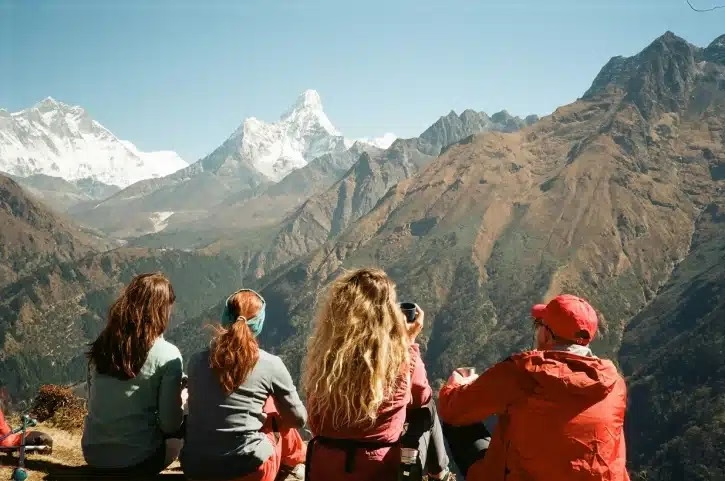
Forests, rivers, and open mountain valleys feel most calming to most hikers, because they combine soft fascination with low noise. Forest trails carry the strongest evidence. Shinrin-yoku, the Japanese practice of forest bathing, reduces anxiety and cortisol. Water adds a steady soundscape. Alpine meadows add long sightlines.
In Nepal, spring rhododendron forests on the Annapurna and Langtang trails combine all three from March to May. Crowded viewpoints at midday do the opposite. In our experience, the calmest hours are the first two after sunrise, before day-trippers and trekking groups reach the trail.
5. Improves Balance and Coordination
Hiking improves balance and coordination by forcing the nervous system to read and react to uneven ground thousands of times per hour. Roots, rocks, and slopes train the ankle, hip, and core stabilizers that flat pavement leaves idle.
How Do Uneven Trails Challenge Balance?
Uneven trails challenge balance by changing the surface under every step. Pavement is predictable. A trail offers loose gravel, wet roots, angled rock, and mud. Each foot placement demands a new ankle angle, a new hip adjustment, and a new weight shift. The peroneal muscles along the outer shin, which stabilize the ankle, fire constantly.
At a hiking pace you take roughly 1,400 steps per kilometer, so a 10 km hike delivers about 14,000 small balance corrections. That volume of practice explains why regular hikers move across rough ground with less effort than gym-trained walkers.
How Does Hiking Improve Body Awareness?
Hiking improves body awareness by training proprioception, the sense of where your limbs are in space. Receptors in muscles, tendons, and joints send position data to the brain on every step. Trail hiking exercises that channel far more than treadmill walking. Hikers learn to feel a slip a split second before it happens.
Practice a one-minute body scan every 30 minutes: check foot placement, hip alignment, and breathing. Stumbling and toe-dragging are the first signs of fatigue, and a hiker with body awareness stops for water before an ankle rolls.
Can Hiking Help Develop Better Coordination?
Hiking develops better coordination by linking eyes, feet, and balance reflexes into one fast loop. Coordination is the smooth timing of several muscle groups working together. Scanning 3 to 5 meters ahead lets the brain plan foot placement before you arrive. Trekking poles add a rhythmic arm-and-leg pattern that trains cross-body timing.
Downhill skills show the biggest gains: short steps, soft knees, and weight over the feet. Older adults gain the most practical value, because balance loss drives fall risk. Start on groomed paths, then progress to rocky trails over 4 to 6 weeks.
6. Increases Stamina and Physical Endurance
Hiking increases stamina and physical endurance by repeatedly challenging the aerobic system for long periods. Muscles build more mitochondria and capillaries, fatigue arrives later, and the same trail feels easier after 4 to 8 weeks of regular hiking.
How Does Regular Hiking Build Endurance?
Regular hiking builds endurance by training muscles to produce energy more efficiently. Endurance is the ability to sustain effort over time. Repeated long, moderate efforts increase the number of mitochondria, the cell structures that produce energy, and the density of capillaries, the tiny vessels that deliver oxygen.
In the pooled Hanson and Jones data, 6-minute walk distance rose by 79.6 meters. Hikers feel the same adaptation as a lower heart rate at the same pace and a faster recovery after each climb.
How Do Longer and Steeper Trails Improve Stamina?
Longer and steeper trails improve stamina by extending time under load and raising intensity. Progressive overload is the training principle: stress rises slightly each week, and the body adapts. A hiker who moves from a 2-hour flat trail to a 4-hour trail with 600 meters of climbing trains both duration and power. Altitude adds another layer.
Above 2,500 m, each breath delivers less oxygen, so the same pace costs more effort. Nepal's trails show it plainly: day 6 at 4,000 m feels harder than day 1 at 2,800 m on a similar slope. Steady pacing, not speed, builds the stamina that carries a trek to its end.
How Can Beginners Gradually Increase Hiking Endurance?
Beginners increase hiking endurance gradually by raising time first, then elevation, then pack weight, one variable at a time. Follow the 10% rule: add no more than 10% to weekly hiking time. This 6-week starter plan applies it:
Hike 45 minutes on flat trail, twice weekly, in weeks 1 and 2
Add a 150 m climb and extend to 60 minutes in weeks 3 and 4
Carry a 3 kg pack on 90 minutes with a 300 m climb in weeks 5 and 6
Take a rest day between hikes. Wear new boots on at least 3 shorter hikes before any multi-day trek. Skipping that step is the most common blister story we hear on day two of a trek.
7. Helps Improve Sleep Quality
Hiking helps improve sleep quality through three channels: physical exertion that builds sleep pressure, daylight that anchors the body clock, and lower stress arousal. Finishing hard efforts 2 or more hours before bed protects sleep onset.
How Does Physical Activity During Hiking Affect Sleep?
Physical activity during hiking affects sleep by raising sleep pressure and lowering stress arousal. Sleep pressure is the build-up of adenosine, a chemical that drives sleepiness through the day. Moderate aerobic exercise is linked to faster sleep onset and more deep, slow-wave sleep in adults. Long hikes also tire the large leg muscles, which prompts physical recovery at night. Effects depend on consistency.
One weekly hike changes little, while 3 hikes per week over a month shifts sleep for many people. A randomized trial run in Chengdu, China, through March 2026 tests nature walking at different dose levels in adults with poor sleep, defined as a Pittsburgh Sleep Quality Index score of 8 or higher. Its findings will clarify how much outdoor time works best.
Can Spending Time Outdoors Support a Healthier Sleep Routine?
Spending time outdoors supports a healthier sleep routine because daylight sets the body clock. According to a 2017 Current Biology study from the University of Colorado Boulder, led by sleep researcher Kenneth Wright, a week of camping under only natural light moved participants' internal clocks about 2 hours and 36 minutes earlier than their normal modern schedules.
The sample was small, 5 people, so read it as a strong signal, not a final verdict. Wright also notes that too little daylight can harm sleep as much as too much light at night. He sets his own clock by hiking in the morning. On Nepal's tea-house treks, most hikers fall asleep by 9 p.m., because the day starts at dawn and the lodge lights go down early.
When Should You Hike to Support Better Sleep?
Hike in the morning or early afternoon to support better sleep. Morning daylight delivers the strongest clock-setting signal, because it is bright and rich in blue wavelengths. Finish vigorous hikes at least 2 hours before bed.
An easy stroll after dinner suits most adults. Avoid late, high-intensity climbs, which raise core temperature and heart rate when the body is trying to cool down. Add a screen-free hour before bed, since artificial evening light pushes the body clock later.
8. Boosts Mood and Mental Well-Being
Hiking boosts mood and mental well-being by combining exercise, daylight, and nature exposure. Pooled research links nature walks to lower depression and anxiety scores, and mood gains often appear after a single outing.
How Can Hiking Support a More Positive Mood?
Hiking supports a more positive mood through exercise chemistry and a calming environment. Aerobic exercise releases endorphins and influences serotonin and dopamine signaling. The 2026 Frontiers review notes that the picture is more complex than a simple happy-hormone story, since some forest walking studies recorded lower blood dopamine. The pooled numbers are clearer.
In Grassini's 2022 meta-analysis in the Journal of Clinical Medicine, nature walks reduced depression by 0.39 standard deviations and anxiety by 0.43 from before to after the walk. Those are small to moderate effects. Hiking complements professional care for clinical depression. It does not replace it.
How Does Time in Nature Affect Mental Well-Being?
Time in nature affects mental well-being by restoring attention and reducing mental fatigue. Natural scenes hold attention softly, so the focus system you use at work rests. The Frontiers review reports a fatigue effect size of -0.84 for nature exposure on the Profile of Mood States scale, a large reduction. Dose matters.
According to White and colleagues, in a 2019 Scientific Reports study of about 20,000 adults in England, people who spent 120 minutes or more in nature per week reported good health and well-being significantly more often than people who spent none. The pattern held whether the time came in one visit or several. Two 60-minute hikes meet the threshold.
Can Hiking Help Create a Healthier Break From Daily Routines?
Hiking creates a healthier break from daily routines by separating you from screens, notifications, and desks for a defined stretch. A break works only when it is complete: phone on airplane mode, camera allowed, messages banned. Mountain trekking amplifies the effect.
On multi-day treks in Nepal, signal drops, lodges run on daylight, and the day shrinks to walking, eating, and resting. Guests regularly tell us their attention stretches by day 3. A half-day local hike delivers a smaller version of the same reset. Book it in your calendar like a meeting, with a fixed start time.
9. Builds Confidence Through Outdoor Challenges
Hiking builds confidence through outdoor challenges by pairing a clear goal with visible progress. Each summit, pass, or finished trail supplies a mastery experience, and mastery experiences raise self-efficacy, the belief that you can handle what comes next.
How Can Completing Difficult Trails Increase Self-Confidence?
Completing difficult trails increases self-confidence because the achievement is concrete and personal. Self-efficacy is the belief in your ability to handle a specific challenge, a concept developed by psychologist Albert Bandura, who identified mastery experiences as its strongest source. According to a 2026 study in PsyEcology by researchers at the Universitat Autònoma de Barcelona, 181 urban adults who joined 10 guided mountain group hikes showed significant gains in self-efficacy and dominance, a sense of control, after hiking, with large effect sizes.
The design compared before and after without a control group, so it shows association, not proof of cause. The finding still matches what we see at viewpoints such as Annapurna Base Camp, at 4,130 m: hikers who doubted themselves on day 1 arrive with a different posture.
What Outdoor Challenges Can Help Build Resilience?
Outdoor challenges build resilience when they are hard, finite, and survivable. Resilience is the capacity to adapt and recover under stress. Hikers face 5 recurring tests: turning weather, fatigue at kilometer 15, navigation doubt, altitude headaches, and group friction. Each one demands a decision under mild stress, and the skill transfers to work and family problems.
A 6-hour hike in drizzle builds more resilience than a sunny stroll, provided clothing and route keep real risk low. Pick a challenge one notch above comfortable. A trail far beyond your fitness breeds anxiety, not growth.
How Does Hiking Encourage Personal Growth?
Hiking encourages personal growth through reflection, patience, and shared effort. Long walks create unstructured thinking time, and decisions that stall at a desk often resolve on the trail. A slow pace teaches patience, because the mountain sets the schedule. Group hiking adds trust and cooperation, and the 2026 Frontiers review reports that group hikes build social capital and a sense of belonging. Keep a trail journal with 3 lines per day: one fact, one feeling, one lesson.
10. Creates a Stronger Connection With Nature
Hiking creates a stronger connection with nature by placing you inside ecosystems at walking speed. Slow travel reveals plants, birds, weather, and geology that vehicles hide, and familiarity builds the care that leads people to protect wild places.
How Does Hiking Encourage Appreciation for the Natural Environment?
Hiking encourages appreciation for the natural environment through repeated, slow, sensory contact. Nature connectedness is the sense of being part of the natural world, and research links it to pro-environmental behavior. Walking pace lets you notice detail: pine after rain, lichen on a boulder, birdsong that changes at 3,000 meters.
Time builds attachment. Return to the same trail across 4 seasons and the place stops being scenery and becomes a character with moods.
What Can Hikers Learn From Local Landscapes and Wildlife?
Hikers learn how altitude shapes life when they walk Himalayan trails. Vegetation changes in bands: subtropical forest, rhododendron and oak forest, conifers, alpine scrub, then bare rock and ice. The rhododendron, Nepal's national flower, blooms in spring, and the Himalayan monal, called danphe, is the national bird.
Himalayan tahr graze steep slopes in Sagarmatha National Park, and red pandas live in the forests of Langtang. Snow leopards roam the Everest, Annapurna, and Manaslu regions but are rarely seen. Local guides add the human layer: pass mani walls and chortens on your left, and ask how villages manage water, grazing, and forest.
How Can Responsible Hiking Help Protect Nature?
Responsible hiking protects nature by limiting impact and supporting local stewardship. Follow the 7 Leave No Trace principles: plan ahead, travel on durable surfaces, dispose of waste properly, leave what you find, minimize campfire impacts, respect wildlife, and be considerate of other visitors.
The 2026 Frontiers review names vegetation damage, soil compaction, wildlife disturbance, and pollution as the main pressures from rising hiker numbers. Stay on marked paths, carry a refillable bottle, and pack out your trash. Permit fees and lodge spending channel money into mountain communities that look after the trails.
How Can Hiking With a Trekking Agency Enhance These Benefits?
Hiking with a trekking agency enhances these benefits by removing the planning and safety risks that cut hikes short. A good agency sets the pace, manages altitude, carries the logistics, and leaves you free to walk.
Four mechanisms matter most:
Pace itineraries for acclimatization, limiting sleeping elevation increases to no more than 500 m per day above 3,000 m, with a rest day every 3 to 4 days, as Wilderness Medical Society guidelines advise.
Train guides to spot altitude illness, weather shifts, and exhaustion before they become emergencies
Share the load with porters under fair weight limits, so hikers carry a light day pack that protects knees and posture
Handle permits, flights, lodges, and meals, which frees attention for the stress-relief benefits described above
The 2026 Frontiers review found that risk education, pre-hike planning, first aid training, and rescue systems reduce hiking accidents. The common solo mistakes follow from their absence: climbing too fast, underestimating descents, and ignoring early altitude symptoms. Guided hiking also brings the shared-challenge effect that the PsyEcology study measured in group hikes.
Can Heaven Himalaya Help You Experience the Benefits of Hiking?
Yes. Heaven Himalaya is a Kathmandu-based trekking agency that designs guided treks and day hikes in Nepal at a pace matched to your fitness, so you gain the benefits above with fewer risks.
Ramhari Adhikari and Sanjib Adhikari founded the company. Ramhari spent more than 10 years as a senior trekking leader at an established Nepali agency and has led groups to Everest Base Camp no fewer than 100 times. Heaven Himalaya is a registered Nepali company, a member of the Trekking Agencies' Association of Nepal (TAAN), and a general member of the Nepal Mountaineering Association.
Routes cover the Everest, Annapurna, Manaslu, Langtang, Mustang, Dhaulagiri, and Makalu regions, plus day hikes, and every itinerary is customizable. Travelers carry reusable water bottles under the company's Refill not Landfill plastic-reduction program.
What Are the Key Takeaways About the 10 Benefits of Hiking?
Hiking delivers 10 benefits across body and mind, and 150 to 300 minutes per week of moderate hiking covers most of them. The summary:
Cardiovascular fitness: lowers blood pressure and resting heart rate, and raises VO2max
Legs and core: build the glutes, quadriceps, calves, and trunk stabilizers
Weight management: burns roughly 360 to 680 kcal per hour for most adults
Stress: cuts cortisol within 20 to 30 minutes outdoors
Balance and coordination: trains about 14,000 corrections per 10 km on uneven trails
Stamina: builds endurance through longer, steeper, progressive hikes
Sleep: anchors the body clock through morning daylight
Mood: lowers depression and anxiety scores in pooled studies
Confidence: converts completed trails into mastery experiences
Nature connection: builds the familiarity that motivates responsible behavior
Start this week with 2 hikes of 45 minutes on a trail close to home, at a pace that allows full sentences. Add time by 10% each week. Adults with a heart condition, uncontrolled blood pressure, or other health concerns speak with a doctor first. This article offers general information, not medical advice. When you are ready for bigger mountains, a guided trek in Nepal is the structured way to scale up.