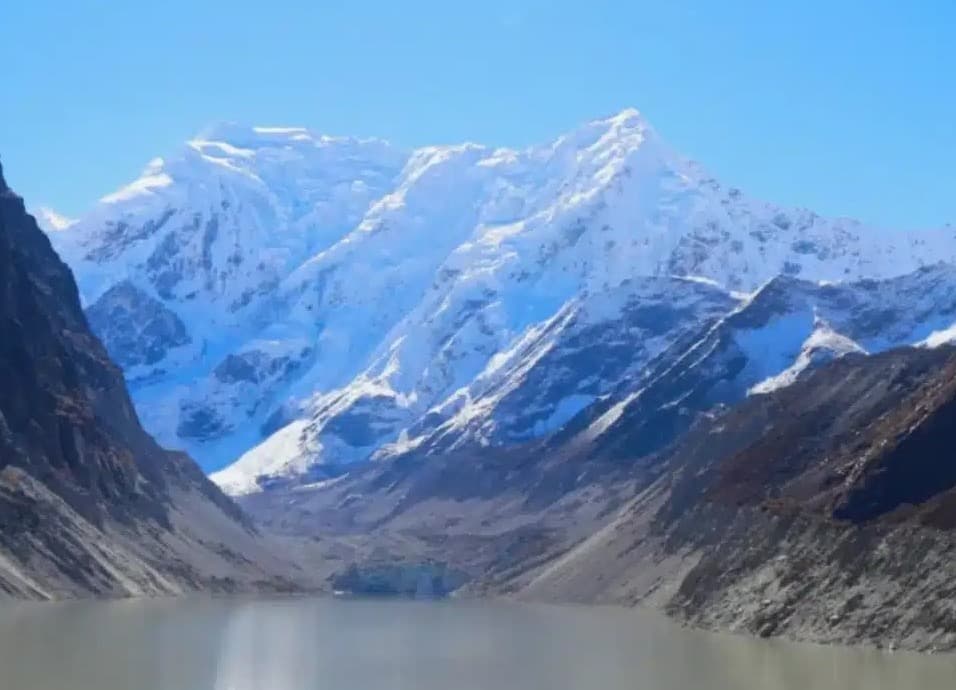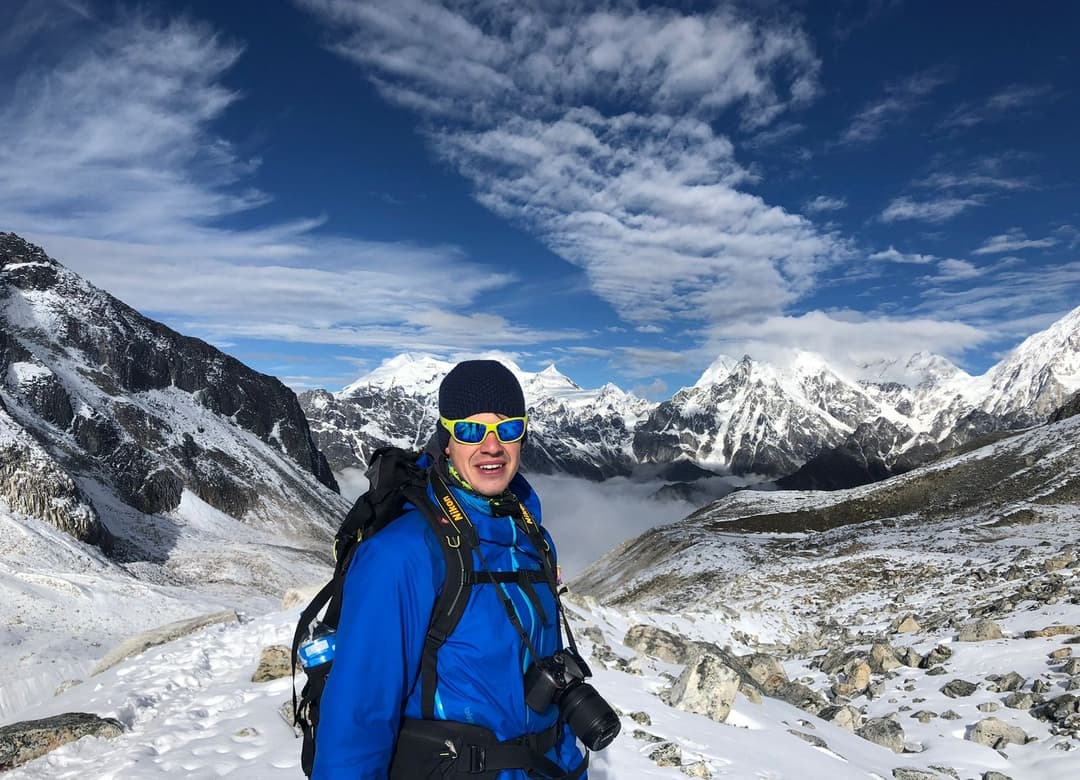
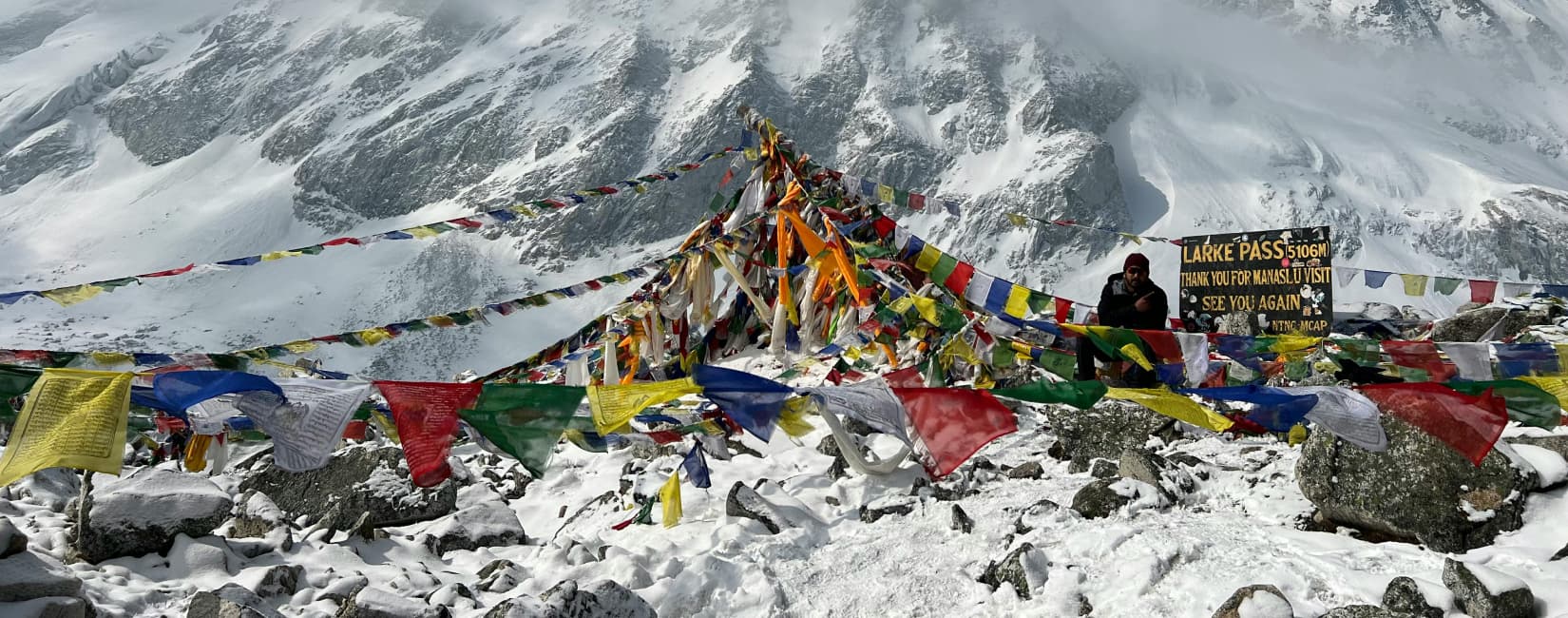
Larkya La Pass, also known as Larke Pass, is one of the highest passes in Nepal. It's the main point of the Manaslu Circuit Trek.
The entire trek is considered off-the-beaten-path. Compared to treks like Annapurna Base Camp Trek, Everest Base Camp Trek, Annapurna Circuit Trek, Mardi Himal Trek, Langtang Valley Trek, etc., it's a bit less famous.
However, despite being less popular compared to the journeys mentioned above, you can still experience adventure, enjoy nature's beauty, and learn about local culture along the way to the Larke Pass. You'll be amazed by the views of the peaks in the Mansiri Range during the trip, including:
- Manaslu (the world's 8th highest peak, 8,163 m/26,781 ft)
- Himalchuli (7,893 m/25,896 ft)
- Ngadi Chuli (7,871 m/25,823 ft), and others.
Today, in this blog, we'll share detailed information about the Larke Pass. You'll be completely aware of its altitude, trail conditions, difficulty level, accommodation facilities, best time to visit, and local lifestyle by the end.
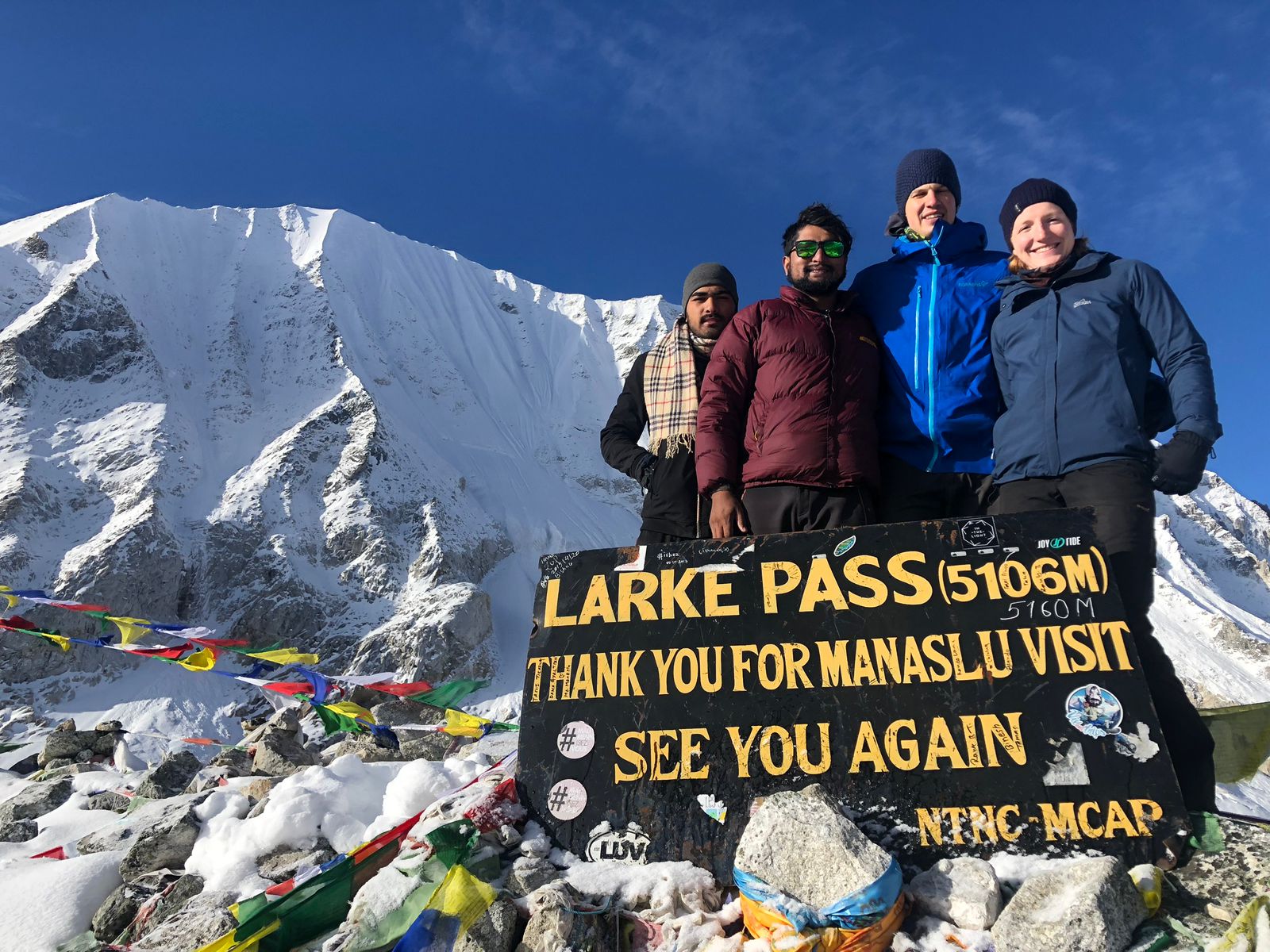
Where Is The Larkya La Pass Located
Larke Pass is located in the Gorkha District of Gandaki Province in western Nepal. It is located on the border of Gorkha and Manang, and is close to the Tibetan (Chinese) border.
The pass entirely belongs to the Manaslu Region. Upon crossing it, the Annapurna Region starts. Speaking of the place, you'll reach Bhimthang of Manang.
Larkya La Pass Altitude
In terms of the altitude, Larkya La rises at 5,106 m (16,752 ft) above sea level. It serves as the gateway from Dharmashala in the Manaslu Region to Bhimthang in the Annapurna Region. From there, you'll see the outstanding views of Manaslu and some other peaks, such as:
- Himlung (7,126 m/23,379.27 ft)
- Cheo Himal (6,820 m/22,375 ft)
- Kang Guru (6,981 m/22,904 ft)
- Annapurna II (7,937 m/26,040 ft)
How Hard Is The Larke Pass
The difficulty of hiking to cross the Larkya La is typically considered moderate to challenging. This means it isn't technically demanding to complete the journey; however, it's certainly not that easy either.
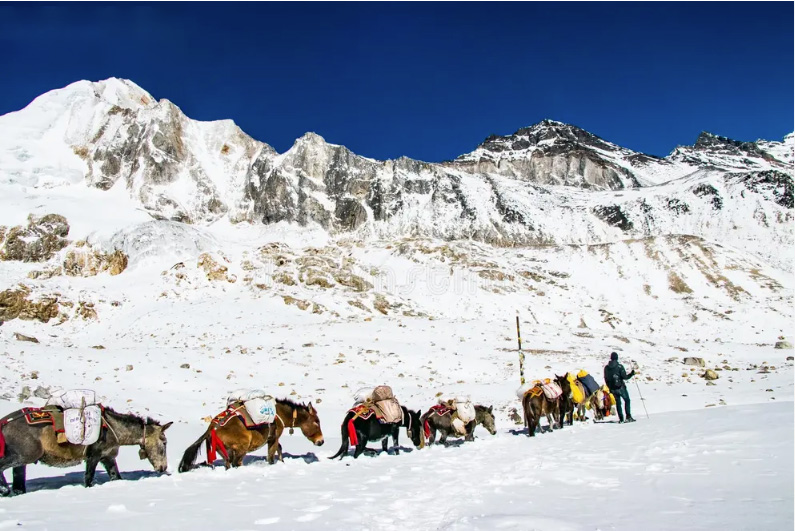
Speaking of the trail, it's mostly rocky terrain but not too extreme or scary. There are no technical sections along the way. Nevertheless, the total walking time and distance are approximately 24 km and take 9 hours at a normal pace, respectively.
Additionally, at the pass, the climate is freezing with strong winds most of the time. No wonder the condition feels harsh if you're from a sea-level or hot region. As a result, even though the route is easy to hike, you may still find it hard to finish it due to the elevation, duration, distance, and extreme weather.
How Long Is Larke La Pass
As stated above, you'll need to walk out for 8 to 9 hours from Dharmashala to reach Bhimthang via the Larke Pass. During this time, you'll cover approximately 24 km.
For less experienced hikers, the duration and distance might feel long and tough. Even experienced individuals might find it long sometimes, especially if the weather turns harsh all of a sudden.
What Are The Challenges Of Larkya La Pass
As you already know, the pass is situated above 5,000 m (16,404.2 ft), which is too high, and the oxygen level is low here. If your carelessness reaches its peak during trekking, you're likely to get into serious trouble.
I'm talking about altitude sickness. It can develop in your body at any time without warning.
It's one of the major challenges of the Larke Pass. There are several symptoms of it, and they are:
- Headache (most common)
- Loss of appetite
- Trouble sleeping
- Fatigue or unusual tiredness
- Nausea or vomiting
- Shortness of breath
- Dizziness
- Swelling of hands, feet, or face (in some cases)
The other challenges are terrain and cold, which we've already discussed in the section above. The terrain is mostly rocky and might make walking more difficult than on the regular trail.
However, cold weather is more challenging than the terrain here. When hiking to the pass, you should be fully prepared for daytime temperatures of -5 to 5 °C and early morning or nighttime temperatures of around -10 to 20 °C.
Best Season To Cross Larkya La Pass
Spring (March to May) and autumn (October to November) are two seasons considered the best times to cross the Larke Pass. During these seasons, the weather is mostly favourable.
The other winter (December to February) and monsoon (June to August) are the off-season for trekking. The reasons are that winter brings frigid conditions and the monsoon brings heavy rainfall, landslides, and floods. Both seasons make high-altitude trekking uncomfortable and dangerous.
Nevertheless, there are also a few cons along with the pros of spring and autumn. Even if you know these two seasons are ideal for trekking, you should still be aware of what can hinder you along the way to Larkya La.
Here are the pros and cons of crossing the Larkya La Pass in either season:
Spring
- Pros: Blooming rhododendron and other wildflowers, mild temperatures, long daylight hours, and clear skies.
- Cons: Snow and ice can still linger along the trail to the pass, which makes it slippery.
- Best For: Experiencing slightly less crowded conditions and a photo session.
Autumn
- Pros: Good visibility, clear skies, dry trail conditions, stable weather, and greenery.
- Cons: The trail can get crowded, and the hotel can fill up quickly.
- Best For: Spectacular mountain views.
You can checkout the detailed description for best time to trek the Larkya La Pass here.
Permit Requirements For Larkya La Pass Trek
To enjoy your hike to the Larke Pass or the Manaslu Circuit Trek, you're required to obtain three permits: the Manaslu Conservation Area Permit (MCAP), Manaslu Restricted Area Permit (RAP), and Annapurna Conservation Area Permit (ACAP). You can only issue these permits through the local tour operator.
MCAP
Since more than half of the trail lies within the Manaslu Conservation Area, you'll need an MCAP to enter. The conservation area was established to manage biodiversity, wildlife, protect the forest, and preserve the mountain ecosystem. The permit helps to contribute to conservation efforts, maintain trails, support the local community, and protect the environment.
RAP
The route from Jagat to Sama Gaun is considered a restricted area by the government of Nepal due to its cultural heritage, environmental fragility, and border sensitivity. Hence, RAP is mandatory for foreign tourists to stroll around the area.
ACAP
Even though the trek begins in the Manaslu Region, it ends in Bhimthang, which is part of the Annapurna Region. Therefore, it's also required for this trek.
Major Mountains And Scenic Views From the Larke Pass
Larkya La is already at 5,106 m (16,752 ft), and from such a height, no doubt you'll be able to witness some of the amazing peaks in the Mansiri and Annapurna Range, including Mt. Manaslu, and others are:
- Himlung (7,126 m/23,379.27 ft)
- Cheo Himal (6,820 m/22,375 ft)
- Kang Guru (6,981 m/22,904 ft)
- Annapurna II (7,937 m/26,040 ft)
From the pass, you'll also view the beautiful frozen lakes, glaciers, and profound changes from Manaslu to Annapurna. When the sun is bright, its light brightens up the ridges, making them look exceptional and your Himalayan experience memorable.
Safety Tips For Crossing Larke Pass
No matter how difficult the adventure is or how experienced a hiker you are, you should always focus on safety to make your journey successful. It isn't an easy game to stroll around the high altitude locations like the Manalsu Region. So, here are some basic safety tips for crossing Larkya La:
- Start doing exercises, such as stretching, running, squatting, cycling, and swimming, every day for at least an hour, a month before the date of your trek, if you aren't a daily workout person.
- Hike at a slow pace, taking 5 to 7 minutes of frequent breaks.
- Drink at least 3 to 4 litres of water daily during the journey. Also, consider eating an apple or a cucumber, as they contain water.
- Eat high-carbohydrate foods, such as rice, pasta, bread, potatoes, and lentils. Such foods are heavy and keep you energised for a long time.
- Bring acetazolamide (Diamox), the best medicine for altitude sickness, but consult with a doctor first.
- Consider garlic soup with timur (Sichuan Pepper) as a part of your daily meal during the trek, as they also help you avoid altitude sickness.
- Spend an extra day in Sama Gaun or Samdo to acclimatise your body.
- Don't ignore the symptoms of altitude sickness: headache, nausea, insomnia, etc. If you find any of them in your body, descend at least up to 500 m (1640.42 ft) immediately.
- Wear layers of clothing according to the weather to keep yourself warm.
- Bring trekking poles, a first-aid kit, and crampons (optional, in case there's snow on the trail).
- Always stay tuned to the weather forecast, because the weather is unpredictable at high elevations.