

Everest Three High Passes Trek: Complete Guide to Itinerary, Cost, Difficulty & Tips
Learn what to expect on the trail, how to prepare for high-altitude passes, and what makes this one of Nepal’s most challenging treks.

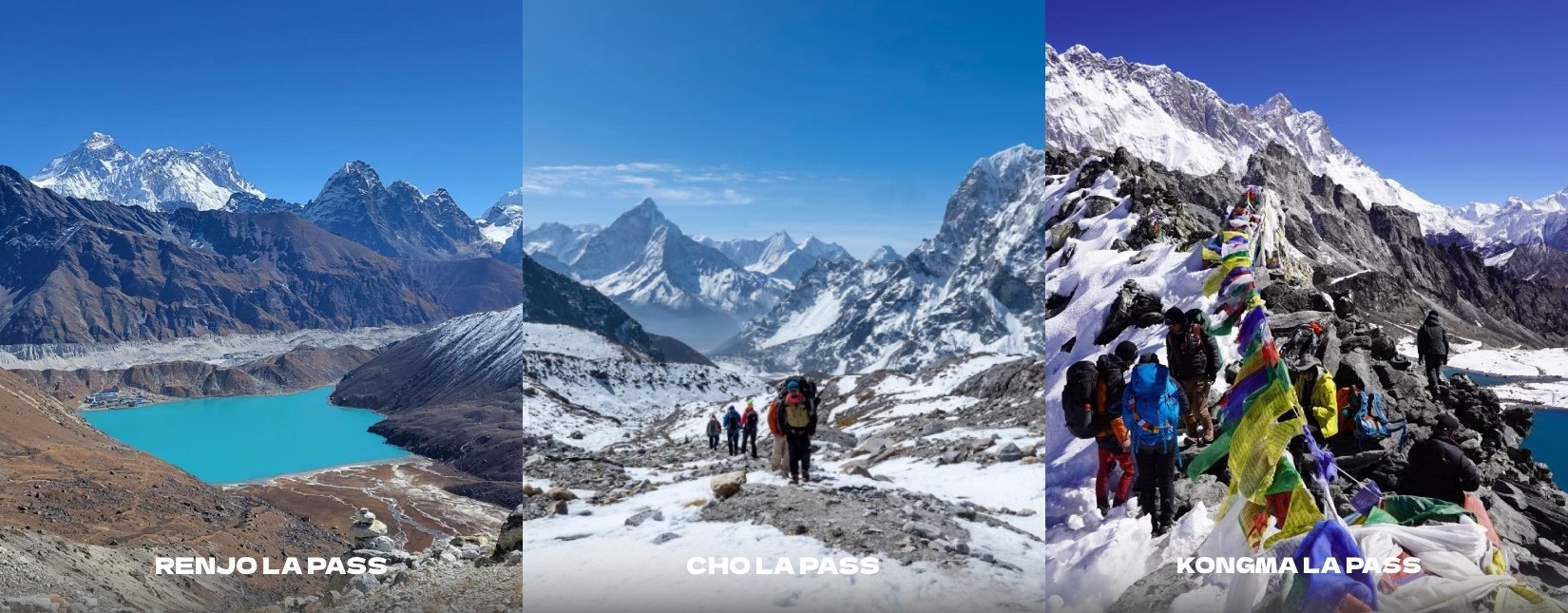
The Everest Three High Passes Trek is a challenging high-altitude trekking circuit in Nepal’s Khumbu region, connecting the Imja, Khumbu, and Gokyo valleys through Kongma La (5,535 m), Cho La (5,420 m), and Renjo La (5,360 m). This 20-day Himalayan adventure combines rugged mountain passes, glacier crossings, traditional Sherpa villages, and iconic landmarks, including Everest Base Camp, Kala Patthar, Gokyo Lakes, and Gokyo Ri, with spectacular views of Everest, Lhotse, Makalu, and Cho Oyu.
The Everest Three High Passes Trek requires strong physical fitness, proper acclimatization, and careful preparation for unpredictable mountain weather and extreme altitude. This guide explores the complete trekking itinerary, difficulty level, best seasons, permits, accommodation, essential equipment, safety measures, and estimated 2026/27 costs to help you prepare for a safe and rewarding journey through the Nepalese Himalayas.
What Is the Everest Three High Passes Trek Route?
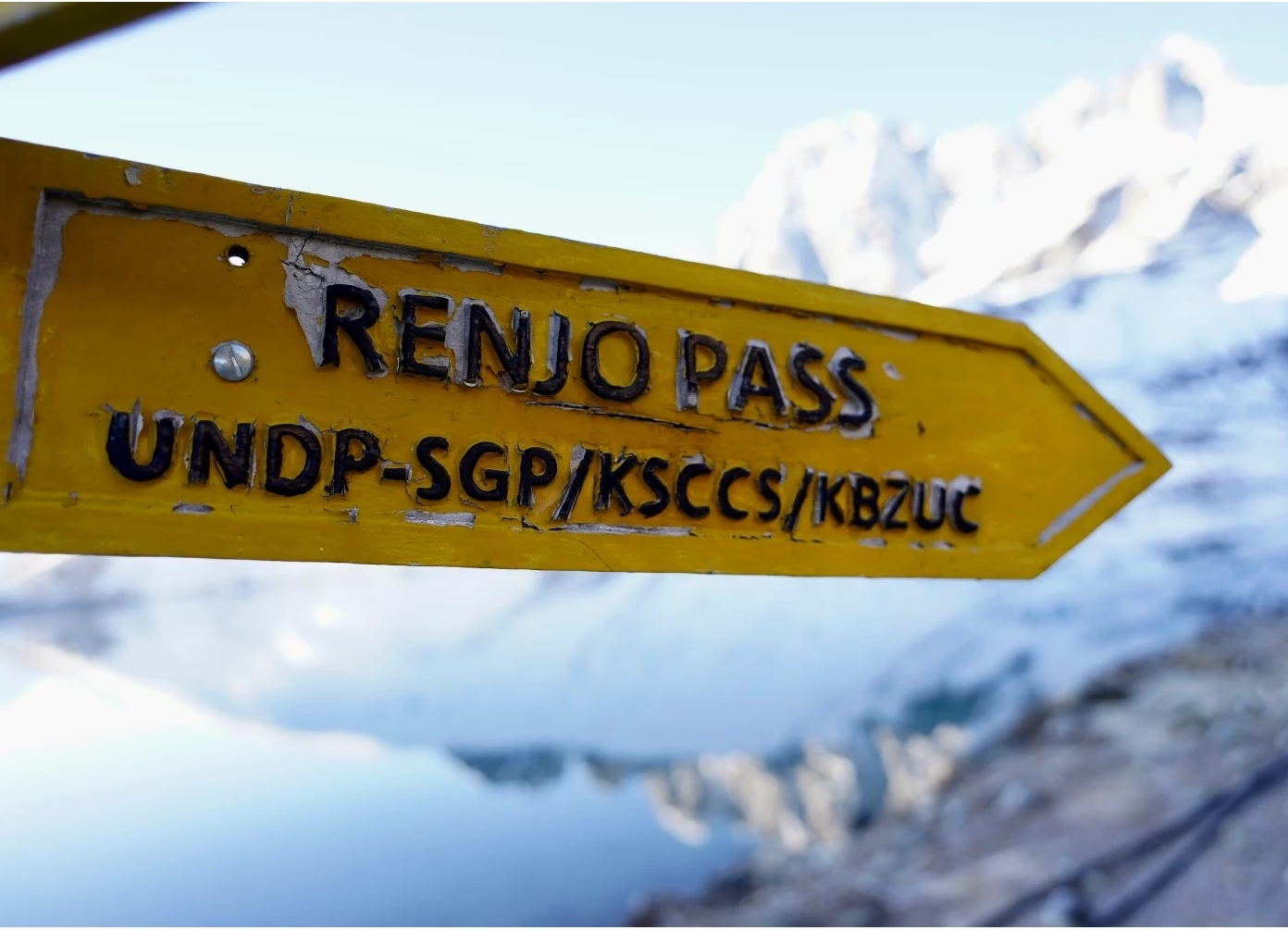
The Everest Three High Passes Trek route is a 17-day walking loop from Lukla that crosses 3 passes above 5,300 m, links the Imja, Khumbu, and Gokyo valleys, and returns to Lukla through Namche Bazaar. Most operators run it east to west, a direction often called counterclockwise.
Khumbu is the Sherpa homeland in Nepal's Solukhumbu District. The route strings together 3 valleys: the Imja valley (Dingboche, Chhukung), the Khumbu valley (Lobuche, Gorak Shep, Everest Base Camp), and the Gokyo valley (Gokyo lakes, Ngozumpa Glacier). A pass is a high saddle between 2 valleys, so each crossing is the hinge that connects one valley to the next.
Most people picture the route as Everest Base Camp plus extras. In real-world use it behaves like 3 separate treks joined by 3 high, cold, exposed days, and planning it that way makes the logistics clear.
Which Everest Three High Passes Does the Trek Cross?
The trek crosses Kongma La (5,535 m), Cho La (5,420 m), and Renjo La (5,360 m), in that order when walked east to west. Kongma La is the highest and longest crossing, Cho La is the only one with a glacier, and Renjo La gives the widest view of Everest.
Published elevations differ by up to 50 m between maps and GPS readings. This guide uses the figures most surveys agree on. The ascent and descent numbers below come from the sleeping elevations on the standard itinerary.
Pass | Elevation | Connects | Ascent on the day | Descent on the day | Character |
Kongma La | 5,535 m | Chhukung to Lobuche | 805 m | 595 m | Longest day, rocky moraine, no shelter |
Cho La | 5,420 m | Dzongla to Dragnag | 590 m | 720 m | Short glacier section, ice and snow |
Renjo La | 5,360 m | Gokyo to Marlung | 570 m | 1,160 m | Stone staircase up, long knee-testing drop |
Kongma La comes first because trekkers are fresh and acclimatized from the Dingboche rest day. Renjo La comes last, and its 1,160 m descent is the reason many trekkers finish with sore quads rather than sore lungs.
What Makes the Everest Three High Passes Trek Different From Other Everest Treks?
The Everest Three High Passes Trek adds 3 pass crossings, 7 nights above 4,700 m, and 3 valleys to the standard Everest Base Camp trek, and it needs 18-21 days instead of 12-14.
The following table compares the 3 most popular Khumbu treks.
Trek | Typical days | Passes | Highest point | Grade |
Everest Base Camp | 12-14 | 0 | 5,545 m | Strenuous |
Cho La loop (EBC + Gokyo) | 14-16 | 1 | 5,545 m | Very strenuous |
Three High Passes | 18-21 | 3 | 5,545 m | Very strenuous |
The Everest Base Camp trail is out-and-back, so trekkers walk the same villages twice. The Three Passes loop never repeats a valley, and the Gokyo and Renjo La sections see a fraction of the foot traffic on the Lobuche trail. One more difference matters for planning: the loop has long stretches with no exit. After Chhukung, the quickest route to a road is 3 days away.
Where Does the Everest Three High Passes Trek Start and End?
The trek starts and ends in Lukla (2,860 m), the airstrip town in Solukhumbu District, with Kathmandu as the arrival and departure city. Day 2 begins with the flight to Lukla and a walk to Phakding. Day 17 returns to Lukla for the Day 18 flight back.
Lukla hosts Tenzing-Hillary Airport, named for the first 2 climbers confirmed on Everest's summit in 1953. The loop format means trekkers pass through Namche Bazaar twice, on Day 3 and Day 16, with 13 days of altitude adaptation in between. An overland alternative exists. Trekkers who avoid flights drive toward Salleri or Phaplu and walk 2-3 days to Lukla, which adds 2-3 days to the schedule.
How Do You Reach Lukla From Kathmandu?
You reach Lukla by a 35-minute flight from Kathmandu or, in peak months, a 20-minute flight from Manthali (Ramechhap) airport after a 4-5 hour drive. Tara Air, Summit Air, and Sita Air operate the route, and a one-way foreigner fare costs between US$215 and US$250 in 2026.
Flights leave from Manthali, about 130 km east of Kathmandu, roughly from 1 March to 31 May and 1 October to 30 November. The dates shift by 2-3 weeks each year, so confirm them at booking. Trekkers leave Kathmandu around 2 am for a 6 am departure, so pack a warm layer and a snack for the drive.
The runway is 527 m long with an 11.7° slope, and pilots fly only with clear visibility. Morning flights go first because cloud builds by 10 am. Weather backlogs in peak season strand trekkers for 2-4 days.
Three practical rules follow from that:
Allow 1-2 buffer days before the trek and 1-2 after it
Hold your duffel to 15 kg checked plus 5 kg carry-on
Book a helicopter only through a licensed operator
A shared helicopter seat from Kathmandu costs about US$500-800 per person. That price is the reason travel insurance with helicopter cover belongs in your plan.
Which Villages and Landmarks Are Included in the Everest Three High Passes Trek Route?
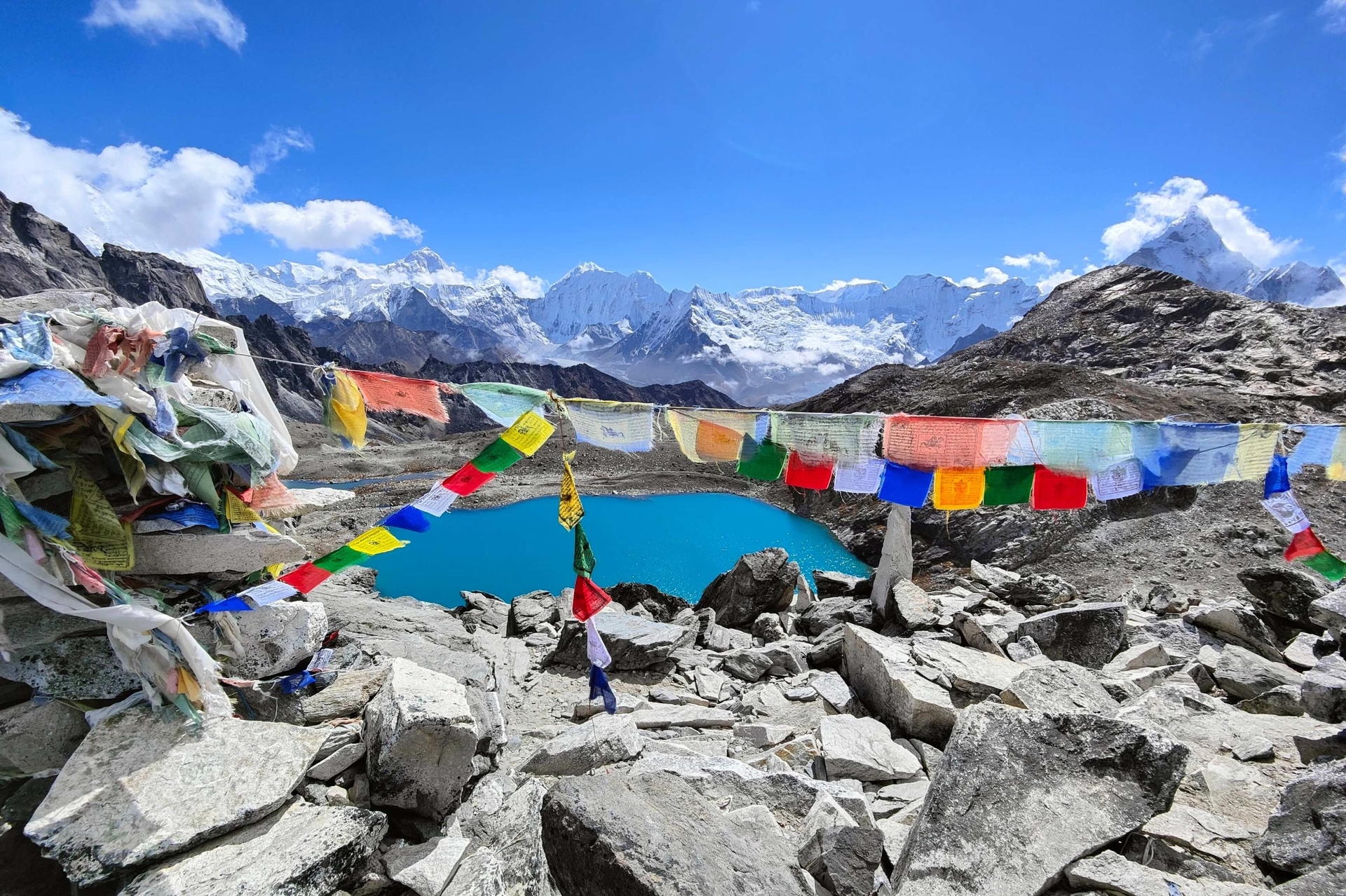
The route includes 12 overnight villages: Lukla, Phakding, Namche Bazaar, Tengboche, Dingboche, Chhukung, Lobuche, Gorak Shep, Dzongla, Dragnag, Gokyo, and Marlung. Landmarks include Tengboche Monastery, Everest Base Camp, Kala Patthar, Gokyo Lakes, and the Ngozumpa Glacier.
Each stop has a job. Namche Bazaar (3,440 m) is the Sherpa trading town with a Saturday market and the Everest View Hotel acclimatization hike. Tengboche Monastery, founded in 1916 and rebuilt after a 1989 fire, is the region's main Buddhist center. Dingboche (4,410 m) sits among stone-walled barley and potato fields. Chhukung Ri, a 5,550 m viewpoint, gives the first close look at Lhotse's south face.
Past Lobuche, the trail climbs past the memorials at Thukla Pass, where cairns honor climbers who died on Everest. Gorak Shep (5,164 m) is the last settlement before Everest Base Camp (5,364 m). Base camp sits at the foot of the Khumbu Icefall, and Everest itself stays hidden behind Nuptse from there. Kala Patthar (5,545 m) gives the classic summit view.
Gokyo (4,790 m) lies beside the third of 6 Gokyo Lakes and below the Ngozumpa Glacier, the longest glacier in Nepal. Gokyo Ri (5,357 m) offers a panorama of 4 peaks above 8,000 m: Everest, Lhotse, Makalu, and Cho Oyu. The Sagarmatha National Park, established in 1976 and listed as a UNESCO World Heritage Site in 1979, covers the whole route and protects 1,148 km² of high Himalaya.
What Is the Everest Three High Passes Trek Itinerary?
The standard itinerary runs 20 days: 2 arrival and flight days, 17 walking days with 2 acclimatization stops, and 1 reserve day in Kathmandu. This is the schedule Heaven Himalaya runs, and the 3 passes land on Days 9, 12, and 15.
The table lists each day with its sleeping elevation and walking time.
Day | Route | Sleeps | Walking time |
1 | Arrive in Kathmandu | Hotel, 1,350 m | None |
2 | Fly to Lukla, walk to Phakding | 2,610 m | 3-4 hrs |
3 | Phakding to Namche Bazaar | 3,440 m | 6 hrs |
4 | Acclimatization hike to Everest View Hotel | 3,440 m | 3-4 hrs |
5 | Namche to Tengboche | 3,860 m | 5-6 hrs |
6 | Tengboche to Dingboche | 4,410 m | 5 hrs |
7 | Acclimatization day in Dingboche | 4,410 m | 3-4 hrs |
8 | Dingboche to Chhukung, climb Chhukung Ri | 4,730 m | 2-3 hrs plus climb |
9 | Cross Kongma La to Lobuche | 4,940 m | 7-8 hrs |
10 | Lobuche to Gorak Shep and Everest Base Camp | 5,164 m | 7-8 hrs |
11 | Kala Patthar, then descend to Dzongla | 4,830 m | 6-7 hrs |
12 | Cross Cho La to Dragnag | 4,700 m | 6-8 hrs |
13 | Dragnag to Gokyo | 4,790 m | 4-5 hrs |
14 | Gokyo Ri and Gokyo Lakes | 4,790 m | 4-5 hrs |
15 | Cross Renjo La to Marlung | 4,200 m | 6-8 hrs |
16 | Marlung to Namche Bazaar via Thame | 3,440 m | 6-7 hrs |
17 | Namche to Lukla | 2,860 m | 7-8 hrs |
18 | Fly to Kathmandu | Hotel | None |
19 | Reserve day for flight delays | Hotel | None |
20 | Final departure | None | None |
Three patterns in this table matter more than any single day. First, trekkers sleep at 4,700 m or higher on 7 consecutive nights (Days 8-14), which is the longest high stretch of any Khumbu trek. Second, the 2 rest days sit at Namche and Dingboche, exactly where the altitude gains start to bite. Third, Day 11 is the one day trekkers underestimate: a sunrise climb to Kala Patthar followed by a 6-7 hour descent to Dzongla. Ask your guide to leave Gorak Shep before 5:30 am.
The reserve day sits at the end to protect your international flight. A Lukla delay on the way out consumes that day, so keep it flexible.
How Difficult Is the Everest Three High Passes Trek?
The Everest Three High Passes Trek is very strenuous: 17 walking days of 4-8 hours, 3 pass ascents of 570-805 m, 7 nights above 4,700 m, and nighttime temperatures well below freezing. The terrain is non-technical, so the difficulty comes from altitude, cold, and cumulative fatigue.
Technical demand stays low. Trekkers walk on trails, scree, and moraine, and a short glacier section on Cho La calls for microspikes. Normal conditions require no ropes, ice axes, or climbing skills. In our experience, the pass days themselves are manageable. The days after them, when fatigue stacks up, catch people out.
What Is the Maximum Elevation of the Three High Passes Trek?
The maximum elevation is 5,545 m at Kala Patthar, the highest point most itineraries reach. Kongma La pass sits at 5,535 m, the highest of the three crossings, and Gorak Shep at 5,164 m is the highest overnight stop. Heaven Himalaya's trip facts round Kala Patthar to 5,550 m.
At 5,500 m the air holds roughly 50% of the oxygen available at sea level, according to standard atmospheric pressure tables. Your body compensates through acclimatization, which takes days, not hours. That is why the itinerary climbs to Kala Patthar on Day 11, after 10 days of gradual exposure, and not earlier.
How Much Trekking Experience Do You Need for Everest Three High Passes Trek?
You need prior multi-day hiking experience, ideally 5-7 consecutive days with 1,000 m of daily elevation change, and no technical mountaineering skills. Previous altitude exposure above 3,500 m helps, but it is not mandatory when the itinerary allows full acclimatization.
Three profiles cover most trekkers:
First-time altitude trekkers add 1-2 days, which makes the trip 21-22 days
Everest Base Camp veterans can run the standard 20 days, though the two routes differ enough that it's worth reading our Everest Base Camp vs Three Passes comparison before committing
Strong hikers with no altitude history build a base on the Everest Base Camp Trek or the Everest Chola Pass Trek first
A fit person with no altitude history is the riskiest profile, since fitness does not predict altitude tolerance. A shorter high trek first shows how your body responds above 4,500 m before you commit to 20 days.
What Are the Biggest Challenges Along the Everest Three High Passes Trek?
The 6 biggest challenges are altitude, pass-day weather, cold nights, accumulated fatigue, flight delays, and trail illness. Each one has a practical counter.
Altitude: follow the acclimatization schedule and never skip the rest days
Pass-day weather: leave by 5-6 am and accept turnaround decisions from your guide
Cold nights: carry a sleeping bag rated to -15°C and a hot water bottle
Accumulated fatigue: eat 3 full meals a day, even without appetite
Flight delays: carry 2 extra days in your schedule
Trail illness: avoid dining-room buffets of raw salad, and treat all water
"Khumbu cough," a dry, persistent cough from breathing cold, dry air at altitude, affects many trekkers by Day 10. A buff over the mouth and hot lemon-ginger tea ease it. Cho La carries its own risk: fresh snow smooths over the glacier's crevasse lines, and only a guide who crossed it recently reads it safely.
How Can You Prepare Physically for the Everest Three High Passes Trek?
Prepare physically with a 16-week plan of endurance, leg strength, and weighted hiking, building to back-to-back 6-8 hour hikes with a 10 kg pack. Aim for 3-4 sessions a week and 1 long hike every weekend.
The plan breaks into 4 phases:
Build a base in weeks 1-4 with 3 cardio sessions of 45 minutes and 2 strength sessions
Add volume in weeks 5-10 with a weekly hike of 3-5 hours carrying 5-8 kg
Peak in weeks 11-14 with back-to-back days of 6-8 hours and 800-1,000 m of ascent
Taper in weeks 15-16 by cutting volume 40% and breaking in your boots
Train descents deliberately. Renjo La drops 1,160 m in a single day and Namche to Lukla drops 580 m, so step-downs, lunges, and downhill hiking protect the knees. Squats, step-ups, and calf raises build the muscle that absorbs those descents. Sleep also counts as training: practice 7-8 hours a night through the final 4 weeks. For a week-by-week breakdown of the full 16-week buildup, see our Everest trek training plan.
When Is the Best Time for the Everest Three High Passes Trek?
The 2 best seasons are October to mid-November and April to mid-May, with October the most stable window for Kongma La, Cho La, and Renjo La. Winter freezes the passes and the monsoon clouds them, so both seasons sit outside the safe window.
Autumn brings crisp air, minimal rain, and the clearest mountain views of the year. Spring brings warmer afternoons and rhododendron blooms below 3,800 m. Both seasons share the same trade-off: the best weather brings the most trekkers and the highest prices, which rise 20-30% in peak months. The Heaven Himalaya guide to the Best Time to Trek in Nepal lists month-by-month detail for the wider country.
Is Spring a Good Season for the Everest Three High Passes Trek?
Yes. Spring (March to May) is a good season, and late April to mid-May is the best part of it. Daytime temperatures are milder than in autumn, and the trail below Namche glows with rhododendron blooms in April.
Spring has 3 drawbacks. Pre-monsoon haze lowers long-distance visibility, afternoon cloud builds earlier each week toward May, and March can leave old snow on Cho La. Everest Base Camp also fills with expedition tents from April, which adds atmosphere and crowds. Lukla flights divert to Manthali from March through May.
Nights at Gokyo and Dzongla still drop to -10°C to -15°C in April, so the sleeping bag rating stays the same as autumn.
Is Autumn the Best Time to Cross the High Passes?
Yes. Autumn (late September to November) is the best time to cross the high passes, with October the strongest month. Post-monsoon air is clear, the trail is dry, and Cho La holds the most predictable conditions of the year.
October brings the steadiest pass conditions in our experience, and also the most crowds, particularly around the Dashain and Tihar festivals when Nepali holidays raise flight demand. November is colder: nights at Gokyo reach -15°C to -20°C, and some high lodges close in the last week. Early September still carries monsoon cloud. Book flights and lodge space 4-6 months ahead for any October departure.
Can You Do the Trek Everest Three High Passes During Winter or Monsoon?
Winter (December to February) is possible for equipped, experienced trekkers, and the monsoon (June to September) is not advised. Winter brings -20°C to -25°C nights, closed high lodges, and snow-covered passes. The monsoon brings rain, leeches below Namche, trail slides, and canceled flights.
Winter crossings need extra buffer days, ice-capable footwear, and a guide who has crossed the passes in cold conditions. Most winter trekkers choose a lower-altitude route instead, and the Heaven Himalaya page on Winter Treks in Nepal lists options. The monsoon has one advantage: prices drop 10-15%. That saving rarely compensates for hidden mountains and unstable trails.
What Permits Are Required for the Everest Three High Passes Trek?
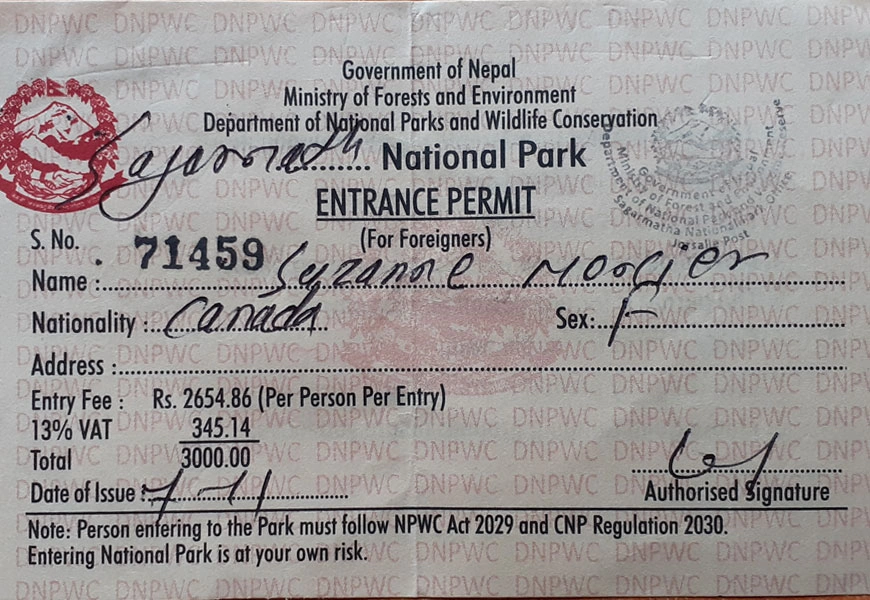
The trek requires 2 permits: the Sagarmatha National Park entry permit (NPR 3,000 plus 13% VAT) and the Khumbu Pasang Lhamu Rural Municipality permit (NPR 3,000). Together they cost about US$45-50 at roughly NPR 140 per US$1. Your agency arranges both.
The 3 passes sit inside the national park and its buffer zone, so no restricted-area permit applies. The permits are non-refundable, and the municipality accepts payment in Nepali rupees only.
Which Trekking Permits Do You Need in the Everest Region?
You only need the Sagarmatha National Park entry permit and the Khumbu Pasang Lhamu Rural Municipality permit; the TIMS card is no longer required or enforced in the Everest region. The Department of National Parks and Wildlife Conservation issues the park permit, and the local municipality issues the second.
The following table lists the permits, fees, and issue points.
Permit | Fee (foreign trekkers) | Approx. USD | Where issued |
Sagarmatha National Park | NPR 3,000 + 13% VAT | US$24 | Bhrikuti Mandap (Kathmandu) or Monjo gate |
Khumbu Pasang Lhamu Rural Municipality | NPR 3,000 | US$21 | Lukla or Monjo |
Although national rules on guides and TIMS shifted in 2023, the Everest region operates under the local Khumbu system, which has officially replaced the TIMS card with its own local Trek Card. The municipality said it would keep admitting independent trekkers, and enforcement at checkpoints has varied since. Your agency confirms what applies on your dates, which is one more reason to book through a registered operator. Optional peak add-ons such as Lobuche East require a separate Nepal Mountaineering Association permit at US$350 in spring and US$175 in other seasons.
What Documents Should You Carry During the Everest Three High Passes Trek?
Carry 6 documents: your passport, Nepal visa, 4 passport photos, permit receipts, insurance certificate, and emergency contact sheet. Keep copies in a waterproof bag, because checkpoints at Monjo and Namche inspect permits.
Passport valid for at least 6 months beyond your entry date
Nepal visa for 30 days (US$50), since a 20-day trek plus buffers exceeds the 15-day visa (US$30); a 90-day visa costs US$125.
Passport photos, 4 copies
Permit receipts for the Khumbu Trek Card and Sagarmatha National Park
Insurance certificate covering helicopter evacuation up to 6,000 m
Emergency contacts, blood group, allergies, and medication list
How Much Does the Everest Three High Passes Trek Cost?
The Everest Three High Passes Trek costs US$1,650-2,500 per person for a guided 2026 package, and US$3,015-3,790 in total once flights, insurance, tips, and personal spending join the budget. Heaven Himalaya prices from US$1,930 per person for 2-4 trekkers. For a full line-by-line breakdown, see our dedicated Everest Three High Passes Trek cost guide.
Group size changes the rate. A solo trekker pays US$2,250, a group of 2-4 pays US$1,930 each, and a group of 5-9 pays US$1,920 each. The solo supplement of US$320 equals about 14% of the single-traveler price.
The next table builds the all-in budget from its parts.
Budget item | Low (US$) | High (US$) |
Guided package (Heaven Himalaya, 2-4 trekkers) | 1,930 | 1,930 |
Kathmandu-Lukla return flights, if not in your quote | 430 | 500 |
Travel insurance with evacuation cover | 100 | 250 |
Tips for guide and porter | 200 | 400 |
Personal spending on trek (17 days, US$15-30 daily) | 255 | 510 |
Extra Kathmandu nights and meals | 100 | 200 |
Total | 3,015 | 3,790 |
Subtract the flight line when your quote includes flights, which brings the total to roughly US$2,600-3,300. Prices in peak months run 20-30% above the shoulder season.
What Is Included in the Everest Three High Passes Trekking Package?
The package covers the guide, a free porter, private airport transfers, trek accommodation and meals, an oximeter, a medical kit, and sleeping bag and down jacket arrangements. Heaven Himalaya also supplies a duffel bag and stores your luggage free at its Kathmandu office.
Typical inclusions run through the itinerary:
Licensed, government-trained guide for all 17 walking days
Porter service, with 1 free porter assigned to carry your duffel
Airport pickup and drop-off in a private vehicle
Teahouse accommodation, with 3 meals on trek days
Pulse oximeter and a guide-carried medical kit
Sleeping bag and down jacket arrangements
Free storage for your Kathmandu luggage
Helicopter rides and extra days caused by flight delays stay outside the price, and the company keeps an emergency fund arrangement for those cases. Flights, permits, Kathmandu hotel nights, and meals are itemized in each written quote, so read the line items before paying the deposit.
What Additional Expenses Should You Budget For Everest Three High Passes Trek?
Budget for 7 extra costs: insurance, tips, drinks, hot showers, device charging, Wi-Fi, and equipment rental. Prices climb with altitude because porters and yaks carry every item up.
Expense | Typical price (US$) |
Hot shower | 3-8 each |
Device charging | 2-5 per charge |
Wi-Fi card | 5-10 per day |
Tea, coffee, soft drink | 2-5 each |
Bottled water | 1-4 per liter |
Sleeping bag rental (-20°C) | 2-4 per day |
Crampons or microspikes rental | 2-3 per day |
Tips follow a Nepal trekking custom: US$10-15 per day for the guide and US$5-8 per day for the porter. Tipping is voluntary, but the wage structure assumes it. Insurance matters most. Heaven Himalaya requires a policy that names emergency helicopter evacuation and trekking at altitude, and most insurers price evacuation cover in the US$100,000 range.
Can You Reduce Trekking Costs Without Compromising Safety?
Yes. You reduce costs by sharing the trip, renting gear, and treating water, while keeping the guide, insurance, rest days, and buffer day untouched. A group of 2-4 trekkers saves US$320 per person compared with solo pricing.
Four savings work well:
Join a group of 2-5 friends and split the private-departure rate
Rent your sleeping bag, down jacket, and microspikes in Kathmandu at US$2-4 per day
Carry purification tablets or a filter in place of 3 bottles of water daily at US$1-4 each
Skip Wi-Fi cards and buy a local SIM with a data pack
A licensed guide costs US$25-35 per day, and a porter costs US$20-25, so 17 days of wages cost US$765-1,020 at market rate. Insurance, the 2 acclimatization days, and the Kathmandu reserve day protect both your trip and your health. Savings from skipping any of them disappear the moment a helicopter is needed.
What Accommodation and Food Can You Expect on the Three High Passes Trek?
Expect twin-share teahouse rooms with foam mattresses and no heating, plus a communal dining room with a yak-dung or wood stove, and menus of dal bhat, noodles, pasta, eggs, and soup. Facilities thin out above 4,500 m. Our EBC trek accommodation guide covers what to expect room by room along the route.
A teahouse is a family-run mountain lodge that sells rooms cheaply and earns its income from meals. Most lodges give a room for US$5-15 per night in exchange for dinner and breakfast in the dining room, and the dining room is the only warm space after 4 pm.
Are Teahouses Available Along the Everest Three High Passes Trekking Route?
Yes. Teahouses operate in all 12 overnight villages from Lukla to Gokyo. Lodges at Lukla, Namche, Tengboche, and Dingboche offer attached bathrooms and hot showers, and lodges at Dzongla, Dragnag, and Marlung are basic.
Room quality drops with altitude. Above 4,000 m, bathrooms are shared and often outside, rooms drop to freezing at night, and walls are thin plywood. Dragnag has only a handful of lodges, so beds fill fast in October. Your guide phones ahead from the trail to secure rooms in peak season.
Bring a -15°C sleeping bag even when the lodge provides blankets. Charging, hot showers, and Wi-Fi cost extra, and the price rises with each stop. Wi-Fi is unreliable at the passes and absent at Dragnag.
What Food and Drinking Water Options Are Available for Everest Three High Passes Trek?
Teahouses serve dal bhat (rice, lentils, and vegetable curry with free refills), noodles, momos, pasta, Sherpa stew, eggs, and garlic soup, and they provide boiled or filtered water for a fee. Food costs US$20-35 per day.
Dal bhat gives the best calories for the price, with free refills at most lodges. Garlic soup is a Khumbu staple, popular with trekkers though it has no proven effect on altitude sickness. Above Namche, choose vegetarian dishes, since meat travels for days without refrigeration.
Drink 3-4 liters of water daily. The Khumbu Pasang Lhamu municipality has restricted single-use plastic water bottles since January 2020, and refill stations in larger villages supply filtered water. Treat all other water with chlorine dioxide tablets or a filter. Carry 2 insulated bottles, because an unprotected bottle freezes overnight at Gokyo. See our full guide to food on the trek for daily menu options and pricing.
How Can You Stay Safe During the Everest Three High Passes Trek?
Stay safe by following 5 rules: ascend gradually, drink 3-4 liters of water daily, trek with a licensed guide, carry evacuation insurance, and turn back when weather or symptoms demand it. Safety on this route is a daily routine, not a single decision.
A good guide runs the same loop every morning: oximeter reading, symptom check, weather read, and a turnaround time for the day's high point. The turnaround time on pass days is commonly late morning, because afternoon wind and cloud build quickly above 5,000 m. Helicopters cannot fly in cloud, so a rescue at Dragnag or Gokyo in poor weather takes hours, not minutes.
Report every symptom to the guide on the day it starts, and keep your layers in the daypack, not the duffel.
How Can You Prevent and Manage Acute Mountain Sickness?
Prevent acute mountain sickness (AMS) by gaining no more than 500 m of sleeping elevation per day above 3,000 m, adding a rest day every 3-4 days, hydrating, and descending when symptoms worsen. According to the Wilderness Medical Society's 2019 clinical practice guidelines for altitude illness, these steps lower the risk of AMS on any ascent.
AMS is a group of symptoms caused by low oxygen at altitude, including headache, nausea, dizziness, fatigue, and poor sleep. The standard itinerary respects the 500 m guideline on every night except Tengboche to Dingboche (+550 m), and the Dingboche rest day follows immediately.
Severe forms need immediate descent. High-altitude pulmonary edema (HAPE) shows as breathlessness at rest and a wet cough. High-altitude cerebral edema (HACE) shows as loss of balance, confusion, and unusual drowsiness. Descent of 300-500 m improves most cases, and a helicopter handles those who cannot walk.
Acetazolamide (125 mg twice daily) is the Wilderness Medical Society's standard prophylaxis for ascents at moderate-to-high risk. Ask your doctor 4-6 weeks before departure and test a dose at home, since it causes tingling and affects people with sulfa allergies.
First-time trekkers read oximeter numbers as a score, though 80-90% at 4,500-5,000 m is common in healthy trekkers. Guides read the trend plus symptoms, and a falling number with a headache matters more than a single low reading.
What Essential Gear Should You Pack for the High Passes?
Pack 5 gear systems: footwear, layers, sleep, protection, and navigation or safety items. Your duffel weight stays under 15 kg for the Lukla flight, and your daypack carries water, layers, and snacks.
Footwear: waterproof, broken-in boots, gaiters, wool socks, and microspikes for Cho La
Layers: merino base layer, fleece, down jacket (700-fill or higher), and a waterproof shell
Sleep: sleeping bag rated to -15°C, and a liner
Protection: insulated gloves with liners, a beanie, a buff, a sun hat, Category 4 sunglasses, and SPF 50 sunscreen
Safety: headlamp with spare batteries, trekking poles, first-aid kit, purification tablets, and a power bank
Cold drains batteries, so sleep with the power bank inside your sleeping bag. The most common packing mistake we see is too much cotton and too few warm socks. The full Heaven Himalaya Packing List for Trekking in Nepal gives item-level quantities.
Do You Need a Guide and Porter for the Everest Three High Passes Trek?
Yes. A licensed guide is the safest and most practical way to cross the 3 passes, and a porter carries the 8-10 kg you would otherwise haul over 5,000 m. While national Nepal Tourism Board rules shifted in 2023 to mandate guides and agency-issued cards nationwide, the Everest region operates independently under the local Khumbu Trek Card system, so no TIMS card is required here.
Policy is only half the answer. Kongma La has no shelter for 7-8 hours, Cho La's glacier hides its route after snow, and 7 nights above 4,700 m demand someone who reads altitude symptoms daily. A guide also secures rooms and coordinates evacuations.
Porters carry duffels, usually 1 porter for 2 trekkers, and the International Porter Protection Group sets a 30 kg maximum load. Ask any operator how it pays, clothes, and insures its porters. Our guide to EBC trek porter and guide arrangements covers what a fair setup looks like. For groups larger than 4, add an assistant guide at about US$20-25 per day.
How Can Heaven Himalaya Help You Complete the Everest Three High Passes Trek?
Heaven Himalaya, a Kathmandu-based trekking company with over 13 years of experience, runs the Everest Three High Passes Trek as a private 20-day departure with licensed guides, a free porter, and a built-in reserve day. Every trek runs for your own group, with no fixed departures to match.
We handle the pieces trekkers struggle to arrange alone: permits, lodge reservations, airport transfers, flight rebooking when Lukla cancels, and medical monitoring with a pulse oximeter and guide-carried first-aid kit. We also arrange sleeping bags and down jackets, so you travel lighter.
Next step: Send your preferred dates and group size to info@heavenhimalaya.com, or message Ram on WhatsApp at +977 985 1273867. We reply with a written itinerary and a quote with every line item spelled out.
Why Choose Heaven Himalaya for Your Everest Three High Passes Trek?
Choose Heaven Himalaya for licensed guides, a 5.0 Tripadvisor rating from 160 reviews. The company is a government-registered operator with memberships in the Nepal Tourism Board, TAAN, KEEP, and the Nepal Mountaineering Association.
Five facts set the trip apart:
The 20-day plan includes 2 acclimatization days and 1 reserve day in Kathmandu
Each trek assigns a free porter to carry your duffel
Private departures let you choose dates, pace, and add-ons
The Kathmandu office stores luggage free of charge
Staff rebook flights and manage rescues when weather closes Lukla
Past trekkers describe the experience in specific terms. One reviewer titled the trek "pure perfection" and named the guide Dipak. Another, who added a Lobuche East summit, noted that the passes "require some serious fitness" and praised the staff for handling canceled flights. Our office sits at Gitanjali Chowk, Dathu Sadak, Kathmandu.
What Should You Know Before Booking the Everest Three High Passes Trek?
Before booking, confirm 8 points: acclimatization days, written inclusions, insurance, buffer days, Manthali flight diversions, porter policy, payment terms, and your visa length. A clear answer to each prevents most problems that surface on the trail.
Count the acclimatization days: a 20-day plan needs 2 rest days, at Namche and Dingboche
Read the written quote: flights, permits, hotel nights, and meals appear as separate lines
Buy insurance covering helicopter evacuation above 5,500 m before paying the deposit
Plan 2 days of buffer around your international flights
Expect a 4-5 hour Manthali drive from March to May and October to November
Ask about porter loads, wages, and clothing
Check the payment terms: Heaven Himalaya takes a 20% non-refundable deposit, accepts credit cards, SWIFT transfers, or cash in Kathmandu, and allows date changes with the deposit held as credit
Choose a 30-day Nepal visa
Cancellations need written notice at least 15 days before departure. For autumn 2027 and spring 2027 departures, book 4-6 months ahead, since guides and lodge rooms fill first for October and April.
The Everest Three High Passes Trek rewards preparation more than bravery. Trekkers who arrive fit, insured, and flexible, with buffer days built in, finish the loop and remember Kongma La, Cho La, and Renjo La as the best days of the trip.
Ready to plan? Browse the full Everest Three Passes trek package for dates and pricing, or email info@heavenhimalaya.com with your dates and fitness background, and our team responds with a route, a price, and an honest read on your timing.