

Explore Lo Manthang
Lo Manthang is the ancient walled capital of the former Kingdom of Lo, located at an elevation of 3,840 meters in the Upper Mustang region of Nepal. Founded in 1380, it is regarded as the last intact walled city in the Himalayas and one of the most culturally significant destinations in the region.
Lo Manthang is a popular destination for trekkers seeking a living Tibetan Buddhist culture, ancient monasteries, and a rare high-altitude desert landscape. Set within a restricted trans-Himalayan region bordered by red cliffs, deep canyons, and centuries-old monastic architecture, the walled city offers a memorable experience along the Upper Mustang trekking route.
- Nepal
- 3 Curated Trips
- Elevation: 3840m.
Top Trending Experiences
All-inclusive tours and adventures in Lo Manthang recommended by experts
Inside Guide to Lo Manthang
Everything you need to know about Lo Manthang
Lo Manthang: Complete Guide to Nepal's Last Forbidden Kingdom
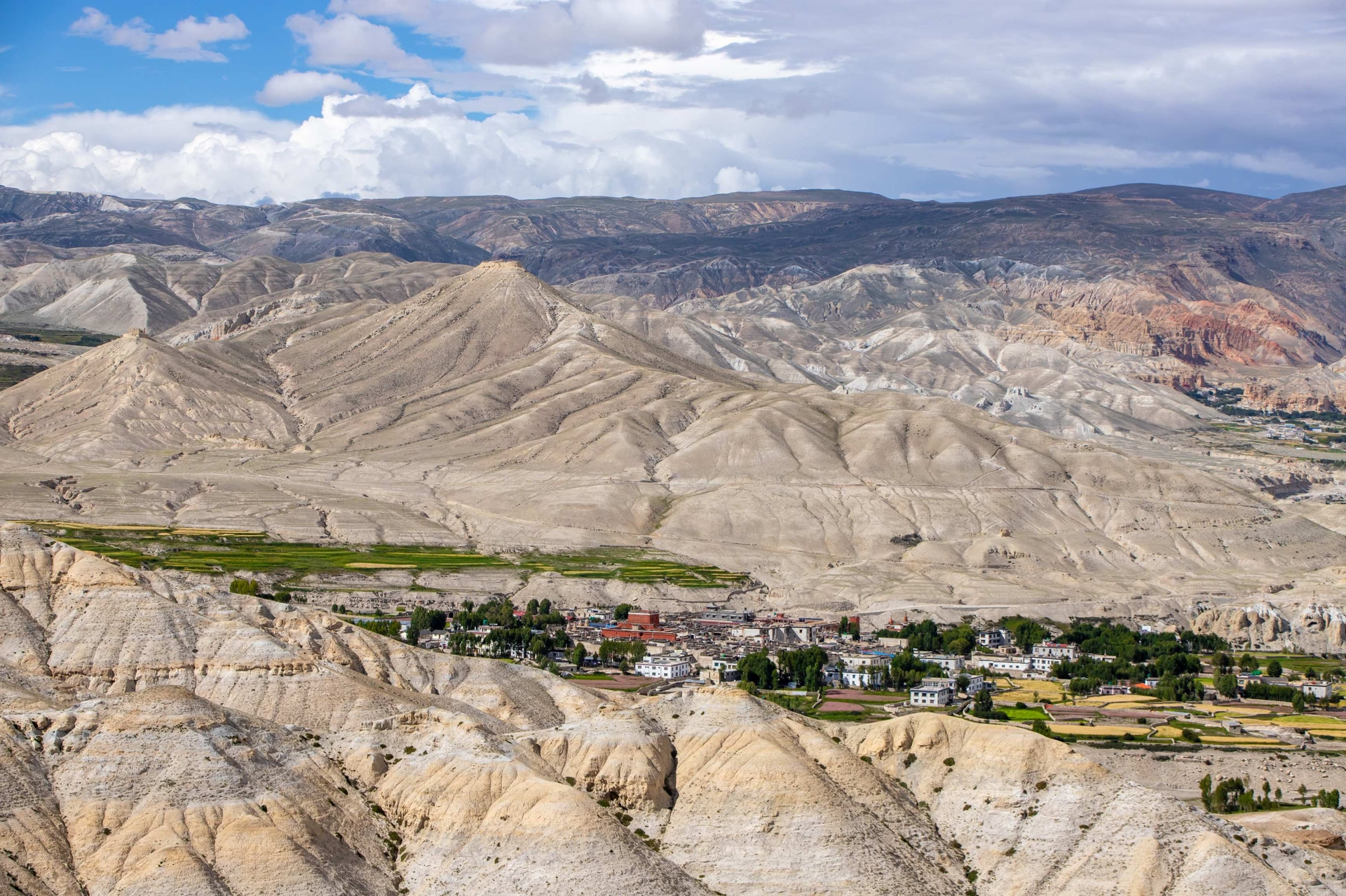
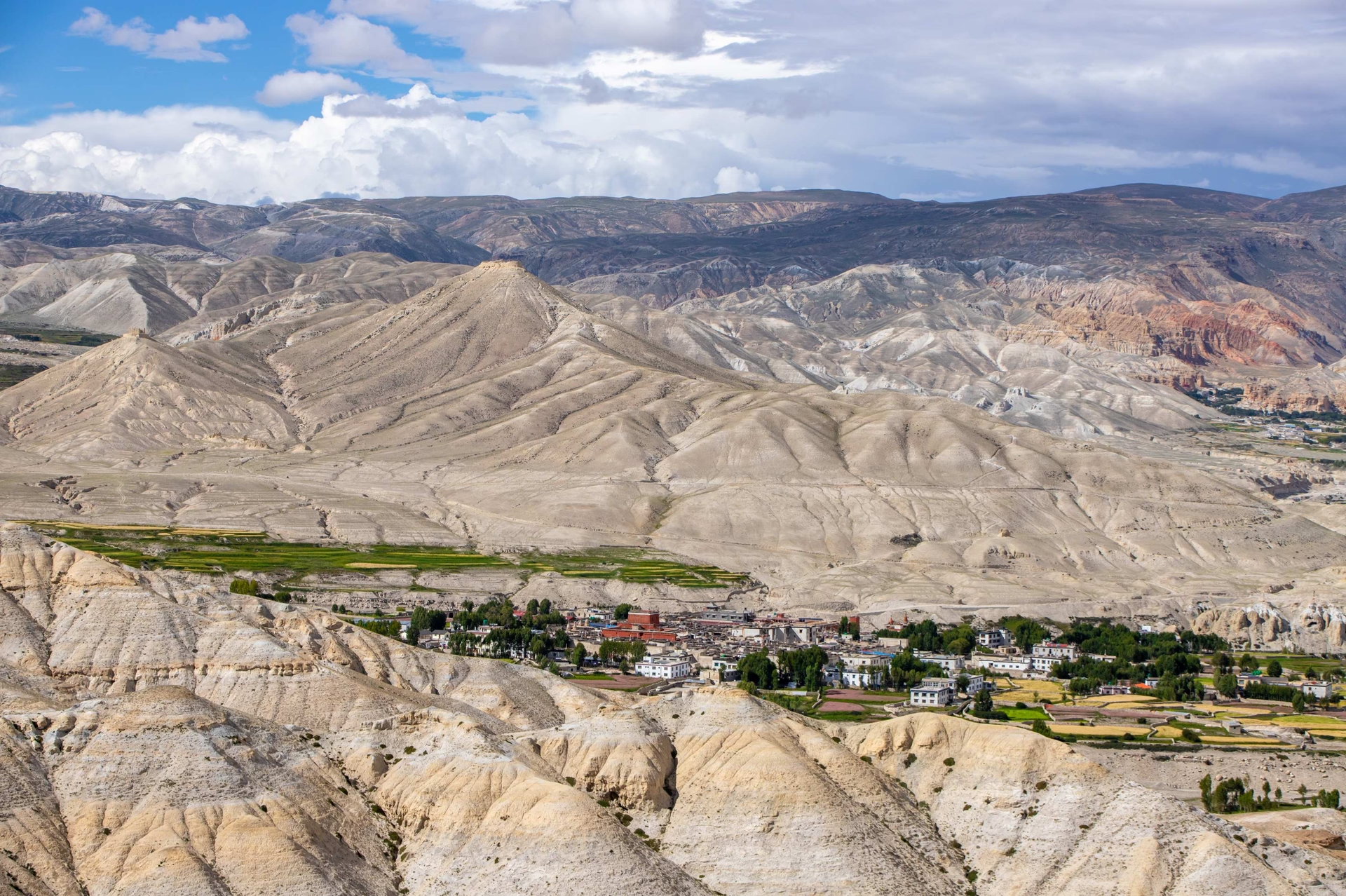
The trail climbs for hours through a landscape that barely looks like Nepal, red cliffs, deep canyons, and bare mountains dried out by the wind. Then you reach the top of Lo La Pass, almost 4,000 meters up, and there it is below you: a walled city that has barely changed since the 1300s.
This is Lo Manthang, the old capital of the Kingdom of Lo. It's the real reason people trek through Upper Mustang in the first place. Everything else on the way, the canyons, the cave monasteries, the windy passes, is just the build-up to this one walled city, where Tibetan Buddhist life still goes on much as it always has.
Lo Manthang Quick Facts
Feature | Information |
Location | Mustang District, Gandaki Province, Nepal |
Elevation | 3,840 m (12,598 ft) |
Population | Approximately 900 within the walled city |
Founded | 1380 AD |
Founding king | Ame Pal |
Ethnic community | Lhoba (Tibetan-descended) |
Religion | Tibetan Buddhism |
Region | Upper Mustang, within the Annapurna Conservation Area |
Nearest airport | Jomsom |
Status | Restricted area: special permit required |
Famous for | The walled city, the King's Palace, ancient monasteries, and the Tiji Festival |
Major festival | Tiji Festival (May or June, dates vary yearly) |
Where Is Lo Manthang?
Lo Manthang lies in the northern part of Mustang District, in Nepal's Gandaki Province, tucked into the upper Kali Gandaki valley near the Tibetan border. It's the capital of what was once the independent Kingdom of Lo, and today it sits at the very top of the Upper Mustang region, the last major settlement before the Nepal–China border, roughly 20 kilometers away.
Getting here means traveling far beyond the usual Annapurna trekking routes. Most visitors fly into Jomsom, then head north through Kagbeni, Chele, Ghami, and Charang before finally crossing the Lo La Pass and descending into the Lo Manthang basin. The town sits inside the Annapurna Conservation Area, but the region around it, Upper Mustang, has its own separate restricted-area status and permit requirements, since it borders Tibet directly.
Why Visit Lo Manthang?
Lo Manthang isn't just another stop on a long trek, it's the reason the Upper Mustang trek exists in the first place. A few things make it genuinely unlike anywhere else in Nepal:
It's the last intact walled city in the Himalayas. No other Himalayan settlement has preserved its complete defensive walls, narrow medieval alleyways, and royal palace in one place.
The culture is Tibetan, not Nepali. Because the region was closed to outsiders until 1992, Lo Manthang preserved a version of Tibetan Buddhist culture that has largely disappeared even in parts of Tibet itself.
It's genuinely restricted. You need a special permit and, unlike most of Nepal, a licensed guide is mandatory. Very few places left in the country carry that level of exclusivity.
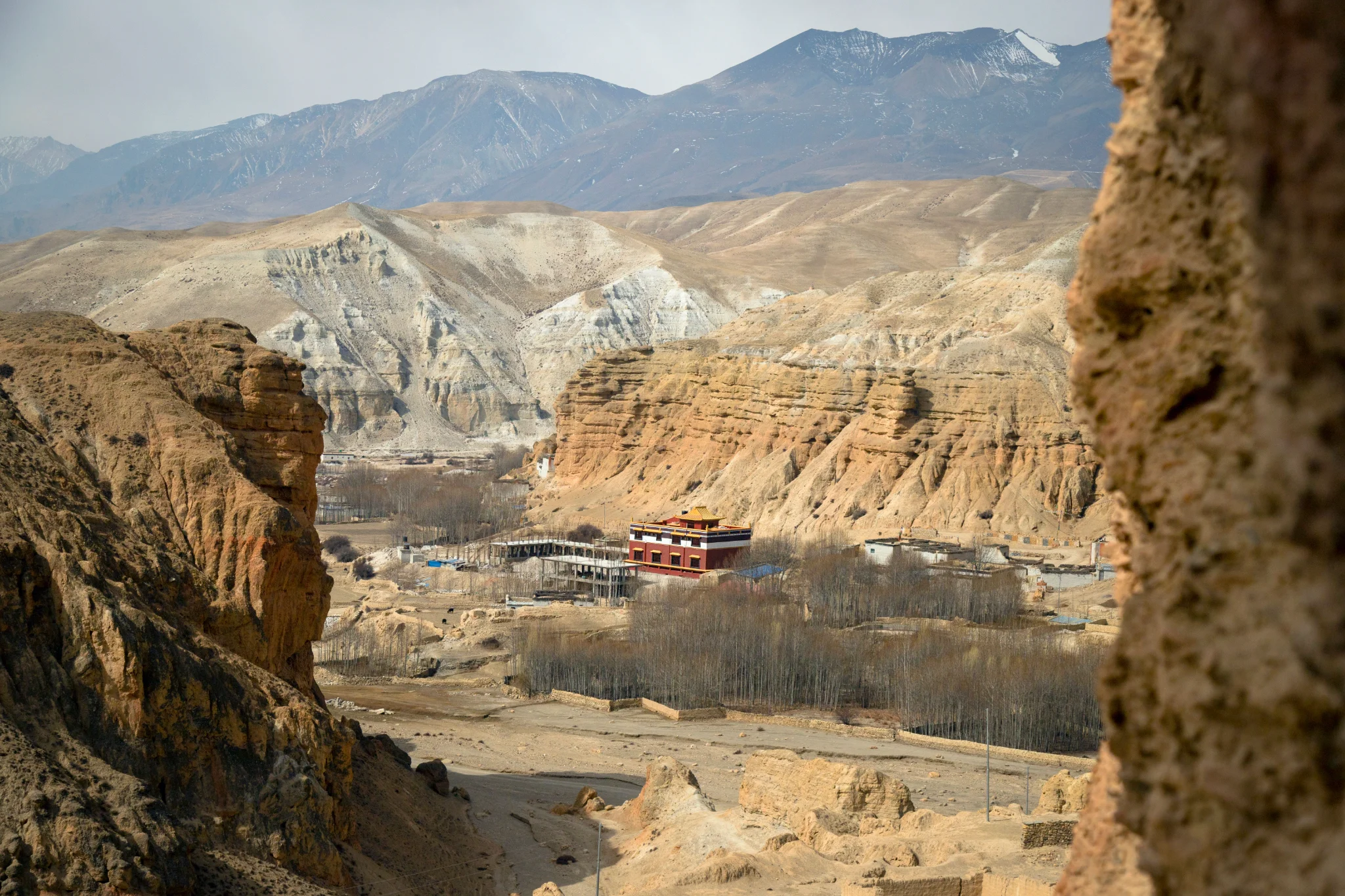
The landscape is unlike the rest of Nepal. Instead of green hills and rhododendron forest, you're walking through a high-altitude desert of red cliffs, eroded canyons, and bare Tibetan-plateau-style terrain.
The Tiji Festival happens nowhere else. Lo Manthang is the only place where this particular three-day Buddhist festival is still performed in its original form.
Put together, this is what draws trekkers past the more accessible parts of the Annapurna region and into one of the more demanding, permit-restricted corners of Nepal.
Best Places to Visit in Lo Manthang
Site | Significance | Time Needed |
King's Palace (Tashi Gephel Palace) | 4-story former royal residence; still central to Tiji Festival ceremonies | 30–45 min |
Thubchen Gompa | 15th-century monastery, built under King Tashi Gon; huge prayer hall with turquoise, gold, and cinnamon-hued frescoes | 30–45 min |
Jampa Lhakhang | Oldest Sakya monastery in Lo Manthang, built under King Angun Sangpo; home to the world's largest collection of wall-painted mandalas | 30 min |
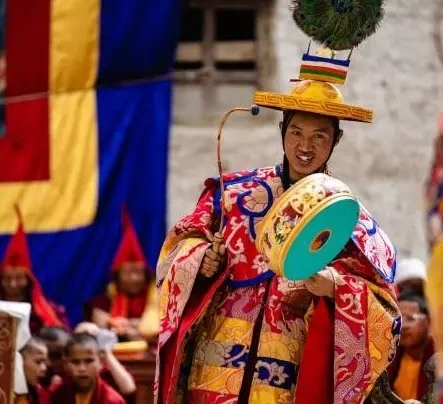
Chodey (Choedhe) Gompa | Main working monastery; the monks here perform the sacred Tiji Festival dances | 20–30 min |
The City Wall | The 20-foot mud-brick wall that gives Lo Manthang its "walled city" identity; walkable in parts for panoramic views | 30–60 min |
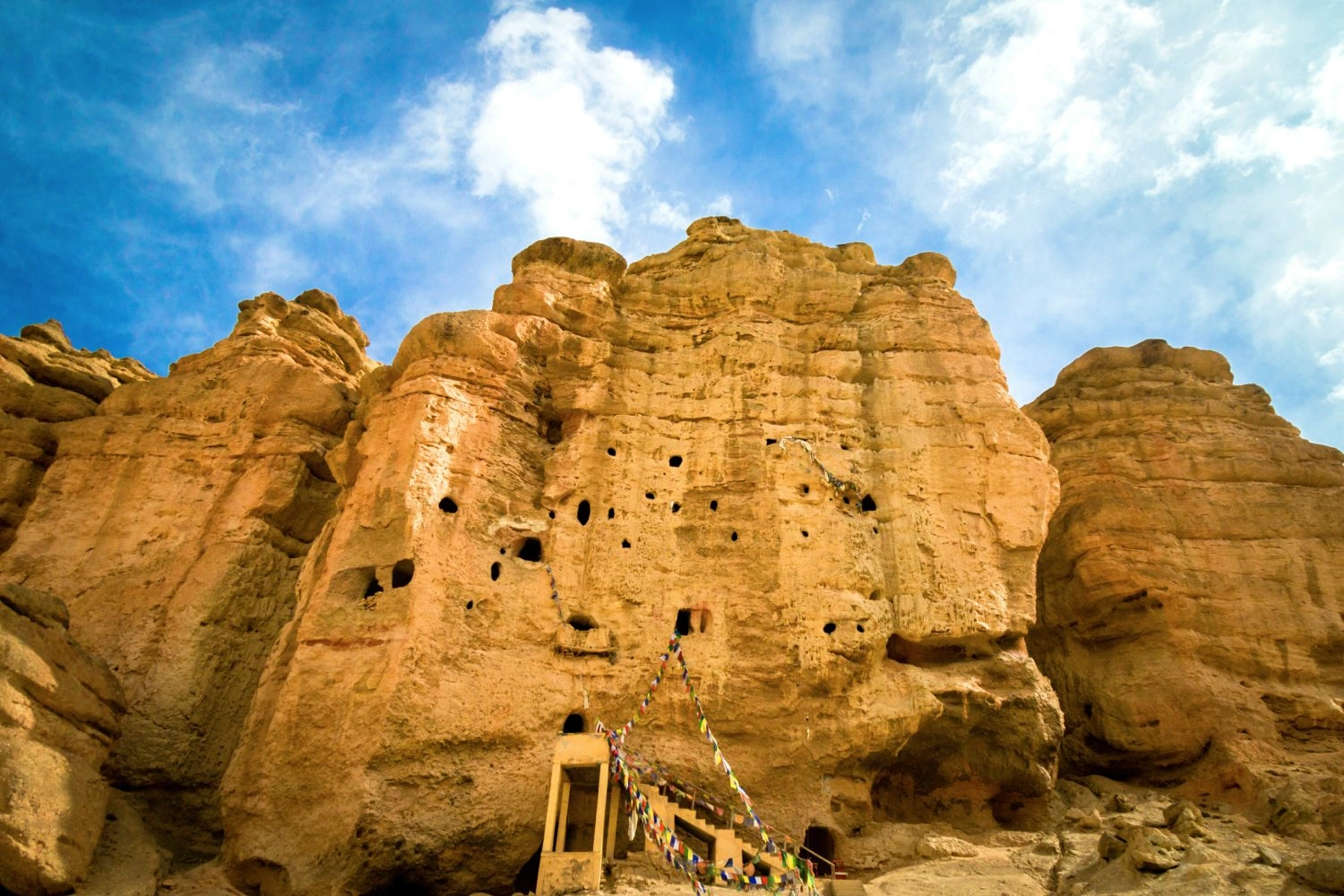
Chhoser Sky Caves | Cliffside cave complex a short trip outside town, once used as homes, storage, and meditation spaces | Half-day trip |
Amchi Museum | Introduction to traditional Tibetan medicine practiced in the region | 20–30 min |
Things to Do in Lo Manthang
Walk the narrow alleyways of the ancient walled city on foot
Meet local Lhoba families and see traditional Tibetan-style homes up close
Visit the Chhoser cave monasteries and Jhong Cave, with its multi-room cliffside chambers
Watch monks perform their daily rituals at Chodey Gompa
Hike up to a viewpoint near Lo La Pass for a panoramic look back at the walled city
Attend the Tiji Festival, if your dates align
Try traditional Mustang cuisine, Tibetan bread, thukpa, and dishes built around barley and buckwheat
Photograph Upper Mustang's stark, canyon-cut desert landscape, especially in the early morning light
Browse local handicrafts, thangka paintings, and jewelry in small shops around the town
Places to Visit Near Lo Manthang
Few visitors come this far and see only the walled city itself. Several worthwhile sites sit within a day's reach:
Nearby Site | Distance from Lo Manthang | Highlight |
Chhoser | Short day trip | Cave monasteries and the Jhong Cave complex |
Nyphu Gompa | Near Chhoser | Monastery built directly into a cliff face |
Garphu Monastery | Near Chhoser | Lesser-visited cave monastery site |
Ghar Gompa (Lo Gekar) | Around 1 day's trek | Dating to the 8th century, considered the oldest monastery in the Mustang region |
Charang (Tsarang) | En route, roughly half a day | Second-largest settlement in Upper Mustang, former co-capital, with a 16th-century monastery and old palace ruins |
Lo La Pass | Just outside town, on the main trail | The pass where trekkers get their first full view of the walled city below |
Experience the Tiji Festival
If there's one thing that draws repeat trekkers back to Upper Mustang, it's the Tiji Festival. Held annually in Lo Manthang, Tiji is formally known as Tenchi, a contraction of Tempa Chirim, meaning "Prayer for World Peace."
The festival reenacts a centuries-old legend: the deity Dorje Jono, an incarnation of Vajrakila, battles and defeats the demon Ma Tam Ru Ta, who had been plaguing the Kingdom of Lo with drought, disease, and destruction. Over three days, monks from Chodey Gompa perform sacred masked Cham dances in the courtyard beside the King's Palace, re-enacting different stages of the story, from the demon's origin to his eventual banishment from the valley.
Lo Manthang is the only place in the world where Tiji is still performed in its original, complete form, which is part of why the festival has become such a draw for cultural travelers, not just trekkers.
Because Tiji follows the Tibetan lunar calendar, its dates shift every year and are usually only confirmed by monastery astrological calculations a few months in advance.
Year | Confirmed Tiji Festival Dates |
2027 | June 1-3 |
2028 | May 21-23 |
If you want to build a trip specifically around the festival, Heaven Himalaya runs a dedicated 17-day Mustang Tiji Festival Trek, timed to have you in Lo Manthang for all three festival days, with the trek itself passing through Kagbeni, Chele, Ghami, and Charang beforehand. Because the festival only happens once a year on fixed dates, these departures fill up early, worth locking in your dates well ahead of the season you're targeting.
Lo Manthang Trek Route
The classic route into Lo Manthang runs through the heart of Upper Mustang, starting from Jomsom and following the Kali Gandaki valley north before climbing into the drier, higher terrain beyond Kagbeni.
Stage | Route | Approx. Elevation | Approx. Duration |
1 | Jomsom to Kagbeni | 2,800 m | 3-4 hrs |
2 | Kagbeni to Chele | 3,110 m | 5-6 hrs |
3 | Chele to Syangboche | 3,800 m | 5-6 hrs |
4 | Syangboche to Ghami | 3,520 m | 5-6 hrs |
5 | Ghami to Charang | 3560 m | 4-5 hrs |
— | Charang to Lo Manthang | 3840 m | 4-5 hrs |
Most itineraries then either retrace this route back to Jomsom or loop back via Dhakmar, Ghar Gompa, and Chhusang for variety. The full Upper Mustang trek, door to door, covers roughly 125–130 km.
How to Reach Lo Manthang
There's no direct road connection from Kathmandu, and Lo Manthang can only be reached via Jomsom, the gateway town to Upper Mustang.
Kathmandu to Jomsom: Trekkers typically drive or fly from Kathmandu to Pokhara first (6–7 hours by road, or a short flight), then take a short 25–30 minute flight from Pokhara to Jomsom.
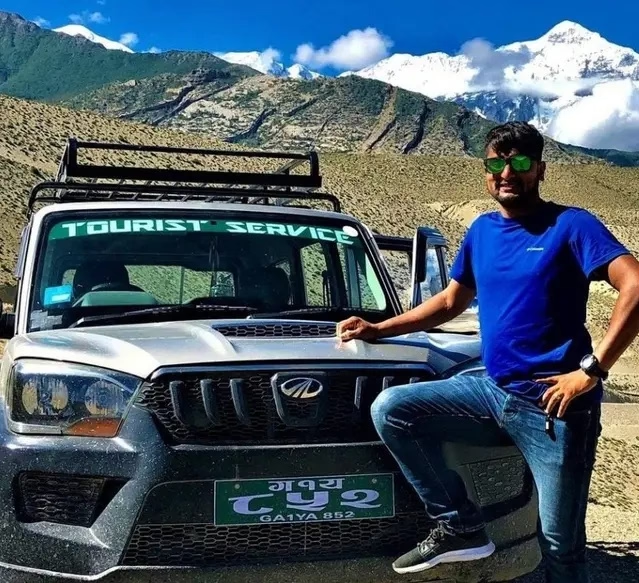
Jomsom to Lo Manthang: From here, most people walk the trekking route above over 4–5 days. If you're short on time or prefer not to trek the whole way, Heaven Himalaya also runs an Upper Mustang Jeep Tour, which covers the same route by 4WD jeep via Kagbeni and Charang, reaching Lo Manthang in a fraction of the time.
Pokhara to Lo Manthang by jeep: This overland route has improved in recent years as road access into the region has expanded, though conditions still vary seasonally, particularly just after monsoon.
Whichever way you go, note that trekking guides are mandatory in Upper Mustang — this isn't a region you can explore independently without one.
Altitude and Difficulty
Lo Manthang sits at 3,840 meters, and the trek to reach it crosses several passes above 3,800 m, including a high point around 4,210 m at PA Pass on some itinerary variations. Altitude is a real consideration here, even though the trek itself is rated moderate rather than technical, there's no climbing involved, just sustained walking at elevation over consecutive days.
Common symptoms to watch for include headache, nausea, dizziness, and unusual fatigue. A well-paced itinerary that gains altitude gradually, combined with proper hydration and an experienced guide monitoring the group, keeps the risk manageable for most reasonably fit trekkers. As always: report symptoms early, and don't push through worsening signs of altitude illness.
How Many Days Should You Spend in Lo Manthang?
One night is the bare minimum and only really suits jeep tours with limited time, you'll see the palace and a monastery or two, but little else.
Two nights is the more common choice on standalone Lo Manthang visits, giving time to properly explore the city, visit the main monasteries, and take a side trip to Chhoser.
Three nights or more makes sense if you're timing your visit around the Tiji Festival, want to explore Ghar Gompa or Charang in depth, or are combining Lo Manthang with a longer Upper Mustang circuit.
Where to Stay in Lo Manthang
Accommodation here ranges from simple teahouses to genuinely comfortable lodges — a wider spread than most people expect at this altitude and remoteness. Basic guesthouses offer shared bathrooms and limited hot water, while the newer, higher-end properties offer attached bathrooms, reliable hot showers, and proper heating. As with the rest of Upper Mustang, prices run higher here than in more accessible parts of Nepal, simply because everything has to be transported in.
Named accommodations include:
Royal Mustang Resort: The standout option, built on former royal-family land and owned by a member of the historic Bista family; considered the best hotel in Upper Mustang
Hotel Grand Shambala
Lo Mustang Himalayan Resort
Hotel Mandala
Numerous basic teahouses throughout the town
Some smaller guesthouses close or reduce services in the coldest winter months, so it's worth confirming availability in advance if you're traveling outside the main spring and autumn seasons.
Permits and Regulations
Because Lo Manthang sits inside a restricted border area, visiting requires more paperwork than most Nepal treks:
Permit | Cost | Notes |
Restricted Area Permit (RAP) | USD 500 for the first 10 days, USD 50 per additional day | A licensed guide and a minimum of two trekkers are mandatory to obtain this permit |
Annapurna Conservation Area Permit (ACAP) | USD 23 for foreign nationals / USD 8 for SAARC nationals | Required since Upper Mustang falls within the Annapurna Conservation Area |
TIMS Card | Not required | Only needed if extending your trip into other trekking regions |
Because independent trekking isn't permitted here, permits are arranged through a registered trekking agency as part of your package.
Weather and Best Time to Visit
Upper Mustang sits in the rain shadow of the Annapurna and Dhaulagiri massifs, which makes its weather pattern noticeably different from the rest of Nepal.
Season | Conditions | Notes |
Spring (Mar–May) | Stable, mild days, cold mornings | Most popular season; coincides with the Tiji Festival |
Summer/Monsoon (Jun–Aug) | Dry compared to the rest of Nepal thanks to the rain shadow | A rare monsoon-season trekking option in Nepal |
Autumn (Sep–Nov) | Stable and clear | Second major trekking season |
Winter (Dec–Feb) | Extreme cold, possible snow, many guesthouses close | Generally not recommended |
Practical Information
Connectivity: Mobile signal from Nepal's main carriers reaches Lo Manthang but is inconsistent. Wi-Fi is available in some guesthouses, typically via slow, expensive satellite connections, sometimes with a usage fee.
Electricity: Power is largely solar-based and can be unreliable in poor weather. Most lodges charge a small fee for charging devices, and a solar power bank is genuinely useful here.
ATMs and money: There are no reliable ATMs in Lo Manthang or anywhere in Upper Mustang. Carry all the Nepalese rupees you'll need before leaving Jomsom or Pokhara.
Card payments: Not accepted in practice; this is a cash-only region.
Water: Boiled water is available at guesthouses for a small fee; bottled water is pricier and less environmentally friendly. A reusable bottle with a treatment method is the practical choice.
Food: Expect a mix of Tibetan and Nepali dishes: thukpa, momo, dal bhat, Tibetan bread, and dishes built around locally grown barley and buckwheat, alongside simpler Western options like pasta and fried rice.
Hot showers: Available at some guesthouses and the higher-end hotels, usually for an added fee at basic teahouses.
Geography and Landscape
Lo Manthang's landscape looks and feels more like the Tibetan plateau than anywhere else in Nepal, and that's not a coincidence: the walled city sat within the Tibetan cultural and, until the 1830s, political sphere for centuries.
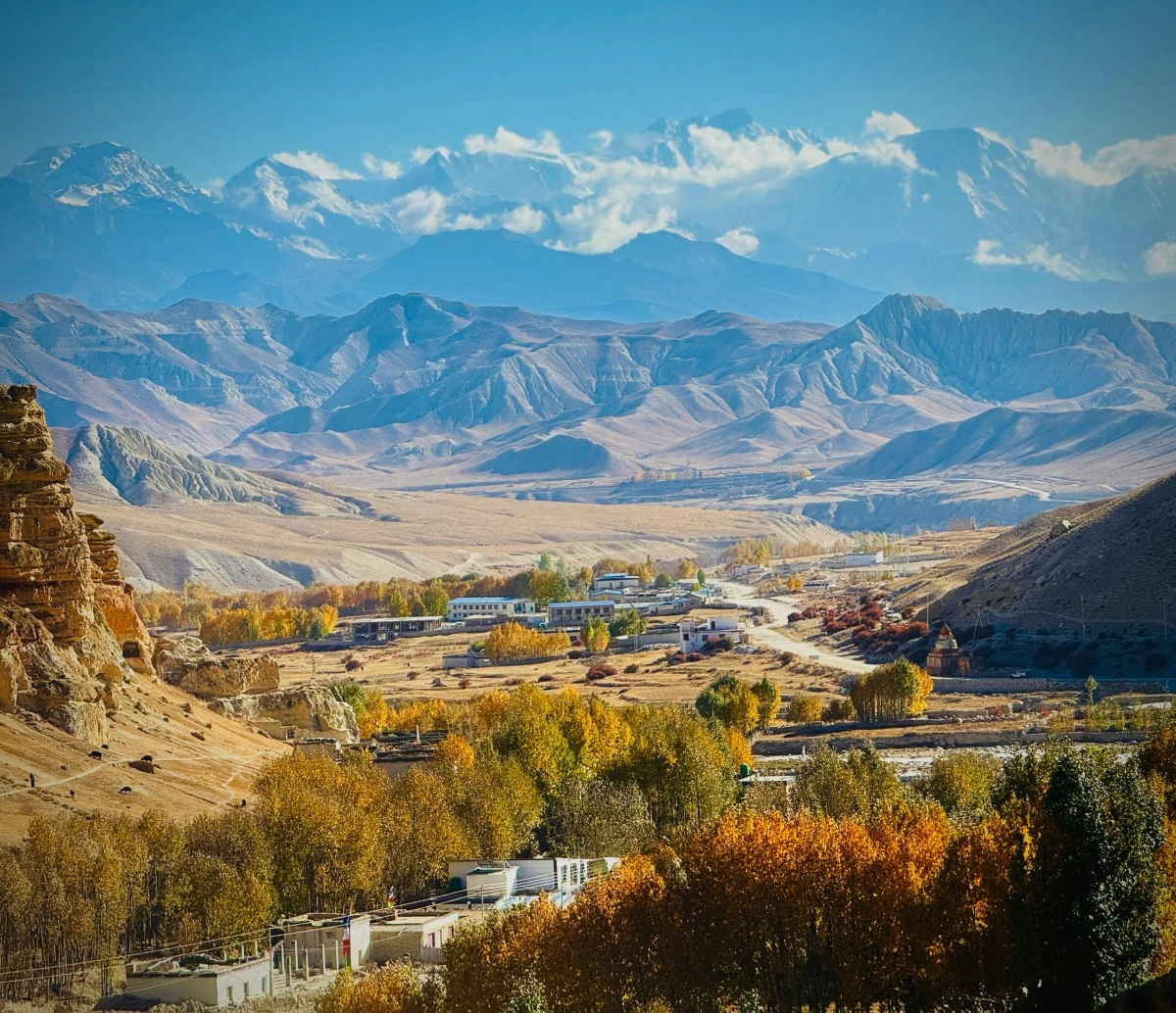
The terrain is defined by its position in the rain shadow of the Annapurna and Dhaulagiri ranges: eroded red-and-ochre cliffs, wide sandy basins, deep canyons cut by seasonal rivers, and almost no tree cover. Barley and buckwheat fields around the town are some of the only green visible for miles, fed by careful irrigation rather than rainfall. On a clear day, the Annapurna, Dhaulagiri, and Nilgiri ranges are all visible in the distance, framing the high desert basin the city sits in.
History of Lo Manthang
Lo Manthang's recorded history begins in 1380, when the Buddhist warrior Ame Pal rose from western Tibet, arrived in this fertile valley, and built a walled fortress city to defend against rival warlords. For 25 generations, his descendants ruled the Kingdom of Lo as an independent monarchy.
When Nepal's Shah kings unified the country in the 18th century, the Kingdom of Lo was absorbed into Nepal but kept its own monarchy and internal rule: a status that persisted for another two centuries. Upper Mustang remained closed to outside visitors until 1992, one of the reasons its Tibetan Buddhist culture stayed so intact. Nepal's shift to a federal republic in 2008 formally ended the monarchy nationwide, and Lo Manthang's own king, Jigme Dorje Palbar Bista, lost his official title, though he continued to be respected locally until his death in 2016. His son now holds the unofficial title of Raja.
A handful of names come up repeatedly in that history: Ame Pal, the founding king; Angun Sangpo, his second son, who built Jampa Lhakhang in the early 15th century; Tashi Gon, the kingdom's third ruler, who built Thubchen Gompa; and Jigme Dorje Palbar Bista, the last officially recognized king.
The Lhoba People and Culture
The people of Lo Manthang are known as the Lhoba, an ethnic group of Tibetan descent whose culture, language, and religious practice closely mirror those found across the border in Tibet.
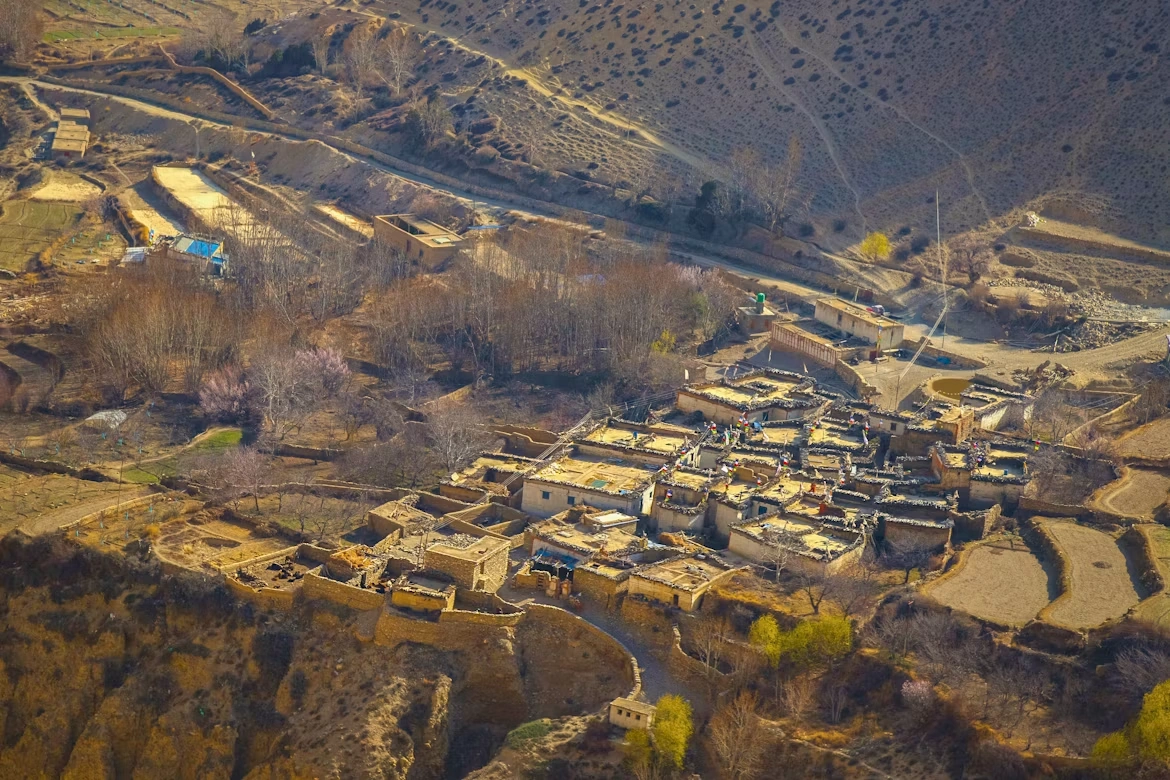
Tibetan Buddhism shapes daily life here: prayer flags, prayer wheels, mani stones, and chortens are everywhere throughout the town, and Lo Manthang's monasteries remain active centers of worship rather than museum pieces. Traditional homes are built from mud brick and stone, with flat roofs suited to the dry climate, and many households still keep a dedicated prayer room.
Traditional clothing draws heavily on Tibetan styles: heavy wool garments suited to the cold, worn more commonly today during festivals and ceremonies than daily life. Food follows the same Tibetan influence: barley and buckwheat form the backbone of the local diet, alongside Tibetan bread, butter tea, and dishes shared widely across the Himalayan plateau.
Frequently Asked Questions
Is Lo Manthang the same as Upper Mustang? No, Upper Mustang is the wider region, and Lo Manthang is its capital city, the main walled settlement within it. Most Upper Mustang treks are built specifically around reaching Lo Manthang.
Why is Lo Manthang called the Forbidden Kingdom? Because it remained closed to outside visitors until 1992, and access still requires a restricted-area permit today.
Can foreigners visit Lo Manthang? Yes, with a Restricted Area Permit, an Annapurna Conservation Area Permit, and a licensed guide, independent, unguided visits aren't permitted.
Do I need a permit for Lo Manthang? Yes, both a Restricted Area Permit (USD 500 for the first 10 days) and an Annapurna Conservation Area Permit are required.
How many days do I need in Lo Manthang? Two nights is typical for a proper visit; add more if you're timing your trip around the Tiji Festival or exploring nearby sites like Charang and Ghar Gompa.
Is Lo Manthang worth visiting? For travelers interested in Tibetan Buddhist culture, medieval walled cities, or high-altitude desert scenery, it's one of the most distinctive destinations in Nepal.
What is the best time to visit Lo Manthang? Spring (March–May) and autumn (September–November) are the most reliable seasons; spring also coincides with the Tiji Festival.
Can I drive to Lo Manthang? Yes, jeep tours from Pokhara via Jomsom and Kagbeni reach Lo Manthang in a fraction of the time a full trek takes.
What is the altitude of Lo Manthang? 3,840 meters (12,598 feet), with the trekking route crossing passes above 4,000 meters en route.
Is Lo Manthang part of Tibet? No, it's part of Nepal, though it was historically and culturally tied to the Tibetan plateau and sat within Tibet's political sphere until the 1830s.
When is the Tiji Festival held? Dates shift yearly with the Tibetan lunar calendar, but it consistently falls in May or June. Confirmed dates: June 1–3, 2027; May 21–23, 2028.
Planning Your Trip to Lo Manthang
Lo Manthang rewards travelers willing to go further and prepare more than the average Nepal trek requires, the permits, the altitude, and the remoteness are all real considerations. But for those who make the trip, it remains one of the last places in the Himalayas where a walled medieval city, an unbroken royal lineage, and a living Tibetan Buddhist tradition all still exist together.
Heaven Himalaya runs both the standard Upper Mustang Trek and the festival-timed Mustang Tiji Festival Trek, along with a faster Upper Mustang Jeep Tour for those short on time. Whichever way you choose to reach it, Lo Manthang is worth the distance.
Where you’ll go
Customize Your Trip
Prefer a tailored itinerary? Let us build the journey of your dreams.