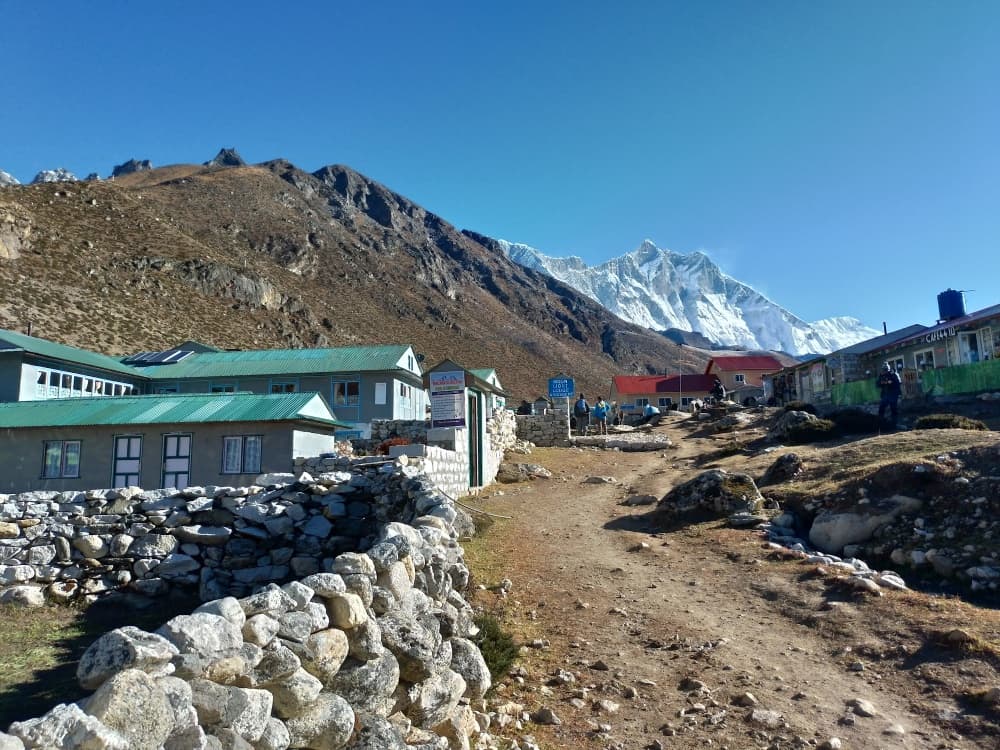
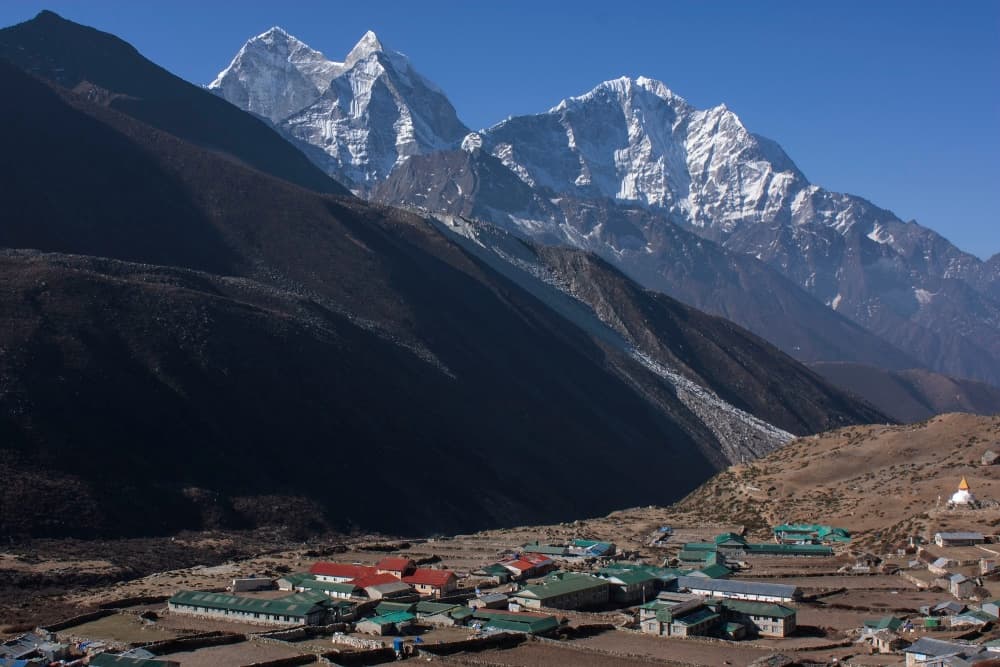
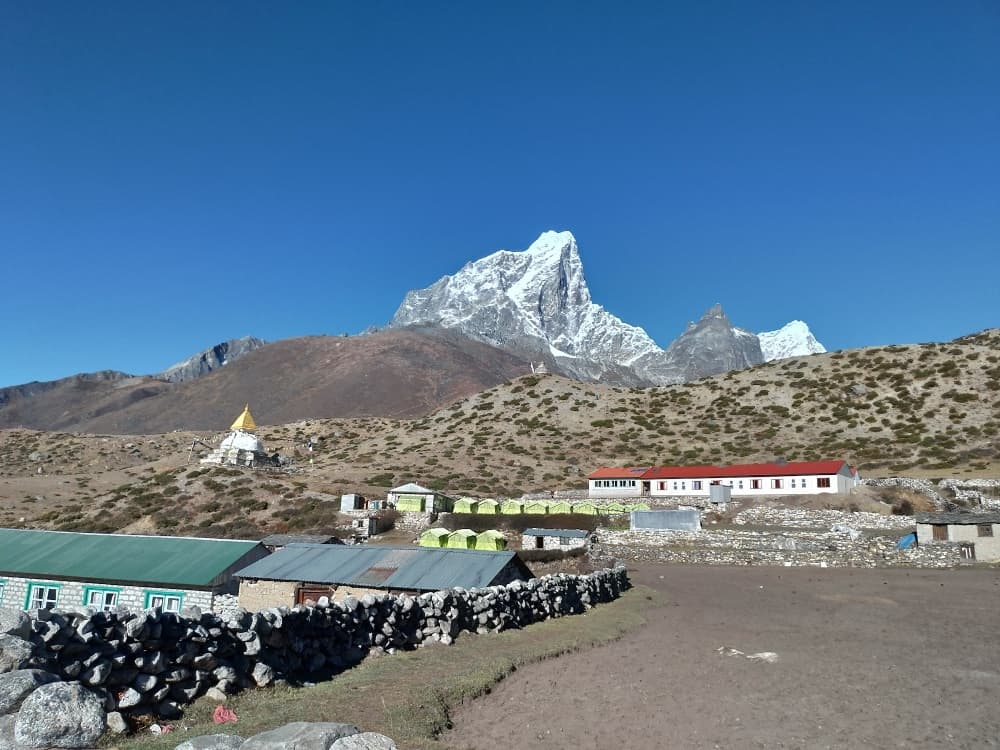
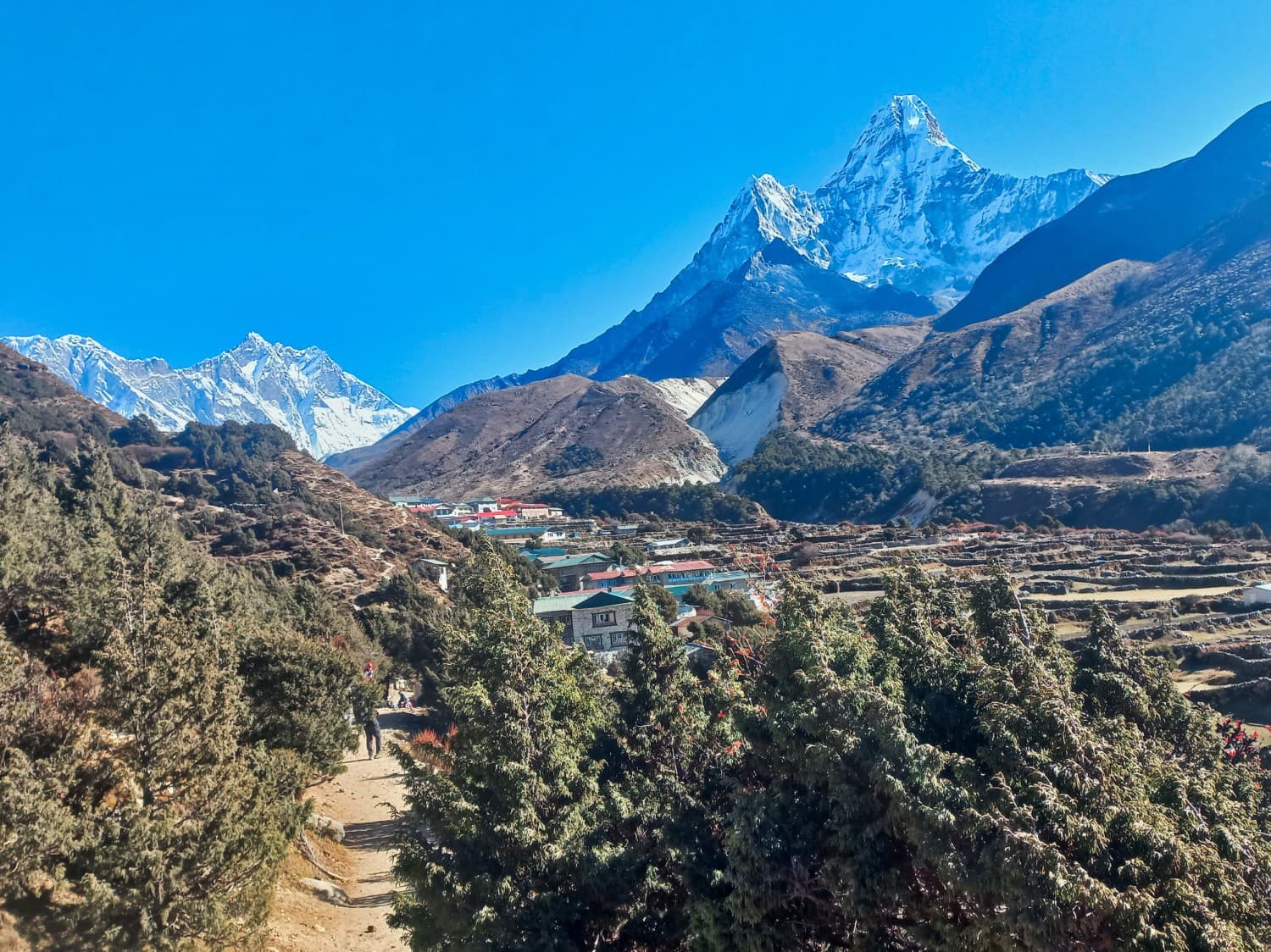
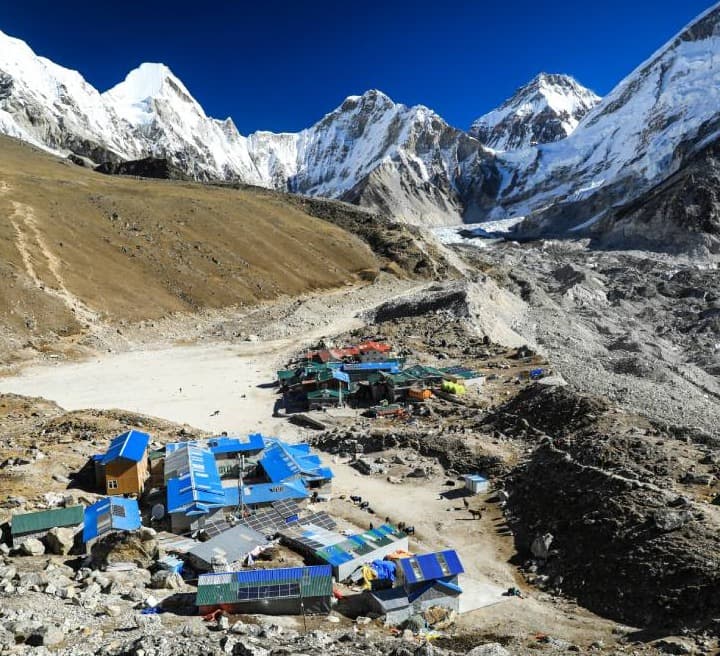
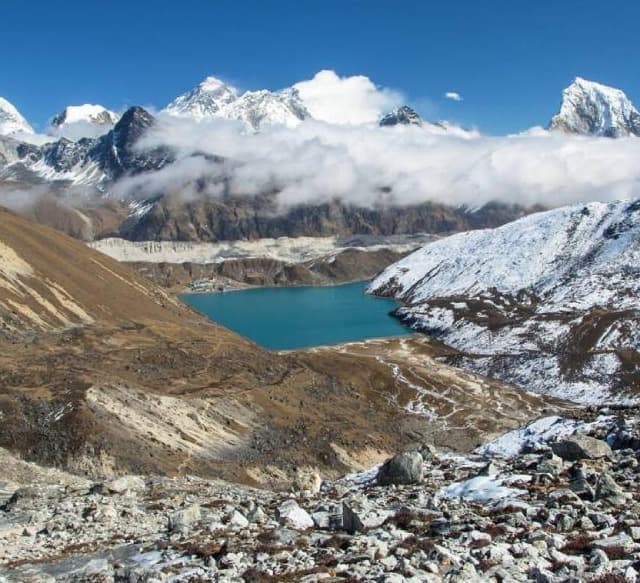
Dingboche sits at an elevation of 4,410 meters (14,470 ft.) in the beautiful Imja Valley. The village is surrounded by spectacular mountain scenery, including Ama Dablam, Lhotse, and Island Peak, while the Imja River flows nearby. Its open valley setting offers wide views of the surrounding Himalayan landscape.
- Elevation: 4,410 m (14,470 ft.)
- Region: Khumbu, Solukhumbu District
- Trek Distance: Approximately 4–5 trekking days from Lukla
- Best Time to Visit: Spring (March–May) and Autumn (September–November)
As trekkers gain altitude, the body requires time to adjust to lower oxygen levels. Due to its location in a broad valley and relative protection from icy winds, Dingboche provides a comfortable place to rest and recover before continuing higher into the Everest region.
For this reason, most Everest Base Camp trekkers spend an additional day here for acclimatization. The village's comfortable lodges, open surroundings, and accessible hiking routes make it one of the most suitable places along the trail to prepare for the challenges of higher elevations.
Although most trekkers visit Dingboche as part of a larger Everest region journey, the village itself is an attractive destination. Prayer flags flutter above stone houses, while mani walls and small gompas reflect the deep spiritual traditions of the local Sherpa community.
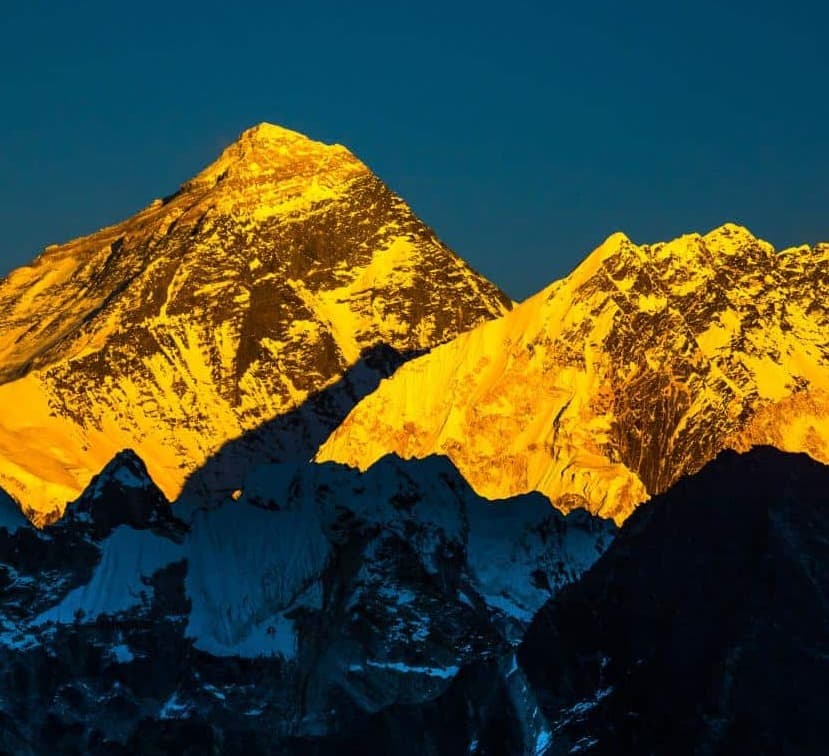
The most popular acclimatization hike is Nagarjun Hill (5,100 m), which offers panoramic views of Ama Dablam, Lhotse, Makalu, and Everest. In recent years, Ama Dablam Base Camp has also become a popular side excursion, attracting trekkers with its close-up views of one of the Himalayas' most beautiful mountains.
Walking through Dingboche provides an opportunity to observe the daily lives of Sherpa families living in the high mountains. The village remains free of motor roads, meaning goods and supplies are transported by yaks, donkeys, and porters.
Despite its remote location, Dingboche offers surprisingly good accommodation facilities. Comfortable lodges, warm dining halls, bakeries, and also you can buy some suppliment gears for your trek if you need any, making it prominent settlement in the upper Everest region.
Dingboche plays an important role in the Everest trekking network. Beyond serving as a key acclimatization stop, it acts as a gateway to destinations such as Lobuche, Chhukung, Tengboche, and Island Peak. Its combination of mountain scenery, Sherpa culture, and strategic location makes it one of the most significant villages in the Everest region.
Interesting Fact: Dingboche's stone-walled fields, used for growing potatoes and barley, are among the highest cultivated lands in the world.