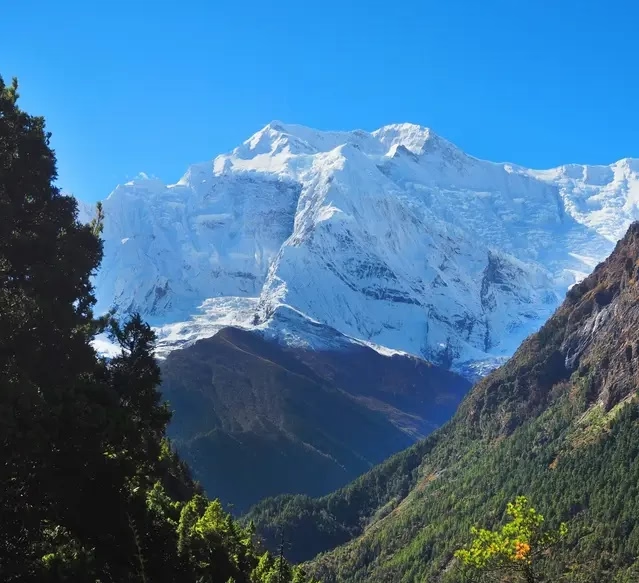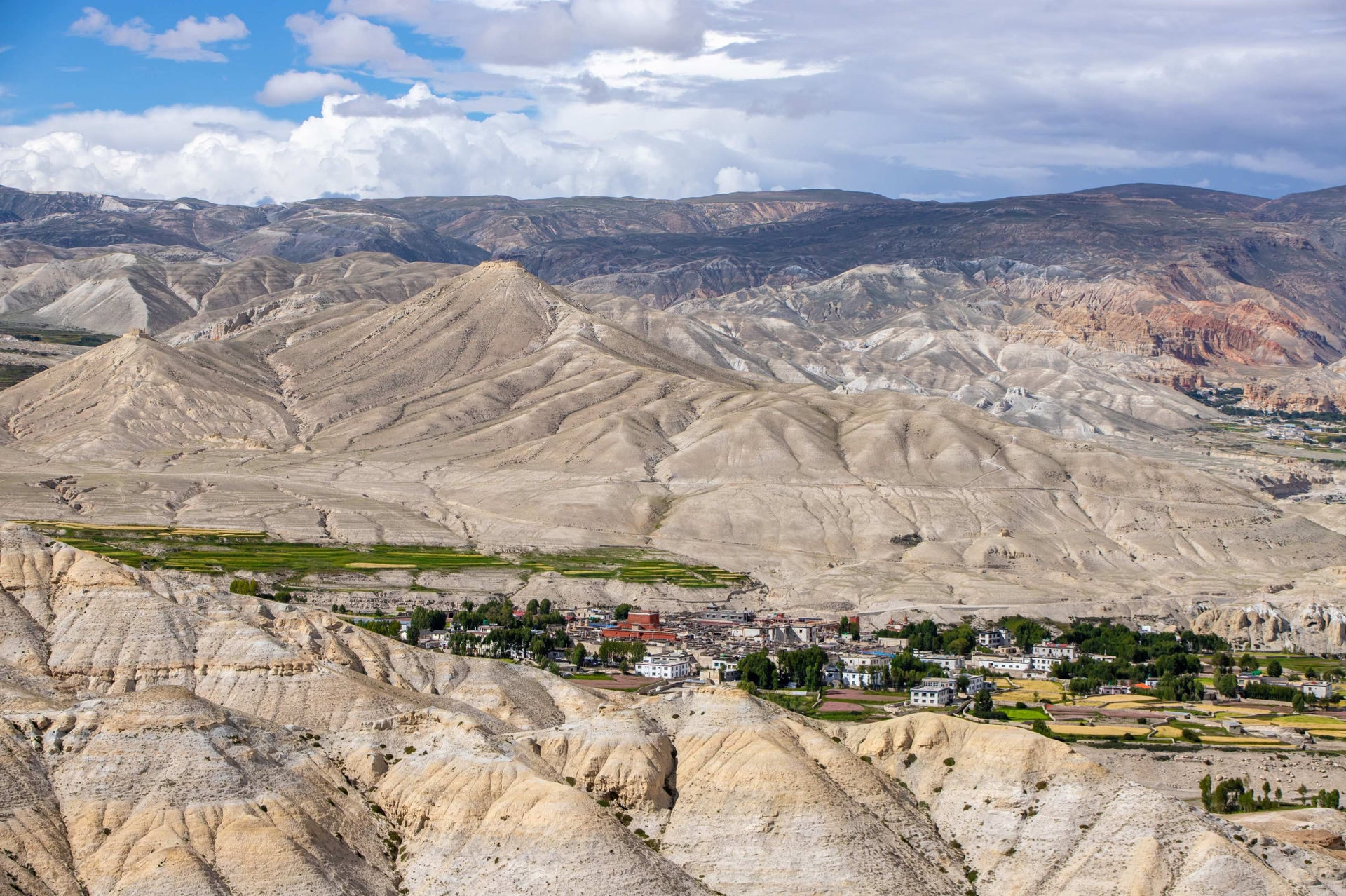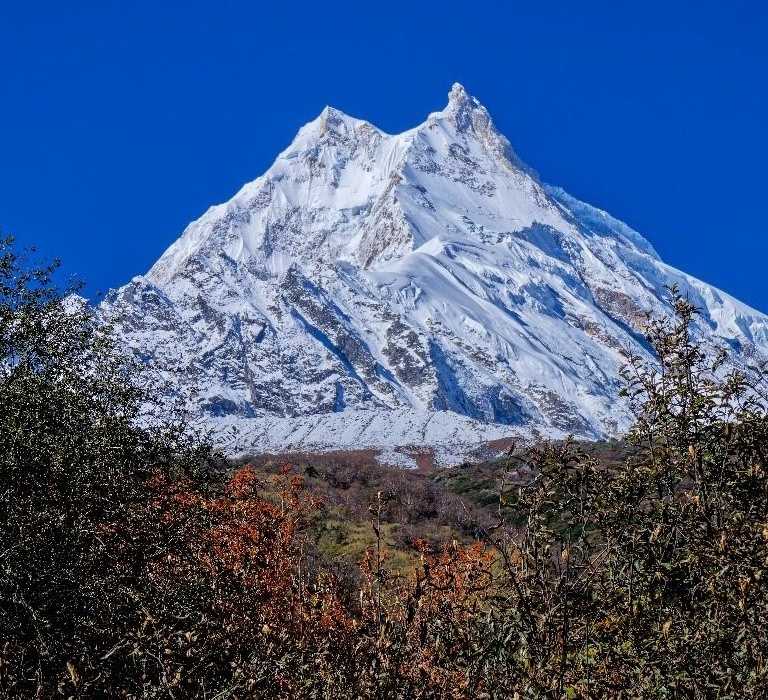

- DestinationNepal
- Duration11 days
- Trip DifficultyChallenging
- ActivitiesTrek
- Group Size1-15
- VehicleCar, Deluxe AC Bus
- AccommodationHotel & Guesthouse
- MealsB.L.D
Overview of the Nar Phu Valley Trek
The Nar Phu Valley trek is a remote, high-altitude adventure in Nepal's northern Manang district. Foreigners were not allowed to enter this limited area at all until 2003. Even today, it remains one of the few hiking trails where you can really escape the crowds.
While thousands the hikers flock to the classic Annapurna Circuit every year, only a handful make the detour into this wild, hidden valley.
Starting from Dharapani, this raw adventure takes you to the isolated villages of Nar and Phu before testing your lungs on the 5,320m Kang La Pass. If you're looking for a challenge that ends right where the classic Annapurna Circuit begins, this is it.
Most people choose trekking Nar Phu Valley for one reason: solitude. The route sits in the rain shadow between the Annapurna and Manaslu ranges, creating a dramatic landscape of raw, arid cliffs and high-desert plateaus. Unlike the busy teahouses on the main trails, the vibe here is pristine and untouched. It is a "Shangri-La" in the truest sense- a place where time seems to have stopped.
The history of this Nar Phu valley is as rugged as the terrain. The people of this region are descendants of Tibetan migrants who crossed the high passes centuries ago- perhaps as early as the 8th century- fleeing conflict or seeking new grazing lands. For hundreds of years, this was a vital salt trade route connecting Tibet to Nepal.
In the 1950s, the legendary British explorer H.W. "Bill" Tilman famously explored this area and called it a "lost world". But for decades after, it was closed to the outside world. This isolation allowed the valley to preserve its ancient culture perfectly. When you trek to Nar Phu, you aren't just seeing mountains; you're walking through living history.
The villages of Nar and Phu look like medieval fortresses. Stacked stone houses, ancient chortens, and the crumbling ruins of Khampa warrior forts dot the landscape. The locals still practice a unique mix of Tibetan Buddhism and the ancient Bonpo religion, revolving their lives around yak herding and agriculture just as their ancestors did.
The scenery is equally dramatic. You start in lush pine forests and narrow canyons before bursting out onto vast, windswept plateaus. The climax of the trip is the Kang La Pass (5,320m), which offers one of the best views in the entire country- a face-to-face encounter with Annapurna II, Gangapurna, and Tilicho Peak.
Because this is a restricted area, you cannot go alone. You need special permits and a guide. A standard Nar Phu Valley trek 11-day itinerary gives you enough time to explore both villages and cross the pass safely. If you want to get the best of the Annapurna region with a raw, cultural adventure, a Nar Phu trek is the ultimate choice for 2026.
Trek Highlights for Nar Phu Valley Trek
Explore a restricted "lost valley" that was closed to foreigners until 2003, giving you a rare chance to hike in almost total silence.
Wander medieval villages of Nar and Phu, where stack-stone houses and ancient watchtowers look like they haven't changed in centuries.
Conquer the challenging 5,320m Kang La Pass for an unobstructed view of Annapurna II and Gangapurna.
Watch the landscape transform dramatically from narrow, green river gorges to vast, dusty high-altitude plateaus that resemble the Tibetan frontier.
Immerse yourself in a unique culture that still practices the ancient pre-Buddhist Bonpo religion in monasteries that feel forgotten by time.
Trek through a rain-shadow zone that stays surprisingly dry and clear, even when the southern side of the Annapurna range is covered in clouds.
Experience the ultimate adventure detour by combining a week of raw wilderness survival with a comfortable finish on the classic Annapurna Circuit.
When is the Best Time for the Nar Phu Valley Trek?
Technically, you can trek here year-round, but the best time for the Nar Phu Valley trek is during the Autumn (September-November) and Spring (March-May) seasons. These months give you the safest weather for crossing the Kang La Pass and the clearest mountain vistas.
1. Autumn (The Top Choice) October and November are widely considered the best months.
Weather: The monsoon rain has washed away the dust, leaving crystal clear blue skies. Most trekkers choose the Nar Phu Valley trek in autumn because the Kang La Pass is generally free of snow and ice.
Temperature: Expect pleasant days (10°C to 20°C) in the lower villages. However, nights in Nar and Phu will drop to freezing (0°C to -5°C).
Why Go: This is peak season for a reason- the visibility is perfect for photography, and the risk of rain and snow is low.
2. Spring (March to May) is the second-best season.
Weather: The valley starts to warm up after the freezing winter. The lower trails near Koto are filled with blooming rhododendrons and wildflowers.
Conditions: Early spring (March) might still have snow blocking the high passes, so checking conditions is vital. By May, the snow melts, but the afternoons can get a bit hazy compared to autumn.
3. Unlike most treks in Nepal, the Nar Phu Valley trek in summer (June-August) is actually possible.
The Rain Shadow Effect: Nar Phu villages lie behind the Annapurna range, meaning the mountain blocks most of the monsoon rain. While Pokhara gets soaked, the upper valley remains relatively dry.
The Catch: To get the dry area, you first trek through the lower, wet sections near Koto. You'll encounter leeches, slippery mud, and rain for the first and last few days. It is a good option if you want solitude but be prepared for wet boots.
Roadblock Warning: Since many Nar Phu Valley trek itineraries involve a drive from Dharapani or Besisahar, you should plan for extra days in case the roads get blocked during the monsoon (June-Aug).
4. Winter trekking in Nar Phu Valley (December-February) is challenging. The villagers often migrate to lower elevations to escape the cold. The Kang La Pass is usually closed due to heavy snow, rendering the entire circuit impassable.
How Much Does the Nar Phu Valley Trek Cost?
Planning a budget for this remote region is tricky because costs vary wildly depending on how you travel. So, how much does the Nar Phu Valley trek cost in 2026?
Realistically, for a standard 11-day itinerary, you should budget between $900 and $1,200 USD per person if you book with a local Kathmandu agency. If you are a solo trekker, expect to pay closer to $1,500 because you cannot share the cost of the guide or jeep.
Your Nar Phu Valley trek budget will depend on three main things:
Group Size: This is the biggest money saver. A private jeep costs $150, whether there is one person or six. Bringing friends significantly splits these fixed costs.
Season: Trekking in the peak Autumn season (Sept-Nov) costs slightly more because the Restricted Area Permit (RAP) is $100 per week. In the off-season (Dec-Aug), the permit drops to $75.
Agency Type: International agencies often charge $2,000+, while local Nepal-based operators offer the same Nar Phu trek price for half the amount.
When you book a package, the bulk of your Nar Phu Valley trek budget is handled upfront. This typically covers:
Permits: The expensive Restricted Area Permit (RAP) and ACAP.
Logistics: Guide, porter, and transportation (jeep/bus).
Basics: Your teahouse accommodation and 3 meals a day (Breakfast, Lunch, Dinner).
Difficulty Level of Nar Phu Valley Trek
The Nar Phu Valley trek difficulty is best rated as moderate to challenging. While you don't need mountaineering skills (ropes and crampons are rarely needed), this is still not a walk in the park. It is significantly tougher than the standard Ghorepani Poon Hill trek and requires more endurance than the Annapurna Circuit trek.
Nar Phu Valley trekking is suitable for experienced hikers with strong cardiovascular fitness. The Nar Phu Valley trek for beginners is very demanding. If this is your first high-altitude trek, we strongly recommend hiring an experienced guide and adding extra acclimatization days. The landscape will be familiar if you've done Everest Base Camp or Annapurna Circuit, but the region's remoteness adds a new layer of challenge.
The major challenges are altitude, rugged terrain, isolation, and remoteness. The biggest hurdle isn't the trek distance; it's the thin air. In Nar Phu villages, you'll have to sleep at about 4,000m for a few days, so you're likely to get altitude sickness. The Kang La Pass difficulty lies in its height. Crossing this pass at roughly 5,320m is the hardest day of the trip. You'll feel breathless, and every step will feel heavy.
The technical difficulty on the Nar Phu trek is low, but the trails are narrow and often carved into cliffs. The road from Koto to Meta goes through pine forests and river gorges and is a steady, hard climb. Expect steep climbs on the Nar Phu trek that test your knees and lungs. The trails are rocky and uneven and can be slippery when it rains or snows.
In addition, you need to be mentally prepared for the daily grind. You have to walk 6-8 hours on average days. The day you cross Kang La Pass, it'll take 10+ hours. You'll cover 10-12 km daily with significant elevation ups and downs. The weather is unpredictable- sunny mornings can turn into freezing, windy afternoons very quickly.
Unlike busy trekking routes where you encounter teahouses every hour, here you're on your own for long stretches. If you get injured or sick, organizing a rescue is more challenging because there are no roads, and helicopter evacuations can be delayed by weather. This isolation requires a strong mindset.
Outline Itinerary of the Nar Phu Valley Trek
Day 01: Arrival in Kathmandu, Nepal & Trip Preparation
Day 02: Drive from Kathmandu to Dharapani (1,860m/6,102ft) 8–9 hrs
Day 03: Trek from Dharapani to Koto (2,600m/8,530ft) 5–6 hrs trek
Day 04: Trek from Koto to Meta (3,560m/11,680ft) 6–7 hrs trek
Day 05: Trek from Meta to Phu Gaon (4,080m/13,386ft) 6–7 hrs trek
Day 06: Acclimatization & Exploration Day in Phu Gaon (4,080m/13,386ft) 3–4 hrs easy walk
Day 07: Trek from Phu Gaon to Nar Village (4,110m/13,484ft) 5–6 hrs trek
Day 08: Trek from Nar to Ngawal (3,660m/12,008ft) via Kang La Pass (5,320m/17,454ft) 7–8 hrs trek
Day 09: Trek from Ngawal to Manang (3,540m/11,614ft) 4–5 hrs trek
Day 10: Drive from Manang to Besisahar (760m/2,493ft) 6–7 hrs
Day 11: Drive from Besisahar to Kathmandu (1,400m/4,593ft) 6–7 hrs
Cost Details
Inclusions
Round-trip transport from Kathmandu to Dharapani by private vehicle and all ground transportation during the trek, including airport/hotel transfers.
2 nights’ accommodation in a 3-star hotel in Kathmandu with breakfast.
13 nights’ accommodation during the trek in best available guesthouses (twin-sharing basis). Where possible, private bathrooms with hot showers are provided in key stops.
All meals (breakfast, lunch, and dinner) during trekking days.
Snacks of fresh seasonal fruits on trekking days.
ACAP and RAP and other required trekking permits.
A licensed, English-speaking, experienced trekking guide.
Assistant guide for groups of 6+ trekkers.
Porters to carry baggage (1 porter for 2 trekkers).
All costs for guide and porter’s food, accommodation, salary, and equipment, including accidental insurance.
Trekking gear provided: duffel bag and sleeping bag.
Heaven Himalaya T-shirt, route map, and trekking completion certificate.
Oximeter to monitor oxygen and pulse during high-altitude trekking.
Comprehensive first-aid kit carried by the guide.
Emergency rescue assistance (to be funded by your travel insurance if needed).
All required paperwork, government taxes, and service charges.
Exclusions
Nepal entry visa fees (USD 50, obtainable on arrival at Kathmandu airport).
Travel insurance, including coverage for emergency high-altitude rescue.
Extra accommodation or meals outside the planned itinerary.
Beverages, including alcoholic and nonalcoholic drinks.
Additional costs caused by weather, natural events, illness, strikes, or government policy changes.
Personal expenses such as shopping, Wi-Fi, battery charging, laundry, hot showers (where not included), and snacks beyond those provided.
Hot showers and Wi-Fi are usually not free in teahouses and cost around $3–5.
Charging phones or cameras typically costs $2–5 per device.
Extra drinks and snacks like tea, coffee, chocolate, or boiled water are paid separately.
Boiled water alone costs about $2–4 per liter.
Personal trekking equipment (boots, clothing, sleeping bag, etc.).
Tipping for guides and staff (recommended as per Nepali custom).
Any other costs not explicitly mentioned in the inclusions.
Note: There are ZERO ATMs after Besisahar. You must withdraw all the cash (NPR) you need for personal expenses and tips in Kathmandu. Running out of money in Phu village is a nightmare. So, we strongly recommend carrying $20-25 USD (in NPR) per day for these "on-trail" expenses.
Dates & Availability
Note to Travelers
Our Nar Phu Valley Trek costs include all ground costs, fully personalized benefits, and a free porter. We are a local tour operator, so the quote you get is the best price, with no mid-commission fees.
Kindly note that the start dates are your dates of arrival in Nepal, and your end dates are the dates of your departure from Nepal. Select a date and add several people, and then proceed to make a reservation.
Besides, the trekking fees mentioned here cover your 11-day itinerary. An additional cost will be generated if you have extra days in Kathmandu or would like to add or subtract the number of trekking days.
Read the cancellation and rescheduling terms and conditions.
Select Departure Date
No fixed group departures right now — run Nar Phu Valley Trekprivately with your own group. Pick a preferred start date and we'll confirm availability.
Group-size discounts will be applied in the next step.
Select a start date from the calendar.
All prices per person, twin share. Subject to availability — Nar Phu Valley Trek dates fill quickly in peak season.
11 days Nar Phu Valley Trek Itinerary
Day 01 :Arrival in Kathmandu & Trip Preparation
- Elevation: 1,400m
- Meals: B, L, D
Touching down in Kathmandu is an experience in itself. After going through immigration and getting your bags, look for your guide holding a nameplate outside the arrivals hall. You and your guide drive to the hotel, likely in Thamel, the city's central tourist hub. The drive is your first introduction to "Kathmandu chaos"- dodging motorbikes and hearing a symphony of horns.
Once you check in, the work begins. You'll have a pre-trip briefing with your guide to check your gear. If you forget anything- like trekking poles, a down jacket, or a sleeping bag- don't worry. Thamel is full of gear shops where you can rent or buy everything you need at a fraction of the price back home.
Use your free time to grab a local NTC SIM card and stock up on snacks like chocolate bars or nuts for the trail. For dinner, dive straight into the culture with a plate of steaming Momo or a classic dal bhat set. Then, get an early night- you need to rest up for the long drive tomorrow.
Day 02 :Drive from Kathmandu to Dharapani (1,860m/6,102ft)
- Elevation: 1,860m
Get ready for an early start. Today is a full day of driving, taking you from the capital deep into the mountains.
The morning drive follows the Prithivi Highway along the Trishuli River. It's a scenic, winding road where you'll watch rafters battling the white water below. You'll pass through bustling roadside towns like Malekhu and Mugling, likely stopping for a quick cup of tea. The road here is paved and generally smooth, offering a comfortable start to the trip.
At Besisahar, you swap your vehicle for a rugged 4X4 jeep. This is where the road ends and the "trail" begins. The track hugs the Marshyangdi River, climbing higher into the valley.
Be prepared- it gets bumpy, dusty, and thrilling. The road is carved into the cliffside with dramatic drops, passing massive waterfalls at Syange and Chamje. You'll cross the river multiple times, seeing the landscape shift from lush rice terraces to rugged gorges. Passing through the beautiful settlement of Tal, you finally arrive in Dharapani by evening.
Day 03 :Trek from Dharapani to Koto (2,600m/8,530ft)
- Elevation: 2,600m
Today, you share the trail with trekkers who are hiking the popular Annapurna Circuit. Following the roaring Marshyangdi River, the path climbs steadily through forests of pine and fir. This is your warm-up for the days ahead.
Your first major stop is Bagarchhap, a village that marks the start of Tibetan influence in the region. Take a moment to visit the white-washed monastery here; the colorful prayer flags offer a great photo opportunity against the green hills. From here, the trail gets steeper as you navigate through some landslide-prone sections and weave onto the jeep track.
A tough climb brings you to Timang, a classic lunch spot. On a clear day, the panoramas of Manaslu and Annapurna II are incredible. It's also a good place to try a bowl of garlic soup- locals swear by it for acclimatization.
After lunch, the trail eases out. You'll pass through Thanchowk and Latamarang, where the air starts to feel drier and smells of pine needles. By late afternoon, you arrive in Koto. This small hamlet sits at the junction of the Marshyangdi and Nar Khola rivers. It feels different here- quieter. Koto is the gateway to the restricted valley; you'll see the police checkpoint where your special permits will be inspected tomorrow morning.
Day 04 :Trek from Koto to Meta (3,560m/11,680ft)
- Elevation: 3,560m
This is the day the real adventure begins. You leave the Annapurna Circuit crowds behind and officially enter the restricted Nar Phu region. After checking your permits at the check post, you cross a suspension bridge over the Nar Khola and step into a completely different world.
The majority of today's hike is through a spectacular, narrow gorge. The trail is cut into the cliffside, with the river roaring far below and towering rock walls closing in above you. It feels wild and secluded. You'll hike through lush forests of pine and rhododendron, crossing several suspension bridges that sway over side streams. Keep your eyes on the trees- Langur monkeys are common here.
The final push is a steep, zigzagging climb out of the river valley. It is a tough workout, but the reward is instant. As you reach the top, the narrow gorge suddenly opens up into the vast, windswept plateau of Meta. The landscape transforms from dense forests to an arid, Tibetan-style high desert.
Meta is a seasonal winter settlement with simple stone houses and lodges. The sights here are massive- you are suddenly close with snowy giants of Annapurna II and Lamjung Himal. It's the perfect place to drop your pack and soak in the silence.
Day 05 :Trek from Meta to Phu Gaon (4,080m/13,386ft)
- Elevation: 4,080m
Today feels like you're walking onto the set of a historical movie. After a warm breakfast of Tibetan bread or Tsampa, you leave Meta and head north into the true high desert.
The trail stays relatively flat for the first few hours, winding along the cliff edge with constant views of Annapurna II and Pisang Peak behind you. You'll pass colorful chortens and dusty trails that lead to Kyang (3,887m), a common lunch stop. This area is fascinating- it's full of ruined stone forts that were once used by Khampa warriors from Tibet. It's a ghost settlement that gives you a real sense of the valley's history.
In the afternoon here, the wind picks up significantly. So, it's better to put on your windbreaker for the final stretch after Kyang. After lunch, the valley narrows. The trail is carved directly into the rock face in some sections, with the river far below. It's a long, dusty walk, but the landscape is stunningly raw and arid.
The final approach to Phu is dramatic. You walk past a towering, eroded rock formation and a carved entrance gate that marks the boundary of the village. Suddenly, Phu Gaon appears- a cluster of stone houses stacked like a beehive on the hillside. With the Tashi Lhakhang Gompa watching from the ridge above and yaks wandering the streets, this place feels completely untouched by the modern world.
Day 06 :Acclimatization & Exploration in Phu Gaon
- Elevation: 4,080m
Today is critical for your success on the pass. To avoid altitude sickness later, you need to follow the "Climb High, Sleep Low" rule. This means you should stay active during the day but return to the village to sleep.
Morning Hike: After breakfast, take a short hike up to the Tashi Lhakhang Gompa. It sits on a neighboring hill and is one of the oldest monasteries in the region. Inside, the murals and statues are centuries old, and the resident Lama is often happy to bless trekkers. The walk up gets your heart rate going without exhausting you.
Himlung Base Camp (Optional): If you're feeling strong, ask your guide to take you towards the Himlung Himal Base Camp (approx. 4,920m). It takes a few hours, but the sights of the glacial peaks are incredible. You don't need to go all the way to base camp; just hiking 300-400 meters higher than the village and coming back down is perfect preparation for your body.
Afternoon: Spend the rest of the day wandering the maze-like alleys of Phu. This place feels frozen in time. You'll see locals spinning yak wool, drying mustard seeds on rooftops, or herding livestock. It's a rare chance to see a lifestyle that hasn't changed much in hundreds of years.
Evening: Back at the teahouse, focus on hydration. Drink 3-4 liters of water or tea. Avoid alcohol completely. Your guide will likely check your oxygen levels tonight to make sure you're ready to move on tomorrow.
Day 07 :Trek from Phu Gaon to Nar Village (4,110m/13,484ft)
- Elevation: 4,110m
Today is a tale of two hikes: a long descent followed by a steep climb. You start by retracing your steps back down the valley along the Phu Khola. It's faster going down; you'll pass the now-familiar ruins and chortens near Kyang.
Instead of going all the way back to Meta, you take a turn towards Nar Phedi. This isn't a village but a solitary monastery sitting at the bottom of the canyon. It's a peaceful, spiritual spot where you can take a breather before the hard work begins.
From the riverbed at Nar Phedi, you face the day's biggest challenge: the climb to Nar. A series of steep, dusty switchbacks zigzags up the hillside. It's a leg-burner but keep a steady pace.
Suddenly, you crest the ridge and enter Nar settlement through a traditional painted gate. Nar feels different from Phu- it's bigger, livelier, and sits in a bowl of terraced barley fields. The view of Pisang and Kangaru Peak from here is fantastic. The village is bustling with women weaving and men herding yaks, giving it a vibrant community feel compared to the quiet isolation of Phu.
Day 08 :Trek from Nar to Ngawal (3,660m/12,008ft) via Kang La Pass (5,320m/17,454ft)
- Elevation: 3,660m
This is the big one- the toughest, longest, and most rewarding day of the entire Nar Phu trekking. Wake up before dawn (usually around 3:00 or 4:00 AM) and begin the climb. It will be cold, so dress in layers and have your headlamp ready.
The trek starts gently through the yak pastures above Nar, giving your legs a chance to warm up. But don't let that fool you. As you reach the base of the pass (Kang La Phedi ~ 4,620m), the trail turns into a steep, rocky grind. You'll likely see Blue Sheep watching you from the ridges as you push through the thin air.
The final ascent to the Kang La Pass is a challenge- it's steep, often covered in loose scree, and requires serious stamina. But the moment you reach the saddle, the pain disappears. The view from the top is arguably better than the Thorong La Pass. A breathtaking wall of snow greets you: Annapurna II, Gangapurna, and Tilicho Peak seem close enough to touch.
What goes up must come down, and the descent is very steep. You'll slide down loose scree slopes for the first hour (trekking poles are a lifesaver here). Slowly, the barren, high-altitude desert gives way to grassy slopes and, eventually, the green pine forests of the Manang Valley.
By late afternoon, you arrive in Ngawal. This village marks your return to the Annapurna Circuit route. Compared to Nar, Ngawal feels like a luxury resort- you'll find apple orchards, better Wi-Fi, and softer beds.
Day 09 :Trek from Ngawal to Manang (3,540m/11,614ft)
- Elevation: 3,540m
After the brutal climb over Kang La yesterday, today feels like a holiday. It is a short, easy walk that lets your legs recover while you enjoy the scenery.
You start by descending from the high ridge of Ngawal back down to the main valley floor. The trail is wide and dusty, winding through pine forests and passing the local airport (Humde). As you walk, the massive wall of Annapurna III and Gangapurna looms directly to your left- the views are constant and spectacular.
Your main stop today is Braga (Braka). This village is home to the oldest monastery in the region, the Braga Gompa, which is over 500 years old. It looks like it's growing out of the cliffside. It is definitely worth stopping to explore the dark, ancient prayer halls inside.
From Braga, it is just a short 30-minute stroll to Manang. Arriving here feels like entering a metropolis compared to the isolation of Nar Phu. You'll find "real" coffee shops, bakeries selling fresh apple crumble, and even small movie halls showing mountain documentaries. It is the perfect place to celebrate completing the restricted part of your trek.
Day 10 :Drive from Manang to Besisahar (760m/2,493ft)
- Elevation: 760m
Today, you trade your hiking boots for four wheels. The drive back to Besisahar is an adventure in itself- a long, bumpy, off-road journey that takes you from the high Himalayas back to the subtropical lowlands in a single day.
You start by cruising down the upper valley past the apple orchards of Pisang. The sights of Annapurna II out the window are your final goodbye to the prominent peaks. As you drop lower towards Chame (the district headquarters), the air gets thicker, warmer, and richer with oxygen.
Be prepared: this road is not a highway. It is a narrow mountain track carved into the cliffside. You'll go over rocky riverbeds, along the edges of deep canyons, and over waterfalls that splash right onto the jeep. It's thrilling, dusty, and definitely "bone-rattling."
You pass through familiar checkpoints like Dharapani and the beautiful waterfall village of Tal, slowly watching the pine forests give way to lush green rice terraces and banana trees. By evening, you arrive in Besisahar. The noise of traffic, the heat, and the paved roads will feel strange after ten days in the wild silence of Nar Phu.
Day 11 :Drive from Besisahar to Kathmandu
- Elevation: 1,400m
Your adventure wraps up today with a drive back to the capital. Compared to the wild jeep tracks of Manang, this ride feels surprisingly smooth.
Leaving Besisahar, you head south to join the main Prithivi Highway at Dumre. The road winds along the banks of the Marshyangdi and Trishuli Rivers. It's a scenic ride through the "Middle Hills" of Nepal- you'll pass terraced rice fields, busy roadside bazaars like Mugling, and plenty of colorful trucks.
As you pass Malekhu (famous for its fried river fish), the traffic starts to build. The final climb up to the Thankot checkpoint is usually slow, but once you cross the pass, the entire Kathmandu Valley opens up below you.
Entering the city is a shock to the senses- it's loud, dusty, and vibrant. Your guide will drop you off at your hotel, where a hot shower and a soft bed are waiting. The 11-day Nar Phu Valley trek officially ends here, leaving you with sore legs and incredible memories.
Create a Bespoke Itinerary
Customize your Himalayan adventure with personalized itineraries for unforgettable experiences!
Route Map
Download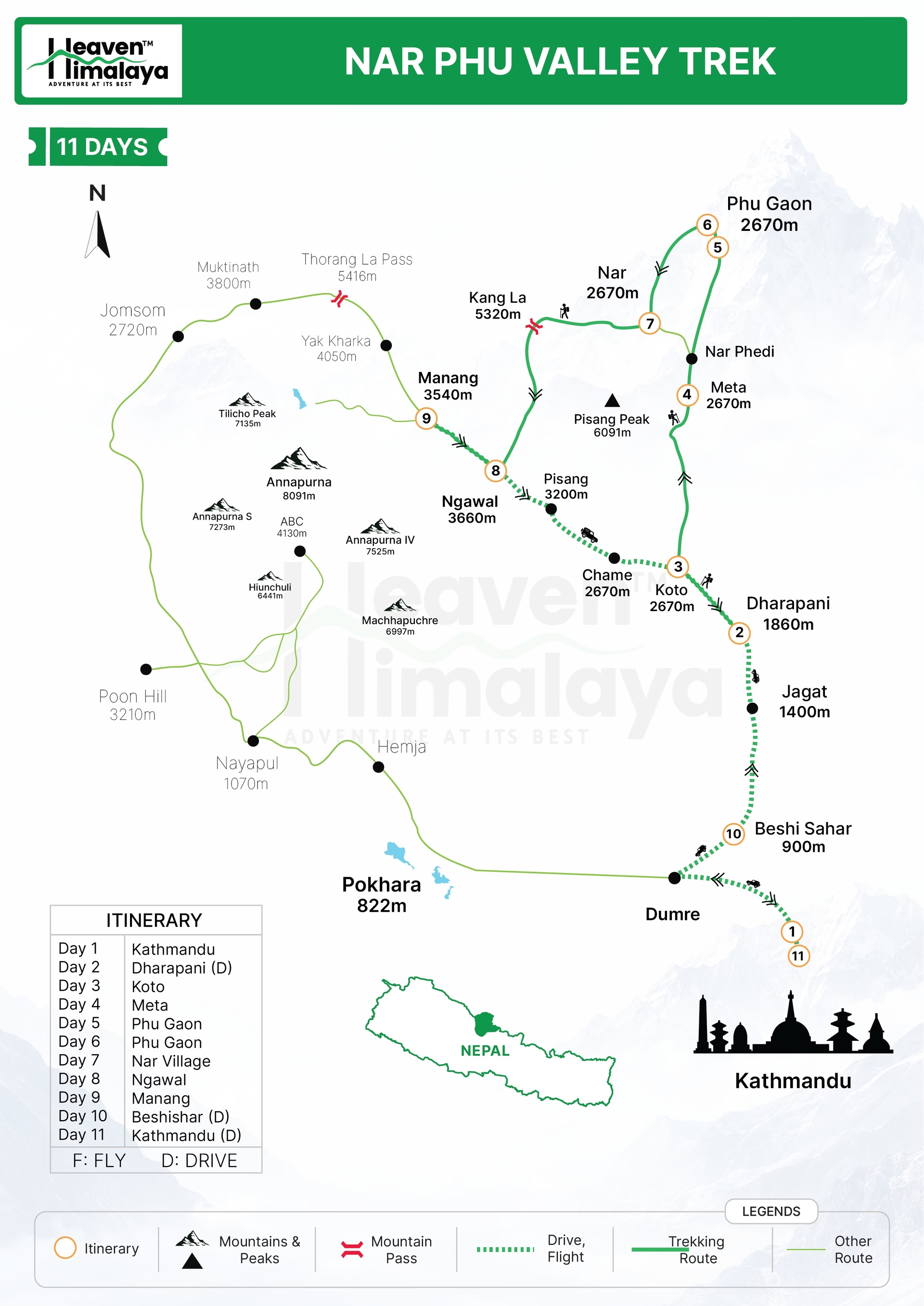
#Shorts
Traveller Reviews
.avif&w=1920&q=75)
Mark T Excellent solo Nar Phu Valley Trek with Heaven Himalaya
Just completed the Nar Phu Valley Trek as a solo traveler and couldn't be happier with how it was organized.From the start, communication was clear. A proper pre-trip gear check meant I knew exactly what I needed and what the guide would provide. They arranged a sleeping bag and trekking poles for hire, which saved me carrying my own.Accommodation throughout felt genuine and welcoming rather than touristy, a real Nepalese experience rather than a tourist-trail one. Transport to and from the trailhead was reliable and comfortable.What really stood out was my guide Hari's ability to read my pace. Early on I struggled a bit with the altitude, and he slowed things right down without making it a big deal. Once I'd acclimatized, we picked up the pace significantly. Hari was genuinely flexible day to day depending on how I was feeling, rather than sticking rigidly to a fixed itinerary.I also picked up a stomach bug partway through the trek. Hari talked through the options with me calmly and…
Trekking Permits for Nar Phu Valley Trek
Because the Nar Phu Valley lies close to the Tibetan border, it is treated differently from standard trekking routes in Nepal. The government strictly manages this area to preserve local culture and the environment.
The most important rule is that you cannot trek solo. You must go through a government-registered trekking agency, and they will take your passport to the Department of Immigration Nepal- trekking permits section to finalize the paperwork.
In addition, there is a strict Nar Phu Valley solo trekking rule implying you must have at least two people in your group or pay for a second "ghost" permit.
Restricted Area Permit (RAP)
To enter this region, your guide must arrange a Nar Phu Valley restricted area permit Nepal mandates for all foreign trekkers. At Koto and while entering the hamlets of Nar and Phu, there are checkpoints where related authorities check your permits. The restricted area permit cost depends on when you travel:
Autumn (September-November): $100 per person for the first week
Winter/Spring/Summer (December - August): $75 per person for the first week.
Extra Days: If you stay more than 7 days, it costs about $15 per extra day.
Annapurna Conservation Area Permit (ACAP)
Besides the special permit, you also need the standard ACAP for Nar Phu trek entry. The ACAP permit costs NPR 3,000 (approx. $25-35 USD). The validity is for the entire duration of your hike.
Documents You Need to Provide
Your trekking agency will ask you for these details to file the application:
Your original passport (with a valid visa)
2-3 passport-sized photos
A copy of your passport
Travel insurance details
You need to submit these documents at least one working day before leaving for the trek, or you can even send copies in advance. But the Department of Immigration requires a physical passport, so it's best to arrive on the day before the trek begins.
Nar Phu Valley Trek Permit Cost (2026)
Permit Type | Season / Condition | Cost (Approx.) (Per Person) |
Restricted Area Permit (RAP) |
|
|
ACAP permit | All Seasons | NPR 3,000(~$25 USD) |
Accommodation for Nar Phu Valley Trek
Unlike the popular Annapurna Circuit trail, the Nar Phu Valley trek accommodation is far more basic and rustic. However, you don't need to camp; this is a full "teahouse trek," but don't expect any luxury. In the lower settlements like Dharapani to Koto, you'll find comfortable lodges, sometimes even with attached bathrooms. However, once you cross the restricted area and climb higher to Nar and Phu, the facilities become very simple.
The Nar Phu Valley teahouses lodges are traditional stone buildings run by local families. The bedrooms are generally unheated, small, and contain two narrow beds, thin foam mattresses, a pillow, and a blanket. Because the insulation is basic, the rooms will get cold at night. It's always wise to carry a sleeping bag rated to -10°C or colder. The provided blankets are rarely enough for the high altitude.
In the entire teahouse, only the dining hall is warm, heated by a wood- or yak-dung stove. This is where trekkers hang out until bedtime. Not only this, you can charge phones or other devices in the dining hall, as power outlets are rare in the rooms. For charging devices, you need to pay a small fee of $3-5.
Lodges fill up quickly during high season particularly in tiny settlements. It is not uncommon to run out of private rooms. If this happens, you might have to sleep in the shared dining room with the host family. This isn't just a backup plan; it is a real look at how life rolls in these remote Himalayan areas. In addition, you cannot book these remote lodges on Booking.com; instead, your guide will help you find the best rooms in the villages.
The Nar Phu trek accommodation cost is very affordable, generally ranging from NPR 300 to 800 (approx. $3-$6 USD) per person, per night for a twin-sharing room. The lodging cost is low because the teahouse owner expects you to eat your meals (dinner and breakfast) at their place.
Nar Phu Valley trek toilet and shower facilities are strictly functional.
Toilets: Expect shared squat toilets (Asian style). In Nar and Phu, toilets are often simple outhouses located outside the main building. You must bring toilet paper and hand sanitizer.
Shower: Solar or gas showers might be available in lower elevations, but up high, a "hot shower" usually means a bucket of boiled water and a mug. This often costs a few dollars extra.
Hygiene: Above 4,000m, it is often too cold to shower and getting wet increases the risk of altitude sickness. Most trekkers rely on wet wipes and dry shampoo for the days spent in the high valley.
Food and Drinks on the Nar Phu Valley Trek
Because of its remoteness, the Nar Phu Valley offers very simple, hearty, fueled meals made of local ingredients. You'll not find extensive menus as you do in Kathmandu or Pokhara, but the teahouse owners prepare fresh meals that provide you with the energy needed for high-altitude trekking.
The Nar Phu Valley trek food menu is a mix of standard Nepali staples and unique Tibetan dishes that reflect the local culture.
Dal Bhat Power: As with all treks in Nepal, dal bhat (steamed rice, lentil soup, vegetable curry, and pickles) is the king of meals. It provides a balance of nutrition and, most importantly, comes with unlimited refills.
Local Tibetan Specialties: Trek to Nar Phu is a great chance to try dishes you rarely find on busier trails. Must-try Tibetan dishes include Thukpa (noodle soup), Syakpa (Sherpa stew), and Tsampa (roasted barley porridge). For breakfast, Tibetan Bread or buckwheat pancakes are delicious, gluten-free options that keep you full for hours.
Vegetarian is Best: Vegetarian food on the Nar Phu Valley trek is widely available and highly recommended. Meat is rare and often dried, so freshness can be an issue higher up.
The cost of meals ranges between NPR 500 to 1000. As you climb higher, prices increase because ingredients have to be carried up by mules or porters. The teahouse's kitchen has limited burners, so ordering early is advisable. As soon as you arrive, order your dinner, and before going to bed, order your breakfast. This ensures you'll not have to wait for food when you're hungry and tired. Food is good, but luxury snacks like Snickers or Pringles are costly and hard to find in the high valley. So, you can get these in Kathmandu or Besisahar.
To stay warm, teahouses serve plenty of hot drinks. Ginger lemon honey tea is a trekker favorite for soothing a sore throat. For a truly local experience, try Butter Tea (salt tea)- it's an acquired taste but provides essential fats and energy for the cold. Locals swear by garlic soup to help with acclimatization. Avoid alcohol at high altitudes; it dehydrates you and makes acclimatization much harder.
Drinking Water Strategy
Staying hydrated is your best defense against altitude sickness, but you must be aware of the water sources. You should never drink untreated tap or stream water. The risk of waterborne bacteria is high.
Boiled Water: This is the safest and most available option. Teahouses will boil water for you, usually for NPR 100-300 per liter. It's great for filling a hot water bottle to put in your sleeping bag at night.
Water Purification: To save money and reduce plastic waste, bring your own purification method. Chlorine/iodine tablets or a UV sterilizer (like a SteriPEN) allow you to treat tap water for free or cheap.
Bottled Water: You can buy mineral water in lower villages, but it is expensive (NPR 200-500) and leaves behind plastic trash that is hard to manage in this remote region. Please try to avoid this.
Electricity, Wi-Fi, and Phone Networks on the Nar Phu Valley Trek
In the Nar Phu Valley, electricity and the internet are luxuries, not guarantees. This is one of the most isolated regions in the Annapurna Conservation Area, so be ready for a digital detox.
Electricity in the Nar Phu Valley trek is limited and unreliable. Unlike the main Annapurna Circuit route, hydroelectricity is standard; the high settlements here rely almost entirely on solar power. Light is generally available only in the evenings or on sunny days. Since solar power in Nar Phu Valley lodges depends on the weather, a cloudy day means no charging for anyone. Thus, when considering how to charge devices on the Nar Phu trek, rely on your own power bank first and the teahouse solar charging second.
Teahouses charge a small fee to charge devices. Budget extra cash for the charging cost on the Nar Phu Valley trek. You might have to pay NPR 200-500 (approx. $2-$4 USD) per hour or per device to charge your phone or camera.
Because charging facilities on the Nar Phu Valley trek are scarce, bringing a high-capacity power bank (20,000mAh) is mandatory. If you have a portable solar charger, strap it to your backpack- it works great in this rain-shadow region. Also, batteries drain incredibly fast in freezing temperatures. So, it's good to keep your phone and batteries inside your sleeping bag at night to keep them warm and preserve the charge.
Wi-Fi on the Nar Phu trek is rare. A few teahouses might offer satellite-based Wi-Fi, but it is slow, expensive, and spotty. It is enough to send a quick WhatsApp message, but streaming video is impossible. Don't expect 4G; internet speeds are barely enough to load a text email. It's good to download all maps, music, and e-books before you leave Kathmandu. Once you pass Koto, you might not see a stable connection for days.
Your phone network will likely work at the start of the trek (around Dharapani or Koto) but will struggle as you enter the restricted valley. You can buy the NTC or NCELL SIM card in Kathmandu before the trek. It's hard to find registered SIM cards outside the big cities. Because the mobile signal on the Nar Phu trek is so weak, locals rely on face-to-face communication. In emergencies, your guide will use a satellite phone.
Training for the Nar Phu Valley Trek
Because this trek is rated as moderate to strenuous, "winging it" is not an option. The combination of high altitude, long daily hikes, and rugged terrain means your body needs to be ready.
Training for the Nar Phu Valley trek isn't just about gym muscle; it's about building the stamina to keep moving when the oxygen gets thin.
A common question most trekkers ask is, "How many months to train for Nar Phu?"
For Fit Individuals: 6-8 weeks is usually enough.
For Beginners: Start 8-12 weeks (3 months) before your trip. Rushing your training can lead to injury before you even get on the plane.
The three main pillars of Nar Phu trek physical training are:
Cardio: You need to prepare your lungs for thin air. Cardio training should include running, cycling, or swimming. Aim to get your heart rate up for 30-45 minutes, 3-4 times a week.
Strength: You'll be hiking on uneven, rocky paths. Strength exercises must target your legs and core. Focus on squats, lunges, and step-ups (mimicking step stone stairs). A strong core helps you balance and protect your back when carrying a daypack.
Endurance: Nothing beats the real thing. Weekend hikes are the best trekking training program for Nar Phu Valley. If you live near hills (like Shivapuri or Nagarjun in Kathmandu), use them! Gradually add weight to your backpack until you're comfortable carrying 5-8kg for 5-6 hours.
Likewise, the isolation of Nar Phu can be mentally draining. Yoga or meditation can help you build the patience needed for long days. Also, simply knowing you have done the physical work gives you the confidence to tackle the high mountain pass.
Altitude Sickness on the Nar Phu Valley Trek
Altitude sickness is the most significant risk on this trek. It happens when you travel to high elevations too quickly, and your body struggles to adapt to the lower oxygen levels.
On the Nar Phu route, you spend several nights above 4,000 meters (in Nar and Phu villages) and cross the Kang La Pass at nearly 5,320 meters. This is the maximum altitude of the Nar Phu trek, and the air here is significantly thinner than at sea level. If you rush, you'll likely get sick.
Most people experience mild AMS on the Nar Phu trekking (Acute Mountain Sickness), which feels like a bad hangover. However, if ignored, it can turn into life-threatening conditions like HAPE (fluid in the lungs) or HACE (fluid in the brain).
How to stay safe and prevent altitude sickness in Nar Phu is mostly about pace.
Go Slow: Never rush. The golden rule is "slow and steady".
Hydrate: Drink 3-4 liters of water daily. Dehydration mimics altitude sickness.
Acclimatization Days: You must take rest days in Meta or Phu to let your body adjust. Don't skip these.
Medication: Many trekkers carry Diamox for the Nar Phu trek. It helps speed up acclimatization, but you should consult your doctor before taking it.
After taking these preventive measures, if you have a headache or feel nauseous, stop immediately. Without panicking, follow these three things:
Rest: Don't go higher.
Hydrate: Drink water and take a mild painkiller.
Descend: If symptoms don't get better in 24 hours, or if they get worse, you must go down. Descending even 300 meters can save your life.
Here is a simple table to help you identify symptoms of altitude sickness on the Nar Phu trek and what to do about them.
Conditions | Common Symptoms | Action Required |
Mild AMS | Headache, loss of appetite, nausea,poor sleep. | Stop. Rest for a day. Drink water. Don’t ascent. |
HAPE (Lungs) | Breathlessness while resting, persistent cough, and frothy saliva. | Emergency. Descend immediately. Administer oxygen if available. |
HACE (Brain) | Severe headache, confusion, difficulty walking (Drunken Walk). | Emergency. Descend immediately. Heli-evacuation required. |
Travel Insurance for Nar Phu Valley Trek
You can't trek to Nar Phu without insurance. It is not only about safety; it is also a must for obtaining a Restricted Area Permit (RAP). Beyond the paperwork, the valley's isolation makes insurance a financial need.
The Nar Phu Valley is a restricted area with limited road conditions. If you suffer from altitude sickness (AMS), break a leg, or get stuck in a snowstorm, you can't just drive to a hospital. The only way out is a helicopter rescue, which can cost $5,000-$10,000+. Thus, operators require proof of valid insurance before they'll even turn the engine on. Without it, you're liable for the entire bill upfront.
For trekking to Nar Phu Valley, standard travel insurance is not enough. Most basic coverage stops at 3,000m or excludes adventure sports. You need a policy that explicitly:
High Altitude Trekking: It must cover hiking up to 6,000m, as Kang La Pass is over 5,300m.
Emergency Evacuation: This must specifically list "Helicopter Rescue" or "Air Ambulance".
Medical Expenses: For treatment in Kathmandu hospitals after evacuation.
Trip Interruption: If flights are cancelled or delayed due to bad weather.
While we can't endorse one brand, the best travel insurance for the Nar Phu trek is one that offers direct billing for helicopter rescues. So, based on our previous clients, here are a few reliable operators:
World Nomads: A popular choice for trekkers, it usually covers high altitudes.
Allianz Travel/IMG Global: Often have robust medical and evacuation limits.
ASC360: A specialized option used for adventure sports in the Himalayas.
Note: You should always check the policy yourself. Rules change, and "trekking" is often in a different category than standard travel. Some helicopter companies require a credit card authorization or a cash deposit to fly, even if you have insurance. So, it's good to have a credit card with a high limit ($5k).
Once you buy the right Nar Phu Valley trek travel insurance, print a hard copy, and save a digital version on your phone. We need the Policy Number and the 24-hour Emergency Contact Number to process your permits in Kathmandu.