

10 Benefits of Yoga While Trekking and Hiking | Simple Poses


Yoga while trekking and hiking is a practical way to improve balance, flexibility, leg and core strength, breathing control, and mental focus for long days on challenging trails. The 10 benefits of yoga while trekking and hiking include better stability on rocky terrain, improved hip and hamstring mobility, stronger uphill performance, controlled breathing at high altitude, reduced stress, less muscle tightness, better posture under a backpack, improved mobility between trekking days, sharper concentration, and greater body awareness.
Yoga poses such as Tree Pose, Warrior III, Chair Pose, and Low Lunge target the movements and muscles used during steep climbs, uneven descents, and consecutive days of walking.
For Himalayan trekking routes such as Everest Base Camp (5,364 m) and the Annapurna region, yoga can complement trekking preparation by helping hikers develop physical control, manage exertion, and relax after demanding walks.
This guide explores all 10 benefits of yoga for trekking and hiking, with practical yoga poses, pranayama breathing techniques, recommended practice routines, and scientific evidence explaining where the benefits are supported or remain uncertain. Learn how to incorporate yoga before departure and during multi-day treks while combining it with aerobic training, gradual acclimatisation, adequate recovery, and essential mountain safety practices.
1. Improves Balance on Uneven Trekking Trails
Yoga improves balance on uneven trekking trails by training single-leg stability, ankle control, and core engagement. A systematic review of 18 randomized trials found better static balance in healthy adults after yoga. While rigid trekking boots immobilize the ankle, yoga strengthens the critical hip, glute, and core muscles required to keep your center of gravity steady on rock, root, and stone step.
Which Yoga Poses Help Improve Balance on Rocky Trails?
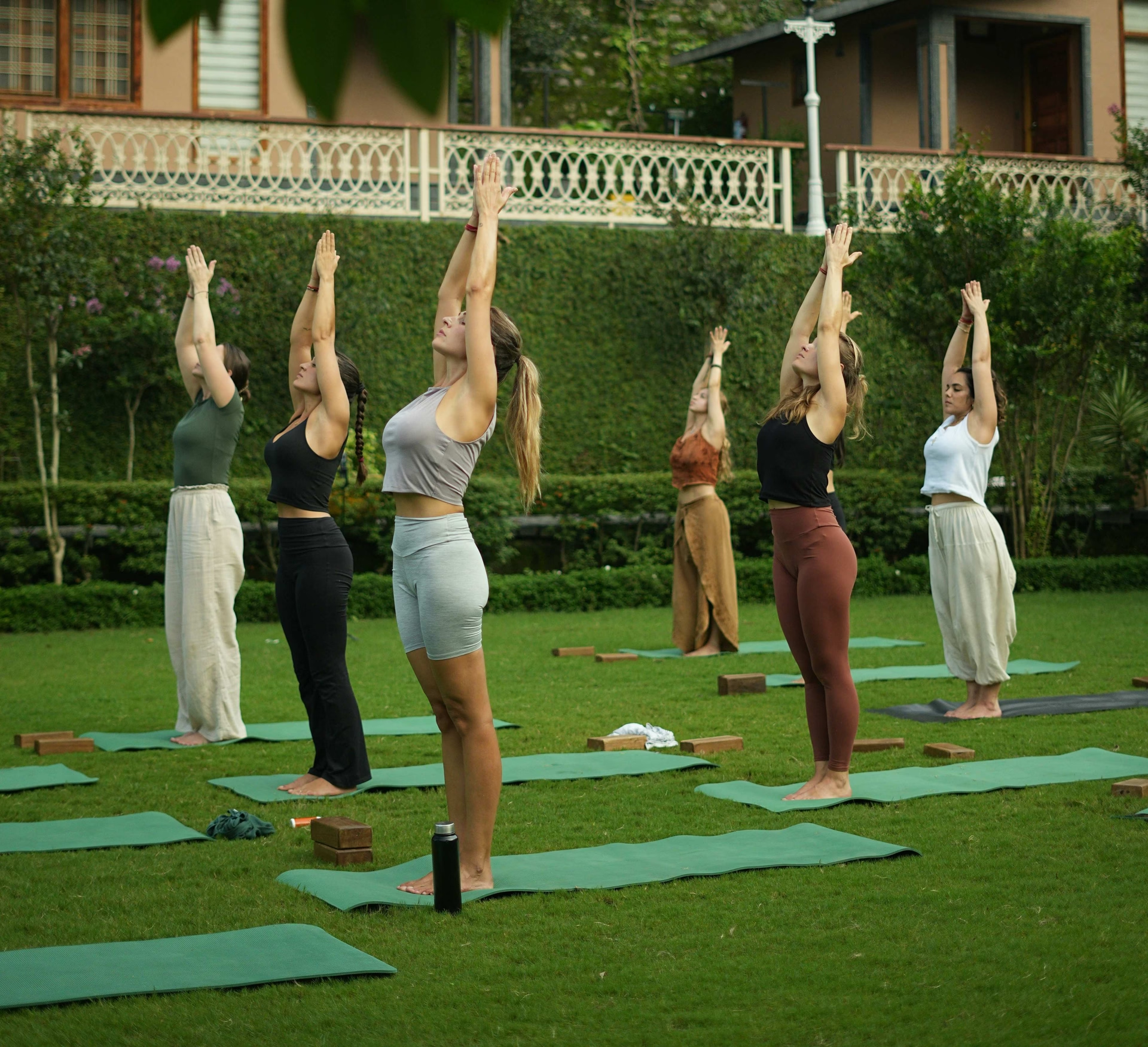
Five poses build trail balance: Tree Pose (Vrikshasana), Eagle Pose (Garudasana), Warrior III (Virabhadrasana III), Chair Pose (Utkatasana), and Half Moon Pose (Ardha Chandrasana). Each pose loads one leg while the rest of the body moves around it, which copies the rhythm of stepping from boulder to boulder. Warrior III trains hamstrings, glutes, and core together, the three areas that control a descent. Hold each pose for 30 to 45 seconds per side. Practise next to a wall for the first week, then step away once you hold 30 seconds without touching it.
How Does Tree Pose Improve Stability During Hiking?
Tree Pose improves stability by forcing the standing ankle, knee, and hip to make constant micro-corrections. Those corrections train the hip and core stabilisers, particularly the gluteus medius, which control the alignment of the leg and prevent your center of gravity from shifting when a boot lands on a loose stone. Place the lifted foot on the calf or inner thigh, never on the knee joint. Fix your gaze on one still point 2 metres ahead. Close your eyes only after 30 steady seconds, because removing vision is the hardest balance test and matches the dim, tired balance of an evening descent.
How Can Yoga Help Prevent Slips and Falls on Trekking Trails?
Yoga helps prevent slips and falls by improving balance and by building the reflex strength that recovers a misstep. Yoga may sharpen your footing on rocky descents: a 2021 meta-analysis of 12 trials found a moderate balance gain (effect size 0.64) in older adults, though the authors flag possible publication bias. Treat yoga as one layer of protection beside trekking poles, grippy boots, and a slow pace. In our experience, most slips happen on afternoon descents, when fatigue blunts foot placement.
How Can Trekkers Practice Balance Exercises Before a Trek?
Trekkers practise balance by training 10 minutes a day for 6 weeks, raising difficulty every two weeks. The progression runs in three stages:
Weeks 1 and 2: Hold Tree Pose beside a wall, 3 rounds per leg.
Weeks 3 and 4: Move to Eagle Pose and Warrior III without support.
Weeks 5 and 6: Stand on one leg on a folded mat while wearing a 3 to 5 kg backpack.
Add single-leg stands while brushing your teeth. Two minutes each morning adds 14 minutes of practice every week at no extra cost.
2. Increases Flexibility for Long Hiking Days
Yoga increases flexibility for long hiking days by lengthening the hamstrings, hip flexors, calves, and glutes through slow, breath-led holds. A 2021 meta-analysis reported a moderate gain in lower-body flexibility (effect size 0.49) against inactive controls, which supports the long stride that steep stone steps demand.
Which Yoga Stretches Improve Flexibility Before a Hike?
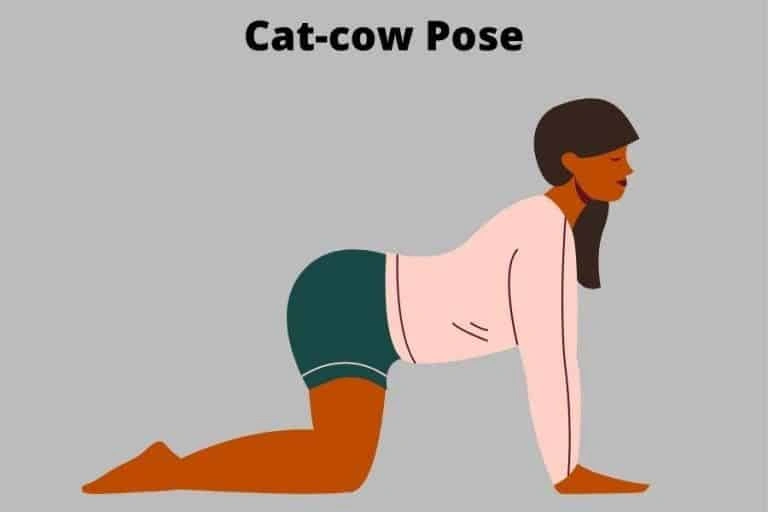
Dynamic yoga flows improve flexibility before a hike: Cat-Cow, Low Lunge (Anjaneyasana) with a gentle sway, Downward-Facing Dog with alternating knee bends, and 3 rounds of Sun Salutation A. Keep the whole warm-up to 8 minutes. Save static holds of 30 seconds or more for the end of the day, because sports physiology reviews report a short dip in muscle force straight after long static stretches. Your legs need full power for the first climb out of camp.
How Does Yoga Improve Hip and Hamstring Mobility?
Yoga improves hip and hamstring mobility through repeated lengthening under gentle load, which gradually widens the range your nervous system allows. Three poses do most of the work: Pigeon Pose (Eka Pada Rajakapotasana) for the hip rotators, Low Lunge for the hip flexors, and Reclined Hand-to-Big-Toe Pose (Supta Padangusthasana) with a strap for the hamstrings. A stiff hip shortens every step on the stone staircases of the Khumbu, and the lower back and knees absorb the difference. Daily 10-minute practice usually shows visible change within 4 to 6 weeks.
Can Yoga Reduce Stiffness During Multi-Day Treks?
Yes. Yoga reduces stiffness during multi-day treks when you practise 10 to 15 minutes in the morning and again in the evening. The morning flow restores movement to legs and back after a night in a cold teahouse room at 3,500 m. The evening flow releases hips and calves after 5 to 7 hours of walking. Keep both sessions gentle above 3,000 m, because your heart rate climbs faster at altitude and hard effort in camp steals energy from tomorrow's trail.
When Should Trekkers Practice Yoga for Better Flexibility?
Trekkers gain the most flexibility by spreading practice across four moments:
Before the trek: Train 4 sessions a week for 6 to 8 weeks.
On trail mornings: Flow for 8 minutes before breakfast.
At the teahouse: Stretch for 10 minutes before dinner, once the body is warm.
On rest days: Practise a longer 30-minute session at acclimatisation stops such as Namche Bazaar.
This schedule matches stretching to the moment each type works best.
3. Builds Strength for Trekking Uphill
Yoga builds strength for trekking uphill by loading the quadriceps, glutes, calves, and core through long isometric holds. Plan on a 9–12 week build-up before your trek: a 2021 meta-analysis linked yoga to better lower-body flexibility (0.49) and leg strength (0.55), with the biggest gains in programs of that length. Yoga complements stair climbing and loaded walking but does not replace them.
Which Yoga Poses Strengthen the Legs for Uphill Hiking?
Five poses strengthen the legs for uphill hiking: Chair Pose (Utkatasana), Warrior II (Virabhadrasana II), Crescent Lunge, Bridge Pose (Setu Bandhasana), and Goddess Pose (Utkata Konasana). Chair Pose loads the quadriceps in the same bent-knee position as a high stone step. Bridge Pose fires the glutes, the main engine of any climb. Hold each pose for 5 breaths and repeat 3 rounds. Add one breath per week until you reach 10 breaths.
How Does Yoga Improve Core Strength for Mountain Treks?
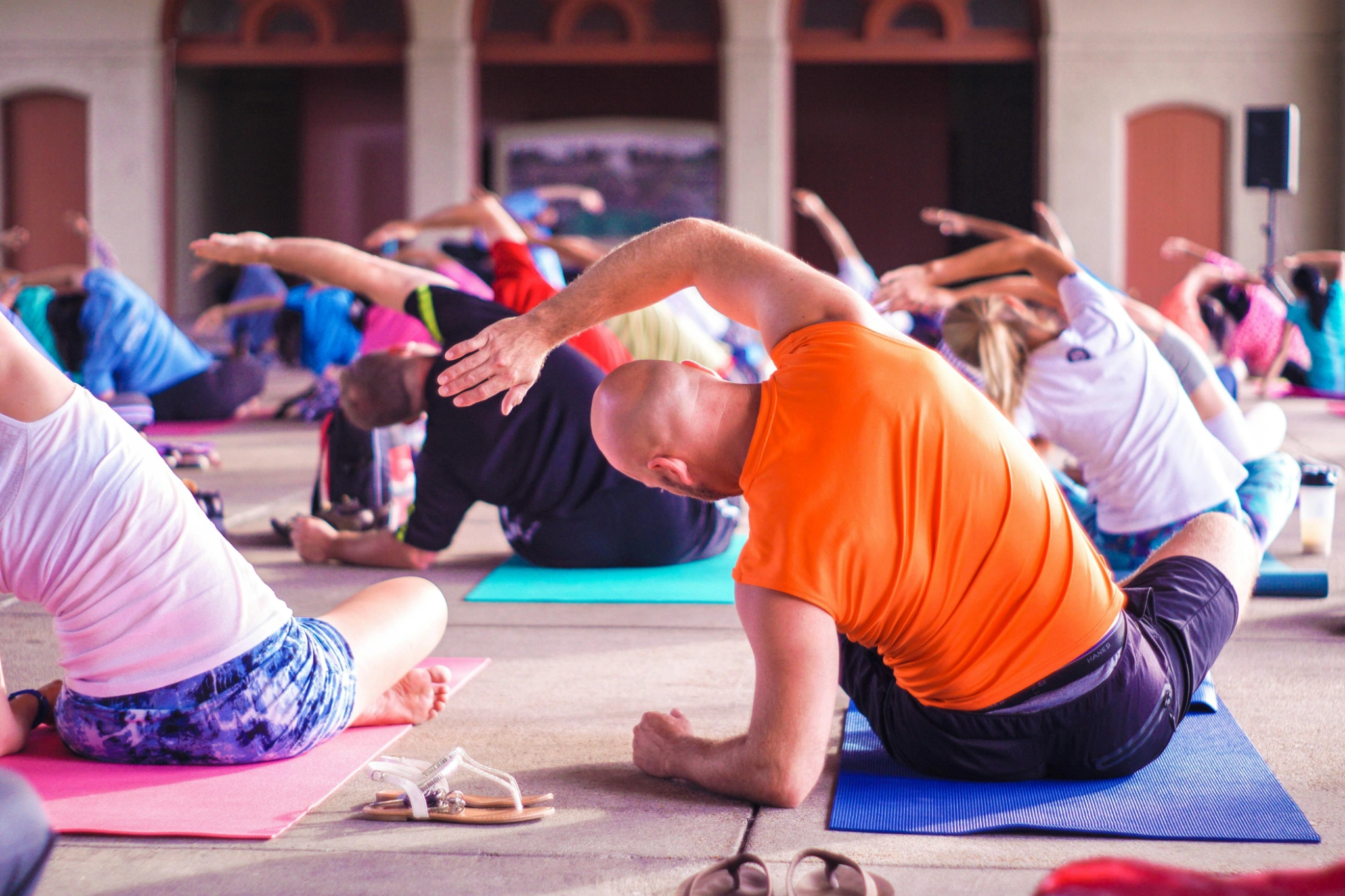
Yoga improves core strength by training the deep stabilisers, including the transversus abdominis, multifidus, and obliques, that hold the trunk steady under a pack. Plank, Side Plank (Vasisthasana), and Boat Pose (Navasana) cover all three. A strong core sends force from the leg into the ground instead of leaking it through a swaying torso. Start with 20 to 30 second holds and build to 60 seconds. Breathe steadily throughout, since breath-holding turns core work into a strain.
Can Yoga Help Trekkers Climb Steep Trails More Efficiently?
Yoga helps trekkers climb steep trails more efficiently through better hip mobility, trunk stability, and breath-paced movement. Yoga lacks the aerobic load of uphill walking, so it works as one part of a three-part plan: 3 to 4 aerobic sessions a week (hiking, stair climbing, or cycling for 45 to 60 minutes), leg strength work, and yoga. Match the plan to your route.
How Often Should Hikers Practice Yoga Before a Trek?
Hikers practise yoga 3 to 4 times a week for 6 to 8 weeks before a trek. The table below shows a progression by week, including session count, session length, and focus area.
Weeks | Sessions per week | Session length | Focus |
1 to 2 | 3 | 25 minutes | Balance and hip mobility |
3 to 4 | 3 to 4 | 35 minutes | Leg strength holds and core |
5 to 6 | 4 | 40 minutes | Strength and balance with a loaded pack |
7 to 8 | 3 | 30 minutes | Breathing practice and recovery flows |
Taper in the final two weeks. Fresh legs beat extra practice on departure day.
4. Helps Control Breathing During High-Altitude Treks
Yoga helps control breathing during high-altitude treks through pranayama, the practice of regulated breath. In a randomized crossover study at 3,650 m, slow yogic breathing at about 7 breaths per minute raised blood oxygen saturation by roughly 2 percentage points. It supports acclimatisation but never replaces a slow ascent.
How Does Pranayama Support Breathing Control While Hiking?
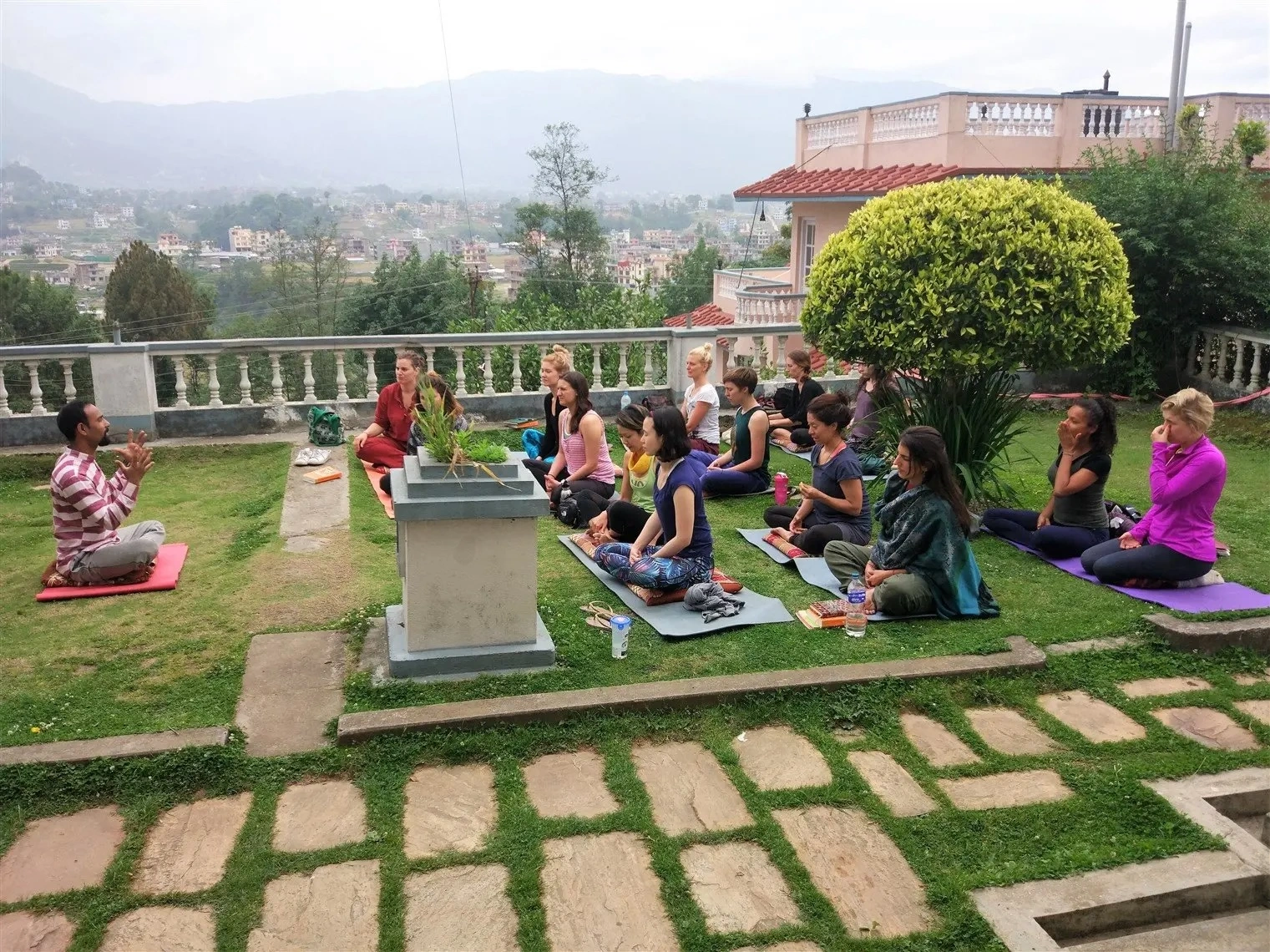
Pranayama supports breathing control by training slow, deep, diaphragm-led breaths. The word joins the Sanskrit prana (vital breath) and ayama (extension). Altitude illness is common: the CDC Yellow Book reports about 25% of visitors sleeping above 2,450 m in Colorado are affected, and rates can approach 30% on standard Everest base camp schedules.
Which Breathing Techniques Help During Uphill Climbs?
Three techniques help on climbs: Dirga (three-part breath), step-breathing, and Nadi Shodhana (alternate-nostril breathing) at rest stops. Step-breathing links breath to footfall: inhale for 3 steps, exhale for 3 or 4, and lengthen the exhale as the slope steepens. Exhale through slightly pursed lips. Skip forceful methods such as Kapalabhati and Bhastrika on the trail. Rapid breathing blows off carbon dioxide and brings on lightheadedness, the last thing you want on a narrow ledge.
Can Yoga Breathing Exercises Help Trekkers Manage Physical Exertion?
Yes. Yoga breathing exercises help trekkers manage physical exertion by keeping effort aerobic and pace steady. Use the talk test: you speak in full sentences at the right pace. A study of 22 defence personnel deployed at high altitude found significant gains in oxygen saturation and breath-holding time after 20 days of 50-minute yoga sessions. The study had no control group, so read it as supportive evidence rather than proof. The pattern still matches what we see: trekkers who practise slow breathing before departure settle into a sustainable rhythm sooner.
How Should Trekkers Adapt Breathing Practices at High Altitudes?
Trekkers adapt breathing practices at high altitudes by keeping them slow, smooth, and gentle. Stay near the 5 to 7 breaths per minute used in the studies, and skip long breath holds. A 2016 trial of 60 novice trekkers ascending to high altitude in the Annapurna region concluded that yoga and pranayama are safe, but it found no significant gain in oxygen saturation. Breathing practice does not prevent altitude illness. According to 2024 Wilderness Medical Society guidelines, raise your sleeping altitude by no more than 500 m per day above 3,000 m and add a rest day every 3 to 4 days.
5. Reduces Stress During Trekking and Hiking
Yoga reduces stress during trekking and hiking by activating slow breathing, quieting mental chatter, and giving nervous trekkers a repeatable routine. A 2018 meta-analysis of 8 trials with 319 participants found a small short-term anxiety reduction (SMD -0.43) compared with no treatment.
How Does Mindful Breathing Help Reduce Trekking Stress?
Mindful breathing reduces trekking stress by slowing the exhale, which signals the body to leave its alarm state. Trekking stress has predictable triggers: exposed trail sections, swaying suspension bridges, altitude symptoms, group pace pressure, and broken sleep. Use a 4-6 count for two minutes: inhale for 4 seconds, exhale for 6. Rest one hand on the belly and track its rise and fall. Repeat before a bridge crossing or at the start of a hard climb.
Which Yoga Practices Promote Relaxation on Mountain Trails?
Four practices promote relaxation on mountain trails: Child's Pose (Balasana), Legs-Up-the-Wall (Viparita Karani), Yoga Nidra, and Bhramari (humming bee breath). Yoga Nidra is a guided body-scan lying down, and 10 to 15 minutes in a sleeping bag rests the nervous system before bed. Bhramari takes 5 rounds: inhale, then hum on a slow exhale with the lips closed. The humming vibration gives the mind a single sound to follow, which quiets worry loops in minutes.
Can Yoga Help Manage Anxiety During Challenging Treks?
Yoga helps manage everyday anxiety during challenging treks, such as nerves before Thorong La (5,416 m). The 2018 meta-analysis also found no effect in people with clinically diagnosed anxiety disorders, and 3 trials that reported safety data showed no rise in injuries. Persistent or severe anxiety calls for a health professional before departure, not a yoga mat. For ordinary pre-pass nerves, stand in Mountain Pose (Tadasana), soften your gaze, and take 6 slow breaths while feeling both feet on the ground.
How Can Trekkers Incorporate Mindfulness Into Daily Hiking?
Trekkers incorporate mindfulness into daily hiking by anchoring it to fixed trail moments. Set a one-minute intention at breakfast. Walk the first hour without conversation or music. Take 3 slow breaths at every rest stop, and end the day with 5 minutes of quiet reflection.
6. Relieves Muscle Tightness After Long Walks
Yoga relieves muscle tightness after long walks by lengthening the calves, hamstrings, hip flexors, and lower back while the muscles are warm. Relief arrives as easier movement and calmer muscles within 10 to 15 minutes. Randomized trials show that stretching does not remove next-day soreness, so pair it with food, fluids, and sleep.
Which Yoga Poses Stretch Tight Calves and Hamstrings?
Downward-Facing Dog, Standing Forward Fold (Uttanasana), and Seated Forward Fold (Paschimottanasana) stretch tight calves and hamstrings. In Downward Dog, pedal the heels one at a time to find the calf. In Forward Fold, bend the knees slightly and let the head hang. Hold each pose for 30 to 60 seconds and complete 2 rounds. Use a trekking pole, a teahouse wall, or a strap made from a spare scarf as props when flexibility runs short.
How Can Yoga Relieve Hip and Lower Back Tightness?
Yoga relieves hip and lower back tightness by releasing the hip flexors and rotators that tilt the pelvis and load the lumbar spine. Pigeon Pose, Figure-Four (a reclined cross-legged hip stretch), Supine Twist, and Cat-Cow cover the key areas. A pack adds to the problem: its weight pulls the pelvis forward on climbs and the lower back absorbs the strain. Spend 60 seconds per side on hips first, then finish with Child's Pose to settle the spine.
What Post-Hike Stretches Help Relax Tired Leg Muscles?
Four post-hike stretches relax tired leg muscles: Low Lunge with the back foot caught for a quadriceps stretch, Legs-Up-the-Wall, Reclined Bound Angle Pose (Supta Baddha Konasana), and ankle circles with toe spreads. Remove your boots and put on a warm layer first, since stretching cold muscles feels sharp and unproductive. Set expectations honestly. A Cochrane review of 12 randomized trials found that pre-exercise stretching reduced soreness by 0.5 points on a 100-point scale and post-exercise stretching by 1 point. These stretches relax; they do not repair.
How Long Should Trekkers Stretch After a Long Hiking Day?
Trekkers stretch for 10 to 20 minutes after a long hiking day. Choose 4 to 6 stretches, hold each for 30 seconds per side, and stop at mild tension, never sharp pain. A 2021 meta-analysis of 11 randomized trials (229 participants) found no benefit of post-exercise stretching for strength recovery or soreness, so extra minutes add nothing measurable. Spend the saved time on dinner and sleep, which drive real repair after 6 or 7 hours on the trail.
7. Improves Posture While Carrying a Backpack
Yoga improves posture while carrying a backpack by strengthening the spinal extensors, core, and upper back and by opening tight chest and shoulder muscles. A strong, mobile trunk keeps the load stacked over the hips instead of dragging the shoulders forward.
How Does Yoga Strengthen the Back and Core for Backpacking?
Yoga strengthens the back and core through Locust Pose (Salabhasana), Bridge Pose, Bird-Dog, and Plank. These poses train the spinal extensors that resist the forward pull of a pack. Teahouse trekkers carry day packs of roughly 5 to 8 kg, while camping trekkers carry 12 to 18 kg, and the heavier load punishes weak back muscles fast. Perform 3 sets of 5 breaths for each pose, 3 times a week. Move slowly and keep the neck long.
Which Yoga Poses Help Improve Shoulder Mobility?
Four poses improve shoulder mobility: Cow Face arms (Gomukhasana arms), Eagle arms, Thread the Needle, and Puppy Pose (Uttana Shishosana). Pack straps compress the front of the shoulders, and tight chest muscles pull the shoulders into a rounded position that restricts breathing. Hold each pose for 30 seconds per side. Practise Thread the Needle at the end of every trekking day to restore the upper back, where pack weight settles and tension builds.
Can Yoga Help Trekkers Maintain Better Posture on Steep Trails?
Yes. Yoga helps trekkers maintain better posture on steep trails by teaching Mountain Pose (Tadasana) alignment under load: ribs stacked over the pelvis, chin level, and gaze 3 to 5 metres ahead rather than at your boots. On climbs, lean from the ankles with a straight spine. On descents, soften the knees and shorten the stride. Run a 1-minute posture check at every rest stop: drop the shoulders, lengthen the neck, and breathe low into the belly.
How Can Hikers Combine Yoga With Proper Backpack Fitting?
Hikers combine yoga with proper backpack fitting by fitting the pack first and testing posture second. Measure torso length from the C7 vertebra at the base of the neck to the iliac crest (the top shelf of your hip bones), and buy the pack by torso length, not height. According to fitting guidance from major outdoor retailers, a well-fitted hip belt carries about 80% of the load. Tighten the hip belt first, then the shoulder straps, then the load lifters at roughly 45 degrees. Finish with 5 breaths in Mountain Pose while wearing the loaded pack. A neutral spine confirms the fit.
8. Supports Muscle Recovery After a Long Hike
Yoga supports muscle recovery after a long hike by promoting relaxation and keeping joints moving between hard days. Restorative poses and slow flows ease the feeling of heavy legs, but they do not rebuild muscle tissue faster. Food, fluids, and sleep carry the actual repair.
Which Gentle Yoga Poses Support Post-Hike Recovery?
Five gentle poses support post-hike recovery: Legs-Up-the-Wall, Reclined Bound Angle Pose, Child's Pose, Supine Twist, and Happy Baby (Ananda Balasana). Spend 2 to 5 minutes in each pose and breathe slowly. Legs-Up-the-Wall works well at a teahouse because any wall will do, and it leaves the legs feeling lighter within minutes. Keep effort at 2 out of 10. Recovery poses feel like lying down, not exercising.
How Does Restorative Yoga Help Relax Tired Muscles?
Restorative yoga relaxes tired muscles by supporting the body with props so muscles release without effort. Rolled jackets, a stuffed sleeping bag, and a teahouse pillow replace bolsters and blocks. Holds last 3 to 5 minutes, long enough for breathing to slow and the nervous system to settle. Sleep often suffers above 3,000 m because of broken breathing patterns, so any practice that deepens relaxation before bed has real value. No trial has measured restorative yoga on trekkers directly, so treat this benefit as practical, not proven.
Can Yoga Improve Mobility Between Consecutive Trekking Days?
Yes. Yoga improves mobility between consecutive trekking days by restoring joint range lost through repeated walking. On a 12-day route such as Everest Base Camp (5,364 m), range at the hips and calves tightens steadily from day to day. A 15-minute evening sequence and an 8-minute morning flow reset that range. According to a meta-analysis of 15 trials by Ko and colleagues, yoga improved flexibility (SMD 0.38) and muscle strength (SMD 0.49) in older adults, which supports the pattern in healthy walkers.
When Should Trekkers Avoid Stretching Sore or Injured Muscles?
Trekkers avoid stretching in four situations: sharp or stabbing pain, a suspected strain with a pop, bruising, or swelling, joint instability after a twist, and a single calf that is painful, warm, red, or swollen. The last pattern can signal a deep vein clot after long-haul flights and requires urgent medical review. Dull, achy soreness across both legs is normal, and gentle movement is safe. Do not stretch deeply into it. Headache, nausea, or dizziness point to altitude illness, so rest and tell your guide at once.
9. Improves Focus and Mental Clarity on the Trail
Yoga improves focus and mental clarity on the trail by training sustained attention through meditation, gaze control, and mindful walking. Sharper attention matters where one misplaced step costs more than lost time. A 2016 study of 60 novice trekkers ascending to high altitude in the Annapurna region reported a smaller drop in cognition scores in the yoga group.
How Does Meditation Help Trekkers Stay Focused?
Meditation helps trekkers stay focused by training the habit of noticing when attention drifts and returning it to one anchor. Sit for 5 to 10 minutes each morning and follow the breath at the nostrils. When the mind wanders to the camera, the phone, or a blister, label it "thinking" and return. On the trail, the anchor becomes foot placement. The skill is identical: notice the drift, then return without drama.
Which Yoga Techniques Improve Concentration During Long Hikes?
Three yoga techniques improve concentration during long hikes: drishti, trataka, and breath counting. Drishti is a fixed gaze point that steadies balance poses and the mind with it. Trataka is steady gazing at a single object, such as a flame or a stone, for 1 to 3 minutes without blinking more than necessary. Breath counting runs from 1 to 10 and restarts after any lapse. Use breath counting on long, monotonous stretches like the valley walk to Phakding.
Can Mindful Walking Help Trekkers Notice Trail Hazards?
Yes. Mindful walking helps trekkers notice trail hazards by directing attention to each step: heel, ball, toes. Scan the ground 2 to 3 metres ahead every few seconds, then glance at mid-distance, and look at scenery only when you stop. The old trail rule holds: stop to look, walk to watch your feet. Stay alert on the Himalayan trails for yak and mule trains. Step to the uphill side of the path and wait until the animals pass.
How Can Trekkers Practice Mental Awareness in the Himalayas?
Trekkers practise mental awareness in the Himalayas by using the landscape as an anchor. Prayer flags, mani walls, and chortens offer natural pauses; pass them clockwise, keeping them on your right, in line with Buddhist custom. At viewpoints, run a quick five-sense check: one thing you see, hear, feel, smell, and taste. The sound of yak bells and glacial rivers makes a reliable focus object. Morning light at Tengboche (3,867 m) rewards 10 silent minutes before breakfast.
10. Increases Body Awareness on Rocky and Steep Paths
Yoga increases body awareness on rocky and steep paths by training proprioception, the sense of joint and limb position. Better proprioception sharpens foot placement, coordination, and fatigue detection, which together lower the odds of a misstep late in the day.
How Does Yoga Improve Coordination on Uneven Terrain?
Yoga improves coordination on uneven terrain by linking breath and movement across asymmetrical, shifting positions. Warrior flows teach weight transfer from one leg to the other, the same skill used when stepping across a stream on stones. The National University of Singapore review of 18 trials reported a large static balance gain (SMD 2.36), but graded the certainty of evidence as low and the results as highly inconsistent (I2 93%). Expect real benefit, and expect it to be smaller than that headline number.
Which Yoga Poses Develop Proprioception and Body Awareness?
Four practices develop proprioception: eyes-closed Mountain Pose, eyes-closed Tree Pose, slow Sun Salutations with 5-second transitions, and barefoot walking meditation indoors. In Mountain Pose, close your eyes and feel the four corners of each foot: big toe mound, little toe mound, and both sides of the heel. Notice the tiny sway. Train this for 1 minute daily. Trekkers who learn to feel the ground through boot soles place their feet with more accuracy on loose scree.
How Can Yoga Help Trekkers Recognize Fatigue and Physical Limits?
Yoga helps trekkers recognize fatigue and physical limits by building the habit of reading the body at regular intervals. Warning signs include a shortening stride, dragging feet, stumbling, irritability, and sudden silence. Rate effort on a 1 to 10 scale and stay at 4 to 6, where full sentences remain easy. Do a 60-second head-to-toe body scan at lunch. Know the difference from altitude illness: headache with nausea, dizziness, or loss of coordination is not tiredness. Test coordination by walking heel to toe along a straight line. Failure means telling your guide and stopping the ascent.
How Can Better Body Awareness Support Safer Mountain Hiking?
Better body awareness supports safer mountain hiking by catching small problems before they become trail-ending ones. A hot spot on the heel becomes a blister in 2 hours, a knee ache on descents signals overload, and numb fingers point to over-tight pack straps. Trekkers with strong body awareness fix these early, report symptoms honestly, and make clear turn-back decisions. That honesty with yourself and your guide is the real safety gain of every other benefit in this guide.
How Can Yoga Prepare Trekkers for Himalayan Adventures With Heaven Himalaya?
Yoga prepares trekkers for Himalayan adventures in 3 steps: train 6 to 8 weeks before departure, choose an itinerary with acclimatisation days, and practise a short daily routine on the trail. Balance, leg strength, and breathing drills built at home carry directly to Himalayan stone steps, suspension bridges, and thin air above 3,500 m.
Heaven Himalaya is a trekking agency in Nepal, and we build treks around how your body adapts, not around a rushed schedule. Choose the route that fits your fitness first, then add your yoga routine to the plan.
Next step: Compare routes, altitudes, and daily walking hours in our guide to the Best Treks in Nepal.
Can Heaven Himalaya Help Trekkers Prepare for Yoga-Friendly Himalayan Treks?
Yes. Heaven Himalaya helps trekkers prepare for yoga-friendly Himalayan treks by planning realistic daily distances, acclimatisation days, and start times that leave room for a morning and evening practice. Our local guides know the rhythm of each trail, including where the ascent gets steep, where teahouses are quiet, and where a rest day pays off most.
Tell us about your routine when you enquire. We plan walking hours, rest days, and teahouse stops around it, and we match the route to your fitness and experience.
Plan your trek: Contact the team at Heaven Himalaya for a route and itinerary built around your pace.
What Are the Key Benefits of Yoga While Trekking and Hiking?
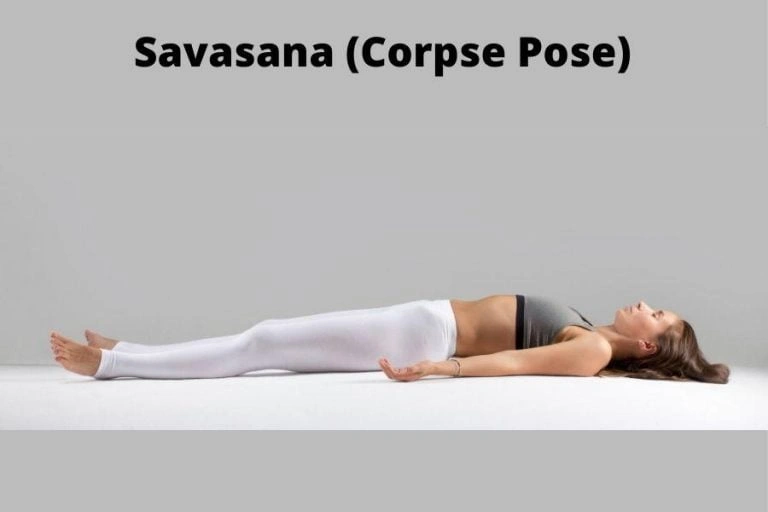
The 10 key benefits of yoga while trekking and hiking are better balance, greater flexibility, stronger uphill legs, controlled breathing, lower stress, less tightness, stable posture under a pack, easier recovery, sharper focus, and finer body awareness. The list below pairs each benefit with its best-supported tool.
Improves balance with Tree Pose and Warrior III.
Increases flexibility with Low Lunge and Pigeon Pose.
Builds uphill strength with Chair Pose and Bridge Pose.
Helps control breathing with slow pranayama at 5 to 7 breaths per minute.
Reduces stress with 4-6 breathing and Yoga Nidra.
Relieves tightness with calf, hamstring, and hip stretches.
Improves posture with Locust Pose and Thread the Needle.
Supports recovery with Legs-Up-the-Wall and restorative holds.
Improves focus with drishti and mindful walking.
Increases body awareness with eyes-closed balance practice.
Evidence strength varies. Balance, flexibility, and strength carry the firmest support, though most trials involve older adults. Breathing and anxiety benefits are encouraging but modest. Recovery benefits are practical: stretching does not cut soreness, yet it eases tension and sleep. Yoga while trekking and hiking works best beside a gradual ascent, a strong aerobic base, and honest communication with your guide.
Consult a doctor before starting a new routine if you have heart, lung, joint, or blood pressure conditions, and before any trek above 3,000 m.