
25 Things to Do in Nepal | Must Do Activities for Tourists
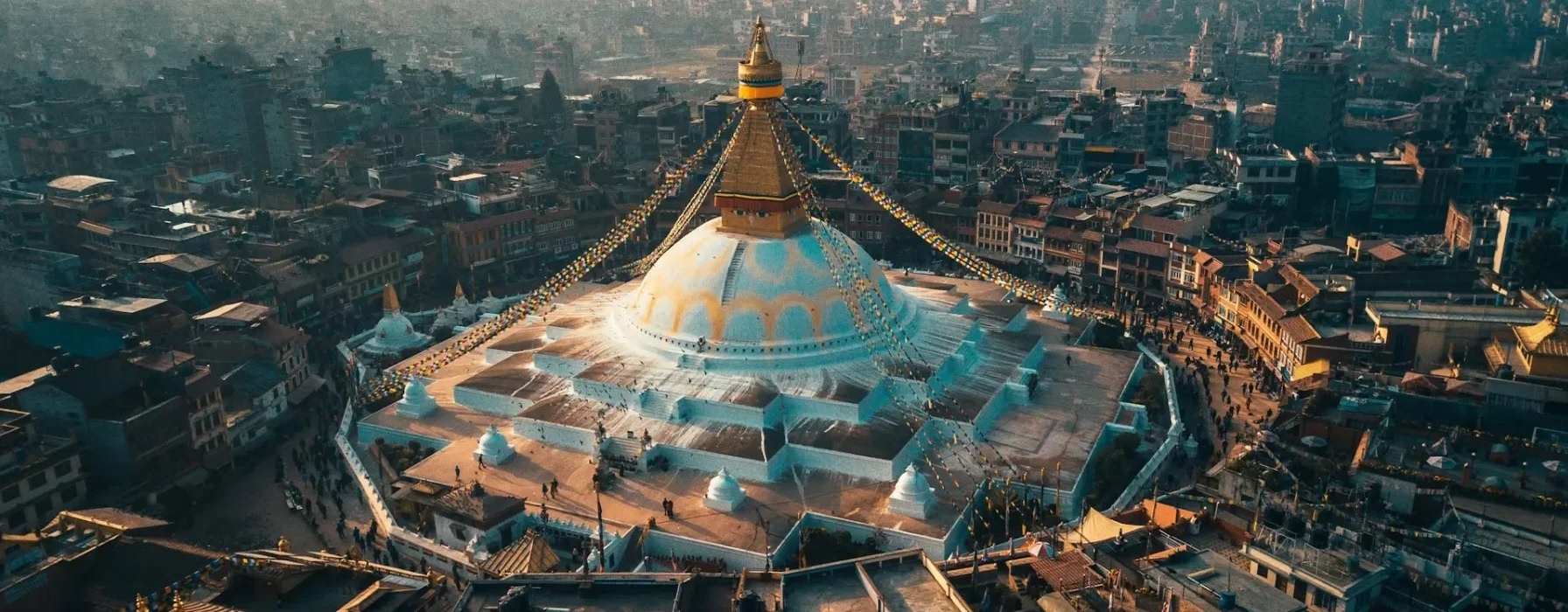
Nepal is a Himalayan destination where ancient cultural heritage, dramatic mountain landscapes, diverse wildlife, and outdoor adventure meet. The best things to do in Nepal range from exploring Kathmandu's UNESCO World Heritage Sites and Bhaktapur's Newari architecture to trekking the Everest Base Camp and Annapurna trails, paragliding over Pokhara, and spotting one-horned rhinoceroses in Chitwan National Park.
Travelers can also discover Buddhist monasteries, visit Lumbini, the birthplace of Gautama Buddha, experience traditional festivals, hike forested hills, explore remote villages, and taste authentic Nepali cuisine. From high-altitude Himalayan viewpoints to the subtropical Terai plains, Nepal offers experiences for adventure seekers, culture enthusiasts, wildlife lovers, and travelers looking for meaningful local encounters.
This guide to the 25 best things to do in Nepal in 2026 explores the country's most rewarding attractions and activities, with practical information on costs, entrance fees, travel seasons, journey times, difficulty levels, and the advantages and limitations of each experience.
Compare trekking routes, wildlife safaris, river rafting, scenic mountain flights, cultural landmarks, and lesser-known escapes to find the experiences that match your interests, fitness, available time, and budget. Whether you are planning a 7-day introduction, a 14-day adventure, or a 21-day journey across Nepal, discover how to combine historic cities, Himalayan scenery, spiritual heritage, and authentic Nepali experiences into a well-balanced itinerary.
1. Explore Kathmandu's Historic Sites and Cultural Attractions
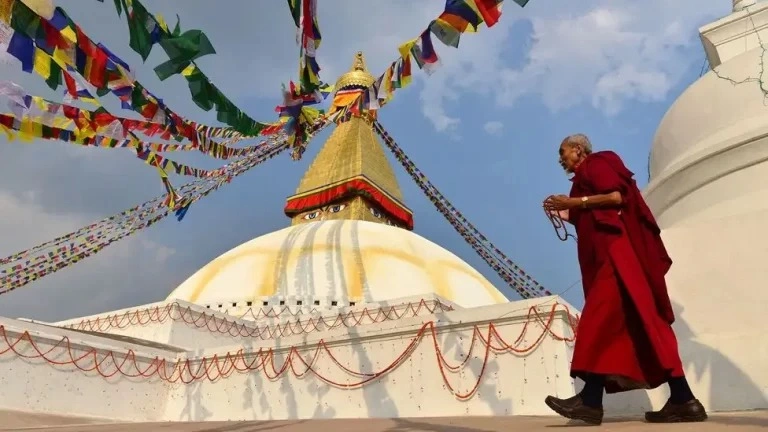
Kathmandu holds 4 UNESCO World Heritage monument zones within 10 km of each other: Kathmandu Durbar Square, Swayambhunath, Boudhanath, and Pashupatinath. Patan, Bhaktapur, and Changu Narayan complete the 7 zones UNESCO inscribed in 1979 as the Kathmandu Valley.
Kathmandu Durbar Square (also called Hanuman Dhoka or Basantapur) charges foreign visitors NPR 1,000 (about USD 7). The site contains the Kumari Ghar, home of the living goddess, and Kasthamandap, the wooden pavilion that gave the city its name. Builders reconstructed Kasthamandap with traditional materials after the 25 April 2015 earthquake.
Swayambhunath sits on a hill reached by about 365 steps. Entry costs NPR 200. Boudhanath, one of the largest stupas in the world, costs NPR 400. Pashupatinath, Nepal's holiest Hindu temple on the Bagmati River, costs NPR 1,000, and only Hindus enter the main shrine. Non-Hindu visitors watch the evening aarti and the cremation ghats from the east bank.
What most visitors overlook: Boudhanath at 6:00 a.m. Tibetan pilgrims walk the kora (the clockwise circuit) before the tour buses arrive. Pair it with Swayambhunath at sunset for the best light in both places.
Common mistake we see: cramming all 4 sites into 1 day. Two days works. Book Durbar Square and Pashupatinath on day 1, Boudhanath and Swayambhunath on day 2. Keep food out of sight near the Swayambhunath macaques.
Best for: first-time visitors, history readers, and photographers.
2. Try Adventure Sports in Nepal: Bungee Jumping, Paragliding, and Ultralight Flights
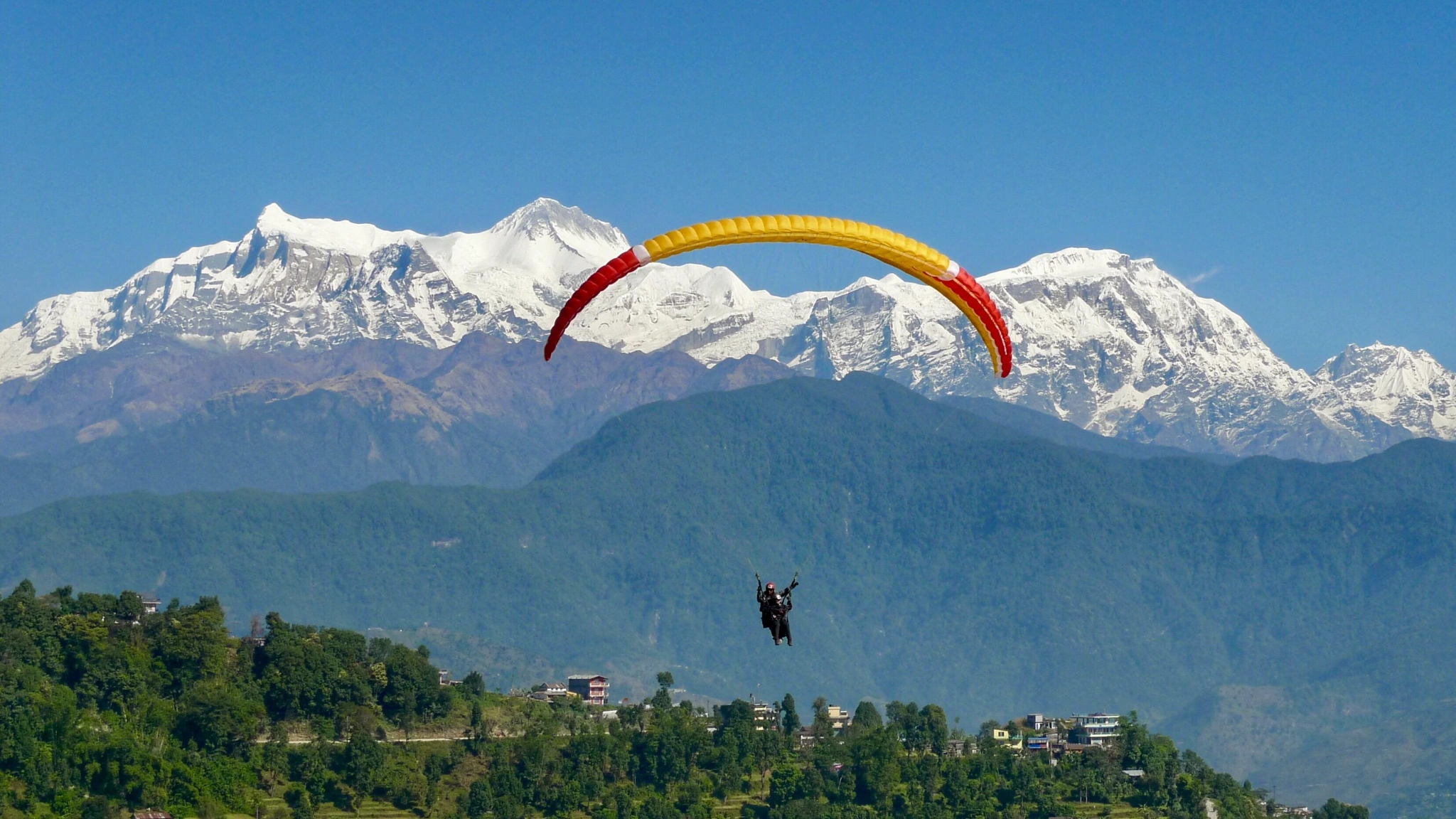
Nepal offers 3 headline adrenaline flights: bungee jumping at Bhote Koshi (about 3 hours from Kathmandu), tandem paragliding from Sarangkot in Pokhara, and ultralight aircraft flights over Phewa Lake. Each runs year-round except for monsoon cancellations from June to August.
Bungee at The Last Resort spans a gorge about 160 m deep, with a free fall near 100 m. According to Mosaic Adventure's operator listing, a bungee-only booking costs about USD 92, and the day package with transport costs about USD 108. Pokhara's HighGround Hemja site offers an 80 m water-touch jump, and The Cliff at Kushma charges about USD 60.
Tandem paragliding launches from Sarangkot at 1,592 m and lands beside Phewa Lake after 20 to 30 minutes. Prices usually run USD 80 to 110. Thermals peak between October and April, so flights last longer in those months. Ultralight flights from Pokhara run 15 to 30 minutes and usually cost USD 120 to 200, depending on duration.
Who wins what: paragliding suits nervous first-timers because the pilot controls everything. Bungee suits people who want one sharp spike. Ultralight flying suits photographers who want an open view.
Common mistakes we see: booking the cheapest operator, skipping the briefing, and eating a heavy breakfast before flying. Ask 3 questions: Which license does the pilot hold? How old is the harness? What is the weather cancellation policy? Standard travel insurance often excludes adventure sports, so confirm the policy lists them.
3. Explore Pokhara, Nepal's City of Lakes
Pokhara is a lakeside city 200 km west of Kathmandu, built around Phewa Lake with the Annapurna range rising within 30 km. A 25-minute flight or a 6-to-8-hour drive connects the two cities. Pokhara is the starting point for the Annapurna treks.
Phewa Lake covers roughly 4 to 5 sq km and ranks as Nepal's second-largest lake after Rara. Rent a wooden boat and paddle to Tal Barahi, the island temple. Begnas and Rupa lakes, 15 km east, stay far quieter. Sunrise from Sarangkot or the World Peace Pagoda frames Annapurna I (8,091 m) and Machapuchare (6,993 m, called "Fishtail" and closed to climbers).
Three stops fill rainy hours: the International Mountain Museum (NPR 500), Gupteshwor Mahadev Cave (NPR 200), and Devi's Fall (NPR 100).
Insight most guides skip: Lakeside turns loud by 9:00 p.m., while Damside stays calmer. Visit between October and November for the clearest peaks. In July and August, clouds hide the mountains for days.
Best for: couples, remote workers, and trekkers on a rest day. Plan 3 nights at minimum.
4. Go on a Wildlife Safari in Chitwan National Park

Chitwan National Park in southern Nepal holds one of Asia's best chances to see the one-horned rhinoceros and the Bengal tiger in the wild. Established in 1973 as Nepal's first national park, it received UNESCO World Heritage status in 1984.
A jeep or canoe safari in Chitwan gives you a real shot at spotting the greater one-horned rhino, the park's March 2021 survey counted 694 rhinos, up from 605 in 2015, meaning Chitwan now holds about 90% of Nepal's entire rhino population (Pachyderm Asian Rhino Specialist Group Report). The 2022 national count recorded 355 tigers across the country, with roughly 128 in Chitwan. Other residents include sloth bears, gharial crocodiles, and leopards.
Park entry costs foreign visitors roughly NPR 1,700 to 2,000 per day. Three safari styles exist:
Jeep safaris cover the core zone in 3 to 4 hours.
Canoe trips glide down the Rapti River past gharials and kingfishers.
Guided walks track pugmarks with 2 licensed naturalists.
Visit from October to March for cool weather and short grass in late January and February, after the villagers' grass-cutting season opens sightlines. April to June runs hot, but animals gather at water holes. July to September brings monsoon mud and fewer sightings.
Common mistakes we see: staying only 1 night or booking a city hotel in Bharatpur far from the park gates. Stay 2 to 3 nights in the park's official buffer zones, choose Sauraha for budget-to-midrange convenience, or Jagatpur and Meghauli in West Chitwan for quieter luxury safaris with fewer jeeps. Choose lodges that no longer offer elephant rides, because many conservation groups now discourage them.
5. Enjoy Birdwatching in Nepal's Natural Habitats
Nepal records more than 890 bird species (nearly 9% of the world's known avian species), which makes it one of the densest birding countries in Asia relative to its size. The 5 best locations are Koshi Tappu, Chitwan, Bardiya, Shivapuri, and Phulchoki.
Data from Hop Nepal's survey list shows Koshi Tappu Wildlife Reserve with 485 species, Chitwan with 543 (recorded in 2006), Bardiya with 407, Shivapuri Nagarjun National Park with 318, and Phulchoki with over 300. Koshi Tappu protects the Critically Endangered Bengal florican, plus Pallas's fish eagle and the large adjutant stork. Phulchoki, the 2,782 m peak on Kathmandu's southern rim, holds the spring babbler and the great barbet.
Go in winter (November to February) for migrants on the Terai wetlands, and in spring (March to May) for forest species on Phulchoki.
What most visitors overlook: Shivapuri is 12 km from Thamel. A birder staying in Kathmandu reaches a 318-species forest by taxi in 45 minutes, with an entry fee near USD 5. Start at 5:30 a.m., carry 8×42 binoculars, and hire a local naturalist for the first outing, because most species announce themselves by call before sight.
Best for: photographers, retirees, and families with patient children.
6. Take a Scenic Helicopter Tour in Nepal

A helicopter tour in Nepal flies you to Everest Base Camp, Kala Patthar, or the Annapurna sanctuary in 3 to 4 hours, with a landing on a high-altitude viewpoint. Shared seats on Everest tours typically cost USD 1,000 to 1,500, and private charters cost more.
Standard Everest flights depart from Kathmandu or Lukla, fly over Namche Bazaar, Tengboche, Everest Base Camp (5,364 m), and Kala Patthar (5,545 m), and land at Hotel Everest View (3,880 m) in Syangboche for a 30-to-45-minute breakfast stop. Under CAAN and local Khumbu safety regulations, commercial helicopters cannot land at Everest Base Camp, and any permitted charter touch-and-go at Kala Patthar is strictly capped at 5 to 10 minutes with rotors running. Annapurna flights from Pokhara run about 30 to 60 minutes and cost much less.
Helicopters suit travelers with little time, weak knees, or medical conditions that rule out a 12-day trek. The trade-off is physiological: a rapid ascent to 5,000 m triggers headaches in some passengers, so drink water and keep the stop short.
Common mistakes we see: booking from a street kiosk, ignoring cancellation terms, and expecting a refund when clouds block Lukla. Ask for 3 items in writing: the operator's registered name, the weather rebooking policy, and the exact landing point. Early morning flights (6:30 to 9:00 a.m.) hold the clearest visibility between October and May.
7. Discover Bhaktapur's Historic Newari Culture and Architecture
Bhaktapur is a medieval Newar city 15 km east of Kathmandu, known for its brick lanes, the 5-story Nyatapola temple, and its pottery square. It stays quieter and better preserved than Kathmandu's core.
The Newars are the indigenous people of the Kathmandu Valley, with their own language (Nepal Bhasa) and festival calendar. Nyatapola, built in 1702 by King Bhupatindra Malla, rises 30 m across 5 tiers, and each tier carries a pair of guardian figures. The 55-Window Palace and the Peacock Window sit in the main square. Foreign visitors pay about USD 15 (NPR 1,800 on the published schedule) for Durbar Square, according to Bhaktapur.com's fee list.
Taste juju dhau ("king of curd") near Taumadhi Square and watch potters at work in Pottery Square. Changu Narayan, 6 km north (NPR 350), carries an inscription dated 464 CE, which makes it among the oldest temples in the valley.
Best tip: sleep over. Day trippers leave by 4:00 p.m., and the brick lanes empty into golden evening light. Bisket Jatra, the Nepali New Year festival, runs from April 11 to 18 in 2026, with the main event on April 14.
Best for: architecture fans and slow travelers.
8. Join a Photography Tour in Nepal
A photography tour in Nepal pairs a local guide with locations picked for light and access: Boudhanath at dawn, Bhaktapur's lanes, Pokhara's Sarangkot, and the Annapurna or Everest trails. Group tours run 7 to 14 days.
Kathmandu's best light runs 6:00 to 8:00 a.m. and 4:30 to 6:00 p.m. Himalayan peaks show best between 6:00 and 8:30 a.m., before clouds build.
Pack a 24-70 mm lens for street and temple work, a 70-200 mm lens for mountain scenes, 2 spare batteries (cold drains them fast), and a rain cover from June to September.
Ethics matter here. Ask permission before portraits, and offer a printed copy later if you can. Never photograph the inner sanctum of a temple or a cremation at close range at Pashupatinath. Drones require a permit from the Civil Aviation Authority of Nepal, and flying near heritage sites and airports is restricted.
Common mistake we see: shooting only postcard angles. A local guide opens doors to potters and thangka painters. Pick a tour that caps group size at 6.
Best for: serious hobbyists and travel bloggers.
9. Visit Lumbini, the Birthplace of Gautama Buddha
Lumbini, in Nepal's southern Terai, is the birthplace of Siddhartha Gautama, who became the Buddha (traditionally dated to around 563 BCE). UNESCO listed the site in 1997. The Maya Devi Temple marks the exact spot, and the Ashoka Pillar beside it carries an inscription from 249 BCE.
The Sacred Garden holds the Maya Devi Temple, the Puskarini Pond where Queen Maya Devi bathed, and the Ashoka Pillar. Entering the outer Lumbini Monastic Zone is free, while foreign visitors pay NPR 500 (SAARC: NPR 300) at the Maya Devi Temple and Sacred Garden gate. The Lumbini Museum costs NPR 50 and closes on Tuesdays.
The Monastic Zone splits into 2 halves. The east holds Theravada monasteries (Myanmar, Sri Lanka, Thailand). The west holds Mahayana and Vajrayana monasteries (China, Germany, France, Japan, Korea). Rent a bicycle or a rickshaw, because the zone spans several kilometers. Buddha Jayanti, the Buddha's birth anniversary, fell on 1 May in 2026 and draws the largest crowds.
Insight competitors skip: Lumbini connects to a 3-site circuit with Tilaurakot (Kapilvastu, 27 km west, where the Buddha spent his childhood), Gotihawa, and Ramagrama. Hire a car for a full day to see them. Gautam Buddha International Airport in Bhairahawa, 22 km from Lumbini, handles domestic flights from Kathmandu.
Seasonal trade-off: April to June exceeds 40°C, so visit from October to March.
Best for: spiritual travelers, history readers, and anyone adding a Terai leg to a Chitwan trip.
10. Go Mountain Biking in Nepal's Scenic Trails
Mountain biking in Nepal ranges from half-day loops around Kathmandu Valley to multi-day rides such as Kathmandu to Pokhara, Annapurna's lower circuit, and Upper Mustang.
Four beginner-friendly routes are Shivapuri Peak, Nagarkot to Changu Narayan, Kakani to Nagarjun, and Bandipur. For a longer ride, cycle from Kathmandu to Pokhara in 4 to 5 days on side roads, which avoids the truck traffic on the Prithvi Highway. Experienced riders try the Kali Gandaki valley from Jomsom, which drops from about 2,700 m along a wind-swept riverbed.
Rental bikes with front suspension cost about USD 15 to 30 per day in Kathmandu and Pokhara. Full-suspension bikes cost USD 30 to 50.
Common mistakes we see: underestimating altitude, riding in monsoon mud, and skipping a helmet. Trails above 3,000 m deliver headaches fast. Choose October to November or February to April, when trails run firm. Carry a spare tube, a pump, and a chain tool, because repair shops thin out beyond the valley.
Best for: active travelers who want a slower, closer view of village Nepal.
11. Experience White-Water Rafting in Nepal's Rivers
Nepal offers white-water rafting on at least 6 major rivers, from gentle Grade 2 floats on the Trishuli to Grade 4 to 5 rapids on the Bhote Koshi.
The International Scale of River Difficulty grades rapids from 1 (easy) to 6 (extreme). The Trishuli (Grade 2 to 3, 1 to 2 days) starts 3 hours from Kathmandu. The Seti near Pokhara (Grade 2 to 3) suits families. The Kali Gandaki (Grade 3 to 4) crosses scenic gorges. The Bhote Koshi (Grade 4 to 5) delivers the biggest water, and bungee jumpers cross the same gorge. The Karnali (Grade 4 and up) and the Sun Koshi (5 to 10 days) serve expedition rafters.
Day trips cost roughly USD 40 to 100, depending on the river. Multi-day expeditions run USD 100 to 150 per day with camping and meals.
Best season: October to December for warm days and clear water, and March to May for higher flows. Monsoon brings the biggest rapids and the greatest danger. Avoid outfits that skip safety kayakers and helmets.
Common mistake we see: choosing a Grade 4 river on a first trip because it sounds exciting. Start on the Trishuli. Upgrade to the Bhote Koshi or the Karnali once you hold 2 or 3 days of paddling experience.
Best for: groups, solo travelers, and families with children older than 8 on the lower grades.
12. Go Hiking and Trekking in the Nepal Himalayas

Trekking in the Nepal Himalayas runs from 3-day teahouse walks to 3-week expeditions, with the 5 classic routes being Everest Base Camp, Annapurna Base Camp, the Annapurna Circuit, Langtang, and Manaslu. Teahouses (family-run lodges) provide beds and dal bhat along each route.
The routes differ by altitude and length (Poon Hill, at 3,210 m over 4 to 5 days, serves as the entry-level alternative):
Everest Base Camp reaches 5,364 m and takes about 12 to 14 days.
Annapurna Base Camp reaches 4,130 m and takes 7 to 10 days.
The Annapurna Circuit crosses Thorong La (5,416 m) and takes 12 to 18 days.
Langtang reaches Kyanjin Ri (4,773 m) and takes 7 to 10 days.
Manaslu Circuit crosses Larkya La (5,160 m) and takes 14 to 16 days.
For Annapurna and Langtang, TIMS card costs NPR 2,000 (about USD 15) for non-SAARC foreigners, and requires booking a licensed guide through a registered agency, alongside the NPR 3,000 Annapurna Conservation Area Permit (ACAP) or NPR 3,000 Langtang National Park fee. The Everest region does not use E-TIMS; instead, trekkers pay the Sagarmatha National Park permit (NPR 3,000) plus the Khumbu Pasang Lhamu Rural Municipality permit (NPR 3,000). Manaslu is a restricted area: USD 100 for the first 7 days from September to November, plus USD 15 for each extra day, with a licensed guide and at least 2 trekkers. Confirm guide rules with a registered agency, because enforcement differs by region.
What most visitors overlook: Lukla flights depart from Ramechhap (Manthali), 4 to 5 hours' drive from Kathmandu, during peak months (March to May and October to November). Build in 1 buffer day at both ends.
Altitude rule: above 3,000 m, raise your sleeping altitude by no more than 300 to 500 m per day and add a rest day every 1,000 m. Insurance must cover helicopter rescue up to 6,000 m.
Best for: fit walkers who value the journey over the summit.
13. Take a Scenic Mountain Flight to See the Himalayas
A mountain flight is a 50-to-60-minute fixed-wing flight from Kathmandu that passes Everest and 6 other Himalayan giants, with about 25 to 35 minutes of viewing. Every passenger gets a window seat.
Operators such as Buddha Air, Yeti Airlines, and Shree Airlines fly from Tribhuvan International Airport between 6:30 and 8:00 a.m. Prices run USD 240 to 280 per person, plus airport tax around USD 20 to 25, according to Himalayan Hero's package listing. The route covers Everest, Lhotse, Makalu, Cho Oyu, Ama Dablam, Gauri Shankar, and the Langtang range.
Fly from October to May. October and November give the sharpest air. June to September brings frequent cloud and cancellations.
What the brochures leave out: the plane cruises beside the peaks and does not land. Everest looks small from the air, so a flat phone photo disappoints. Use 3× to 5× zoom and press the lens against the window to cut reflections. Book the earliest departure, because haze builds after 9:00 a.m.
Trade-offs versus a helicopter: the plane costs a fifth as much but never lands, so you gain no ground-level moment at altitude. Choose the plane for budget and time. Choose the helicopter for the landing.
Best for: travelers with 1 morning, older visitors, and anyone who cannot trek.
14. Try Rock Climbing in Nepal
Rock climbing in Nepal spans indoor walls in Thamel and Pokhara, outdoor crags around Kathmandu Valley (Hattiban, Nagarjun), and technical peaks above 6,000 m. Sport climbing grades follow the French scale.
Guided half-day sessions cost about USD 40 to 80 including gear. Valley crags near Hattiban (Lalitpur) and the Nagarjun forest offer short bolted routes.
Advanced climbers target trekking peaks. Beyond sport crags like Hattiban, Nagarjun, and Bimalnagar (near Bandipur), climbers looking to transition from rock to high-altitude snow and ice target the 27 trekking peaks managed by the Nepal Mountaineering Association (NMA), such as Island Peak (6,189 m), Mera Peak (6,476 m), and Lobuche East (6,119 m). Trekking peaks need a permit from the NMA and a guide for most foreigners. They demand crampons, ice axes, and a roped glacier approach, so skip them without prior alpine training.
Common mistakes we see: assuming a trek fitness level equals climbing fitness, renting worn harnesses, and ignoring rockfall in monsoon. Choose October to November or March to May. Pick operators with internationally or nationally certified guides, and check the rope's age and the bolts before you clip in.
Best for: gym climbers and trekkers ready for a first summit.
15. Experience Nepal's Traditional Festivals and Cultural Events
Nepal celebrates dozens of festivals each year, and the 5 biggest for visitors are Dashain, Tihar, Holi, Indra Jatra, and Buddha Jayanti. Dates follow the lunar Bikram Sambat calendar and shift yearly.
According to Best Heritage Tour's 2026 festival calendar, the 2026 dates are:
Maha Shivaratri: 15 February at Pashupatinath.
Holi: 2 March in Kathmandu and the hills; 3 March in the Terai.
Nepali New Year and Bisket Jatra: 14 April in Bhaktapur.
Buddha Jayanti: 1 May in Lumbini.
Indra Jatra: 25 September in Kathmandu, with the Kumari chariot procession.
Dashain: 11 to 25 October, with Vijaya Dashami on 21 October.
Tihar: 6 to 11 November, the festival of lights, with Laxmi Puja on 8 November.
Dashain and Tihar reshape travel logistics: buses fill, shops close for 2 to 3 days, and ticket prices rise. Book domestic flights 3 to 4 weeks ahead and stock cash.
Best for authenticity: Bisket Jatra in Bhaktapur and Indra Jatra in Kathmandu. Both happen in the old squares and need no tickets. Tihar lights every home with oil lamps, which makes Kathmandu and Patan evenings memorable.
Etiquette: accept tika (the red blessing mark) with your right hand, dress modestly, and give space during rituals. Festival crowds attract pickpockets.
16. Enjoy River Fishing in Nepal

River fishing in Nepal targets the golden mahseer (Tor putitora), a powerful game fish that can exceed 20 kg in the Karnali, Narayani, and Kali Gandaki rivers. Catch-and-release river fishing for golden mahseer is permitted on designated stretches, but anglers should know the species' status: Tor putitora was formally assessed in the 2018 IUCN Red List review by Jha, Rayamajhi, Dahanukar, Harrison and Pinder, which documented ongoing population decline across South Asia (IUCN Red List Assessment, Tor putitora).
Bardiya's Karnali and Chitwan's Narayani offer the best odds. Anglers also target snow trout in cold upper streams and carp in Phewa and Begnas lakes.
Plan 3 to 7 days for a mahseer trip. Guided packages run USD 100 to 250 per day, covering camp, boat, tackle, and a licensed ghillie (the local fishing guide). Fish in October to December after the monsoon clears the water, or March to May before flows rise.
Rules matter: fishing inside national parks and buffer zones requires a permit, and rules differ per river, so book through a registered operator.
Common mistake we see: using light spinning gear. Mahseer strip line quickly, so bring a 20 lb-class rod and a strong reel. Handle fish with wet hands and release them facing the current.
Best for: anglers, wildlife photographers, and travelers who want a quiet river day.
17. Practice Yoga and Meditation in Nepal
Nepal hosts yoga retreats and meditation centers in Kathmandu, Pokhara, and the hills, with 3 main traditions: Hindu yoga, Tibetan Buddhist meditation, and Vipassana. Retreats run from 1-day classes to 10-day silent courses.
Kopan Monastery, on a hill north of Boudhanath, runs Tibetan Buddhist meditation courses for 1 to 10 days. Dhamma Shringa near Budhanilkantha teaches 10-day Vipassana courses in the S. N. Goenka tradition on a donation basis. Pokhara's Lakeside and Sarangkot offer hatha and vinyasa studios, with drop-in classes at USD 5 to 10 and week-long retreats from USD 300. Pharping, 20 km south of Kathmandu, hosts Buddhist caves and retreat teachers.
Pick Vipassana for silence, Kopan for structured Buddhist teaching, and Pokhara for physical practice with mountain views.
Common mistakes we see: booking a 10-day silent course as a first retreat, expecting a spa, and arriving with a full itinerary. Vipassana asks for no talking, no phone, no reading, and a 4:00 a.m. wake-up. Try a 1-day course first.
Best for: post-trek rest and long-stay travelers.
18. Explore Godawari Botanical Garden and Its Natural Beauty
Godawari's National Botanical Garden is a government-run garden about 15 km south of Kathmandu, set at the foot of Phulchoki, with a large collection of native and imported plants, orchids, and shaded walking paths. Foreign visitors pay NPR 200.
The garden opened in 1962 and sits at roughly 1,500 m. It holds native and imported plants across themed zones, including ferns, orchids, medicinal herbs, a Himalayan flora section, and a rock garden. Rhododendrons, Nepal's national flower, bloom between March and April, and the best orchid displays arrive in spring and early summer.
Nearby, the Godawari Kunda spring draws pilgrims, and the road to Phulchoki climbs through forest that holds more than 300 bird species.
What most visitors overlook: weekdays. Weekends fill with picnicking families, while weekday mornings bring birdsong and empty paths. Taxis from Patan take about 40 minutes.
Trade-off: the garden is small, so treat it as a half-day and combine it with a Phulchoki bird walk. Cloud rolls in after 2:00 p.m.
Best for: families, plant lovers, and birders.
19. Visit Nepal's Sacred Buddhist Monasteries and Heritage Sites

Nepal's most important Buddhist monasteries sit in 4 areas: Boudhanath and Swayambhunath in Kathmandu, Namo Buddha near Panauti, Pharping, and Tengboche in the Everest region. Each belongs to a Tibetan or Sherpa lineage.
Boudhanath is the center of Tibetan Buddhism in Nepal, ringed by more than 50 gompas (monasteries). Namo Buddha, 40 km southeast of Kathmandu, marks the legendary place where a prince offered his body to a starving tigress. A hill hike links Namo Buddha with Panauti. Tengboche, at 3,867 m, hosts the Mani Rimdu festival in October or November. Kopan and Pullahari monasteries host English-language teachings and welcome visitors.
Morning prayers (4:30 to 6:30 a.m.) bring horns, cymbals, and chanting, and visitors may sit quietly at the back.
Etiquette rules: remove shoes before entering, walk clockwise around stupas and prayer wheels, cover shoulders and knees, and ask before photographing monks or statues. Never point your feet at an altar, and never step on a threshold.
Insight competitors skip: Pharping's Asura Cave, where Padmasambhava is said to have meditated, receives few foreign visitors and sits 20 km from Kathmandu.
Common mistake we see: treating monasteries as photo stops. Spend 20 minutes in silence and watch the rhythm of the prayers.
20. Take Short Day Hikes Around Kathmandu Valley
The 5 best short day hikes around Kathmandu Valley are Shivapuri Peak (2,732 m), Phulchoki (2,782 m), Champadevi (2,285 m), Nagarkot to Changu Narayan, and Chobhar to Dakshinkali. Each hike takes 3 to 6 hours and needs no permit beyond a small park fee.
Shivapuri rises north of Budhanilkantha and enters a national park (entry near USD 5). Phulchoki is the highest point on the rim, with bird forest and wide Himalayan views in clear weather. Champadevi, near Chobhar, offers a quieter ridge walk with a temple at its summit. The Nagarkot to Changu Narayan route follows forest tracks and village paths for about 3 to 4 hours downhill.
Choose Shivapuri for birds, Phulchoki for views and flowers, Nagarkot to Changu Narayan for culture, and Champadevi for solitude.
Leave early. Air clears between 6:00 and 9:00 a.m. Winter (November to February) offers the crispest mountain visibility, while March and April add rhododendron blooms. Taxis cost USD 10 to 25 each way.
Common mistakes we see: starting at midday and carrying too little water. Download an offline map, and carry 1.5 liters of water per person plus a rain layer.
Best for: acclimatization before a trek and short layovers.
21. Stay in a Rural Homestay and Experience Nepali Village Life
A rural homestay in Nepal places you in a family home in a village such as Ghalegaun, Sirubari, Panauti, Bandipur, or a Tharu village near Bardia and Chitwan. Prices run roughly USD 10 to 25 per night, including dinner and breakfast.
Community homestay programs distribute income across village households, so the money stays local. Ghalegaun (Lamjung) sits near 2,000 m with Gurung hospitality and Annapurna views. Sirubari (Syangja) was among the first community homestays in Nepal. Tharu villages near Bardia offer stick dances, mustard-oil lamps, and fishing with locals. Panauti, 32 km from Kathmandu, offers Newar homestays in a medieval town.
Expect simple rooms, a shared bathroom, and dal bhat for dinner. Hosts often invite guests to join farm tasks, such as planting rice in July.
Common mistakes we see: arriving with high expectations for Wi-Fi, hot showers, and private rooms. Electricity may cut out. Bring a headlamp, a power bank, and a small gift such as school supplies or fruit. Remove shoes at the door, accept tea when offered, and ask before photographing family members.
Best for: families and cultural travelers.
22. Experience Thamel's Nightlife in Kathmandu

Thamel is Kathmandu's main tourist district, with rooftop bars, live-music pubs, and late-night eateries that operate until around midnight. It lies 2 km north of Durbar Square and walks easily from most hotels.
Thamel's lanes pack hundreds of bars, restaurants, and shops into a few square blocks. Live bands play at Purple Haze, Tom & Jerry, and other pubs, covering rock, blues, and Nepali folk fusion. For a more local crowd, cross to Jhamsikhel in Lalitpur, where Moksh holds live gigs, or Lazimpat for hotel bars.
Most venues wind down between 11:30 p.m. and 1:00 a.m. Beer costs NPR 400 to 700 for a Nepal Ice, Gorkha, or Tuborg, and cocktails cost NPR 700 to 1,100.
Safety tips: use licensed taxis or ride apps such as Pathao or inDrive late at night, keep drinks in sight, and avoid unmarked basement clubs. Carry a photocopy of your passport. Touts sell drugs, and possession carries heavy penalties, so refuse every offer.
What most visitors overlook: Thamel at 7:00 a.m., when shops open slowly, temple bells ring, and the lanes belong to locals.
Best for: solo travelers and music fans.
23. Taste Traditional Nepali Food and Local Specialties

Traditional Nepali food centers on dal bhat (lentil soup with rice and vegetable curries), momo (steamed dumplings), and Newari dishes such as choila, bara, and yomari. Each region adds its own staples.
Dal bhat is the daily standard. A plate costs roughly USD 2 to 4 in Kathmandu and Pokhara and USD 5 to 8 at Everest Base Camp altitude. Most teahouses offer free refills, which explains the trekker saying "dal bhat power, 24 hour."
Seven dishes worth trying:
Momo: buff, chicken, or vegetable dumplings with tomato achar.
Choila: spiced grilled buffalo meat from Newar kitchens.
Bara: lentil patties, often topped with egg.
Sel roti: sweet ring-shaped rice bread eaten during Tihar and Dashain.
Thukpa: noodle soup from Tibetan and Sherpa kitchens.
Dhido: millet or buckwheat porridge with gundruk (fermented greens).
Juju dhau: rich, sweet curd from Bhaktapur.
Drink tongba (warm fermented millet beer sipped through a bamboo straw), chiya (milk tea with spices), or local raksi (rice or millet spirit). Raksi strength varies, so sip slowly.
Practical tip: order the Newari khaja set in Patan or Kathmandu for a tasting plate. Vegetarians eat well, because dal bhat, thukpa, and momo all come in vegetarian versions.
Common mistake we see: avoiding street food altogether. Choose busy stalls with fresh turnover, skip raw salad and ice in rural areas, and drink bottled or filtered water.
24. Shop for Nepali Handicrafts, Souvenirs, and Local Products
The best Nepali souvenirs are pashmina shawls, handmade singing bowls, thangka paintings, lokta paper, Dhaka topi caps, Ilam tea, and Mithila art. Thamel, Patan, Bhaktapur, and Asan Bazaar stock all of them.
Five product notes help you buy well:
Pashmina: genuine cashmere blends cost USD 40 to 150. A USD 8 scarf is viscose.
Singing bowls: hand-hammered bowls ring evenly and vary in tone. Machine-spun bowls look uniform.
Thangka: Tibetan Buddhist paintings take weeks to complete, and prices reflect detail and mineral pigment.
Lokta paper: a handmade paper from the lokta shrub, used for notebooks and lamps.
Dhaka topi: a patterned cap worn by Nepali men, and a gift with local meaning.
Patan has the best workshops for metal statues and woodcarving, and Bhaktapur offers pottery and thangka schools. Ilam tea comes from eastern Nepal.
Bargaining: start near half the first price and settle around 60 to 70%. Stay polite. Fixed-price fair-trade shops often carry better quality.
Export rules: antiques older than 100 years require a certificate from the Department of Archaeology. Khukuri knives travel only in checked baggage. Ask the shop to ship large items with tracking.
Common mistake we see: buying on day 1 in Thamel. Browse for 2 days, compare 3 shops, and ask where the maker works.
25. Visit Janakpur to Explore Its Temples and Mithila Culture

Janakpur, in Nepal's southeastern Terai, is the ancient capital of Mithila and the birthplace of Sita in the Ramayana. The marble Janaki Mandir, built in 1910, is its centerpiece. Pilgrims call the city Janakpurdham.
The Janaki Mandir blends Mughal, Rajput, and Koiri styles, with domes and arched windows in white and cream. The city holds more than 100 sacred ponds, including Ganga Sagar and Dhanush Sagar, where devotees bathe.
The big event is Vivah Panchami, the re-enactment of the wedding of Ram and Sita. In 2026 it falls on 14 December, and tens of thousands of pilgrims arrive from Nepal and India. Book rooms weeks ahead.
Mithila painting is Janakpur's second pull. Women artists paint on walls and paper in bold lines and natural colors, depicting deities, fish, and peacocks. Visit the Janakpur Women's Development Center, which sells art and supports local women.
Getting there: a 35-minute flight from Kathmandu, or an 8-to-9-hour road trip. Winter (October to February) stays comfortable. March to June reaches 40°C.
Insight competitors skip: combine Janakpur with Lumbini and Chitwan for a 10-day Terai circuit that stays quiet compared with the mountains. Chhath, on 15 November 2026, adds river-side rituals at dawn and dusk.
Best for: pilgrims and art lovers.
Which of the Best Things to Do in Nepal Fits Your Trip?
The best things to do in Nepal depend on 3 factors: your season, your fitness, and your budget. October to November suits trekking, flights, and festivals. March to May suits rhododendron hikes and rafting. June to September suits Kathmandu Valley culture, with fewer crowds, although rain hides the mountains.
Three starter plans fit most trips:
7 days: Kathmandu, Bhaktapur, Pokhara, and a Chitwan safari.
14 days: add a mountain flight, rafting, and a 5-day Annapurna trek.
21 days: add Lumbini, Janakpur, and a homestay in the hills.
Book Dashain and Tihar travel 3 to 4 weeks ahead. Confirm permits, fees, and flight schedules with a registered agency or the Nepal Tourism Board before you pay, because rates change often. Carry insurance that covers adventure activities, and keep a buffer day for weather.
Save this list, pick 5 of these best things to do in Nepal, and build your itinerary around your season.