

Island Peak vs Lobuche Peak: Difficulty, Height, Cost & Which One to Climb

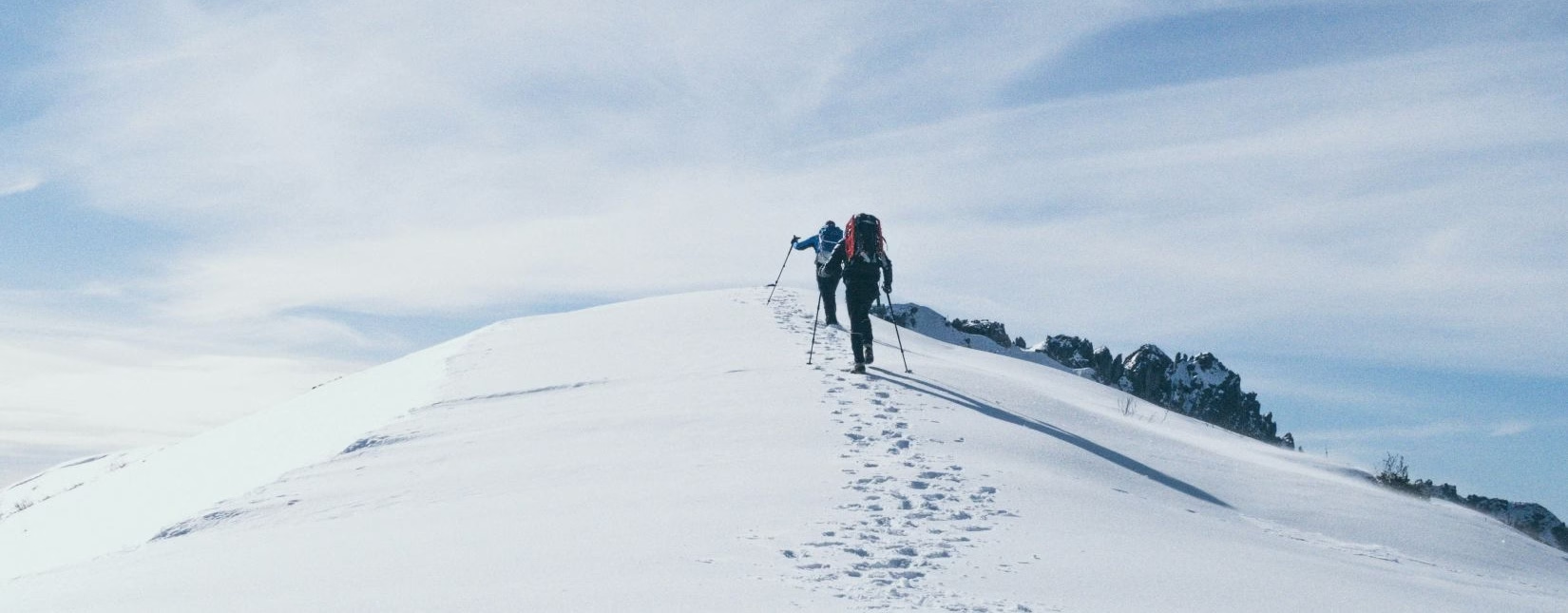
Island Peak (6,189 m), also known as Imja Tse, and Lobuche East (6,119 m) are two popular Himalayan trekking peaks in Nepal's Khumbu region, near Mount Everest. Both offer an opportunity to experience 6,000-metre mountaineering, but their climbing difficulty, terrain and summit routes differ. Island Peak is generally better suited to fit beginners seeking their first Himalayan summit, with glacier crossings and a steep ice headwall, while Lobuche East appeals to climbers looking for more technical challenges, rocky sections and an exposed summit ridge.
Choosing between Island Peak and Lobuche Peak depends on more than elevation or climbing difficulty. Summit-day demands, acclimatization, expedition duration, climbing seasons, permits and overall costs all influence the decision. This guide compares both peaks in detail, including their climbing routes, technical requirements, itineraries and package prices, to help you identify the best option for your experience, fitness level, budget and Himalayan climbing goals.
The table below summarises the two climbs across the seven attributes that decide most comparisons.
Attribute | Island Peak (Imja Tse) | Lobuche East |
Summit elevation | 6,189 m (20,305 ft) | 6,119 m (20,075 ft) |
Difficulty rating | Moderate | Moderate to challenging |
Technical crux | Crevasse ladders, then a 40–50° ice headwall | Rock slabs, ice wall, narrow exposed ridge |
Highest night before summit | Base camp, 5,240 m | High camp, about 5,400 m |
Summit-day vertical gain | About 950 m | About 720 m |
Standard EBC package | 17 days | 19 days |
NMA royalty, foreign climber (2026) | $350 spring / $175 autumn | $350 spring / $175 autumn |
Island Peak leads on height and summit-day gain. Lobuche East leads on exposure and quiet. The sections below explain why.
What Are Island Peak and Lobuche Peak in the Everest Region?
Island Peak (Imja Tse) and Lobuche Peak (Lobuche East) are two 6,000-metre trekking peaks in Nepal's Khumbu region. The NMA permits both for fit climbers with basic mountaineering skills, and both rise within sight of Everest, Lhotse and Ama Dablam.
"Trekking peak" is a permit category, not a difficulty grade. According to the Nepal Mountaineering Association, 27 designated peaks fall into this category, and the NMA issues their climbing permits.
Eric Shipton's party named Island Peak in the early 1950s for its island-in-a-sea-of-ice look from Dingboche. Nepal renamed it Imja Tse in 1983. A British team that included Tenzing Norgay made the first ascent in 1953 as Everest training.
Lobuche has two summits joined by a sharp ridge. Lobuche East (6,119 m) is the trekking peak. Lobuche West (6,145 m) is an expedition peak that requires a Department of Tourism permit and technical rock climbing. Laurence Nielson and Ang Gyalzen Sherpa made the first recorded ascent of Lobuche East on 25 April 1984. This article uses "Lobuche Peak" to mean Lobuche East.
Where Are Island Peak and Lobuche Peak Located?
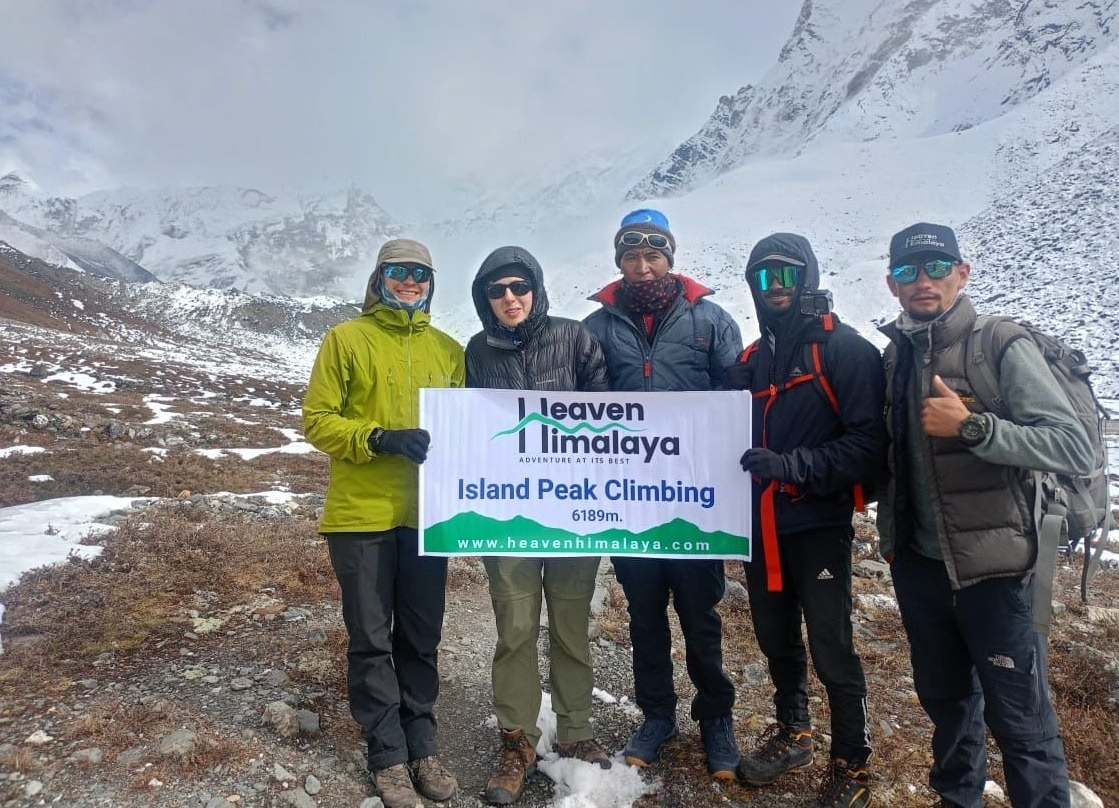
Island Peak and Lobuche Peak both stand in Sagarmatha National Park, Solukhumbu District, Koshi Province, eastern Nepal. Island Peak rises above Chhukung in the Imja Valley; Lobuche East rises above Lobuche village on the Everest Base Camp trail.
Island Peak sits at the head of the Imja Valley, reached from Dingboche and Chhukung (4,730 m), the last village before base camp. Lobuche East rises directly above Lobuche village (4,910 m) beside the Khumbu Glacier.
One to two trekking days separate the two trailheads. Sagarmatha National Park, inscribed as a UNESCO World Heritage Site in 1979, covers 1,148 square kilometres and encloses both peaks.
What Are the Elevations of Island Peak and Lobuche Peak?
Island Peak stands 6,189 m (20,305 ft) and Lobuche East stands 6,119 m (20,075 ft). Island Peak is 70 m (230 ft) higher. Lobuche West, the expedition summit, reaches 6,145 m.
The table below lists summit and camp elevations for both peaks.
Peak | Summit | Base camp | High camp | Summit-day gain |
Island Peak | 6,189 m / 20,305 ft | 5,240 m | None on standard route | About 950 m |
Lobuche East | 6,119 m / 20,075 ft | About 4,950 m | About 5,400 m | About 720 m |
Lobuche's high camp sits 160 m above Island Peak's base camp. That makes the night before a Lobuche summit the highest sleeping altitude on either peak's standard itinerary. Island Peak compensates with a longer push: roughly 230 m more vertical gain on summit day.
Why Are Island Peak and Lobuche Peak Popular Climbing Destinations?
Island Peak and Lobuche Peak attract climbers because each offers a 6,000-metre summit without an expedition permit, each combines naturally with the Everest Base Camp trek, and each delivers close views of Everest, Lhotse and Ama Dablam.
Five factors explain their popularity:
Access: Lodges line the trail to both base camps, and Sherpa support is deep.
Cost: The NMA royalty is $350 in spring. According to the Government of Nepal's schedule effective 1 September 2025, an Everest spring permit costs $15,000.
Skill ladder: Both peaks teach crampon, rope and ascender technique before any 7,000 m objective.
Acclimatization: Both slot after Everest Base Camp (5,364 m) and Kala Patthar (5,545 m).
Pedigree: Everest teams still use both peaks as training climbs.
See the full list of peak climbing in Nepal for other options.
How Do Island Peak and Lobuche Peak Compare in Climbing Difficulty?
Island Peak is rated moderately difficult and Lobuche East moderate to challenging. Both demand glacier or snow-slope skills in crampons, ice axe and fixed-rope technique at altitudes above 5,000 m, and both reward fitness more than raw technical talent.
Difficulty has two parts: technical (steepness, exposure, rope work) and physical (altitude, gain, duration, cold). The peaks balance them differently.
Which Peak Is More Difficult to Climb, Island Peak or Lobuche Peak?
Lobuche East is the more technical climb, and Island Peak is the longer climb. Heaven Himalaya rates Lobuche East slightly harder because of its ice headwall, narrow ridge and mixed rock-and-ice terrain, while Island Peak asks for more vertical gain on summit day.
Climbers who have done both disagree. Technical climbers rate Lobuche East harder because the exposure is sustained. Fitness-focused climbers rate Island Peak harder because summit day runs longer and the headwall comes late.
Factor | Island Peak | Lobuche East | Harder peak |
Summit-day gain | About 950 m | About 720 m | Island Peak |
Steepest section | 40–50° ice headwall | Steep ice wall plus rock slabs | Lobuche East (sustained) |
Exposure | Short summit ridge | Long narrow ridge, false summit | Lobuche East |
Crevasse hazard | Ladder crossings on glacier | Few crevasses on standard route | Island Peak |
Wind at camp | Sheltered valley | Exposed ridge camp | Lobuche East |
Crowding on fixed ropes | High in peak weeks | Moderate | Island Peak (delays) |
In real-world use, the harder peak is the one that targets the climber's weakness. Strong aerobic climbers with little exposure experience struggle on Lobuche's ridge. Good scramblers with modest fitness struggle on Island Peak's long summit day. For detail, see the guides on Island Peak Climbing Difficulty and Lobuche Peak Climbing Difficulty.
What Technical Climbing Skills Are Required for Island Peak and Lobuche Peak?
Both peaks require seven core skills: crampon walking, ice-axe use, fixed-rope ascent with an ascender, rappelling, harness handling, ladder crossing and ridge balance. Guides teach them at base camp or high camp the day before the summit push.
Each skill has a specific definition:
Walk in crampons (steel spikes strapped to boots) on snow and steep ice.
Arrest a slide with an ice axe, the climber's main balance and braking tool.
Ascend fixed ropes using an ascender (a jumar), a clamp that slides up a rope and locks under load.
Rappel with a figure-eight or ATC descender, the device that controls rope friction.
Clip a harness to the rope with locking carabiners.
Cross crevasse ladders in crampons (Island Peak).
Balance along a narrow ridge with a rope clipped in (Lobuche East).
Common mistakes we see: climbers practise the ascender only once at base camp, then fumble it at 6,000 m in the dark with thick gloves. Practise the full clip-and-release routine with gloves on, at home, before the trip.
How Challenging Are the Summit Routes of Island Peak and Lobuche Peak?
Island Peak's summit route crosses a crevassed glacier on ladders and climbs a 40–50° ice headwall on fixed rope. Lobuche East's route climbs rock slabs, a steep ice wall and a narrow ridge past a false summit. Both summit days start between midnight and 2 a.m.
On Island Peak, the climb leaves base camp over rocky moraine, follows a ridge, then reaches the glacier. Guides fix ladders across crevasses and rope the team together. The headwall follows, a steep snow-and-ice face climbed on fixed rope with an ascender. A short summit ridge finishes the route. The round trip takes 9 to 12 hours.
On Lobuche East, the climb leaves high camp in the dark over rock slabs and a rocky ridge. Snow and ice slopes lead to a steep ice wall on fixed rope. A narrow, exposed ridge follows, with a false summit before the true summit. The round trip takes about 10 hours, with the ascent running 4 to 6 hours.
How Do Altitude and Acclimatization Affect Island Peak and Lobuche Peak Climbing Difficulty?
Altitude is the largest single difficulty factor on both peaks. At 6,000 m the air holds about 47% of sea-level oxygen, and acute mountain sickness (AMS) ends more summit attempts than technique does. Slow ascent, rest days and a reserve day cut that risk.
AMS is the illness caused by too-fast ascent. Its symptoms are headache, nausea, dizziness, fatigue and poor sleep. Severe forms, high-altitude pulmonary edema (HAPE) and high-altitude cerebral edema (HACE), are life-threatening and require immediate descent.
According to the Wilderness Medical Society's clinical practice guidelines for acute altitude illness, climbers above 3,000 m limit the gain in sleeping altitude to about 500 m per day and add a rest day every three to four days. Both Heaven Himalaya itineraries follow that pattern through Namche Bazaar (3,440 m), Dingboche (4,410 m) and Lobuche (4,910 m).
Island Peak asks for a 950 m push from a 5,240 m base camp, so summit day hits the lungs hardest. Lobuche East adds a night at 5,400 m, so sleep and appetite suffer first. The Himalayan Rescue Association runs a seasonal aid post at Pheriche (4,240 m). Climbers discuss acetazolamide prophylaxis with a doctor before departure.
What Are the Main Differences Between Island Peak and Lobuche Peak?
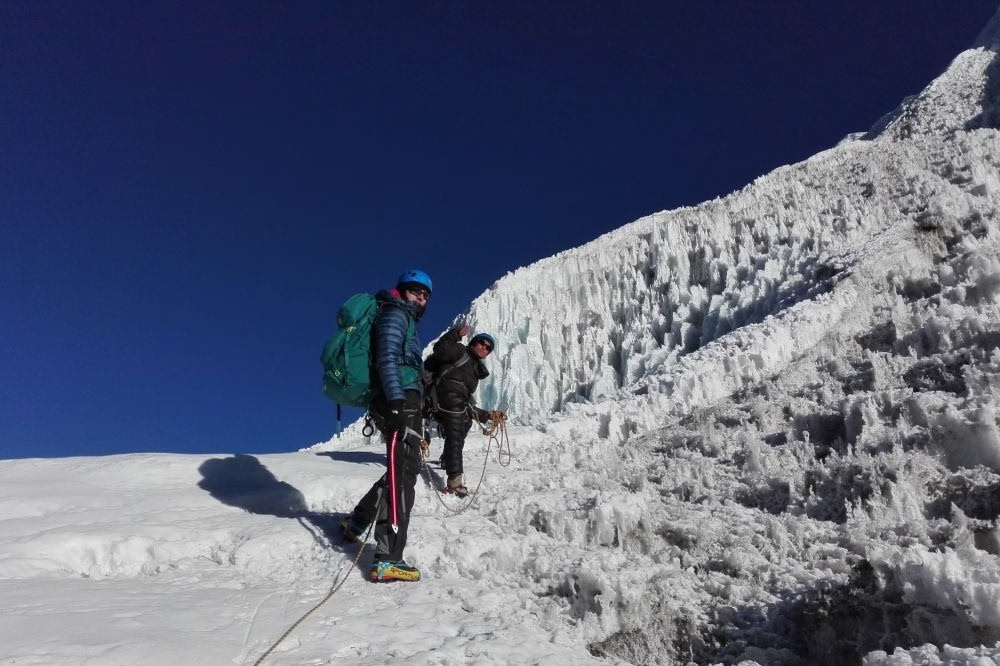
Island Peak and Lobuche Peak differ in five ways: summit profile, route terrain, crevasse exposure, crowd level and summit panorama. Island Peak is higher, glaciated and busier. Lobuche East is lower, steeper, ridge-based and quieter.
How Do Island Peak and Lobuche Peak Elevations and Summit Profiles Compare?
Island Peak's summit is 70 m higher but its profile is simpler: a headwall, then a short snow crest. Lobuche East's summit is lower but its profile is more complex: a long ridge with a false summit before the true top.
Island Peak's profile has one defined crux, the headwall, and a short finish, so climbers ration energy for it. Lobuche East's profile spreads moderate hard sections over the full route: slabs, an ice wall, then the ridge. The false summit tests morale, because the true summit appears only after the first top.
How Do Island Peak and Lobuche Peak Climbing Routes and Terrain Differ?
Island Peak's terrain is mostly moraine, glacier and snow-ice. Lobuche East's terrain is mostly rock, mixed ground and ridge. Island Peak's base camp is a broad, sheltered valley; Lobuche's high camp is a windier ridge perch.
Island Peak base camp sits on a wide, sheltered valley floor, about six hours from Chhukung. Lobuche East climbers leave Lobuche village for Lobuche Base Camp, then climb moraine to a high camp at about 5,400 m with tighter platforms and more wind.
Rock footwork decides Lobuche's first hours. Snow and ice craft decide Island Peak's last hours.
How Do Island Peak and Lobuche Peak Glacier Crossings and Crevasse Risks Compare?
Island Peak crosses a crevassed glacier with ladders and roped teams. Lobuche East's standard route has few crevasses, but it carries exposure, rockfall and wind risk instead. Neither route is safe to attempt without a licensed guide.
A crevasse is a deep crack in glacier ice, often hidden under snow. On Island Peak, guides fix ladders over open crevasses and rope clients together. Ladder crossings change between seasons as the glacier shifts, so current guide knowledge is the only reliable source.
Lobuche East's hazards differ: loose rock on the slabs, steep ice below the ridge and wind above high camp. It suits climbers who accept exposure but prefer to avoid glacier travel. On both peaks the descent carries more risk than the ascent, because fatigue peaks when the technical ground returns.
How Do Island Peak and Lobuche Peak Summit Views and Himalayan Landscapes Differ?
Island Peak looks into a bowl of giants: Lhotse, Makalu and Ama Dablam, with Everest beyond. Lobuche East looks across the Khumbu Glacier at the Everest massif, with Pumori, Nuptse and Ama Dablam. Lobuche edges ahead for Everest; Island Peak for Lhotse's wall.
Island Peak's summit shows Lhotse's huge south face, Makalu (8,485 m), Ama Dablam and distant Everest (8,849 m), plus the Imja Valley glaciers. Lobuche East's summit shows Everest, Nuptse (7,861 m), Pumori (7,161 m) and Ama Dablam, with the Khumbu Glacier and Everest Base Camp region below.
Photographers favour Lobuche for the Everest-facing line and Island Peak for the surrounding wall of 8,000 m peaks.
How Long Does It Take to Climb Island Peak vs Lobuche Peak?
Island Peak takes 17 days with the Everest Base Camp trek and Lobuche Peak takes 19 days in Heaven Himalaya's standard itineraries. Stand-alone climbs without Everest Base Camp run about 13 to 15 days for either peak. Each plan includes a buffer day for weather.
How Many Days Are Needed for Island Peak Climbing?
Island Peak climbing needs 17 days with Everest Base Camp: 14 days in the mountains, a Chhukung rest day, a summit day on Day 12 and a contingency day on Day 13. A stand-alone Island Peak climb runs about 13 days.
The 17-day plan flies to Lukla on Day 2 and returns to Kathmandu on Day 16. Namche Bazaar gets one acclimatization day and Chhukung (4,730 m) one rest day after the Everest Base Camp and Kala Patthar loop. The summit push leaves Island Peak Base Camp (5,240 m) after midnight and returns to Chhukung the same day.
Add 2 to 3 spare days at the end of the trip for Lukla flight delays, because weather cancels or diverts flights in every season.
How Many Days Are Needed for Lobuche Peak Climbing?
Lobuche Peak climbing needs 19 days with Everest Base Camp: two Kathmandu days, a 15-day mountain section, a summit day on Day 13 and a reserve day on Day 14. A stand-alone Lobuche climb runs 12 to 15 days.
The 19-day plan adds Kathmandu sightseeing on Day 2 and a Nagarjun hike (5,100 m) alongside the Namche acclimatization day. It reaches Everest Base Camp on Day 10, Lobuche High Camp (5,400 m) on Day 12 and the summit on Day 13, with Day 14 in reserve.
What Are the Typical Trekking and Climbing Itineraries of Island Peak and Lobuche Peak?
Both itineraries follow the Everest Base Camp trail to Dingboche, then split: Island Peak turns east into the Imja Valley via Chhukung, and Lobuche turns north along the Khumbu Glacier to Lobuche Base Camp and High Camp.During March, April, May, October and November, the Kathmandu–Lukla flight often departs from Manthali Airport in Ramechhap, a 4 to 5 hour drive from Kathmandu. Plan for that drive in peak months.
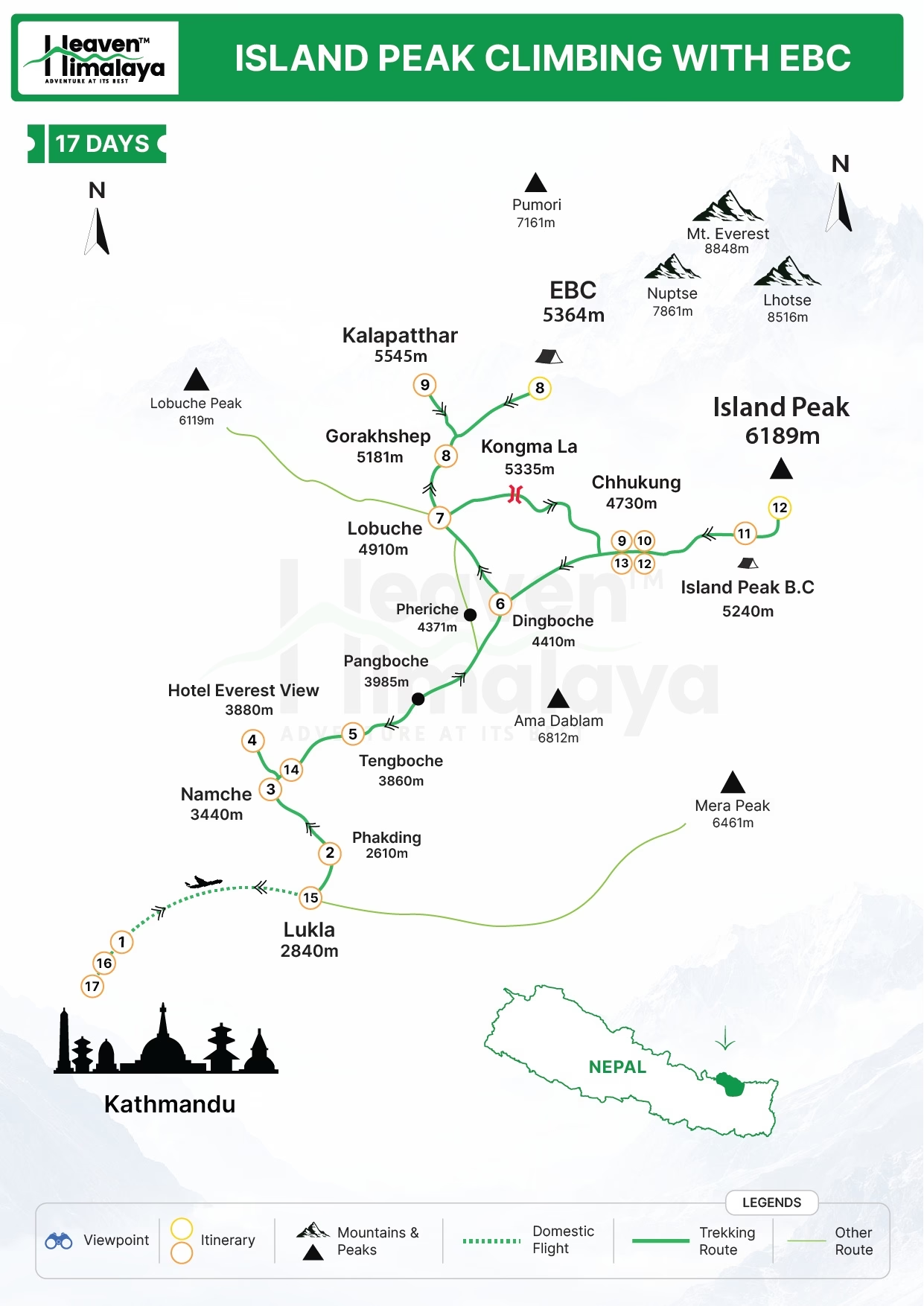
Island Peak Day-by-Day Itinerary (17 Days):
Day 01: Arrival in Kathmandu (1,400 m / 4,593 ft)
Day 02: Fly to Lukla (2,860 m / 9,383 ft) and trek to Phakding (2,652 m / 8,699 ft, 3 hrs)
Day 03: Trek to Namche Bazaar (3,440 m / 11,283 ft, 6 hrs)
Day 04: Acclimatization hike to Everest View Hotel (3,865 m / 12,680 ft, 3 hrs)
Day 05: Trek to Tengboche (3,860 m / 12,660 ft, 5–6 hrs)
Day 06: Trek to Dingboche (4,410 m / 14,464 ft, 5–6 hrs)
Day 07: Trek to Lobuche (4,910 m / 16,105 ft, 5 hrs)
Day 08: Trek to Gorekshep (5,181 m / 16,994 ft), visit Everest Base Camp (5,364 m / 17,594 ft), return Gorekshep (7–8 hrs)
Day 09: Hike to Kalapattar (5,545 m / 18,188 ft) and trek to Chhukung (4,730 m / 15,518 ft, 5–6 hrs)
Day 10: Rest and acclimatization in Chhukung (4,730 m / 15,518 ft)
Day 11: Trek to Island Peak Base Camp (5,240 m / 17,187 ft, 6 hrs)
Day 12: Summit Island Peak (6,189 m / 20,300 ft) and return to Chhukung (9–10 hrs)
Day 13: Contingency day
Day 14: Trek back to Namche (3,440 m / 11,283 ft, 7–8 hrs)
Day 15: Trek back to Lukla (2,800 m / 9,184 ft, 7–8 hrs)
Day 16: Fly back to Kathmandu (1,400 m / 4,593 ft)
Day 17: Departure from Kathmandu
Lobuche East Peak Climbing Itinerary (19 Days):
Day 01: Arrival in Kathmandu (1,400m/4,593ft)
Day 02: Sightseeing Tour in Kathmandu (1,400m/4,593ft)
Day 03: Fly to Lukla and trek to Phakding (2,610 m/8,697 ft). Duration: 3 hours
Day 04: Trek to Namche (3,440 m/11,286 ft) Duration: 6 hours
Day 05: Hike to Everest View Hotel (3,880 m/12,729 ft) Duration: 3 hours
Day 06: Trek to Tengboche (3,860 m/12,664 ft) Duration: 5–6 hours
Day 07: Trek to Dingboche (4,410 m/14,469 ft) Duration: 5–6 hours
Day 08: Hike to Nagerjun (5,100 m/16,732 ft) Duration: 4-5 hours
Day 09: Trek to Lobuche (4,910 m/16,108 ft) Duration: 5 hours
Day 10: Trek to Gorekshep (5,181 m/16,994 ft), then to Everest Base Camp (5,364 m/17,598 ft), and back to Gorekshep. Duration: 7-8 hours
Day 11: Hike to Kalapatthar (5545 m/18,192 ft) and trek to Lobuche (4,910 m/16,108 ft). Duration: 5–6 hours
Day 12: Trek to Lobuche High Camp (5,400 m/17,716 ft) Duration: 5–6 hours
Day 13: Summit Lobuche Peak (6,119 m/20,069ft) and descend to High Camp (5,400 m/17,716 ft). Duration: 10 hours
Day 14: Reserve Day
Day 15: Trek to Pangboche (3,985 m/13,074 ft) Duration: 5–6 hours
Day 16: Trek back to Namche (3,440 m/11,286 ft). Duration: 4-5 hours
Day 17: Trek back to Lukla (2,800 m/9,184 ft). Duration: 6-7 hours
Day 18: Fly back to Kathmandu (1,400m/4,593ft)
Day 19: Departure Day (Farewell)
Which Peak Offers Better Acclimatization Opportunities: Island Peak or Lobuche Peak?
Lobuche Peak offers the stronger acclimatization profile: 19 days, an extra Nagarjun hike (5,100 m), a night at 5,400 m and a reserve day. Island Peak's 17-day plan relies on an Everest View Hotel hike, Everest Base Camp, Kala Patthar and a Chhukung rest day.
Both itineraries use "climb high, sleep low": ascend during the day, then descend to sleep lower. Kala Patthar (5,545 m) is the highest daytime exposure on both plans. Island Peak's order puts Everest Base Camp first, then a Chhukung rest day (4,730 m) before the 5,240 m base camp. Lobuche's order reaches high camp already adapted to 5,000 m nights, at the cost of a higher final-night altitude. Slow acclimatizers add one more rest day to either plan.
The most common mistake on these climbs is dropping the reserve day to save money.
What Is the Best Time to Climb Island Peak and Lobuche Peak?
The best time to climb Island Peak and Lobuche Peak is spring (March to May) and autumn (September to November). Both seasons deliver stable weather, clear skies and firm snow. Winter and monsoon climbs are possible but harder, colder or wetter.
Seasonal timing affects summit odds, comfort and cost. The guide on Best Time to Climb Island Peak covers monthly detail for the Island Peak route.
Is Spring a Good Season for Island Peak and Lobuche Peak Climbs?
Yes. Spring (March to May) is a good season for both peaks, with warmer temperatures, longer days and the most reliable summit windows. The trade-off is crowding on the trail, in lodges and on the Island Peak fixed ropes, and a $350 permit royalty.
April to mid-May gives the most settled weather. Pre-dawn summit temperatures on both peaks commonly fall between −15 °C and −25 °C, but daytime sun is stronger and the wind lighter than in late autumn. Everest expedition season overlaps with spring, so Namche Bazaar, Dingboche and Lobuche fill with teams. Book lodges and flights early.
Late May brings afternoon cloud as the monsoon approaches, so guides schedule summit days early in the window.
Can You Climb Island Peak and Lobuche Peak in Autumn?
Yes. Autumn (September to November) works for both peaks, with clear post-monsoon skies and a permit royalty of $175, half the spring rate. October is the most stable month; late November turns cold and windy.
Late September carries residual monsoon moisture. October delivers the clearest views and books out first. November brings colder nights and stronger wind at Lobuche High Camp. Kathmandu–Lukla flights depart from Manthali in October and November, which adds a 4 to 5 hour drive.
As of November 2026, the autumn window is closing, and the next spring window opens in March 2027. Autumn saves $175 on the permit and trades that saving for colder nights at high camp.
How Do Weather and Snow Conditions Affect Island Peak and Lobuche Peak Summit Success?
Weather and snow decide summit success more than fitness does. Wind above 5,400 m, fresh snow and afternoon cloud cancel summit attempts. A reserve day and a flexible guide cut that risk because they allow a second attempt.
On Island Peak, snow depth controls crevasse visibility. Fresh snow hides crevasses and slows the glacier crossing, while a thin autumn snowpack leaves crevasses open and ladders longer. On Lobuche East, fresh snow slows the rock slabs and ice wall, and wind on the ridge decides whether guides continue.
Teams start between midnight and 2 a.m. to summit at first light and descend before afternoon wind and soft snow build. Operators report summit success of 75% to 90% on both peaks in stable windows with proper acclimatization; no official registry tracks it. Winter closes many lodges and adds heavy snow and extreme cold, and the monsoon brings rain, cloud and unstable snow.
What Are the Permits and Requirements for Island Peak vs Lobuche Peak?
Island Peak and Lobuche Peak require the same three permits: an NMA climbing permit, a Sagarmatha National Park entry permit and a Khumbu Pasang Lhamu Rural Municipality permit. Climbers also need fitness, a licensed guide and technical equipment.
Which Climbing Permits Are Required for Island Peak and Lobuche Peak?
Island Peak and Lobuche East need an NMA climbing permit ($350 spring, $175 autumn in 2026), a Sagarmatha National Park permit (NPR 3,000) and a Khumbu Pasang Lhamu Rural Municipality permit. Operators arrange all three.
According to the Government of Nepal's royalty schedule effective 1 September 2025, foreign climbers pay $350 in spring and $175 in autumn, winter and summer for peaks of 6,500 m and below. That raised the spring rate from $250. Island Peak and Lobuche East sit in the same fee class, so the permit never decides the choice.
The table lists each permit with its 2026 cost for foreign climbers.
Permit | Issuer | Cost (foreign climber, 2026) |
NMA climbing royalty | Nepal Mountaineering Association | $350 spring; $175 autumn, winter, summer |
Sagarmatha National Park entry | Department of National Parks | NPR 3,000 (about $22–25) |
Local entry permit | Khumbu Pasang Lhamu Rural Municipality | NPR 2,000–3,000 (about $15–23) |
Garbage deposit | NMA, per team | $500, refundable |
Park and municipality fees are set in NPR, so dollar figures move with the exchange rate. Heaven Himalaya's packages include all permits.
What Experience and Fitness Level Do Climbers Need for Island Peak and Lobuche Peak?
Climbers need strong cardiovascular fitness, the stamina to hike 6 to 8 hours a day for two weeks, and ideally prior trekking above 4,000 m. Guides recommend 12 to 16 weeks of training before departure.
A workable training plan has four weekly sessions:
Build aerobic base with 3 runs, rides or swims of 45 to 60 minutes.
Climb stairs or hills with an 8 to 10 kg pack for 60 to 90 minutes.
Hike once weekly for 4 to 6 hours with a loaded pack.
Strengthen legs and core twice weekly: squats, lunges, step-ups, planks.
Summit day demands 9 to 12 hours of continuous effort in cold, thin air, so the weekly long hike matters most. A medical check-up before departure is standard.
Is Previous Mountaineering Experience Necessary?
No. Neither peak requires a formal mountaineering qualification. Guides teach crampon, ice-axe, ascender and rappel technique at base camp. A snow or ice skills day before the trip still shortens the learning curve and builds confidence.
Island Peak rewards comfort on steep ice and ladders; Lobuche East rewards comfort on rock and narrow ridges. A winter skills day, an Alpine glacier trek or an indoor ice-wall session prepares climbers for either. As a stepping stone, Mera Peak Climbing (6,476 m) offers a high summit with less technical terrain.
What Guides and Climbing Equipment Are Required for Island Peak and Lobuche Peak?
Both peaks require a licensed climbing Sherpa guide on summit day and a trekking guide on the approach. Personal technical gear includes boots, crampons, an ice axe, a harness, an ascender and a helmet; operators supply ropes and group hardware.
Heaven Himalaya's gear list separates personal and group equipment.
Personal climbing gear | Group climbing gear |
Ice axe, crampons, harness | Snow bars |
Plastic mountaineering boots | Main and fixed ropes |
Ascender (jumar), descender or figure-eight | Ice hammer |
Two tape slings, four screw-gate karabiners | Ice screws |
Climbing helmet, altimeter |
Rental in Kathmandu costs about $150 to $350 for a full technical set, according to Heaven Himalaya's 2026 cost guide. The most common rental mistake is an untested boot fit: try the boots with the crampons attached and with the socks planned for summit day. The Packing List for Trekking in Nepal covers clothing layers and sleeping-bag ratings.
How Much Does It Cost to Climb Island Peak vs Lobuche Peak?
Heaven Himalaya's published packages cost $2,099 to $2,599 per person for Island Peak (17 days) and $1,999 to $2,749 for Lobuche Peak (19 days), depending on group size. Market quotes for the same climbs range from about $1,800 to $4,000+.
The permit royalty is identical for both peaks, so price gaps come from itinerary length and group tiers. The full breakdown sits in the guide to Island Peak Climbing Cost.
What Is the Average Cost of Island Peak Climbing?
The average cost of Island Peak climbing is $2,300 to $2,700 per person for an Everest Base Camp package, and $1,800 to $4,000 across all service levels: budget ($1,800–$2,200), standard ($2,500–$3,500) and luxury ($4,000+).
Heaven Himalaya's 17-day Island Peak package runs $2,599 for 1 to 4 climbers, $2,299 for 5 to 8 and $2,099 for 9 to 20. The price covers:
Permits: NMA climbing, Sagarmatha National Park and local municipality
Flights: return Kathmandu–Lukla
Lodging: a 3-star Kathmandu hotel with breakfast, guesthouses and tented camp
Meals: breakfast, lunch and dinner on the trek
Staff: a licensed trekking guide, a climbing Sherpa and a porter for every two climbers
Group gear: ropes, snow bars and ice screws
It excludes international flights, the $50 visa, travel insurance, Kathmandu lunches and dinners, personal climbing gear and tips.
What Is the Average Cost of Lobuche Peak Climbing?
The average cost of Lobuche Peak climbing with an Everest Base Camp trek is $2,000 to $2,750 per person. Heaven Himalaya's 19-day package runs $2,749 for one climber and falls to $1,999 for groups of 9 to 16.
The tiers are $2,749 for 1 climber, $2,399 for 2 to 3, $2,298 for 4 to 5, $2,198 for 6 to 8 and $1,999 for 9 to 16. Inclusions and exclusions match the Island Peak package.
The longer itinerary adds a Kathmandu sightseeing day and an acclimatization hike, yet the per-person price sits below Island Peak at every group size above one.
Which Factors Affect the Total Island Peak and Lobuche Peak Climbing Cost?
Eight factors drive the total cost of either climb: group size, season, itinerary length, guide ratio, gear, flights, insurance and tips. Group size and season move the price most.
Group size: Larger groups cut the per-person price by $500 on Island Peak and up to $750 on Lobuche Peak between the smallest and largest tiers.
Season: The NMA royalty falls from $350 in spring to $175 in autumn.
Itinerary length: Each extra day adds $20 to $45 for lodging and meals.
Guide ratio: A 1:1 private guide costs more than a shared 1:5 ratio.
Gear: Rental runs $150 to $350.
Flights: Lukla flights cost about $180 each way; Ramechhap diversions add a road transfer.
Insurance: A policy covering helicopter evacuation is a trip-specific cost.
Tips: Climbers typically give $150 to $200 in total.
Which Peak Offers Better Value for Money: Island Peak or Lobuche Peak?
Lobuche Peak offers the better value for groups of two or more: it costs less per person than Island Peak at every group size above one, by $200 for 2 to 3 climbers and $301 for 4 climbers, while adding two days. Island Peak costs $150 less for a solo climber.
The table lists Heaven Himalaya's published per-person prices, with all permits included.
Group size | Island Peak (17 days) | Lobuche Peak (19 days) |
1 climber | $2,599 | $2,749 |
2–3 climbers | $2,599 | $2,399 |
4 climbers | $2,599 | $2,298 |
5 climbers | $2,299 | $2,298 |
6–8 climbers | $2,299 | $2,198 |
9+ climbers | $2,099 (to 20) | $1,999 (to 16) |
Per day, a two-person Island Peak trip costs about $153 ($2,599 ÷ 17) and a Lobuche trip about $126 ($2,399 ÷ 19). Lobuche undercuts Island Peak from the second climber onward; Island Peak is cheaper only for solo travellers. Lobuche buys two extra days and a stronger acclimatization profile; Island Peak buys a shorter trip and a higher summit.
Which Peak Offers the Better Himalayan Climbing Experience: Island Peak or Lobuche Peak?
Island Peak delivers the more classic first Himalayan summit, and Lobuche East delivers the more technical, quieter, Everest-facing climb. Choose by experience, time, terrain preference and crowd tolerance.
Which Peak Is Better for Beginner Mountaineers: Island Peak or Lobuche Peak?
Island Peak is the better peak for most beginner mountaineers. It has well-established routes, deep guide support, one clearly defined crux and a sheltered base camp. Lobuche East suits beginners who handle exposure comfortably.
Beginners here means climbers with no technical mountaineering history but strong fitness and some high-altitude trekking, ideally Everest Base Camp. Island Peak's headwall is steep but short, fixed-rope climbing teaches skills quickly, and the busy route gives a well-trodden track. Beginners who choose Lobuche East gain a quieter route and a shorter vertical day but meet sustained ridge exposure. Either way, a "beginner" peak at 6,189 m still ends attempts through altitude, cold and fatigue.
Which Peak Is Better for Experienced Climbers: Island Peak or Lobuche Peak?
Lobuche East is the better peak for experienced climbers. It offers steeper mixed terrain, a longer exposed ridge, fewer crowds and a face-on Everest view. Island Peak remains a strong acclimatization climb before bigger objectives.
Lobuche East's rock slabs, ice wall and ridge test judgment, and its 5,400 m high camp prepares the body for objectives such as Ama Dablam (6,812 m) or Baruntse (7,129 m). Climbers seeking solitude favour Lobuche in spring weeks when Island Peak's fixed ropes carry multiple teams. Island Peak serves the same acclimatization role for teams who prefer a glacier.
Can You Combine Island Peak and Lobuche Peak in One Expedition?
Yes. Operators run combined Island Peak and Lobuche East expeditions in 20 to 24 days. The standard order is Lobuche East first, then Island Peak, and each summit needs its own NMA permit, so the royalty doubles ($700 in spring, $350 in autumn).
A combined plan climbs Lobuche East first, then returns to Dingboche and walks to Chhukung for Island Peak. Two summit days need two reserve days, so a 22 to 24 day plan leaves margin that a 20-day plan removes. Combination suits climbers with a full month, strong acclimatization history and a spring or October window.
How Can Heaven Himalaya Help You Choose Between Island Peak and Lobuche Peak?
Heaven Himalaya helps climbers choose by matching experience, available days, season and budget to one of two published itineraries, then adjusting that itinerary before booking. Both packages list prices openly, and the company works directly as a local operator.
Heaven Himalaya is a Kathmandu-based operator at Gitanjali Chowk, Dathu Sadak. Managing Director Ramhari Adhikari has guided Nepal's Everest, Annapurna, Langtang and Manaslu regions since 2008, including Island Peak. The company lists affiliations with the NMA, the Nepal Tourism Board, TAAN and KEEP, and shows a 5.0 Tripadvisor rating from 160 reviews.
Five inputs settle most choices: climbing history, days available, travel month, group size and budget. The guide team then recommends Island Peak, Lobuche East or a combination and states the trade-off plainly.
Can Heaven Himalaya Organize Island Peak and Lobuche Peak Climbing Expeditions?
Yes. Heaven Himalaya organizes both climbs as private departures: Island Peak Climbing with EBC (17 days, from $2,099 per person) and Lobuche Peak Climbing with EBC (19 days, from $1,999 per person), with custom itineraries and combinations on request.
Both packages include airport transfers, a 3-star Kathmandu hotel, Lukla flights, all permits, guesthouse and tented-camp accommodation, full board on the trek, licensed guides and a shared porter. Clients choose their own start date. Heaven Himalaya's terms place helicopter evacuation and flight-delay days outside the package price, so travel insurance with evacuation cover is essential.
Plan your climb with Heaven Himalaya
Compare both itineraries in full: Island Peak Climbing with EBC (17 days) and Lobuche Peak Climbing with EBC (19 days). For the trek alone, see the Everest Base Camp Trek.
Questions about difficulty, season or a combined expedition? Message Ram on WhatsApp at +977 985 1273867 or email info@heavenhimalaya.com.
What Should You Consider Before Choosing Island Peak or Lobuche Peak?
Consider seven factors before choosing between Island Peak and Lobuche Peak: climbing experience, exposure comfort, fitness, days available, season, group size and crowd tolerance. Island Peak fits most first-timers; Lobuche East fits climbers who want technical terrain and quiet.
Use this decision sequence to settle the choice:
Assess experience. No technical history points to Island Peak. Prior rock, ridge or ice experience opens Lobuche East.
Test exposure comfort. Narrow ridges that raise the pulse point to Island Peak's more defined crux.
Measure fitness. Strong endurance suits Island Peak's 950 m summit day; strong footwork suits Lobuche's 720 m ridge day.
Count available days. Seventeen days fits Island Peak; 19 days fits Lobuche; 22 to 24 days fits both.
Pick the month. Spring (March–May) costs $350 in permit royalty; autumn (September–November) costs $175. Both peaks run in both seasons.
Compare group size. Solo climbers pay less for Island Peak; groups of two or more pay less for Lobuche.
Decide crowd tolerance. Quiet routes point to Lobuche East; classic, supported routes point to Island Peak.
Island Peak vs Lobuche Peak comes down to one pattern. Island Peak (6,189 m) is the higher, longer, more classic climb with a single steep headwall. Lobuche East (6,119 m) is the lower, steeper, quieter climb with a 5,400 m high camp and an exposed ridge. Both share the same permit royalty, seasons and scenery. Pick the peak that matches today's skills, book the reserve day and let the guide call the summit window. Questions go to info@heavenhimalaya.com.