Trip Note for Langtang Helambu Trek
The Langtang Helambu Trek is a scenic Himalayan circuit just north of Kathmandu, offering a perfect blend of alpine wilderness and rich mountain culture. Starting with a drive to Syabrubesi, the trail enters Langtang National Park and winds through rhododendron forests, riverside paths, and traditional Tamang villages before reaching Kyanjin Gompa beneath towering peaks like Langtang Lirung, Ganesh Himal, and Dorje Lakpa. A highlight is hiking to Tserko Ri (5,033m) for sweeping glacier views. Crossing the Lauribina La Pass (4,610m), the route descends into the peaceful Helambu region, home to the Hyolmo people and monasteries like Churi Gompa. With diverse landscapes, authentic culture, and fewer crowds than Everest or Annapurna, this trek offers a complete and rewarding Himalayan experience without domestic flights.
Langtang Helambu Trek Overview
The Langtang Helambu trek is widely celebrated as the nearest "real" Himalayan adventure you can find, starting from the capital city. While the mountains feel worlds away, the Langtang Helambu trek route is located only about 130km north of Kathmandu. This makes it an ideal choice for those who want to skip the domestic flights and dive straight into the wild landscapes of Langtang National Park.
Because this journey connects the high, glacier-carved Langtang Valley with the green, mystical ridges of Helambu, it is often called the Langtang Helambu circuit trek. It turns two separate paths into one beautiful, continuous loop through the heart of the Himalayas.
The Langtang Helambu trekking route became popular in the 1970s and 80s, and it is now Nepal's third-most-famous trekking region. Initially, people visited these valleys separately, but this combined journey via the Lauribina La Pass became the preferred way to travel in the 1990s. This is because it offers a much richer Langtang Helambu trek cultural experience than doing just one side.
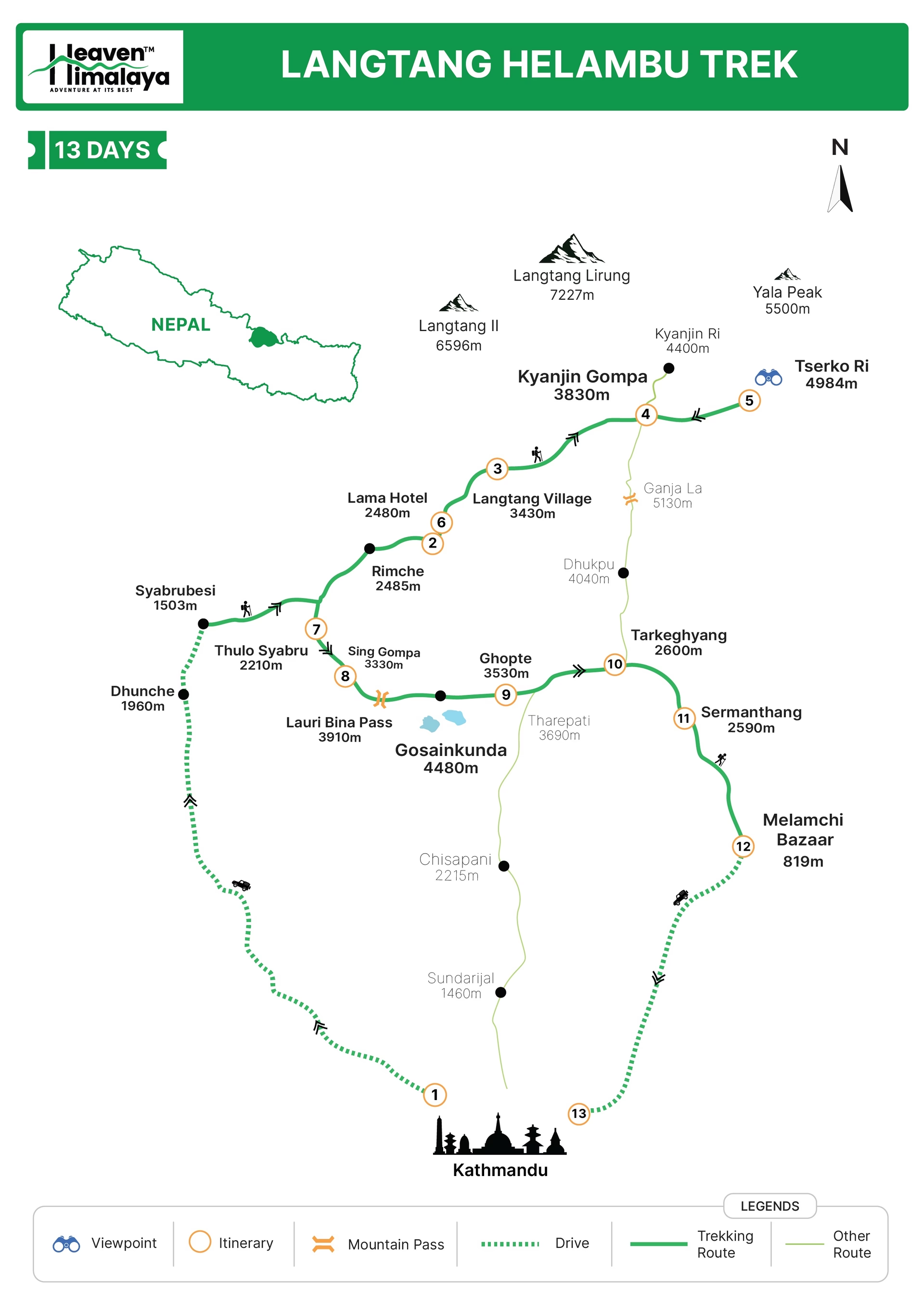
The trek starts with a scenic drive to Syabrubesi. The first half of the journey takes you through the lush forest to Lama Hotel, then to Langtang village. Eventually, you reach the high-altitude pastures of Kyanjin Gompa. This place feels like a hidden piece of Tibet right on the border. From here, a side trip to Tserko Ri/Tsergo Ri (5,033m) offers a stunning view of the mighty glaciers and peaks surrounding the valley.
After exploring the high Langtang region, the route shifts toward Helambu. You'll head back down the valley and turn toward the hillside settlement of Thulo Syabru, then climb to Sing Gompa. The most exciting part of this transition is crossing the Lauribina La Pass at 4,610m. This high pass serves as a gateway, leading to Ghopte and, eventually, to the large, traditional hamlets of Tarke Ghyang and Sermathang. By connecting these two areas, the trek feels like a complete circuit rather than just a walk up and back.
One of the most special parts of this Langtang Helambu trek itinerary is the chance to meet two different mountain communities. In the first half of the trip, you'll stay with the Tamang people, who have strong ties to Tibet. As you cross the high pass and enter Helambu, you meet the Hyolmo people. While they are often called the "Sherpas of Helambu", they have their own distinct language and customs that have stayed the same for hundreds of years. These mixed cultures, combined with the shifting scenery, make the Langtang Helambu trek feel so rewarding every single day.
While our standard Langtang Helambu trekking route focuses on moving between these two cultural hubs, we do not include the full Gosaikunda Lake tour in this specific package to keep the pace comfortable. This helps keep the daily walking pace comfortable and less tiring.
However, we know that many trekkers look at the Langtang Helambu trek map and want to see those famous lakes, so we can easily customize the trip for you if you want to add them. By the time you finish the 13-day Langtang Helambu trek and head back to the city, you'll surely understand why so many people call this their favorite trekking experience in all of Nepal.
Trek Highlights of Langtang Helambu Trek
Experience incredible close-up views of peaks over 7,000 meters, including Langtang Lirung, Ganesh Himal, and Dorje Lakpa.
The journey takes through Tamang and Hyolmo villages where ancient Buddhist culture and mystical traditions are still very much alive.
A great chance to spot rare wildlife like the elusive red panda, Himalayan tahr, and langur monkeys within the diverse forests of Langtang National Park.
Birdwatchers will enjoy the trek, as the region is home to over 300 bird species, including those flying across the high valleys and river gorges.
Peaceful experience with far fewer crowds compared to the busier Everest and Annapurna trails.
Witness the incredible resilience of local communities who have rebuilt villages following the 2015 earthquake.
Get a unique "circuit" feel as the trek starts in the deep Langtang valley, crosses a high pass, and enters the rolling hills of Helambu.
Visit local yak cheese factories and ancient monasteries like Kyanjin Gompa and Churi Gompa, which add a special spiritual and local flavor.
Why choose Heaven Himalaya for the Annapurna Circuit Trek?
Owner-Led Personal Service
Unlike large trekking agencies that operate like call centers, where you talk to a sales agent, Heaven Himalaya follows a "boutique" approach, where the founder, Ramhari Adhikari, is hands-on. Undoubtedly, having direct access to the owner creates a layer of accountability that employees cannot match. If you're unsure about packing lists, visa procedures, or currency exchange, you can get answers directly from the decision-maker.
Proven 5-Star Ratings
If you are one of those who seek good reviews before booking a travel package, then you are in the right place, as Heaven Himalaya consistently receives high scores on third-party platforms like TripAdvisor and Trustpilot, replicating reliability and authenticity. The Annapurna Circuit is a long and arduous commitment. A 5-star rating specifically for this route suggests that the agency handles the most challenging aspects of trekking effectively, such as what to do when a teahouse is fully booked or when a trekker falls ill.
Rigorous Altitude Protocols
Acute Mountain Sickness is the most significant risk factor on the circuit, especially crossing Thorong La (5,416m). However, the guides at Heaven Himalaya monitor your oxygen saturation in the blood daily using pulse oximeters. On the rest days in Manang, they don't let you sleep; they take you on hikes to higher elevations and bring you back down to sleep, which is scientifically proven to aid acclimatization.
Sustainable "Refill Not Landfill"
Heaven Himalaya highly encourages its clients not to buy single-use mineral water bottles, which are a major contributor to plastic pollution in the Himalayas. They likely provide water purification tablets or boiled water services. They ensure porters carry safe weights, have proper hiking boots, and are insured. A happy porter team creates a positive atmosphere for the whole group.
Transparent All-Inclusive Pricing
Heaven Himalaya offers transparent pricing policies preventing unexpected costs. After you book, there won't be any surprise charges for permits, guides, meals, or porters. All fees and emergencies are covered in advance, so there will be no additional costs. You don't have to bring a lot of cash into the mountains because you can pay in bundles for permits, meals, lodging, and staff costs.
Fully Licensed Operations
Heaven Himalaya is registered with the Department of Tourism and the Trekking Agencies' Association of Nepal (TAAN). This is critical for insurance. If you need a helicopter rescue, your insurance company will likely require official documentation from a licensed agency. If you trek with an unlicensed "freelance" guide, your insurance claims could be denied.
Flexible Small-Team Adaptability
As a boutique agency, Heaven Himalaya is always ready to tweak itineraries to accommodate fitness levels, weather conditions, or add Tilicho Lake detours. In contrast to large group tours, which run on rigid, military-style schedules, this small group allows for real-time adjustments.
When is the Best Time for the Langtang Helambu Trek?
The best time for the Langtang Helambu trek is Autumn (September to November) and Spring (March to May). The weather is most consistent throughout these months, which means your trek will be safer and visually spectacular.
1. Spring (March to May)
If you enjoy vibrant landscapes, the Langtang Helambu trek in spring is hard to beat. Daytime temperatures at lower altitudes range from 10°C to 20°C. Above the tree line, it remains cool but comfortable. In spring, the Langtang region truly awake with lush greenery and massive rhododendron forests in full bloom. On top of that, it's prime time for wildlife spotting as animals become more active. You must choose spring to feel the rejuvenate vibe of the valley.
2. Autumn (September to November)
For many, the Langtang Helambu trek in autumn is the ultimate choice. This season offers the most consistent Langtang Helambu trek weather, with crisp air and deep blue skies. In this season, you can count on clear, sunny days with temperatures between 10°C and 18°C. It's cold at night, especially in Kyanjin Gompa, but you can handle it with the proper clothing. After the monsoon, the dust is washed away, offering clear vistas of Langtang Lirung, Ganesh Himal, and Dorje Lakpa. In addition, this season often coincides with major Nepali festivals like Dashain and Tihar, giving you a chance to experience the local Hyolmo culture in the Helambu regions.
3. Off-Season Trekking: Winter and Monsoon
While the best season for Langtang Helambu trek is during the spring and autumn, some thrill-seekers look elsewhere:
Langtang Helambu Trek in Winter (December to February): It's a "winter wonderland" for those who don't mind sub-zero temperatures and snowy paths. It's incredibly peaceful but be prepared for some teahouse closures and potential avalanche risks. Langtang Helambu trek in monsoon (June to August): Generally, we don't recommend this time. Heavy rain brings leeches, slippery trails, and clouds that hide the peaks. However, for a botanist or a trekker seeking total solitude amidst misty, green hills, it remains an option- just pack plenty of rain gear.
How Much Does the Langtang Helambu Trek Cost in 2026?
Figuring out your budget for a 13-day trek through Langtang and Helambu is all about finding your balance between comfort and cost. By combining these two major trekking areas into one trip, you're actually being quite savvy with your money. You'll save a significant amount on transportation and avoid certain permit logistics, making this one of the most cost-effective long-distance treks in Nepal.
While budgeting your Langtang Helambu trek, you need to consider these key factors:
Group Size: Trekking with a group of 4 or more can slash your transport and guide costs by $100-$250 per person. Transportation: A local bus to Syabrubesi is the most "local" experience and the cheapest, but a private jeep (shared with friends) offers significantly more comfort on Nepal's winding roads. This accessibility is a big reason why the Langtang region is generally 20-30% more affordable than the Everest region- you're trading expensive domestic flights for a scenic drive. Seasonality: During peak months (October and April), teahouse prices are firm. In the off-season, you may find more room for negotiation, though many high-altitude lodges may close.
Airport transfers–pick up and drop in a private vehicle
All ground transportation in a private vehicle (Car or a Jeep)
Your accommodation in a 3-star category hotel in Kathmandu with a breakfast plan
Your accommodation in the best guesthouses available (on a sharing basis) during the trek
Breakfast, lunch, and dinner throughout the Langtang trekking journey
All paper works
National Park and Heritage Sites entry tickets
Trekkers Information Management System (TIMS) and trekking permits
A licensed, English-speaking, experienced guide along with a porter (1 for two clients)
All the costs of guide and porter, including accidental insurance
Duffel bag, and sleeping bags (to be returned to us after the Langtang trek)
T-shirts, a route map, and a travel completion certificate
All applicable government taxes and service charges.
First aid kit
Exclusions
Meals (lunch and dinner) in Kathmandu
International airfare
Nepal entry visa fees (USD 50 for a tourist visa, and it can be obtained at the airport in Kathmandu on arrival!)
Travel Insurance
Personal refreshment items like cold drinks, snacks, etc.
Personal utility items like laundry, telephone expenses, electricity charges, etc.
Personal Langtang trekking gear.
Tips for guides and porters
Dates & Availability
Select Departure Date
No fixed group departures right now — run Langtang Helambu Trekprivately with your own group. Pick a preferred start date and we'll confirm availability.
Loading calendar…
Sold out dates
Group-size discounts will be applied in the next step.
Select a start date from the calendar.
All prices per person, twin share. Subject to availability — Langtang Helambu Trek dates fill quickly in peak season.
13 days Langtang Helambu Trek Itinerary
Day 01 :Drive from Kathmandu to Syabrubesi (1,550m)
Elevation: 1,550m
Duration: 6-7 hrs
Accommodation: Hotel
Meals: Breakfast, Lunch, and Dinner Included
Our adventure begins early in Kathmandu. As we drive out of the valley, you'll watch the busy city streets slowly fade away, replaced by green terraced fields and small brick houses. It's a long drive, but the changing scenery keeps it interesting the whole way.
Once we leave the main highway at Galchi, the road starts to follow the massive Trishuli River. This river is famous for white-water rafting. We usually stop for lunch in a lively riverside towns like Trishuli Bazaar or Betrawati.
As we climb higher into the Rasuwa district, the road gets a bit winding, but this is where the views get splendid. On a clear day, after passing through Kalikasthan, you'll get the first stunning sights of snowy peaks- Ganesh Himal and the Langtang range.
We'll pass through Dhunche, the district headquarters, where we stop briefly to check our permits at the army checkpoint. From there, it's a short drive down to the river valley to reach Syabrubesi. This small town sits right where the Bhote Koshi and Langtang rivers meet. It has an authentic "gateway" vibe- full of trekkers, tea houses, and the roaring sound of the river.
Day 02 :Trek from Syabrubesi to Lama Hotel (2,470m)
Elevation: 2,470m
Duration: 6-7 hrs
Accommodation: Guesthouse
Meals: Breakfast, Lunch, and Dinner Included
After breakfast in Syabrubesi, we start our first real day of walking. Today, we enter the Langtang National Park. While trekking through the green jungle, the air is fresh, and the trail is lined with trees like oak, maple, and bamboo.
Most of the walk follows the Langtang Khola river. Along the way, you'll cross several high bridges that hang over the water. They are safe but very exciting to walk across! If you look up into the trees, you might see Langur monkeys or even a red panda if you are lucky.
We'll stop at small places like Pairo and Bamboo to have a tea break or lunch. The trail goes up and down, but it is a steady climb that helps your body get used to the movement. By afternoon, we arrive at Lama Hotel. Just so you know, this isn't one big hotel, but a small group of guest houses in the middle of the forest.
Day 03 :Trekking from Lama Hotel to Langtang Village (3,430m)
Elevation: 3,430m
Duration: 4-6 hrs
Accommodation: Guesthouse
Meals: Breakfast, Lunch, and Dinner Included
After leaving the forest of Lama Hotel, the trail starts to climb. You'll notice the air getting cooler and the trees beginning to thin out. After about 4 hours of walking, we reach Ghoda Tabela, at 3,030 meters. This is a great spot to stop for lunch.
In the past, this flat area was used for grazing horses, but today you are more likely to see yaks wandering around. There is also a small checkpoint here where the guards will check your Langtang trekking permits.
After lunch, the scenery changes completely. We leave the "jungle" behind and enter a wide, open valley. The scenery is impressive, and you'll get the amazing sights of Langtang Lirung. Along the path, you'll see mani walls (stone walls with carvings) and prayer wheels.
By the afternoon, we arrive in Langtang village, home to the Tamang people, who follow a unique, Tibet-influenced culture. You'll see prayer flags flying in the wind and water mills used for grinding grain. It feels like a very real, working village. You can watch the locals go about their daily routines.
Day 04 :Trek from Langtang Village to Kyanjin Gompa (3,870m)
Elevation: 3,870m
Duration: 3-4 hrs
Accommodation: Guesthouse
Meals: Breakfast, Lunch, and Dinner Included
After breakfast, we leave Langtang town and head further up the valley. The trees are mostly gone now, replaced by wide, open fields and massive rocky peaks. As you walk, you'll be surrounded by famous mountains like Langtang Lirung and Yala Peak.
On the way, we pass through a tiny settlement called Mundu. This area is very peaceful, and you'll likely see yaks and sheep grazing in the high pastures. If you keep a sharp eye on the grassy hills, you might even spot a Himalayan tahr (a type of mountain goat).
As we get closer to Kyanjin Gompa, the valley opens up even more. In the distance, you can see the white ice of the Langtang Glacier. We should arrive at Kyanjin Gompa by lunchtime, which gives you plenty of time to rest and explore. This hamlet is the spiritual heart of the valley, and the local monastery (the Gompa) is a tranquil, special place to visit.
One thing you absolutely must do here is visit the famous yak cheese factory. You can see how the cheese is made and buy a few slices of fresh, creamy cheese to snack on. After that, we recommend the rest of the day. Save your energy for tomorrow's big hike up to the Tserko Ri viewpoint.
Day 05 :Hike to the Tserko Ri (5,033m)
Elevation: 5,033m
Duration: 6 hrs
Accommodation: Guesthouse
Meals: Breakfast, Lunch, and Dinner Included
Today is a big day. We are heading up to Tserko Ri, which is the highest point of our trek at about 5,000 meters. The walk starts relatively easy. We move through open fields where yaks are grazing, and the path is mostly flat.
However, the middle part of the hike gets much steeper. You'll be walking on a rocky ridge with plenty of zig-zagging paths. The ground can be a bit loose and rocky, so we take our time and watch our step.
The last part of the climb is the hardest because the air is very thin. You might feel a bit out of breath. But once you stand on the summit, all the hard work feels worth it. Enjoy 360-degree panoramas of the giant mountains. You are so close to peaks like Langtang Lirung and Dorje Lakpa that it feels like you can touch them. On a clear day, you can even see across the border into Tibet.
After taking plenty of photos and enjoying the feeling of being at 5,000 meters, we head back down the same way. The walk down is much faster, but it can be a bit hard on the knees, so we keep a steady pace. Once we are back in Kyanjin Gompa, you can have a warm meal and rest.
Day 06 :Trek from Kyanjin Gompa to Lama Hotel (2,470m)
Elevation: 2,470m
Duration: 7-9 hrs
Accommodation: Guesthouse
Meals: Breakfast, Lunch, and Dinner Included
Today is a long walking day, but the good news is that almost all of it is downhill. We are going back the same way we came, covering the distance of two days in just one.
The walk starts with an easy stroll through the high mountain meadows. You can take one last look at the prominent peaks like Langtang Lirung as they begin to fade behind you. We'll pass through the small settlements and yak pastures again, perhaps stopping in Langtang village for a quick cup of tea.
By lunchtime, we should reach Ghoda Tabela. You notice rocky ground begins to turn green again. After lunch, we enter the deep forest. The air gets cooler and shadier under the oak and bamboo trees.
Finally, we arrive back at the riverside lodges of Lama Hotel. This is our last night on the "Langtang side" of the trip. From tomorrow, we start the second half of our adventure as we head toward the beautiful Helambu region!
Day 07 :Walking from Lama Hotel to Thulo Syabru (2,210m)
Elevation: 3,330m
Duration: 5-6 hrs
Accommodation: Guesthouse
Meals: Breakfast, Lunch, and Dinner Included
Today is an exhilarating day because it marks a change in our path. Instead of heading all the way back to Syabrubesi, we are going to turn toward the Helambu region. This is the "bridge" that connects the two valleys and marks the start of the second half of our 13-day Langtang Helambu trek itinerary.
The morning starts with a nice, easy walk through the same bamboo and oak forests we saw on our first day. We'll pass through familiar spots like Rimche. However, once we get near the area called Pairo, everything changes. Instead of staying on the main trail that goes down, we take a different path that starts to climb uphill.This new trail takes us through a mix of green forests, small farms, and quaint stone houses belonging to the Tamang people. As you climb higher, you'll get striking views of the Trishuli River far below and the Ganesh Himal in the distance.
By the afternoon, we reach Thulo Syabru, a lovely Tamang village. This is a scenic settlement that sits high on a ridge, with traditional stone houses clustered together. Walk around to watch local Tamang families at work. It feels much more like a conventional farming village than a busy trekking hub.
Day 08 :Trek from Thulo Syabru to Sing Gompa (3,330m)
Elevation: 3,330m
Duration: 6 hrs
Accommodation: Guesthouse
Meals: Breakfast, Lunch, and Dinner Included
Today's walk is all about going up. We start right out of Thulo Syarbu with a steep climb that passes by local farms and houses. As you gain height, you can look back and see the Langtang and Ganesh Himal mountains standing tall over the valleys you just walked through.
After the initial climb, we enter one of the most beautiful forest sections of the entire trek. It is a thick woods filled with rhododendron, oak, and pine trees. If you are here in the spring, the flowers make the forest feel very colorful. We'll cross a few small streams and waterfalls along the way, making it a very peaceful hike.
We'll stop at a place called Dursagang for a break and later reach the ridge at Phoprang Danda. This is a vast, open area with great views in every direction. You'll see several stone chortnes with colorful prayer flags.
Finally, the trail leads us to Sing Gompa, also known as Chandanbari. This small village sits right on top of a ridge. The first thing you'll notice is the old monastery (the Gompa) surrounded by prayer wheels and statues.
Day 09 :Trek from Sing Gompa to Ghopte (3,530m)
Elevation: 3,530m
Duration: 5 hrs
Accommodation: Guesthouse
Meals: Breakfast, Lunch, and Dinner Included
Today we have a big climb ahead of us, so we tried to leave Sing Gompa quite early. We are going to cross the highest point of the Helambu transition: the Lauribina La Pass. While many trekkers spend a night at the Gosaikunda Lake, our route takes us past the lakes and directly over the pass to reach the Ghopte side by evening.
The morning starts with a steady climb through the forest. As we reach Cholangpati (3,654m), the trees begin to thin, and the views become wide and open. You'll walk up a famous section called "Lauribina Ridge". It is a bit steep and windy, but the 360-degree Himalayan panoramas and the distant hills of Tibet are absolutely world-class.
As we get closer to the top, we'll pass near the famous Gosaikunda Lakes. Instead of stopping to stay at the lakeside hotels, we keep moving toward the Lauribina La Pass, which sits at 4,610 meters. Standing at the top of the pass is an incredible feeling- you are surrounded by snowy peaks in every direction. After a quick break for photos at the prayer-flag-covered summit, we begin a long, rocky descent.
The path down to Phedi (3,630m) is steep, so we take our time and watch our step on the stones. After a late lunch, we continue walking through a more rugged, rocky landscape until we reach Ghopte.
Day 10 :Trek from Ghopte to Tarke Ghyang (2,600m)
Elevation: 2,600m
Duration: 6 hrs
Accommodation: Guesthouse
Meals: Breakfast, Lunch, and Dinner Included
We start the morning with a mix of gentle ups and downs as we move along the ridges. You'll see plenty of wide-open pastures, and then the trail enters a thick, green forest. The first primary goal of the day is to reach Thadepati (3,690m). This high ridge serves as a balcony overlooking the Helambu Valley.
Next, we have a long, steep walk down through forests. The trail crosses several small mountain streams before Melamchi Gaon (2,530m). This is a very charming village where the Hyolmo people live. It's important not to confuse this quiet mountain settlement with Melamchi Pul, which is the busy town down by the road where we'll catch our bus in a few days.
From the village, we have one more moderate climb to finish the day. We walk past local terraces and farm fields where you can see the villagers at work. The path winds through the greenery until we finally reach Tarke Ghyang. This is one of the oldest and largest settlements in the whole Helambu region.
Day 11 :Trek from Tarke Ghyang to Sermathang (2,590m)
Elevation: 2,590m
Duration: 4 hrs
Accommodation: Guesthouse
Meals: Breakfast, Lunch, and Dinner Included
Before we leave Tarke Gyang, we'll take some time to visit the village's historic monastery, Churi Gompa. It is a captivating monastery filled with colorful paintings, statues, and woodcarvings that showcase the deep Buddhist heritage of the Hyolmo people.
The walk toward Sermathang is enjoyable and mostly gentle. The trek begins with a slight uphill, then winds around the side of the hill through forests of pine and rhododendron. We'll pass through a few tiny settlements like Ghangyul, where life moves at a very slow pace. As we get closer to Sermathang, the path levels out. This village is spread out along a high ridge, offering some of the best sunrise and sunset views in the region.
Sermathang is a significant hub for the Hyolmo community. These families moved here from Tibet centuries ago and have created a unique mountain culture renowned throughout Nepal for its hospitality. In this hamlet, we recommend trying some authentic Hyolmo dishes, such as Rhildok or He Dhurma.
Day 12 :Trek from Sermathang to Melamchi Pul Bazaar (870m)
Elevation: 870m
Duration: 5 hrs
Accommodation: Guesthouse
Meals: Breakfast, Lunch, and Dinner Included
Today is the final day of our trek, and it's a pleasant walk to finish the Langtang-Helambu trip. We start the morning in Sermathang with one last view over the broad Helambu Valley before we begin our long descent.
The first part of the walk is very gentle. We follow the ridge and pass through several charming little hamlets, such as Nigale and Kakani. Along the way, you can look down into the deep river gorges and see the terraced hillsides stretching out for miles.
As we get closer to the end of the trail, the path gets a bit steeper as it drops down toward the river. You'll notice more rice paddies as we reach the lower valley. Finally, we arrive at Melamchi Pul Bazaar. The word "Pul" actually means "Bridge," and you'll see the busy town sitting right by the Melamchi River.
Day 13 :Drive from Melamchi Bazaar to Kathmandu (1,400m)
Elevation: 1,400m
Duration: 4 hrs
Accommodation: Hotel
Meals: Breakfast, Lunch, and Dinner Included
After a final breakfast by the river, we hop into our jeep for the drive back to Kathmandu. The first part of the journey follows the Melamchi River gorge, offering you one last look at Nepal's rural hills and small farms.
As we move along, the dirt roads eventually turn into the paved Araniko Highway, and the ride becomes much smoother. The drive takes us through the outstanding Panchkhal valley and the hill town of Dhulikhel. On a clear day, you can still see the snowy peaks of the Langtang range from here.
As we get closer to the city, we pass through the historic town of Banepa and move toward Bhaktapur. You'll start to notice the landscape shifting from quiet hills to busier suburbs. We pass the famous Suryabinayak temple and finally enter the urban streets of Kathmandu. Once we arrive back at the hotel, it's time to say goodbye to your trekking crew and celebrate!
Altitude profileMax 5,033 m
Create a Bespoke Itinerary
Customize your Himalayan adventure with personalized itineraries for unforgettable experiences!
Excellent solo Nar Phu Valley Trek with Heaven Himalaya
Just completed the Nar Phu Valley Trek as a solo traveler and couldn't be happier with how it was organized.From the start, communication was clear. A proper pre-trip gear check meant I knew exactly what I needed and what the guide would provide. They arranged a sleeping bag and trekking poles for hire, which saved me carrying my own.Accommodation throughout felt genuine and welcoming rather than touristy, a real Nepalese experience rather than a tourist-trail one. Transport to and from the trailhead was reliable and comfortable.What really stood out was my guide Hari's ability to read my pace. Early on I struggled a bit with the altitude, and he slowed things right down without making it a big deal. Once I'd acclimatized, we picked up the pace significantly. Hari was genuinely flexible day to day depending on how I was feeling, rather than sticking rigidly to a fixed itinerary.I also picked up a stomach bug partway through the trek. Hari talked through the options with me calmly and…
Jojo Y
Second time in Nepal with Heaven Himalaya
This is my second time in Nepal with Heaven Himalaya & I am writing this with gratitude & appreciation for my guide Hari, my porter Arun, as well as the entire team.This was meant to be my birthday trip, I had requested to summit EBC on the actual day of my birthday (29/5/2026), and i made it happen with the help & support of Hari and Arun.Hari has been very thoughtful and attentive throughout the trip, making sure to constantly ask/check if I’m feeling okay as we ascended to higher altitudes.As it got colder higher up on the mountains, Hari thoughtfully delivered hot water to my room every night to help me deal with the extremely cold nights.On my birthday itself, Hari also resourcefully brought a “Happy Birthday” candle which he got from Namche to the summit, and we created our own birthday “cake” using the candle and an apple. That was a very beautiful memory & amazing experience.As I was traveling alone as a female, Hari also did his best to find me the most comfortable accommodat…
CCharlotte B
EBC Hike in May 2026
Last month in May 2026, I did the Everest Base Camp hike with Heaven Himalaya, and it was absolutely amazing. From the start they made everything easy . My guide Bishal, which he said meant thulo in nepali was so helpful and patient; he knew everything about the trail and mountains and also made us laugh all the time.Our porter Krishna was a star! He carried our bags without complaining and always had a smile, telling us funny stories in the evenings. I don't know what we would have done without him.The trek itself was so hard but so worth it. The views are just mindblowing; waking up every morning to see the mountains covered in snow is something I will never forget. Bishal and Krishna made sure we were safe and happy all the way.Reaching Kala Patthar at sunrise was unreal, seeing Everest in the golden light was like a dream. Bishal and Krishna were there with us every step, cheering us on and making it so special.I would absolutely recommend Heaven Himalaya for everyone. They are no…
Tina
Exceptional Service and a Birthday to Remember
They say the mountains humble you, but what I didn't expect was how deeply the people of Nepal would touch my heart.Couldn't have asked for a better crew for our Everest Base Camp - Cho La Pass - Gokyo adventure. From day one, Shankar, Ganesh, Dawa, and Prince treated us with so much kindness, patience, and care that it never felt like we were just another hiking group to them.They became our family in the mountains.Our guide, Shankar, was exceptional. Calm, knowledgeable, dependable, and always looking out for us every step of the way. He knew the mountains like the back of his hand and made us feel safe even during the toughest parts of the trek. When weather conditions in Lukla became unpredictable and visibility was poor, he immediately took action and arranged a helicopter to Kathmandu so we wouldn't miss our international flights. In moments of stress, that level of leadership and quick thinking means everything.It was my birthday during the trek, so I felt incredibly special wh…
Jarin Lam
Unforgettable First Trek to Annapurna Base Camp & Poon Hill
We had an amazing experience with Heaven Himalaya for our first trekking trip to Annapurna Base Camp and Poon Hill. We were actually recommended to them by a friend, and we’re incredibly thankful we chose to go with them. It was truly an unforgettable 2 weeks in Nepal.Our guide, Hari, was attentive, thoughtful, and always made sure we were comfortable and enjoying the journey. He was constantly on the ball, supporting us every step of the way and helping to adjust the itinerary whenever needed. Despite a few slight hiccups during the trip, he remained calm, flexible, and proactive in making arrangements to ensure everything went smoothly.Our porter, Anis, was also incredibly reliable and supportive throughout the trek. He consistently checked in on us and made sure our needs were always taken care of along the way.A special thank you as well to Ram, who was very helpful in coordinating everything behind the scenes and ensuring the trip ran smoothly from start to finish.Beyond the trek…
Dan
Truly Unforgettable!!!
My friend and I booked the 14 day Annapurna Circuit with Tilicho Lake trek. The whole experience was amazing. Ram made it easy to alter the trip to our specific needs. We added flights, cut off 2 days of trekking, requested single rooms, and he quickly got us a quote and booked! Hari was our guide on the trek and he was fantastic! He attended to all our needs and safely guided us for the entire time. He did an excellent job of getting us the best rooms, served our meals every day, and did everything in his power to make sure us old men(63 and 74) made it over the Pass! Our porter, Denise, was equally impressive! I still don't know how he carried our bags for 10 days! Clear blue skies, endless views, majestic mountains, deep river valleys, friendly people, a truly unforgettable trip!!!
Good to Know Information for Langtang and Helambu Region
Trekking Permits for Langtang Helambu Trek
To keep the Himalayas pristine and safe for everyone, the Nepal government requires a few specific permits for the Langtang Helambu trek. When you book your 13-day adventure with us, we handle the paperwork for you, but it's always good to know what's in your permit folder.
In 2026, the rules for trekking in Nepal became a lot simple because foreign trekkers must trek with a licensed guide. This means your agency will handle all the hard work at the permit offices in Kathmandu, so you can focus fully on the trek.
1. Langtang National Park Entry Permit
This permit gives you entry to the Langtang region's protected areas, where the rare Red Panda lives. The fees go directly to trail maintenance and local conservation efforts.
Validity: This is a single-entry permit valid for the duration of your trek.
2. TIMS Card (Trekkers' Information Management System)
The TIMS card for the Langtang Helambu trek serves as your safety registration. It ensures your details are in the system in the event of an emergency.
Cost: NPR 2,000 (approx. $15) for all foreign trekkers.
Requirements: Since you'll be trekking with one of our licensed guides, we'll issue this as a "Group TIMS", which is the standard safety requirement for the trekking permits in Nepal Langtang region.
3. Shivapuri Nagarjun National Park Permit
Because our 13-day route takes you through the charming Helambu region and villages such as Melamchi Gaon and Tarke Ghyang and crosses the Shivapuri National Park. So, the Shivapuri permit is also required.
Foreign nationals: NPR 1,000 (approx. $8)
SAARC nationals: NPR 600 (approx. $5)
Where to get it: This is usually settled at the park get as we exit toward Kathmandu.
Documents Needed for Your Permits
To help us secure your Langtang Helambu trek permits quickly, please provide the following information:
A clear scan or photo of your passport, which must be valid for at least 6 months.
A copy of your Nepal tourist visa.
Two digital passport-sized photos.
Travel insurance details (must cover emergency evacuation up to 5,000m).
Note: Bring 4-5 physical passport photos and some Nepali Rupees (NPR) in cash, just in case you need to buy a local permit for a specific monastery or local community project.
Accommodation for Langtang Helambu Trek
When trekking through the Langtang and Helambu regions, the accommodation is more than just a place to sleep- it's where you'll experience the Himalayan hospitality. The teahouses in Langtang Helambu offer a warm, cozy, and authentic mountain experience.
For 2026, the accommodation standards have seen a significant upgrade. Because much of the infrastructure in the Langtang Valley was rebuilt after the 2015 earthquake. There are many newer lodges with modern designs available in Nepal compared to the older trails.
The most common Langtang Helambu trek accommodation is the "Teahouse". These are family-run guesthouses where the ground floor is a communal dining hall- warmed by a central wood-burning stove- and the upper floors contain the bedrooms.
Most room facilities in the Langtang Helambu trek include twin-sharing beds with a foam mattress, a pillow, and a blanket. While blankets are available, we always recommend a high-quality sleeping bag for hygiene and extra warmth at higher altitudes, such as Kyanjin Gompa.
Accommodation in the Langtang Valley is more rugged. In places like Syabrubesi, you can find luxury lodges with attached bathrooms. However, as you reach Kyanjin Gompa, rooms become smaller and walls thinner to prioritize safety and wind resistance. Similarly, the lodges in Helambu are more like homestays. You'll stay in traditional Tamang and Hyolmo settlements like Tarke Ghyang and Sermathang, where the vibe is deeply cultural.
Toilet and Shower Facilities Along the Langtang Helambu Trek Route
Like other trekking trails, toilet and shower facilities along the Langtang and Helambu trek are functional but rudimentary. You'll encounter a mix of Western-style flush toilets in lower valleys and traditional Asian squat toilets as you go higher. Most bathrooms are shared and located at the end of a hallway or in a separate small building.
Hot water for the shower is usually available but comes at a cost (approx. $3-$5). In Langtang, most lodges use gas or solar heaters. In the Helambu settlements, you might occasionally be offered a "bucket shower" (a bucket of hot water and a mug), which is a classic trekking experience in Nepal.
Always pack your own toilet paper, hand sanitizer, and a quick-dry towel. While the lodges are clean, these personal items are rarely provided in the rooms.
Food and Drinks on the Langtang Helambu Trek
One of the highlights of the journey is the food on the Langtang Helambu trek. Because you're walking 5 to 7 hours a day, your body needs fuel, and the teahouses provide hearty, energy-packed meals.
The menu is a delicious mix of traditional Nepali flavors and mountain staples. While the teahouse food on the Langtang Helambu route is simple, it is always freshly made with local ingredients.
If there's one meal, you'll become very familiar with, it's Dal Bhat. This staple Nepali dish consists of steamed rice, lentil soup, vegetable curry, and spicy pickles. On the Dal Bhat Langtang Helambu trek, the golden rule is "Dal Bhat Power, 24 Hour!" Most lodges offer unlimited refills of rice and lentils, making it the most cost-effective and filling meal for a hungry trekker. In the Helambu region, you might get to try authentic Hyolmo-style dishes, often featuring local greens and unique mountain spices.
While Dal Bhat is the king, you'll have plenty of other meals during the Langtang Helambu trek to choose from:
Breakfast: Fuel up with porridge, muesli, eggs (any style), pancakes, or Tibetan bread with honey. Lunch & Dinner: You'll find a variety like Momo (dumplings), Thukpa (noodle soup), pasta, and even mountain-style pizza. Acclimatization Tip: We highly recommend the local garlic soup- it's a traditional mountain remedy believed to help with altitude adjustment. The Cheese Factory: Don't miss the chance to try fresh Yak cheese in the Langtang Valley; it's a local delicacy produced in the high-altitude factories you'll pass along the trail.
Drinking Water and Hydration Options during Langtang Helambu Trek
Staying hydrated is crucial for preventing altitude sickness. We recommend drinking 2-4 liters of fluid daily.
Drinking water on the Langtang Helambu trek requires a bit of planning:
Purification is Key: Tap water is available at every teahouse, but you should never drink it untreated. We suggest using purification tablets, a UV filter (like a SteriPEN) < or a LifeStraw.
Boiled Water: You can buy thermoses of boiled water at teahouses for a small fee ($1-4). This is the safest and warmest option for cold mountain nights.
Say No to Plastic: To protect the fragile Himalayan environment, we strongly discourage buying plastic-bottled water. Using a reusable bottle with a filter is better for the planet and your budget.
After a long day of hiking, nothing beats a hot drink. You'll find everything from ginger-lemon-honey tea to "Po Cha" (salty Tibetan butter tea). While local spirits like Raksi are available, we recommend saving the celebration for your final night back in Kathmandu- alcohol and high altitude are not a good mix!
Electricity, Wi-Fi, and Phone Networks on the Langtang Helambu Trek
In lower towns like Syabrubesi and the Helambu settlements, you'll usually find reliable electricity from the national grid or local micro-hydro plants. However, as you climb toward Kyanjin Gompa, most teahouses switch to solar power.
You can usually charge devices in the common dining hall for a small fee, typically ranging from $2 to $5 per device. High altitudes and cold nights drain batteries fast. We strongly recommend carrying a 20,000 mAh power bank so you aren't tethered to a crowded charging plug in the dining hall.
While about 90% of the teahouses now offer Wi-Fi, remember that "mountain internet" is meant for messaging family, not streaming movies. The connection is often powered by satellite or long-range point-to-point links, which can be affected by heavy clouds or snow.
You'll find the best speeds in Syabrubesi and Lagntang village. Past Lama Hotel, the internet speed can become spotty. Expect to pay between NPR 300 and 600 ($2-$5) for a Wi-Fi password.
For the most reliable phone network on the Langtang Helambu trek, we recommend getting a local SIM card in Kathmandu before you depart.
NTC (Nepal Telecom): This is generally the best mobile network in the Langtang region. It has the broadest reach in remote valleys and is your best bet for a signal at higher elevations. Ncell: Great for 4G speeds in Kathmandu and the very start of the trek, but the signal tends to drop off faster than NTC once you get deep into the Langtang National Park. Data Tip: Buying a local data pack (10GB to 30GB) is often cheaper and more reliable than relying on teahouse Wi-Fi.
Also, download your maps like Maps.me or Google Maps and your favorite playlists while you're still in Kathmandu. Store your phone and power bank inside your sleeping bag at night. The body heat prevents the lithium batteries from "dying" in the sub-zero mountain air.
Difficulty Level of Langtang Helambu Trek
If you're wondering, "Is the Langtang Helambu trek difficult?", the short answer is: it's a moderate trek in Nepal's Langtang region. It is perfectly achievable for fit beginners, but it shouldn't be underestimated.
While it doesn't reach the extreme altitudes of the Everest Base Camp trek, the Langtang Helambu trek difficulty level comes from its duration. Walking for 11 days straight requires a solid base level of stamina. The great news is that combining these two regions actually helps with your acclimatization: you'll climb high in the Langtang Valley first, then stay at a relatively stable, lower altitude as you traverse into Helambu.
A typical day on the Langtang Helambu trek, you'll walk 10 to 15 km for 5 to 7 hours. The Langtang valley section is the more rugged of the two, with steep stone staircases and rocky paths. The climb from Lama Hotel to Langtang village is particularly famous for its "Nepali Flat" - a local phrase for a trail that never seems to stop going up and down. Similarly, the Helambu trails move through lush forests and high ridgelines. While the air is thicker and easier to breathe, the constant undulating terrain can be taxing on the knees.
The key determinant of the Langtang Helambu trek's difficulty is altitude. You'll start at Syabrubesi (~1,500m) and reach Kyanjin Gompa (~3,870m). If you choose to hike to Tserko Ri (5,000m), you'll be standing at the same height as many of the world's highest base camps. To manage this safely, we build an acclimatization day into our 13-day itinerary at Kyanjin Gompa, ensuring your body adjusts before crossing over toward Helambu.
You don't need to be an Olympic athlete, but the Langtang Helambu trek for beginners is much more enjoyable if you've spent some time on your feet beforehand. The trek is ideal for anyone with a moderate fitness level who wants a deep dive into Himalayan culture without the technical demands of peak climbing. If you're worried about the weight, hiring a porter can reduce your Langtang Helambu trek difficulty significantly, allowing you to walk with just a small daypack for water and your camera.
Training for the Langtang Helambu Trek
A little bit of physical preparation for the Langtang Helambu trek will make your time in the mountains much more enjoyable. While you don't need to be a professional athlete, starting a structured beginner training plan for Nepal trekking about 8 to 12 weeks before your departure will make those steep climbs feel much more manageable.
The goal isn't just to get fit; it's to build the kind of stamina that helps you wake up on day 10 feeling just as energized as day one. Here is how we recommend approaching your training for the Langtang Helambu trek:
1. Building Your Cardiovascular Base
Since the air gets thinner as you climb toward Kyanjin Gompa, your heart needs to work more efficiently. And activities like running, cycling, or swimming will improve your heart's ability to pump oxygen, which becomes much scarcer once you cross the 3,000m. Aim for 3 to 4 sessions a week, focusing on steady, moderate-intensity movement for 45 to 60 minutes.
2. Strength and Conditioning
You'll be spending a lot of time on "Nepali Flats" (constant ups and downs), so strengthening your legs and core is essential. Squats, lunges, and step-ups are the best exercises for the Langtang Helambu trek because they mimic the motion of climbing stone stairs. Don't forget your core; a strong midsection helps you maintain balance on uneven, rocky trails and makes carrying a daypack much easier on your shoulders.
3. The "Practice Hike"
There is no better way to prepare for a trek than actually to go hiking. If you have access to local trails, spend your weekends on longer walks. Start with a light daypack and gradually increase the weight to about 5-10kg. This not only builds your fitness for the Langtang Helambu trek but also lets you break in your boots- preventing blisters later!
4. Flexibility and Mental Prep
Trekking in Nepal is as much a mental challenge as a physical one. You'll be away from your usual comforts and spending long days in remote areas. Practices like yoga or even simple breathing exercises are surprisingly helpful for altitude. They teach you how to keep your breathing steady when the air gets thin, and they keep your muscles limber after a long day on the trail.
Altitude Sickness on the Langtang Helambu Trek
One of the most common questions we get is about altitude sickness on the Langtang Helambu trek. Because the route climbs into the High Himalayas, it's a valid concern, but the good news is that this specific circuit is actually one of the safer options in Nepal for managing elevation.
The Langtang Helambu trek reaches an altitude of 3,870m at Kyanjin Gompa. However, you might push up to 4,773m (Kyanjin Ri) or even 5,033m (Tserko Ri) for the views. Most people don't notice how much thinner the air is until they pass 3,000 meters. While severe cases of high-altitude sickness on the Langtang Helambu trek are rare because we don't stay at extreme heights for long, you should still be prepared for mild symptoms like nausea, headache, feeling more tired than usual, or a slight loss of appetite.
The key to a successful trek is slow, steady acclimatization on the Langtang Helambu trek. We've designed a 13-day itinerary to give your body plenty of time to adjust. Here's how you can help yourself feel 100%:
Pace is Everything: This isn't a race. Walking slowly and keeping your heart rate steady is the best way to help your blood oxygen levels stay within a healthy range. Hydration is Your Secret Weapon: Aim to drink 3-4 liters of water a day. Dehydration often mimics the symptoms of altitude sickness in Langtang, so keep that water bottle handy! Eat and Rest: Your body is working overtime to produce more red blood cells. Fuel it with plenty of carbs (Dal Bhat is perfect for this) and make sure you get a good night's sleep.
Travel Insurance for the Langtang Helambu Trek
While the Nepal government doesn't legally mandate it for every hiker, we consider travel insurance for the Langtang Helambu trek to be a non-negotiable part of your kit. Think of it as your most important piece of gear. As a responsible trekking agency, we require proof of insurance before we hit the trail, not because we like paperwork, but because we want to know that you are fully protected if the unexpected happens.
Even though this isn't the highest trek in the Himalayas, you're still heading into remote terrain where there are no roads. If you encounter a severe case of altitude sickness or a trail injury, the only way back to Kathmandu is often by helicopter. These rescues are incredibly efficient, but they are also expensive- often costing between $2500 and $5,000. Having the right trekking insurance in Nepal's Langtang region ensures that if you need help, we can call for a rescue immediately without worrying about the financial logistics.
Not all travel insurance is created equal. When you are looking for Langtang Helambu trek insurance coverage, you need to double-check the "fine print" for these specific items:
High Altitude Coverage: Many standard policies stop at 2,500m. Since our route reached nearly 4,000m (and viewpoints hit 5,000m), you must ensure your policy covers high-altitude trekking in Nepal up to 5,000 meters.
Helicopter Evacuation: This is the big one. Ensure that "emergency heli-evacuation" is explicitly listed. Some policies offer medical coverage but exclude air ambulances.
Medical & Hospitalization: Your policy should cover both emergency treatment on the trail and any follow-up care or hospitalization needed in Kathmandu.
Trip Interruptions: Life happens. We recommend a policy that also covers trip cancellations or delays due to weather or illness, so you don't lose your investment if your plans have to change at the last minute.
At the end of the day, having trekking travel insurance in Nepal is all about peace of mind. It allows you to focus on the stunning views of Langtang Lirung and the culture of the Helambu regions, knowing that you have a global support team behind you. Before we head out of Kathmandu, your guide will take a copy of your insurance details so that, in the rare event of an emergency evacuation in Nepal, we can act quickly.
Essential Packing List for Annapurna Circuit Trek
Bags and Carrying System
Item
Quantity
Notes
Main Duffel/Backpack
1
60-80L (with porter) or 45-65L (independent trekking)


.avif&w=1920&q=75)