

Nims Dai passes away in Broad Peak Avalanche

"Giving up is not in the blood, sir!"-Nims Dai
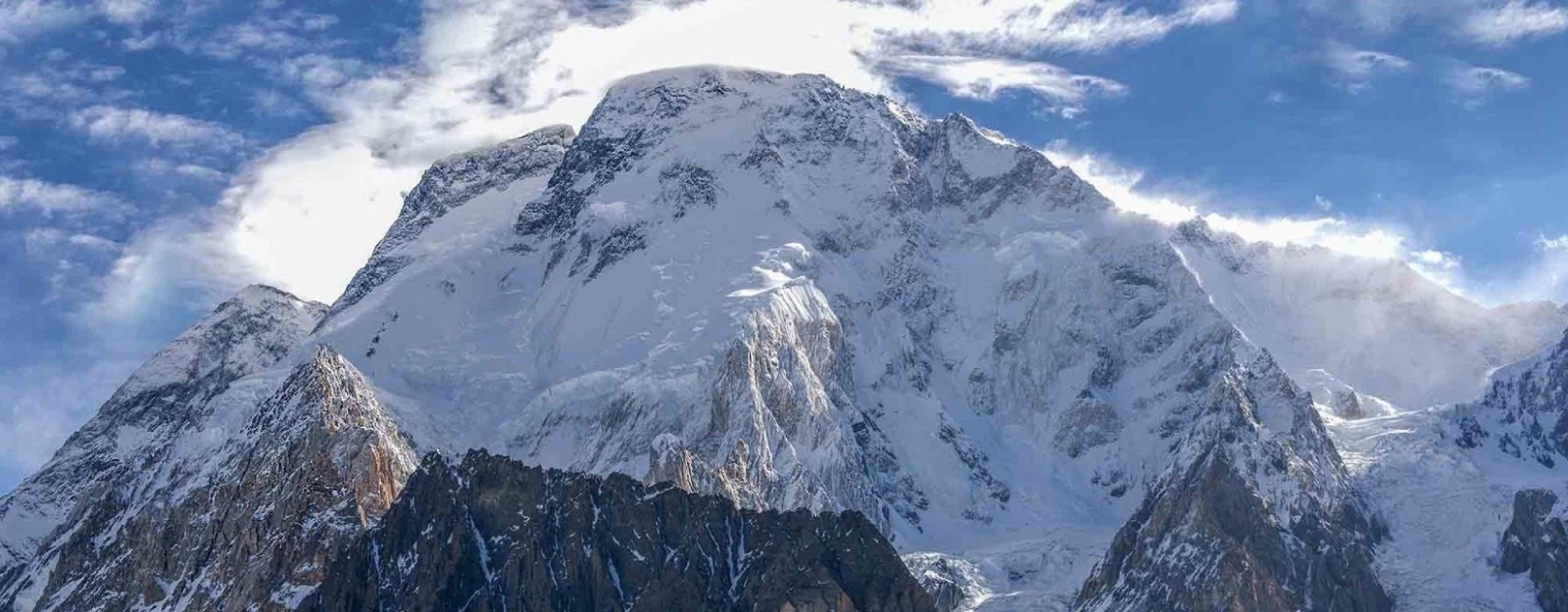
The mountains have always inspired humanity with their beauty, mystery, and challenge. Yet, they also remind us that nature remains beyond human control. In late July 2026, the mountaineering world was shaken by a tragic avalanche on Broad Peak, one of the world's fourteen 8,000-meter mountains in Pakistan's Karakoram Range. The disaster drew global attention as reports emerged that legendary Nepali climber Nirmal "Nims" Purja and several fellow climbers were among those caught in the avalanche.
After a two day long search and rescue, he and his expedition team were all declared dead. He was a symbol of determination, resilience, and possibility. Known worldwide for completing all 14 eight-thousanders in just 6 months and 6 days, he inspired millions through his belief that "Nothing is impossible." His relentless mindset and willingness to push beyond accepted limits earned him a reputation as one of the greatest climbers of his generation.
As we reflect on this tragedy, we honor not only Nims Dai but every climber who lost their life on Broad Peak. Their passion for exploration, courage in the face of uncertainty, and love for the mountains will never be forgotten.
The Broad Peak Tragedy
On 30th July 2026, an expedition on Broad Peak encountered dangerous conditions high on the mountain. During the summit push, a powerful avalanche swept across the route, triggering an emergency that quickly became one of the most closely followed mountaineering incidents in recent years. The avalanche came at roughly around 9:30 am on Thursday morning and the rescue team did not know about the avalanche until 13 hours after the accident, losing the precious time for daylight search and rescue.
Broad Peak Rescue Mission and Death Confirmation
Rescue helicopters were deployed the next morning after the alarm was raised under the coordination of Pakistan aviation authority, Pakistan alpine club and Base Camp rescue team. The conducted search and rescue battling extreme altitude, unstable snow conditions, and poor weather in an effort to locate the missing climbers. As for Nims Purja, hope remained alive as tracker data and search efforts suggested the possibility that Nims might still be found. Climbers, families, and supporters around the world followed every update, hoping for a miracle.
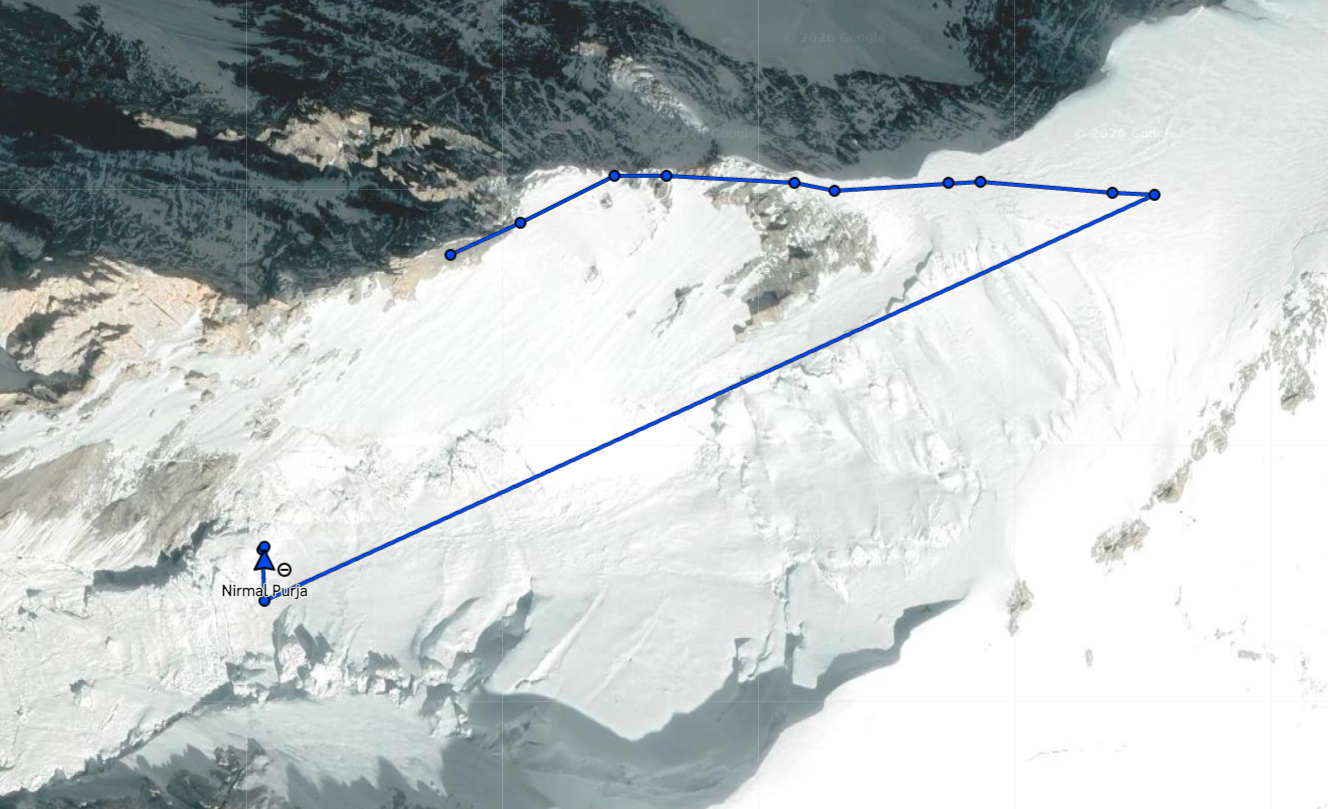
Sadly, those hopes gradually turned into heartbreak as official confirmations emerged by the Elite Expedition Team. The tragedy served as a powerful reminder that even the most experienced mountaineers are never beyond the reach of nature's forces. Mountains do not recognize records, reputation, or achievement. They demand humility from everyone who enters their realm.
Nims dai himself famously said:
"The mountain doesn't care who you are."
Those words now carry even deeper meaning. The same mountains that witnessed his extraordinary achievements also remind us that no climber, regardless of fame or experience, stands above nature. In the end, the mountains remain impartial, and that is perhaps the greatest lesson they teach.
Today, the Broad Peak tragedy stands as both a moment of sorrow and a tribute to the courage of those who dared to pursue their dreams among the highest peaks on Earth.
Why broad peak mattered to Nims Dai
Broad Peak was not simply another summit on Nims Dai's remarkable climbing résumé but second last stepping stone for successfully summited 8000ers twice with no oxygen. He was there to summit only Gasherbrum II (Jul 21, 2026) for his The Hattrick Project but had a change of plan and decided to summit Broad Peak which would have only left Cho Oyu in his mission to summit the 14 8000ers twice with no oxygen.
Who Was Nims Dai
Before becoming a global mountaineering icon, Nirmal "Nims" Purja came from small Dana village in Nepal's Myagdi District. Raised in a modest family, he learned resilience, discipline, and perseverance from an early age. His journey to greatness first took him through the military, where he joined the British Army's Brigade of Gurkhas and later achieved the distinction of becoming the first Gurkha to serve in the elite Special Boat Service (SBS).
Despite a successful military career, Nims Dai chose to follow a different calling. He left the security of military life, accepted significant financial risks, and dedicated himself fully to mountaineering. What began as a bold personal decision soon evolved into one of the most extraordinary careers in the history of high-altitude climbing.
Records That Changed Mountaineering Forever
Nims Dai did more than break records,he redefined what climbers believed was possible. His extraordinary achievements on the world's highest peaks challenged long-held assumptions about endurance, logistics, and human capability. Guided by his famous belief that "Nothing is impossible." he became one of the most influential mountaineers of the modern era.
Project Possible: The Impossible Challenge
In 2019, Nims Dai launched Project Possible, an ambitious mission to climb all fourteen of the world's 8,000-meter peaks in a single season. The idea was met with widespread skepticism. Many experts considered it unrealistic, while securing financial backing proved difficult. Yet Nims Dai remained determined to prove that perceived limits existed only to be challenged.
Before Project Possible, the record for climbing all fourteen eight-thousanders one individual to climb them consecutively stood at 7 years 11 months and 14 days held by Jerzy Kukuczka in 1987, and South Korean Kim Chang-ho who beat Kukuczka’s record in 2013 by just 1 month and 8 days. The achievement was regarded as one of mountaineering's most untouchable records due to the immense logistical, physical, and financial demands involved.
Nims Dai would rewrite that history completely by climbing all 14 Peaks in 6 Months and 6 Days.
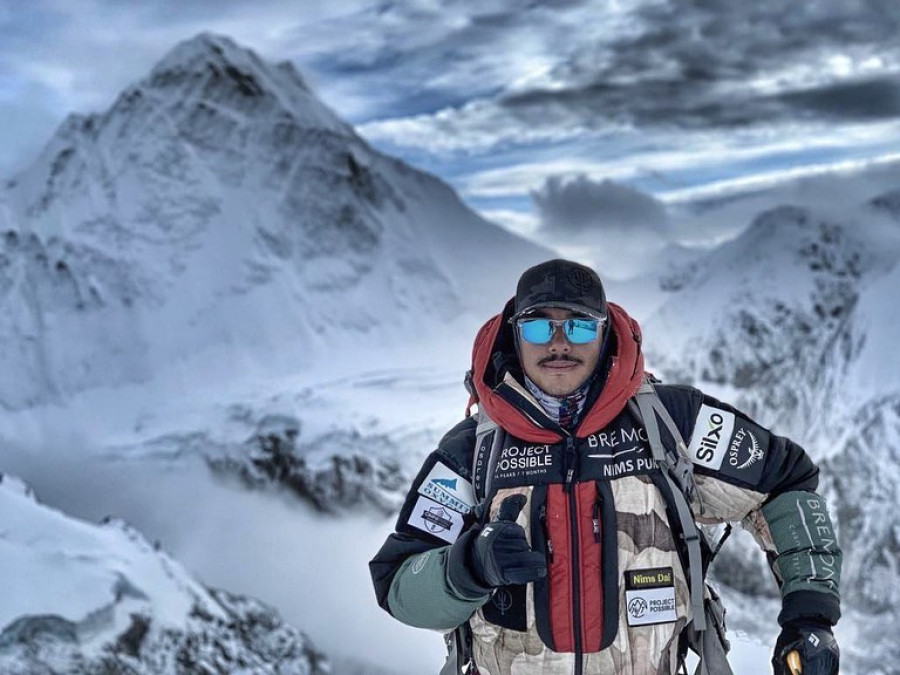
The fourteen summits completed during Project Possible were:
Annapurna I (8,091m) – April 23, 2019 (Tuesday) – 10:15 AM
Dhaulagiri I (8,167m) – May 12, 2019 (Sunday) – 01:00 PM
Kanchenjunga (8,586m) – May 15, 2019 (Wednesday) – 11:30 AM
Mount Everest (8,848.86m) – May 22, 2019 (Wednesday) – 05:30 AM
Lhotse (8,516m) – May 22, 2019 (Wednesday) – 03:45 PM
Makalu (8,485m) – May 24, 2019 (Friday) – 10:00 AM
Nanga Parbat (8,126m) – July 03, 2019 (Wednesday) – 11:48 AM
Gasherbrum I (8,080m) – July 15, 2019 (Monday) – 08:00 AM
Gasherbrum II (8,035m) – July 18, 2019 (Thursday) – 05:30 AM
K2 (8,611m) – July 24, 2019 (Wednesday) – 02:10 PM
Broad Peak (8,051m) – July 26, 2019 (Friday) – 05:00 PM
Cho Oyu (8,188m) – September 23, 2019 (Monday) – 08:30 AM
Manaslu (8,163m) – September 27, 2019 (Friday) – 07:10 AM
Shishapangma (8,027m) – October 29, 2019 (Tuesday) – 08:58 AM
On that final summit, Nims Dai completed all fourteen 8,000-meter mountains in just 6 months and 6 days, shattering the previous record and creating one of the greatest achievements in adventure sports history.
Nims Dai's achievement transformed what climbers believed was possible. His success inspired a new generation of mountaineers to pursue ambitious objectives, including later record attempts by climbers such as Kristin Harila. Yet regardless of subsequent records, Project Possible remains one of the most influential achievements in mountaineering history.
Although Project Possible is often associated with Nims Dai, he consistently emphasized that it was a team achievement. A highly skilled group of Nepali climbers Mingma David Sherpa, Geljen Sherpa, Lakpa Dendi Sherpa and other people worked alongside him throughout the project, overcoming logistical challenges, harsh weather, and extreme altitude. Their collective effort demonstrated the world-class capabilities of Nepali mountaineers and brought long-overdue recognition to their contributions.
The story of Project Possible reached a global audience through the Netflix documentary 14 Peaks: Nothing Is Impossible. The film documented the challenges, risks, and determination behind the record-breaking journey, introducing millions of viewers to Nims Dai's remarkable story.
Beyond showcasing an extraordinary athletic achievement, the documentary transformed Nims Dai into a globally recognized figure and highlighted Nepal's mountaineering excellence. For many international viewers, it was also a powerful introduction to the skill, leadership, and resilience of Nepali climbers who have long played a vital role in Himalayan expeditions.
Nims Dai’s Eight-Thousand Legacy
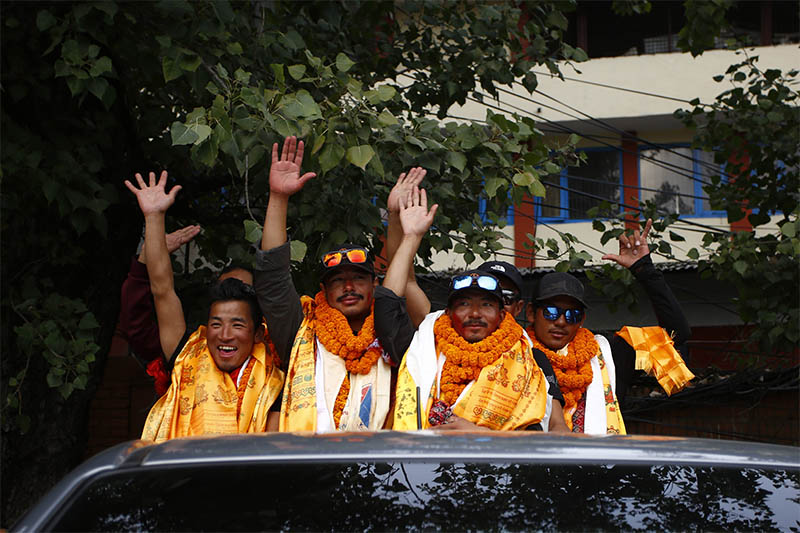
Following Project Possible, Nims Dai continued to expand his legacy by accumulating one of the highest numbers of successful ascents of 8,000-meter peaks in mountaineering history. His career statistics placed him among the most accomplished high-altitude climbers ever recorded and reinforced his reputation as one of the dominant figures of modern mountaineering.
Nims Dai's journey among the world's highest mountains began with Dhaulagiri in 2014, marking the start of an extraordinary climbing career. His final expedition took him back to Broad Peak, a mountain that had already been part of his historic achievements and remained connected to his final mountaineering ambitions.
Winter Ascent of K2
For decades, K2 in winter was considered the last great unsolved challenge in high-altitude mountaineering. Known for brutal weather, technical climbing, and a long history of failed winter attempts, the mountain earned a reputation as one of the most difficult objectives on Earth.
On January 16, 2021, Nims Dai and a team of ten Nepali climbers achieved the first successful winter ascent of K2. Before stepping onto the summit, the climbers gathered together and sang Nepal's national anthem (Saayaun Thunga Phool ka Hami …), creating one of the most iconic moments in mountaineering history. The achievement not only solved a decades-old challenge but also became a landmark victory for Nepal and for climbers everywhere who dare to pursue the impossible.
Beyond the Records: Rescue Missions and Leadership
While Nims Dai's records captured global attention, many climbers admired him even more for his willingness to help others in the mountains. Throughout his career, he participated in numerous high-altitude rescue missions, often putting his own safety at risk to save lives. One of his most remarkable rescues came on Annapurna in 2019, when he helped rescue climber Dr. Chin Wui Kin from the notorious "Death Zone" above 7,000 meters. Such actions earned him immense respect throughout the mountaineering community.
Beyond his physical strength, Nims Dai was known for his calm leadership during crises. Fellow climbers often described him as confident, decisive, and capable of inspiring others even in the most challenging situations.
Redefining Mountaineering and Elevating Nepal
Nims Dai transformed how the world viewed Nepali climbers. Through his achievements, he challenged the outdated perception that Sherpas and Nepali mountaineers existed only in supporting roles. Instead, he demonstrated that they were leaders, innovators, and world-class athletes capable of setting the highest standards in mountaineering.
As the face of Project Possible and the Netflix documentary 14 Peaks: Nothing Is Impossible, he became a global ambassador for Nepal, inspiring travelers, adventurers, and aspiring climbers from around the world to discover the Himalayas.
Porter House in Lobuche
Nims Dai's impact extended far beyond summit records. Recognizing the hardships faced by Himalayan porters, he is building the Porter House in Lobuche to provide better accommodation and support for those who work tirelessly behind the scenes under Nimsdai foundation citing “ A haven for the ‘Unsung Heroes of the Mountains'. The project reflected his commitment to improving porter welfare and creating a lasting positive impact on Nepal's mountain communities.

Elite Exped: Building a Mountaineering Legacy
Nims Dai founded Elite Exped with a vision of delivering world-class mountaineering experiences led by elite Nepali climbers. Through the company, he welcomed adventurers from across the globe while helping showcase Nepal's expertise, professionalism, and leadership within the international mountaineering industry.
Legacy of Nims Dai
Nims Dai's legacy cannot be measured solely by the summits he reached or the records he broke. He inspired people to challenge limitations, demonstrated extraordinary leadership in difficult situations, and consistently advocated for greater recognition of Nepali climbers. His humanitarian efforts, rescue missions, and dedication to helping others revealed a character that extended far beyond athletic achievement.
The legacy he leaves behind will continue to influence future generations of climbers, strengthen Nepal's place in mountaineering history, and inspire dreamers around the world. His achievements changed the sport forever, but his courage, humility, and belief in the impossible are what will ensure he is never forgotten.
Remembering Nims Dai and the Crew: A Final Farewell
Nims Dai lived by the belief
"Giving up is not in the blood, sir!"
From a small village in Nepal to the highest peaks on Earth, he proved that determination and courage can overcome extraordinary obstacles. His life remains a powerful reminder that true greatness comes not only from achievement but also from inspiring others to dream bigger.
As we remember Nims Dai, we also honor every climber who lost their life in the Broad Peak tragedy. Each of them carried a passion for exploration and a love for the mountains that deserves to be remembered. Their stories now form part of the enduring legacy of Broad Peak.
From all of us at Heaven Himalaya, we extend our deepest condolences to the families, friends, and fellow climbers affected by this tragedy. Nims Dai's achievements elevated Nepal, inspired millions, and redefined what humanity can accomplish in the mountains. Though he may be gone, his legacy will continue to inspire generations of adventurers to come.