Embark on journey along the serene trails of Manaslu circuit, crossing iconic Larkya La Pass and exploring villages that blend both Nepalese and Tibetan cultures beneath Mt. Manaslu, in a 14 days tour.
DestinationNepal
Duration14 days
Trip DifficultyModerate
ActivitiesTrek
Max. Elevation5160m.
Group Size2-4
VehicleCar, Deluxe AC Bus
AccommodationHotel, Teahouse & Lodge
MealsB.L.D
Manaslu Circuit Trek Overview
The Manaslu Circuit Trek is an ultimate adventure like no other, with unbeaten trails and an authentic village experience. Our 14-day itinerary to Mount Manaslu and Larke Pass takes you to a less crowded region than other trips to Everest Base Camp and Annapurna.
Although isolated, the Manaslu trek offers thrilling adventure and the best views of the high mountains.
This travel package is perfect if you want to explore remote areas, experience romance, and immerse yourself in a different culture.
Heaven Himalaya’s Larke La Pass and Manaslu trekking are 14-day travel packages that begin at Soti Khola and finish at Besisahar. But you can stretch it out to 22 days with an extra side trek to the Tsum Valley.
Trip Highlights
The Manaslu Circuit is an off-the-beaten path in the rural, unexplored beauty of Nepali landscapes.
A safer trekking route with less chance of altitude sickness.
We can see natural flora and fauna in subtropical jungles with wild and remote scenery.
Stunning panoramic views of Manaslu, Himalchuli, Ngadi Chuli, and other Himalayan peaks.
Crossing the Larkya La Pass (5,106 meters, 16,752 feet) highest point of the Trek.
Trekkers interact with Tibetan-influenced communities in villages like Samagaun, Samdo, and Deng.
Witness Lhosar, Chhewar, and Mani Rimdu ceremonies unique to the region.
Snowy mountains with glaciers like Cheo Himal, Nemjung, Kang Guru, Annapurna II, Himlung Himal, and Gyaji Kang.
Buddhist villages, monasteries, Mani walls, prayer flags, stone statues, Tibetan refugee villages, etc.
Get to explore Budhi Gandaki River Valley with it's deep gorges, suspension bridges, lush landscapes .
Trekker can easily extend their journey and explore parts of Annapurna.
Home to Snow Leopards, Himalayan Tahr, colorful Himlayan Monal (Danphe) offering chance for rare wildlife encounters.
Here’s everything you should know about trekking to Manaslu.
What does the 14-day Manaslu Circuit Trek look like?
Manaslu Circuit Trekking is a remote hiking tour to the Nepal-Tibet border region. The region was only opened to outsiders in 1992.
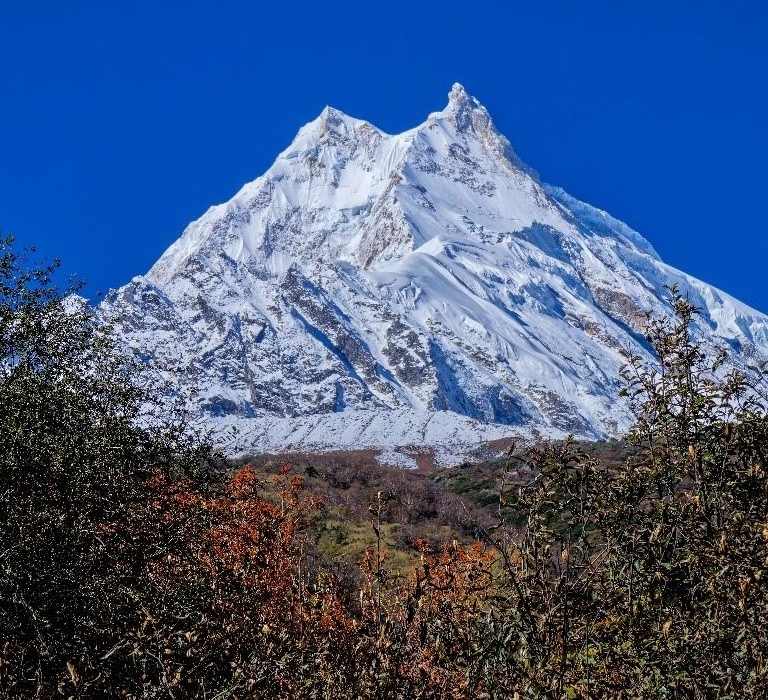
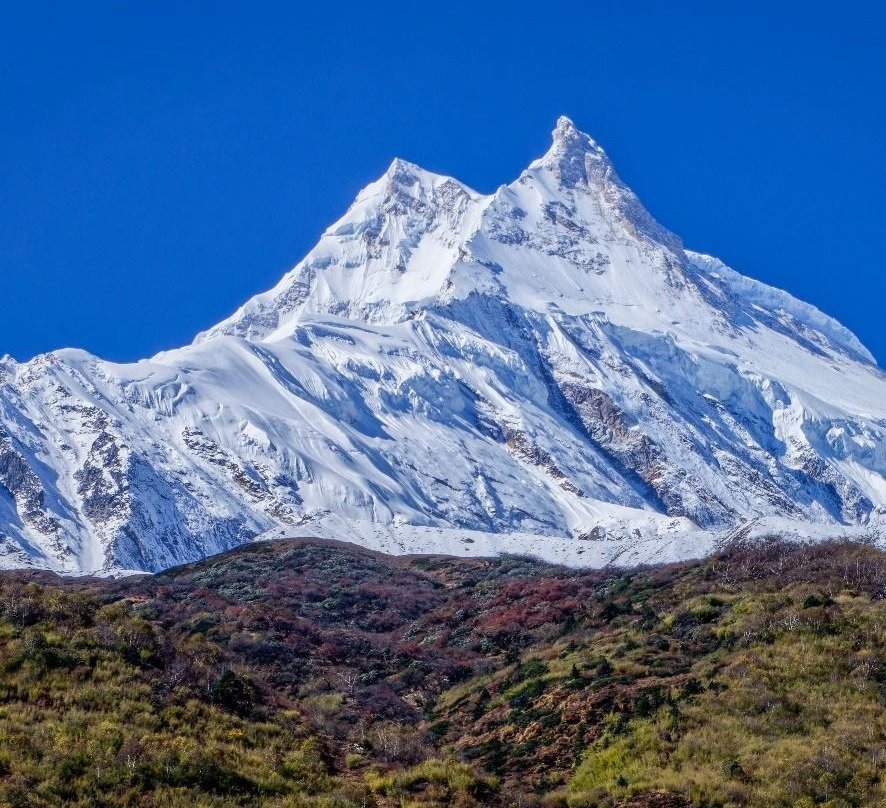
The trail is a less-traveled route that leads to Mt. Manaslu (8,163 meters), the eighth-highest peak in the world. The name Manaslu translates as “mountain of the soul.” So, the region is also secluded and cultural, and it offers a fantastic excursion in terms of geography and biological variations. You will see cedar and birch trees, rice and millet fields, and meadows on the trip.
The 14-day hiking route is regarded as the ideal location for teahouse hikes. And there are countless reasons to back it up.
It is a classic walking trip with epic scenery and rich biodiversity.
The personal interactions with locals and their historical culture in Tsum Valley and Nubri Valley blend perfectly into the tour.
The trail has stunning scenery with mountains, rivers, flowers, and bridges. These are all covered in a wild beauty that is infused with Hindu and Buddhist culture.
Similarly, the Budhi Gandaki River that comes along with the trip has turquoise water and spectacular waterfalls that make you fall in love with the whole Manaslu Circuit trekking route.
Top 9 reasons to trek to Manaslu Circuit
The trekking package to Manaslu Circuit is a classic remote walking tour in remote sections of Nepal. The route is wild and isolated, and the scenery provides everything that Nepal offers. Here are a few reasons:
The Manaslu Region, between Jagat and Dharapani, is a restricted area for tourism control. So, trekking to the restricted area will be full of adventures and thrills with a classic touch of nature.
Crossing the high mountain pass, Larke La Pass, at 5106 m, is the most adventurous journey in the whole Manaslu Circuit Trek.
You will walk through the forest trails with fantastic mountain views that showcase the wilderness of the region. Trekking through these trails will add a natural scent to your journey.
Explore villages that blend Nepalese and Tibetan cultures, where ancient Monastries, Mani walls reflects Buddhsim and their local traditions.
You’ll hike through villages, rocky terrain, and streams of experienced hillside living. These regions are less touched by modernization and are in their natural form.
Good-quality guesthouses and accomodations are on the way, with great food.
During your rest day at Samagaun, we will trek to Birendra Tal, a freshwater lake in Manaslu Glacier or Manaslu Base Camp, the base camp of the world’s 8th-highest mountain.
Manaslu Trek is a relatively new and restricted trekking route, so there will be fewer travelers. You get to enjoy the sound of birds, rivers and chill mountain breeze instead of human voices.
You can extend your trek to the iconic Tsum Valley a sacred "Beyul" requiring special Permit, where you get to enjoy the local festivals and daily life that are distinctively Tibetan.
Popular Place along the Manaslu Circuit Trek
Every stop along the trail offers its unique charm and breathtaking scenery. From villages to mountain viewpoints, each place tells the story of culture, nature, and adventure. The trails lead you through landscapes that shift from lush river valleys to high-altitude passes, from ancient monasteries to untouched Himalayan wilderness. The route becomes even more remarkable with the charming villages and places along the trail, that you'll forever reminisce.
Some of the popular destinations you encounter along the trail are:
Lho Village: It is a remote village in the Nubri Valley of Gorkha district, Nepal, offering stunning views of Mount Manaslu (26,781 ft.). Located between Namrung and Samagaun villages on the Manaslu circuit, it provide trekkers with a glimpse of local life, Peaceful Ribum Monastery. It is also a popular spot for acclimatization and recharging during the trek.
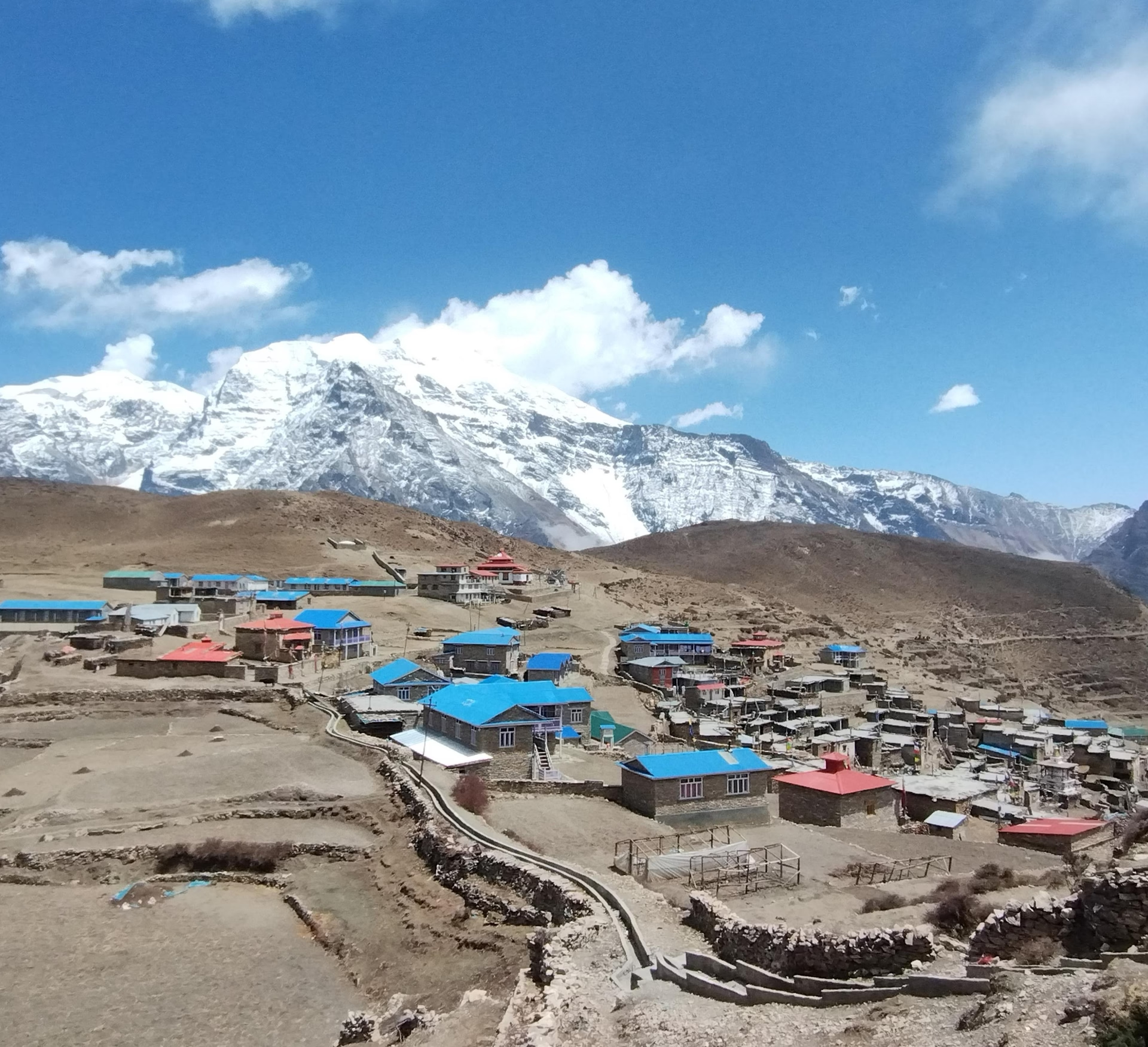
Samagaun Village: It is a beautiful village in the Manaslu area. Lying at 3530m elevation, this small human settlement is surrounded by towering peaks and green landscape. Samagaun is a key stop for trekkers to acclimatize, rest, and explore surroundings, including the serene Birendra Lake, Pungyen Monastery and Manaslu Base Camp.
Larkya La Phedi: It(4460m) is a high-altitude settlement on the Manaslu Circuit Trek, located just before the iconic Larkya La Pass (5,160 m), one of the longest passes in the Himalayas. It serves as the last teahouse lodging and accommodation point, where trekkers rest before crossing the challenging pass.
Tsum Valley: It is (1,900–3,500 m) is a sacred and remote Himalayan valley in the Manaslu region, renowned for its ancient Tibetan-Buddhist culture and pristine landscapes. It lies far northern part of Nepal near Tibetan border. As a less-travelled destination requiring a special permit, you need to book it seprately with Manaslu circuit Trek. It provides a truly unforgettable experience of the Himlayan culture, tradition and way of life.
Permits Required for the Manaslu Circuit Trek
There are trekking limits in Manaslu Region since it is a conservation area established in 1998. A permit is required to control and monitor trekking activities in the restricted Manaslu region. It helps protect the area’s fragile environment and preserve its unique culture. The fees collected support local communities and conservation projects along the trekking route. Required Permits are:
Manaslu Restricted Area Permit (MRAP):
Purpose: Allows Trekking in Restricted zone of Manaslu (Jagat → Dharapani)
Area : Only the restricted region where solo trekking isnot allowed
Validity: Valid only for the specific dates and route of your trek.
It must be issued through Registered Travel Agency with a licensed guide.
Manaslu Conservation Area Permit (MCAP):
Purpose: Allows Entry into the Manaslu Conservation Area.
Area : Entire Manaslu Conservation Area including villages, trails, and surrounding protected zones.
Validity: Enitre Duration of your trek in MCA
Annapurna Conservation Area Permit (ACAP)
Purpose: Required for ACA, which includes parts of Manaslu Circuit exit route ((e.g., Dharapani → Besisahar)
Area : Entire Annapurna Conservation Area including villages, trails, and surrounding protected zones.
Validity: Enitre Duration of your trek in ACA.
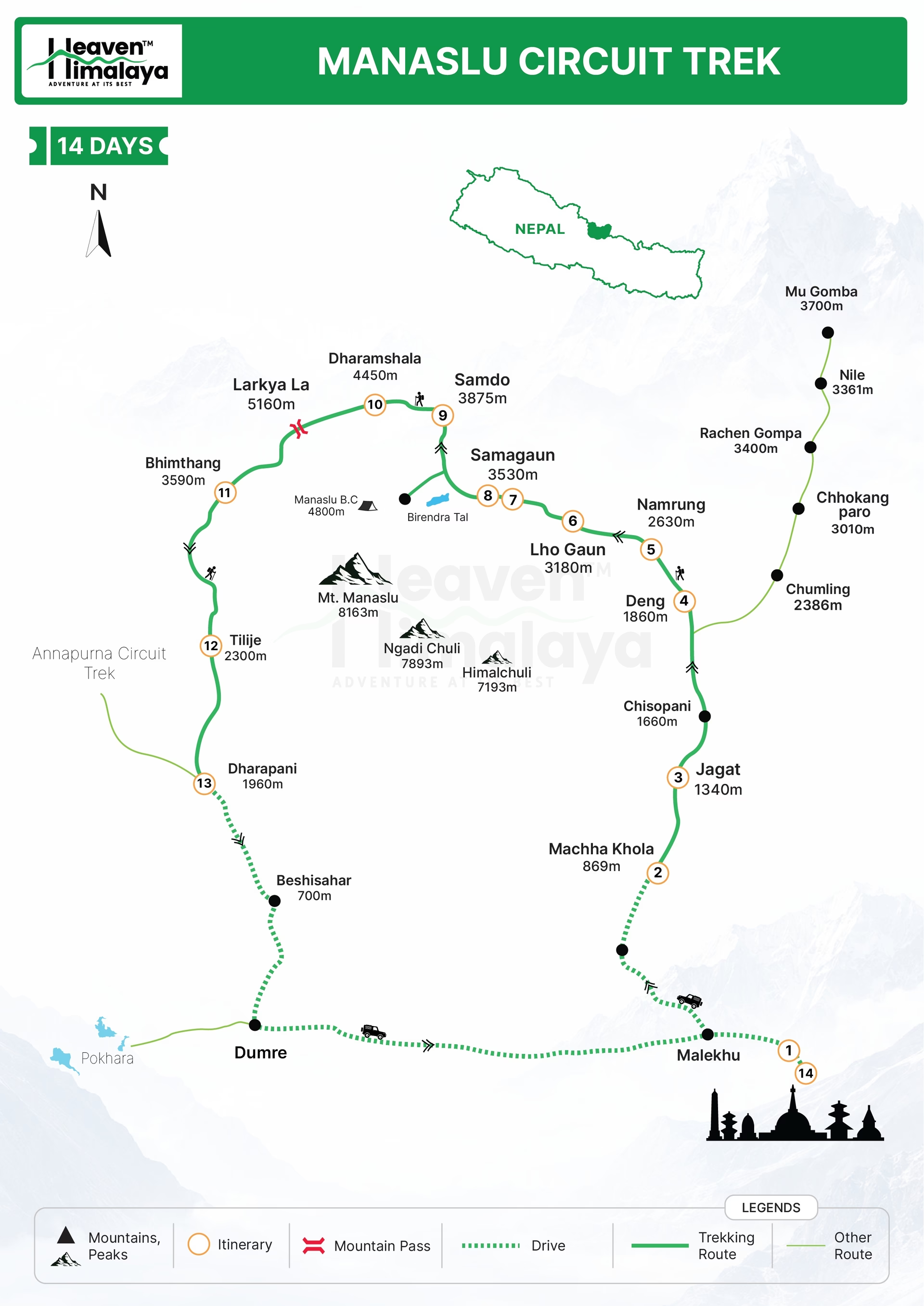
Ouline Itinerary - Manasalu Circuit trek
Day 01: Arrival in Kathmandu (1,400 m / 4,593 ft) – welcome and trip briefing.
Day 02: Drive to Machha Khola (760 m / 2,493 ft) – scenic countryside drive.
Day 03: Trek to Jagat (1,340 m / 4,396 ft) – enter Manaslu Conservation Area.
Day 04: Trek to Deng (1,860 m / 6,102 ft) – diverse villages and bamboo forests.
Day 05: Trek to Namrung (2,630 m / 8,629 ft) – Buddhist culture and mountain views.
Day 06: Trek to Lho Gaun (3,180 m / 10,433 ft) – first close view of Mt. Manaslu.
Day 07: Trek to Samagaon (3,530 m / 11,581 ft) – gateway to Manaslu Base Camp.
Day 08: Rest day in Samagaon – acclimatization and cultural hikes.
Day 09: Trek to Samdo (3,875 m / 12,717 ft) – Tibetan-influenced highland village.
Day 10: Trek to Dharamshala / Phedi (4,450 m / 14,599 ft) – prepare for Larkya La Pass.
Day 11: Cross Larkya La Pass (5,106 m / 16,751 ft) and trek to Bhimthang (3,720 m / 12,205 ft).
Day 12: Trek to Tilije (2,300 m / 7,546 ft) – descend to lush valleys.
Day 13: Trek to Dharapani (1,860 m / 6,102 ft) and drive to Kathmandu.
Day 14: Departure – farewell and airport transfer.
Airport transfers—pickup and drop-off in a private vehicle
All ground transportation during the tour is in a private Jeep.
Your accommodation is in a 3-star hotel in Kathmandu with a breakfast plan.
Accommodation in mountain teahouses/guesthouses during the trek
Meals: 12 breakfast, 13 lunch, and 12 dinner during the trekking days
All paper works
National parks and heritage sites offer entry tickets.
Trekkers Information Management System (TIMS)
Restricted Area Permits
ACAP and MCAP permits
A licensed, English-speaking, experienced, and professional guide
A porter to carry your luggage during the tour (1 porter for 2 people)
All the costs of guide and porter, including accidental insurance
Duffel bag and sleeping bags (to be returned to us after the trek)
Heaven Himalaya T-shirt, Manaslu route map, and a travel completion certificate
An oximeter to measure your oxygen and Pulse level during the trek in the mountain is very useful for all the trekkers to be aware of the high altitude sickness.
Compressive first aid box (Guide will carry it throughout the trek).
Emergency rescue operation assistance is arranged in case of complex health conditions (funded by your Travel Insurance)
All applicable government taxes and service charges.
Exclusions
Meals (lunch and dinner) in Kathmandu
International airfare
Nepal entry visa fees (USD 50 for a tourist visa, and it can be obtained at the airport in Kathmandu on arrival!)
Personal refreshment items like cold drinks, snacks, etc.
Personal utility items, such as laundry, telephone expenses, and electricity charges
Additional costs by out of management control due to the landscape, weather conditions, illness, changes in government policies, strikes, physical conditions, etc.
Personal expenses such as shopping, hot and cold drinks, hot shower, hard and soft alcohols, snacks, hot and cold water, Wi-Fi, battery re-charge fee,
Travel insurance has to cover emergency rescue evacuation from high-altitude up to 6000 m.
Personal trekking equipment for this trek
Tipping and Gratitude to the guides and staff (Recommended by Nepali culture )
Any other expenses that are not mentioned in the Price Inclusive section of this trek
Dates & Availability
Note to Travelers
Start dates are when your trek begins, and end dates are when the trip ends and you leave Nepal.
We specially quoted and specified the below list of start dates for the group joining option. Let us know if the below start dates do not work for you; we will surely add your available days to fit your interest.
Guaranteed: We guarantee Manaslu trips to run.
Available: The trip is available to run when the minimum group size is met.
Limited: Hurry; only a few seats are available.
29Sep
Sep 29 – Oct 13, 2026
Available
$1,399
30Sep
Sep 30 – Oct 14, 2026
Available
$1,399
Departure & return
Status
Price
Actions
29Sep
Sep 29 – Oct 13, 2026
Available
$1,399
30Sep
Sep 30 – Oct 14, 2026
Available
$1,399
All prices per person, twin share. Subject to availability — Manaslu Circuit Trek dates fill quickly in peak season.
14 days Manaslu Circuit Trek Itinerary
Day 01 :Arrival in Kathmandu (1,400m/4,593ft)
Elevation: 1,400m
Accommodation: Hotel
Meals: Breakfast Included
A representative from our team will wait for you at the arrival terminal of Kathmandu Airport. Make sure that you look after a person with your nameplate! The representative will welcome you and transfer you to your hotel in Kathmandu.
As you check into the hotel, the representative will give you a synopsis of our plans. Tonight, spend your time at a hotel in Kathmandu.
Day 02 :Drive to Machha Khola (760 m/2,493 ft.): 8–9 Hours.
Elevation: 760m
Duration: 8-9 hrs
Accommodation: Guesthouse
Meals: Breakfast, Lunch, and Dinner Included
Get ready for a long drive today. After breakfast at the hotel, we will transfer you to a vehicle that will drive you to Macchakhola.
The first half of the trip is smooth along a blacktop concrete road until Dhading Besi, and from Dhading Besi, the trail is full of difficulties. So, get ready to shake your body with some moves as you drive along the bumpy road to Macchakhola. However, the street and the route will offer some classic pictures of the countryside landscape of Nepal.
Tonight, spend your time at a guesthouse in Machha Khola.
Day 03 :Trek to Jagat (1,340 m/4,396 ft.): 5–6 Hours
Elevation: 1,340m
Duration: 5-6 hours
Accommodation: Guesthouse
Meals: Breakfast, Lunch, and Dinner Included
After breakfast, we start our trekking journey in the Manaslu region of Nepal. Initially, we cross Maccha Khola and climb up gradually towards the small village of Khorla Besi and then to the natural hot spring at Tatopani.
As we move ahead from Tatopani, we come across a forested area. We walk through the wilderness of the forests to Doban and continue up along the stone-paved staircases to Thado Bharyang. Next, we cross the west bank of Budhi Gandaki and climb up over a ridge. Finally, we follow a beautiful trail along the river to the village of Jagat.
Tonight, spend your time at a guesthouse in Jagat
Day 04 :Trek to Deng (1,860 m/6,102 ft.): 6-7 Hours
Elevation: 1,860m
Duration: 6-7 hrs
Accommodation: Guesthouse
Meals: Breakfast, Lunch, and Dinner Included
Today, we leave Jagat and follow a trail that climbs uphill along a lush and pristine path. Then we walk along a flat and well-levelled path until we come across a long suspension bridge over the Budhi Gandaki River. We cross the bridge and move ahead to enter Philim.
Philim is a large Gurung village in the region where one can notice the dominance of the Buddhist religion. The town's colourful prayer flags, stupas, and monasteries give off a positive vibe about the Buddhist religion that is prevalent there. From Philim, we traverse the dense forests of pine and rhododendron to Deng. We can see the beautiful waterfall cascading in such a beautiful environment.
Tonight, spend your time at a guesthouse in Deng.
Day 05 :Trek to Namrung (2,630 m/8,629 ft.): 6 Hours
Elevation: 2,630m
Duration: 6 hrs approx
Accommodation: Guesthouse
Meals: Breakfast, Lunch, and Dinner Included
We walk through the farmlands and village of Deng and cross a suspension bridge over the Budhi Gandaki River. We follow the trail that continues along an enchanting route to climb up to Rana. From here, the trail further climbs up and continues west towards the Budhi Gandaki valley. We pass various forests and mani stones on the way to Ghap.
We then head towards Prok village, enjoying some fantastic views of Singri Himal on our way. Now, we follow a trail besides the river and cross it many times through the forest and gompas. Finally, we make a steep climb along the way to reach Namrung.
Tonight, spend your time at a guesthouse in Namrung.
Day 06 :Trek to Lho Gaun (3,180 m/10,433 ft.): 5–6 Hours
Elevation: 3,180m
Duration: 5-6 hrs
Accommodation: Guesthouse
Meals: Breakfast, Lunch, and Dinner Included
Namrung is a beautiful viewpoint from where one can enjoy some breathtaking views of mountains like Singri Himal, Ganesh Himal, Mt. Hiunchuli, etc. We eat breakfast with breathtaking views of the mountains in the background.
Beholding the beauty of these mountains, we make our way towards Lho. Then, we climb up a steep path through a forested area to Lihi. As you move ahead of Namrung, you will notice a change in vegetation that turns more alpine. Even the dominance of Buddhism as a religion gets more intense.
People of Tibetan origin mostly inhabit the region ahead of Namrung. At Lihi, you can see beautiful chortens and fields full of barley. Here, you will get a glimpse of the Manaslu Himal, and the view of Mt. Manaslu will follow you along with the Lho village.
Tonight, spend your time at a guesthouse in Lho village.
Day 07 :Trek to Samagaon (3,530 m/11,581 ft.): 5–6 Hours
Elevation: 3,530m
Duration: 5-6 hrs
Accommodation: Guesthouse
Meals: Breakfast, Lunch, and Dinner Included
Today, we leave Samagaon and proceed with our trek. We cross Shyla village on the way to reach Sama Gaon. The trail today passes through some fantastic landscapes. During the walking journey, one can get some uninterrupted close-up views of Mt. Manaslu from Sama Gaon. At Samagon, we can explore the famous Ribung Gompa. Tonight, spend your time at a guesthouse in Sama Gaon.
Day 08 :Rest day in Samagaon (3,530 m/11,581 ft.)
Elevation: 3,530m
Accommodation: Guesthouse
Meals: Breakfast, Lunch, and Dinner Included
It’s a beautiful day in Samagaun. Today, we don’t move forwards with our trek. We stay in Samagaon and explore the surrounding areas. We are already at height and are on our way to a higher-elevation region, so we are staying in Samagaon today to acclimatise to the rising elevation.
We have two options for the day: Manaslu base camp, Pungyen Gompa, and Birendra Tal. We can hike to any of these attractions today. In the evening, we return to Samagaon for an overnight stay. Tonight, spend your time at a guesthouse in Sama Gaon.
Day 09 :Trek to Samdo (3,875 m/12,717 ft.): 3–4 Hours
Elevation: 3,875m
Duration: 3-4 hrs
Accommodation: Guesthouse
Meals: Breakfast, Lunch, and Dinner Included
In the morning, after breakfast, we climb uphill along a deserted path and windy valley to Samdo. We follow the Budhi Gandaki River and cross a bridge to take a trail that leads us to Larkya La. The trail passes through a charming forest full of rhododendron, juniper, and birch trees.
The manmade walls along the way add to the charm of the path. Moving ahead, we climb up to Samdo, a place that is just 4 km away from the Tibetan border. We can see a Tibetan refugee village here with some adorable views of Mt. Manaslu, Simnang Himal, Ngadi Chuli, the Manaslu glacier, the Manaslu icefall, etc.
Tonight, spend your time at a guesthouse in Samdo.
Day 10 :Trek to Dharamshala (4,450 m/14,599 ft.): 3 hours.
Elevation: 4,450m
Duration: 3hrs
Accommodation: Guesthouse
Meals: Breakfast, Lunch, and Dinner Included
Today, we start our day with a delicious breakfast. Then we walk along the trail to cross a wooden bridge over the Budhi Gandaki River. After crossing the bridge, we hike up towards Dharamshala.
On the way, we get an impressive glimpse of the Larkya glacier. Upon reaching Dharamshala, we have our lunch and walk to Larkya Phedi just to acclimatise ourselves for the journey ahead.
Tonight, spend your time at a guesthouse in Dharamshala.
Day 11 :Trek to Bhimthang (3,720 m/12,205 ft.) via Larkya La pass (5,106 m/16,751 ft.): 8–9 Hours
Elevation: 5,160m
Duration: 8-9 hrs
Accommodation: Guesthouse (Shared Bathroom)
Meals: Breakfast, Lunch, and Dinner Included
Today is one of the most anticipated days of our Manaslu Circuit Trek because we are going to cross Larkya La, which is the highest point on our trek. So, we start our day early. It’s a challenging way up to Larkya La, but a sincere effort on the steady path can help us successfully reach the pass.
From the pass, we can enjoy some enchanting views of mountains like Mt. Himlung, Mt. Kang Guru, Annapurna II, etc. After a successful ascent up to the pass, we descend for around three hours to Bhimphedi. On the way down, the Manaslu Trek offers some magnificent views of icefalls and mountains.
Tonight, spend your time at a guesthouse in Bhimphedi.
Day 12 :Trek to Tilije (2,300 m/7,546 ft.): 8–9 Hours
Elevation: 2,300m
Duration: 8-9 hrs
Accommodation: Guesthouse
Meals: Breakfast, Lunch, and Dinner Included
From Bhimphedi, the trail descends to the pastures and continues towards a bridge over the Dudh Khola River. We cross the bridge and walk through rhododendron forests, river valleys, and farmlands. Then we do a quick climb up to the village of Gho.
Furthermore, we continue along the trail until we reach Tilije. Tonight, spend your time at a guesthouse in Tilije.
Day 13 :Trek to Dharapani (1,860m/6,102ft) and drive back to Kathmandu (1,400m/4,593ft): 8–9 Hours
Elevation: 1,860m
Duration: 8-9 hrs
Early in the morning, after breakfast, we descend through a stone-paved path along with a village to Thonje village. We cross a police checkpoint on the way to Dharapani, the point that joins the route with the route of the Annapurna Circuit. From Dharapani, we take a jeep that will drop us off at Besisahar.
From Besisahar, we take another vehicle that will drive us back to Kathmandu. Tonight, spend your time at a hotel in Kathmandu.
Day 14 :Departure Day (Farewell)
Elevation: 1,400m
Accommodation: Hotel
Meals: Breakfast Included
Today, fly home from Kathmandu or continue your travels to some other destinations around the globe. We will drop you off at the airport three hours before your scheduled flight.
We hope you had a great time with us. Thank you, and have a safe journey home.
Altitude profileMax 5,160 m
Create a Bespoke Itinerary
Customize your Himalayan adventure with personalized itineraries for unforgettable experiences!
I left at the beginning of May to do the Manaslu tour trek solo with guide and porter.My trek was well organized from start to finish and the best lodges were reserved for me.I always felt safe and appreciated the flexibility of being able to reduce my trek duration from 14 days to 12 days by walking more hours during the day.I thank Heaven Himalaya for allowing me to live this incredible experience.I highly recommend!
What to Pack
Clothings
The Manaslu Circuit Trek in Nepal is a challenging and rewarding trek that takes you around the eighth-highest mountain in the world, Mount Manaslu. It's important to be well-prepared for varying weather conditions and the remote nature of the trek. Here's a suggested packing list for the Manaslu Circuit Trek:
Upper Body
T-shirts (preferably quick-dry and breathable) (day)
Parka/windbreaker (day)
Rain gear/poncho
Inner thermal (at night)
Fleece or warm mid-layer (evenings and higher altitude)
Fleece jacket
Down jacket (night)
Lower Body
Undergarments
Trekking pants (preferably stretchable, quick-dry, and water-resistant) (day)
Rain gear
Inner thermal (at night)
Fleece/wool pants (night)
Handwear
Lightweight fleece or wool gloves
Heavyweight gloves
Trekking Footwears
Trekking boots
Hiking socks
Trekking sandals
Cotton socks
Gaiters (optional)
Running shoes (optional)
Note: Make sure your trekking boots are well broken-in and that you have worn them for some time before the trek. Avoid bringing brand-new boots, as they may cause blisters, discomfort, or foot pain during long days of walking.
Trekking Accessories
Duffle bag**
Trekking backpack
Sleeping bag**
Trekking poles**
Trekking Map**
Water bottle
Head torch with extra batteries
Raincoat
Face mask
Crampons (optional)
Binoculars (optional)
Sleeping bag liner (optional)
Daypack cover (optional)
Medical Kit
Altitude & Trekking related medications
Acetazolamide (Diamox) for Altitude sickness
Parcetamol - headache & fever relief
Ibuprofen - Pain relief
Stomach Medications
Antacids
Oral Rehydration salts ( Jeebanjal)
Motion Sickness (Vomiting) medicines
First Aid Supplies
Bandages
Blisters Plaster
Handyplasts
Antiseptic wipes
Medical Tapes
Skin Protection
Moisturizer
Lip Balm
Sunscreen cream with high SPF
Eye Protection
Sunglasses (both UV rays and snow glare)
Lubricating eye drops
Other Essentials
Oxymeter
Thermometer
Water Purification Tablets (Chlorine, Iodine, Chlorine dioxide tablets)
Hand sanitizer
Note: When you trek with a reputable agency, your guide is trained to handle altitude-related issues and carries a basic first-aid kit with essential medical supplies. You should still bring personal medications, but they look after you throughout the trek.
Travel Documents
Passport, with at least 6 months validity
4 copies of passport
4-5 Passport size photo
Physical Trek Map (Digital Route Map)
Visa (available at kathmandu airport)
Insurance
Trekking permits
Cash ( min. 400$)
Miscellaneous Items
Solar charger
Garbage bag
Book/diary/card games
Solar power bank
Camera (optional)
Extras (for men)
Small mirror
Razor and shaving cream
Pee bottle (optional)
Extras (for women)
Feminine wipes
Sanitary napkins
Nail brush and clippers
Tweezer
Important Note: We provide a duffle bag, sleeping bag, and down jacket and expect them to be returned at the end of the trip. We also provide trekking maps, and our experienced trekking guide will assist you in utilizing and understanding the map effectively. This map is yours to keep as a memorable souvenir.
Further, pack your bags with things that protect you from rain, cold, and sun and things that make you able to move efficiently in the mountains.
At the end of the trip, to express our gratitude for choosing Heaven Himalaya, we extend to you a Heaven Himalaya T-shirt and trip achievement certificate. These items are more than tokens; they are our way of showing appreciation for your trust in us.
Trekking Headwears
Sun cap or brimmed hat
Sunglasses
Neck gaiter
Balaclava
Bandana or headscarf
Other Essentials
Toothbrush, toothpaste, shampoo, shower gel
Sunscreen, body moisturizer, lip balm
Wet wipes
Quick-drying towel
Toilet paper
First aid kit (bandages, antiseptic wipes, pain relievers, blister treatment and any personal medications)
Water purification tablets or water filtration system
Altitude sickness medication like Daimox (but consult with your guide or doctor before using it)
How difficult is it to trek to the Manaslu Circuit?
The ascent on the Manaslu Circuit trekking journey is not particularly challenging. But with the region’s high altitude, steep ascents and descents, and rocky terrain with landslides flooding paths, it is considered strenuous to walk on. The other thing you can bet on is running into yaks.
There is no need for mountaineering gear, and the path doesn’t involve climbing snowy mountains. Instead, we cross the Larkya La Pass (5,106 meters, 16,752 feet), the highest point of the trip, so proper acclimatization and a decent fitness level are required.
The difficulty level depends on a person’s health, age, and hiking experience. However, with proper acclimatization, the trek can be completed by anyone with moderate to good physical fitness and prior long hiking experiences.
The Manaslu Circuit trek is harder than Annapurna and Everest due to the absence of paved paths and guide routes. Similarly, the variation in altitude can be very challenging to cope with for people traveling here for the first time.
Thus, it’s always a better option to train for the Manaslu Trek before you start the journey. You can walk or hike at least a few kilometers daily for almost 2 or 3 weeks. You can work on your cardiovascular fitness in the gym. Most of all, mental preparation is fundamental before starting any treks or hikes in the mountains.
If you are confident about the trek and have firm determination to step into the journey, then you will be successful. We offer you a guide and porters during your trip. The porters will help you carry your loads, and the guide will be there to explain things and boost your immunity.
What are the best seasons for the Manaslu Circuit Trek?
The best seasons for Manaslu Circuit Trekking are in the fall (September to November) and spring (March to May).
In spring, there’s glorious weather, beautiful nature, and lots of outdoor activities. Autumn offers consistent weather and comfortable daytime hiking temperatures, but it also presents several difficulties.
However, the tea houses and lodges might fill up quickly during this busy time, so you should reserve your meals and lodging in advance.
The off-season trail is challenging due to tough terrain, cold weather, and harsh conditions including snowfall, landslides, and avalanches. The trail can also be slippery and infested with leeches during the winter and summer months.
How long is the Manaslu Circuit itinerary?
The Manaslu Circuit walk takes, on average, 14 days in total. However, the actual time stands between 14 and 21 days, depending on your pace and itinerary. The trailhead is the one that is nearby in Kathmandu.
The 126 km (80 miles) drive from Kathmandu to Soti Khola takes an incredible 6 hours. Starting from there, the Manaslu Circuit Trek is a 14-day adventure following a standard itinerary. But there is always room for customization. So, you can choose to shorten or extend the tour, including adding more acclimatization days, according to your fitness level.
The distance and duration required to complete the trip also depend on the state of the roads, the time of year, and one’s level of physical fitness. Keep in mind that one should always enter the trail from the starting point, i.e., Aarughat and Gorkha, to cover every major trekking point.
How is the accommodation on the Manaslu Circuit Trek?
Certainly, it won’t be difficult to find lodging on the Manaslu trek route. For an overnight stay during the Manaslu Circuit Trek, accommodations are provided at various locations. The teahouses are common accommodation destinations. Although the service is rather basic, it is very useful.
While you are at a lower elevation at the beginning of the climb, you can have rooms with an attached bathroom. There is a communal area for dining and sitting in these teahouses, which is a nice spot to stay warm by the fire at night.
However, the level of service and amenities will decrease as you ascend to a higher altitude. The altitude and hiking season have a significant impact on lodging costs. Off-season trekking will, however, be far less expensive.
Although camping is an option, most hikers prefer staying at the teahouses because it is more comfortable. But it is also feasible to camp while doing the Manaslu Trek. However, you’ll need to employ porters to transport the camping supplies and equipment.
There is no heating system in the rooms at the teahouses. In contrast, the dining area, where you will spend most of your time relaxing, will have a typical wooden heater.
How is the food during the Manaslu Circuit Trek?
Manaslu’s newest tea houses offer a wide variety of food options for breakfast, lunch, and dinner. Every teahouse offers enticing and nutritious meals to hikers. Occasionally, you can have stews and curries made with seasonal vegetables along with barley-based dishes. Farm vegetable and non-vegetable soup sets are also quite popular.
Both vegetarian and non-vegetarian alternatives are available. Next, you’ll indulge in yak products, including meat, butter, and milk.
While trekking in the Himalayas, making butter tea is indeed one thing to do. The trekkers benefit from these energizing drinks by being protected from the bitter cold and altitude sickness.
Tibetan culture has had a significant influence on the cuisines along the Manaslu Circuit trekking journey. You can frequently find dumplings, chowmein, noodles, and hot vegetarian and vegan soup. Gundruk Dhindo, one of the many intriguing Manaslu trek foods in the Himalayas, has the greatest significance in Nepalese history.
Dhindo is a cereal prepared from corn, millet, buckwheat, or barley, while Ghandruk is a fermented green vegetable that is frequently eaten as a soup dish. This diet is reputed to be more energizing and lasting than Dal Bhat. The Highlanders claim to have lived longer because of this organic diet.
If you want some cold drinks, these are also accessible at the teahouses.
How cold is the Manaslu region?
The Manaslu Circuit Trek takes you from 700 meters to 5,160 meters. So, the temperature varies depending on the season and elevation. The region experiences cold temperatures throughout the year, and the days will be mostly cold, with highs of 4 to 12 degrees.
In addition, the nights will be bitterly cold. Especially in January, the temperature can dip as low as -10 degrees Celsius. But the weather is very variable above 4000 meters.
Entrance and Permits for Manaslu Circuit Trek
Manaslu has been designated a unique territory under Nepalese government regulations; therefore, before beginning the trek, one must be fully informed of the permits needed.
No one can trek in the region without first acquiring a special permit. The permit can only be obtained through a local trekking organization in Nepal due to the territory’s open border with Tibet.
For the Manaslu circle trip, you must have two different trekking permits. You don’t need to apply for them because your chosen authorized trekking company in Nepal will handle all of the tour preparation, including the permit work.
Restricted Area Permit:
The Manaslu Restricted Permit is a unique paper ticket given out by the government of Nepal as a license to enter the Manaslu region. Here’s how much it costs:
September to November: $70 per person for the first week, with an additional $10 per person per day for each additional week.
December to August: $50 per person for the first week, with an additional $7 per person per day after that.
Manaslu Conservation Area Permit (MCAP):
To enter the Manaslu Conservation Area, you must have this permit. A printed photo is necessary to apply for this permit. The Nepal Tourism Board at Bhrikutimandap, Kathmandu, is where one can get it.
Foreigners’ MCAP costs $27 or NPR 3000.
For SAARC countries, MCAP costs NPR 1,000.
The cost for local tourists is NPR 100.
Permit for Annapurna Conservation Area (ACAP):
From Dharapani to Besisahar, this Manaslu permit is necessary. The procedure is the same as for MCAP.
Cost for foreigners: NPR 3000 or $27
Cost for SAARC nations: NPR 1,000
Cost for local tourists: NPR 100
If you intend to complete the Tsum Valley trek along with the Manaslu Circuit, the Tsum Valley Permit is required. It costs USD 45 per person for the first seven days.
Note: A TIMS card is not required for trekking to Manaslu Circuit once you have obtained the restricted area permit.
How is the accessibility of electricity, the internet, and mobile networks during the Manaslu Circuit Trekking?
Internet:
The majority of teahouses nowadays have Wi-Fi. There are many teahouses along the path that offer internet connectivity for a certain charge in higher areas. When you are at a lower altitude, there is no Wi-Fi fee. Altitude affects the reliability of Wi-Fi. The weather also has an impact on the network.
Phone Network:
SAT phones are also available at some tea houses. But the coverage is limited. There is no coverage after this. On this expedition, the local phone hardly ever functions. On the Manaslu Circuit route, Nepal Telecom has better coverage than Ncell among the different SIM Card options in Nepal.
Electricity:
Lower-altitude communities are wired into the national grid. However, there are frequent power outages in the area. This problem has diminished in recent years. But it also might not be available on cloudy days.
Normally, due to its terrain, there are frequent power outages in the area. As a result, the voltage of the power that is readily available is low.
Also, some places use micro-hydropower. Larger battery charging may therefore be pricey. You should therefore consider bringing a power bank or solar charger to recharge them.
Manaslu Circuit Trek Insurance
For adequate coverage of medical expenses, natural disasters, and avalanches before a trip, travel insurance is a necessity for any high-altitude trek in Nepal.
If you don’t have one, then it might also end up with your bank balance costing your health. As a result, you must get specialized insurance for Manaslu Circuit Trekking, which includes medical coverage, trip cancellation, and helicopter evacuation.
The majority of Nepal’s hiking paths are sterile and cut off from the population. Likewise, trekking paths in the Manaslu Circuit are in an isolated, desolate area of Nepal. Trekkers who sustain severe injuries must be transported to Kathmandu due to the Himalayas’ isolated locations and lack of medical services. Thus, including a helicopter evacuation policy is a must.
You should get in touch with your local climbing society for evacuation between 6,000 meters and high altitudes.
Note: Customers must examine the terms and conditions of the travel insurance before purchasing it.
5 Best Travel Tips for Manaslu Circuit Trekking
Always be prepared for high-altitude sickness
Do not forget to pack your bag lightly and wisely.
Always hire a professional guide and a porter
Respect local cultures and traditions. Do not mock any customs or lifestyles.
Be prepared for unpredictable weather and temperatures.
Before you go
If you have hiked in Nepal before, then it’s easier to plan any other hikes in the country. But if it’s your first time hiking in Nepal and you are planning to walk along the Manaslu Circuit, then you might have come across several questions that remain unanswered. Here we have listed a few things to work on before embarking on the journey.
Get a tourist visa for Nepal and fly to Kathmandu.
Obtain the necessary permits (MCAP, RAP, and TIMS).
Plan your itinerary depending on your fitness level.
Pack the right gear according to the time of the year.
Start the trek, acclimatize, and complete it (start from Aarughat and finish in Besisahar).
FAQs
Manaslu Circuit Trek Frequently Asked Questions
General-Manaslu Circuit Trek
What is the Manaslu Circuit Trek?
The Manaslu Circuit Trek is a high-altitude trek around Mount Manaslu, the world’s eighth-highest mountain at 8,163 m. The trail follows the Budhi Gandaki Valley, passes remote mountain villages, and crosses the Larkya La Pass before descending toward the Annapurna region.
Where is the Manaslu Circuit Trek located?
The trek is in the Manaslu region of north-central Nepal. It begins in the lower Budhi Gandaki Valley and gradually enters the higher Himalayan settlements around Samagaun and Samdo before crossing Larkya La into the area around Bimthang and Dharapani.
What is the highest point of the Manaslu Circuit Trek?
The highest point is Larkya La Pass at 5,106 m (16,752 ft). Crossing the pass is the main high-altitude challenge of the trek and requires proper acclimatization and preparation.
Is the Manaslu Circuit Trek safe?
The trek can be completed safely with a proper itinerary, an experienced licensed guide, and good preparation for altitude and changing mountain weather. Manaslu is a restricted trekking region, and the current rules require trekkers to travel with a licensed guide and obtain an agency-issued TIMS card.
Can beginners do the Manaslu Circuit Trek?
The trek is possible for fit and well-prepared beginners, but it is not usually the first choice for someone with no trekking experience. The long duration, high altitude, remote sections, and Larkya La crossing make it more demanding than many shorter Himalayan treks.
What makes the Manaslu Circuit Trek different from other popular treks in Nepal?
The Manaslu Circuit combines high mountain scenery with remote villages and strong Tibetan-influenced culture. As you move higher, the landscape and settlements change, with areas such as Lho, Samagaun, and Samdo offering a different experience from the more developed trekking routes. The crossing of Larkya La adds a major high-mountain pass to the journey.
Is the Manaslu Circuit Trek difficult?
The Manaslu Circuit is considered a challenging trek because of its long walking days, increasing altitude, remote sections, and the crossing of Larkya La Pass at 5,106 m. It does not normally require technical climbing skills, but good fitness and acclimatization are important.
Why trek with Heaven Himalaya?
When you choose to book a trek package with Heaven Himalaya, you'll already be ahead of other trekkers in terms of service and benefits. A local mountain trekking guide with extensive knowledge of the routes will accompany you. Booking with us means you'll walk with Sherpa locals and support their livelihood. While foreign companies offer similar trips to Everest Base Camp, they can't do it on their own. They hire government-registered companies like us in Nepal. Booking with them means you'll pay intermediaries' fees out of your pocket. Other perks of travelling with us are:
A focus on clients' safety, with our trip organized with the utmost safety in mind
The best price guarantee.
Free transfers from the airport to the hotel and back in a private vehicle
Trained, government-licensed local guides who have an entire knowledge of local routes.
Support for locals to earn their living through tourism.
An oximeter for monitoring oxygen levels while on a high-altitude trek, guides with medical kits to handle situations that may arise.
Arrangements for sleeping bags and down jackets.
Free storage at the Heaven Himalaya office store for extra luggage during your tour
A duffel bag to transfer your items from luggage to be carried during the journey A free porter to help carry your heavy bags.
Manaslu Training Guide
Is prior trekking experience necessary to undertake the Manaslu Circuit Trek?
Prior trekking experience is not mandatory, but it can be a valuable asset. If you are a beginner with good physical conditions and commence a training plan at least 2 to 3 months before the trek, you can confidently embark on the Manaslu Circuit trek.
While seasoned trekkers may find it more familiar, novice trekkers with the right attitude, thorough preparation, and well-structured training plan can complete this trek.
How can I simulate the trek’s terrain and conditions during my training?
If you don’t have access to hills, mountains, or hiking trails in your home country, using a treadmill with an incline setting and a stair machine can effectively easily simulate the trek’s terrain and conditions during training.
Treadmill incline hill workouts can indeed improve your body’s ability to use oxygen efficiently, which is crucial for any trekking tours in Nepal.
Climbing stairs mimic the uphill and downhill terrain you will encounter on the trek, helping you to strengthen your leg muscles, enhance cardiovascular fitness, and improve your overall stamina.
Why is mental preparation for the Manaslu Circuit trek important?
Loading…
How long should I train before attempting the Manaslu Circuit Trek?
Loading…
How difficult is the Manaslu Circuit trek?
Loading…
Manaslu Trek Accommodation
Can I charge for my electronic devices?
Loading…
Are sleeping bags and blankets provided?
Loading…
How much does accommodation cost along the Manaslu Circuit trekking route?
Loading…
Is it necessary to pre-book accommodation?
Loading…
Food and Drinks in Manaslu
Can I pay in USD for food and drinks in Manaslu?
Loading…
Can I order a pizza during the Manaslu Circuit Trek?
Loading…
Trekkers' Well-Being & Safety
Is emergency helicopter evacuation possible?
Loading…
Is the Trek safe for first-time trekkers?
Loading…
What happens if I become sick during the trek?
Loading…
How do you ensure trekker safety in remote areas?
Loading…
Visa and Arrival
Can I get a visa on arrival in Nepal?
Loading…
Does Nepal provide a Visa on Arrival?
Loading…
How can I buy a SIM card in Nepal?
Loading…
Where can I exchange money upon arrival in Nepal?
Loading…
Booking, Deposit & Payment
What payment methods do you accept?
Loading…
What are the Cancellation and Refund Policy ?
Loading…
Can I postpone my trek after booking?
Loading…
How do I book the Everest Region Treks?
Loading…
Similar Travel Packages
You may also like these handpicked adventures similar to Island Peak Climbing with EBC for an exceptional travel experience.