

10 Best Hikes in Nepal for Beginners: Easy Treks

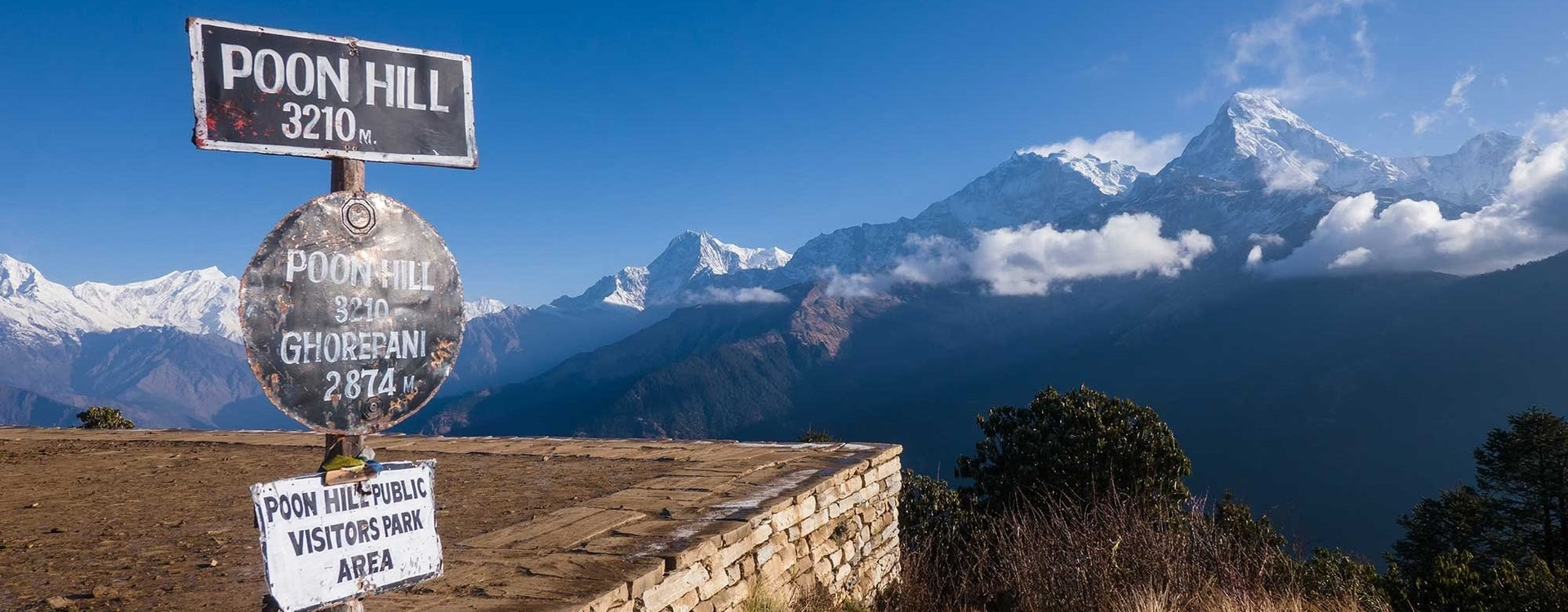
The 10 best hikes in Nepal for beginners are Chisapani, Nagarkot, Poon Hill, Ghandruk, Balthali, Kakani, Champadevi, Shivapuri, Ranikot, and Kalinchowk. These beginner-friendly Nepal hikes range from easy 1-day walks near Kathmandu to 4- to 5-day Himalayan treks from Pokhara, with top elevations from 1,730 m at Balthali to 3,842 m at Kalinchowk.
Most routes combine manageable trails, village landscapes, Himalayan viewpoints, and accessible accommodation without technical climbing, while Poon Hill and Kalinchowk require extra attention to altitude above 3,000 m.
Choosing the right Nepal hike for a first-time trekker depends on available days, fitness, walking difficulty, altitude, season, and access from Kathmandu or Pokhara. Kakani, Balthali, Ranikot, Champadevi, Chisapani, and Nagarkot suit shorter and lower-altitude trips; Ghandruk and Poon Hill provide a deeper Annapurna trekking experience with teahouse stays and mountain views; Shivapuri offers a demanding day hike close to Kathmandu; and Kalinchowk adds high-altitude scenery and winter snow.
The routes below compare difficulty, duration, elevation, permits, scenery, accommodation, and seasonal conditions to help beginners select a hike that matches their experience and travel plans.
Comparison Table of Best Hikes in Nepal for Beginners
The table below compares the 10 hikes by top altitude, typical duration, difficulty on a 1 to 5 scale (1 is easiest), and permit cost. Difficulty scores reflect route length, total climbing, and altitude.
Hike | Region | Top altitude | Typical duration | Difficulty (1 to 5) | Permit |
Chisapani | Kathmandu north rim | 2,165 m | 2 to 3 days | 2 | Park fee NPR 1,000 |
Nagarkot | Kathmandu east rim | 2,175 m | 1 to 2 days | 2 | Park fee only via Chisapani |
Poon Hill | Annapurna | 3,210 m | 4 to 5 days | 3 | ACAP NPR 3,000 |
Ghandruk | Annapurna | 1,940 m | 2 to 3 days | 3 | ACAP NPR 3,000 |
Balthali | Kavrepalanchok | 1,730 m | 1 to 2 days | 2 | None |
Kakani | Nuwakot | 2,073 m | 1 day | 1 | None |
Champadevi | Kathmandu south-west rim | 2,278 m | 1 day | 2 | None |
Shivapuri | Kathmandu north rim | 2,732 m | 1 day | 3 | NPR 1,130 (including 13% VAT) for foreign visitor |
Ranikot | Bhaktapur and Kavrepalanchok | 2,000 m | 1 day | 2 | None |
Kalinchowk | Dolakha | 3,842 m | 2 to 3 days | 4 | Conservation area entry |
Six hikes score 2 or lower, which makes them the safest first choice for travelers with no hiking history. Poon Hill, Ghandruk, and Shivapuri score 3 because of sustained uphill stairs. Kalinchowk scores 4 because of altitude, not distance.
1. Chisapani Hike
Chisapani is a ridge village at 2,165 m on the northern rim of the Kathmandu Valley. Most beginners walk there from Sundarijal in 4 to 6 hours, sleep in a lodge, and continue to Nagarkot the next day. The name means "cold water" in Nepali.
What Makes Chisapani Suitable for First-Time Hikers?
Chisapani suits first-time hikers because the trail stays below 2,300 m, lodges appear at every stage, and Sundarijal sits about 45 minutes from Thamel by car. Altitude sickness is uncommon at this height, so you test boots, pack weight, and fitness without a high-altitude gamble. The Shivapuri Nagarjun National Park fee costs NPR 1,130 (including 13% VAT) for foreign visitors, paid at the Sundarijal gate. One mistake we see often: starting the stone staircase beside the water pipeline after 10:00, in midday heat. Leave Thamel by 7:00 and you climb in shade.
How Difficult Is the Chisapani Hike?
The Chisapani hike rates 2 out of 5: about 800 m of climbing over 4 to 6 hours, with no technical sections. Day one is the hard part. The staircase out of Sundarijal and the climb through Mulkharka village test the legs, then the ridge flattens. Day two to Nagarkot runs 6 to 7 hours but stays mostly level on forest roads. A 6 kg daypack is the right weight for both days.
What Can Beginners See and Experience on the Chisapani Hike?
Beginners see oak and rhododendron forest, Tamang villages, and a sunrise panorama of the Langtang range and Ganesh Himal from the ridge. The forest belongs to Shivapuri Nagarjun National Park, home to more than 300 bird species and wildlife such as leopards and Himalayan black bears. Large animals rarely show themselves, but birdsong never stops. Lodges serve dal bhat, the standard Nepali meal of rice, lentil soup, and vegetables, and the sunrise viewpoint sits a short walk from the beds. Chisapani suits travelers with 2 to 3 spare days in Kathmandu and no hiking history. October to November and March to April give the clearest sunrise, and autumn lodges fill by early afternoon, so reserve a bed the day before you walk.
2. Nagarkot Hike
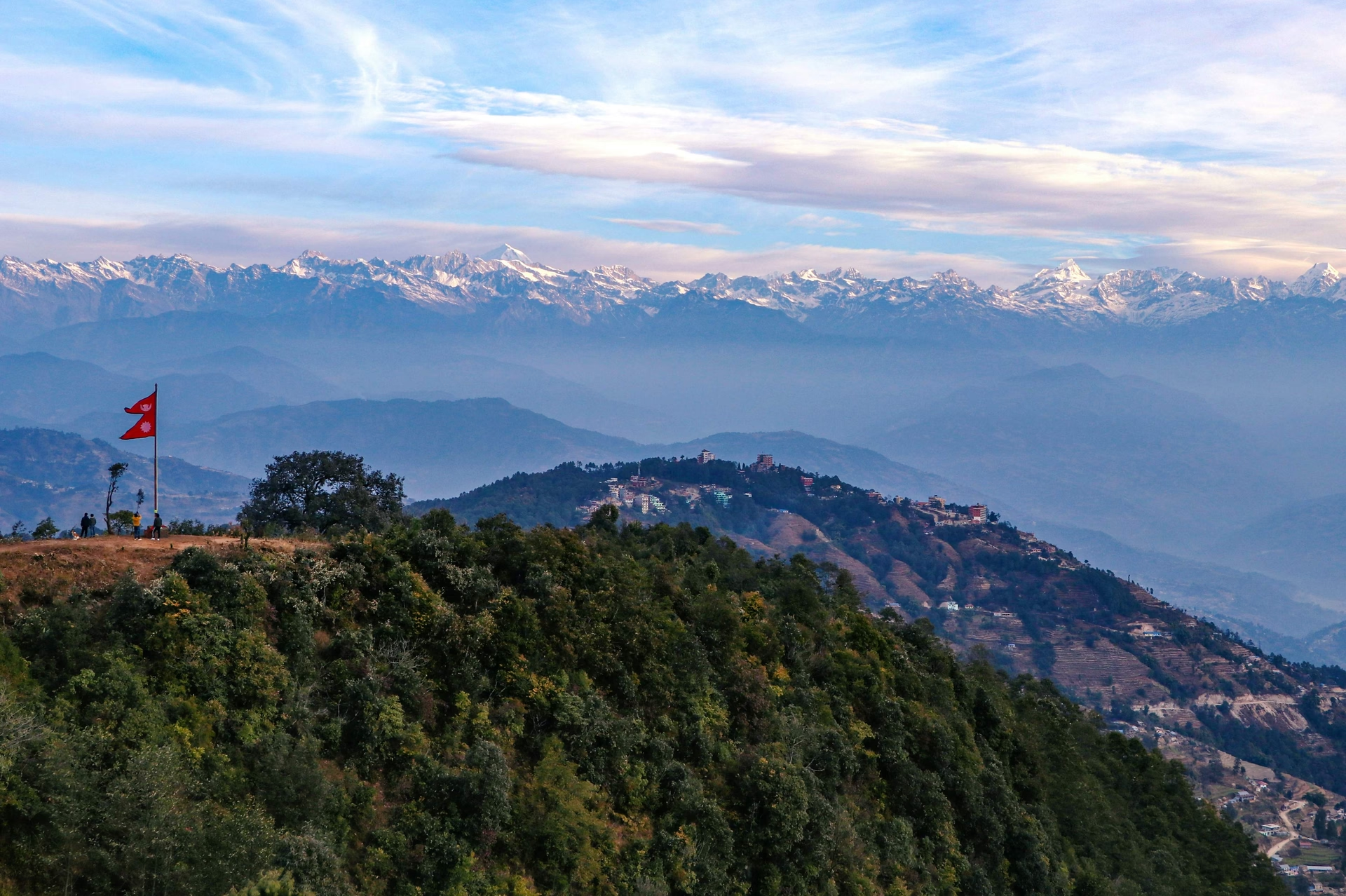
Nagarkot is a hill resort village at about 2,175 m, roughly 35 km east of Kathmandu, famous for Himalayan sunrise views. Hikers reach it on foot from Changunarayan, from Chisapani, or along the Nagarkot Nature Trail on the hill itself.
How Difficult Is the Beginner Hike to Nagarkot?
The beginner hike to Nagarkot rates 2 out of 5, with a 4-hour route from Changunarayan, a 6 to 7 hour route from Chisapani, and a half-day loop on the Nagarkot Nature Trail. The Changunarayan route climbs about 630 m on village paths and farm roads. The Chisapani route is longer but flatter. Pick the Changunarayan route for a single day, and the Chisapani route when you want a 2-day trek with a night in the forest.
What Can You See on the Nagarkot Hiking Trail?
The Nagarkot trail shows Langtang Lirung (7,227 m), Ganesh Himal, Dorje Lakpa, and Gaurishankar at sunrise, with Everest as a faint pyramid on the clearest mornings. The trail also passes Tamang and Newar villages, terraced millet fields, and pine forest. Changunarayan, a UNESCO World Heritage temple near Bhaktapur, makes the best starting point because it holds the oldest known stone inscription in the Kathmandu Valley, dated 464 AD. Bhaktapur Durbar Square sits 30 minutes away by car for the return. Nagarkot suits couples, families, and photographers who want the mountains without a multi-day trek.
When Is the Best Time to Hike to Nagarkot?
The best time to hike to Nagarkot is October to November and March to April, when morning air is dry and the mountain line stays sharp. Monsoon cloud hides the peaks from June to August, and haze softens the view in May. January sunrises are clear but cold, with single-digit temperatures at dawn. Book a Nagarkot room for the night before your sunrise: leaving Kathmandu at 4:30 to catch first light wastes the best hour of the day.
3. Poon Hill Trek
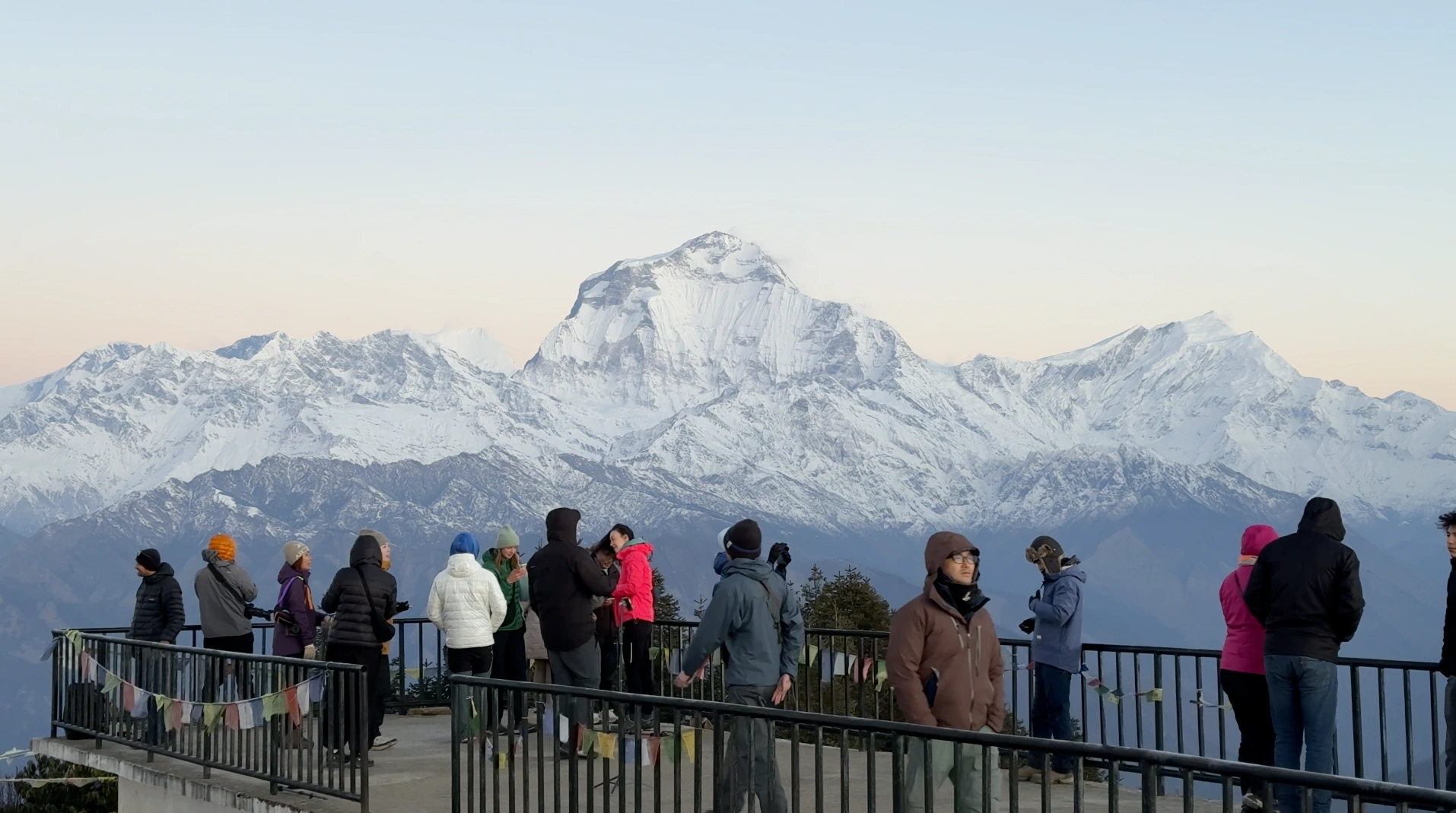
Poon Hill (3,210 m) is the most popular beginner trek in Nepal, a 4-day to 5-day route from Nayapul through Ghorepani to a Himalayan sunrise viewpoint in the Annapurna Conservation Area. It is the classic first teahouse trek. Pokhara serves as the gateway city.
How Difficult Is the Poon Hill Trek for Beginners?
The Poon Hill trek rates 3 out of 5: 4 to 6 hours of walking per day, about 3,300 stone steps near Ulleri, and a high point above 3,000 m. The steps are the real test. Ghorepani sits at 2,860 m, which is above the 2,500 m line where mild altitude symptoms begin. The Poon Hill route respects that limit, because the 3,210 m summit is a pre-dawn day hike of about 350 m from the Ghorepani lodges, not a sleeping altitude.
The Wilderness Medical Society's 2019 altitude guidance advises that above 3,000 m trekkers raise their sleeping elevation by no more than 500 m per day and take a rest day every three to four days. Poon Hill stays inside that limit: you sleep at Ghorepani (2,860 m), then climb about 350 m before dawn to the 3,210 m viewpoint and walk back down for breakfast.
What Can Beginners Expect on the Poon Hill Trek?
Beginners expect teahouse lodging, rhododendron forest, Gurung and Magar villages, and a mandatory permit bill of NPR 5,000 (NPR 3,000 for the Annapurna Conservation Area Permit and NPR 2,000 for a TIMS card, which must be obtained alongside hiring a mandatory licensed guide). Rooms are basic, with shared bathrooms and blankets. Meals cost more with each hour of altitude gained, because porters carry the supplies.
A standard 4-day plan runs Pokhara to Nayapul with a trek to Tikhedhunga or Ulleri on day 1, a climb up the remaining stone steps to Ghorepani on day 2, the Poon Hill sunrise and a walk to Tadapani on day 3, and a descent through Ghandruk for a drive back to Pokhara on day 4. The sunrise view covers Dhaulagiri I (8,167 m), Annapurna I (8,091 m), Annapurna South (7,219 m), and Machhapuchhre (6,993 m).
When Is the Best Time for a First-Time Poon Hill Trek?
The best time for a first-time Poon Hill trek is March to May and October to November. Spring brings blooming rhododendrons from March to April. Autumn brings the clearest skies and the biggest crowds: Nepal logged 128,443 arrivals in October 2025, and Ghorepani lodges fill fast around the Dashain and Tihar holidays. Winter nights at Ghorepani fall below freezing. The monsoon months of June to August bring leeches and cloud. Poon Hill suits active beginners with 5 free days who want a true Himalayan trek.
4. Ghandruk Trek
Ghandruk (1,940 m) is a Gurung village on the southern slopes of the Annapurna range, reached by a 2-day trek from Nayapul or by jeep to Kimche followed by a shorter walk. It offers mountain views without the Poon Hill altitude.
How Difficult Is the Ghandruk Trek for Beginners?
The Ghandruk trek rates 3 out of 5, with about 900 m of climbing from Birethanti (1,025 m) over 5 to 6 hours. Most of that gain arrives as stone steps after Syauli Bazaar. The effort is steady rather than steep, and every village on the way sells tea, so rest stops cost nothing. Beginners who prefer a lighter first day take a jeep to Kimche and walk the final stretch only. Descending the same stairs the next day punishes the knees more than the climb did, so trekking poles help.
What Makes Ghandruk an Ideal Beginner Trek?
Ghandruk is an ideal beginner trek because it combines a low maximum altitude, frequent lodges, and a living Gurung culture within a 2-day to 3-day window. The village has long supplied soldiers to Gurkha regiments, and its slate-roofed stone houses reflect that history. Homestays let first-timers eat with a family instead of in a lodge dining room. The Annapurna Conservation Area Project runs an office in the village, which means help is close if a blister turns serious.
What Can You See and Experience Around Ghandruk?
Around Ghandruk you see Annapurna South (7,219 m), Hiunchuli (6,441 m), and Machhapuchhre (6,993 m) from terraced village paths. The Gurung Museum explains local dress, tools, and the shepherd traditions of the Tamu people. Evening light turns the south face of Annapurna orange, and the village is quiet once day visitors leave. Ghandruk also forms the standard exit of the Poon Hill loop, so many trekkers pass through it without staying. A night here gives the village back its calm. Ghandruk suits cultural travelers and slow walkers who prefer lower altitude than Poon Hill.
5. Balthali Village Hiking
Balthali is a Tamang and Newar village at 1,730 m in Kavrepalanchok District, about 40 km east of Kathmandu, where a 1-night to 2-night hike links Namo Buddha, Balthali, and Panauti. The village sits at the junction of the Roshi and Ladku rivers.
How Difficult Is the Balthali Village Hike?
The Balthali village hike rates 2 out of 5: Namo Buddha to Balthali takes about 2 hours, and Balthali to Panauti takes about 2.5 hours on rolling trails. Dhulikhel to Namo Buddha adds 4 hours for hikers who start earlier. Elevation changes are small, because Namo Buddha (1,750 m) and Balthali (1,730 m) sit at almost the same height. The trail dips into river valleys and climbs out again, so total climbing exceeds what the altitude figures suggest. After rain, the last stretch of road toward Balthali turns to mud, and trail shoes beat sandals.
What Can You Experience in Balthali Village?
In Balthali you experience Tamang homestays, terraced farmland, and quiet ridge views toward Langtang and Gaurishankar, away from tourist crowds. Namo Buddha, a Tibetan Buddhist pilgrimage site, anchors the route culturally. Panauti, at the end, was the 13th-century capital of the Banepa kingdom and keeps its pink brick and carved wood architecture. Most Kathmandu day hikers skip this valley, which explains why the village still feels local. Hand your lunch order to the homestay host at breakfast, and the meal arrives hot when you return.
When Is the Best Time to Hike to Balthali?
The best time to hike to Balthali is October to December and February to April, when trails are dry and the Himalayan line is visible. Panauti hosts a carriage festival in September, which suits travelers who want culture over views. Monsoon trails turn slick, and leeches appear in the forest sections from June to August. Winter mornings are cold at 1,700 m but the days are sunny, which makes December a strong choice for a quiet hike. Balthali suits travelers who want village life and a night away from Kathmandu traffic.
6. Kakani Trek
Kakani is a ridge-top hill station at 2,073 m in Nuwakot District, about 25 km north-west of Kathmandu, with forest trails and a Himalayan viewpoint. It is the gentlest highland hike on this list.
How Difficult Is the Kakani Trek?
The Kakani trek rates 1 out of 5: most trips drive to the hill station in about 1.5 hours and then walk 3 to 5 hours on rolling forest roads and village paths. There is no sustained climbing, which suits families, older hikers, and people returning to exercise after a break. Pick a Kakani day when your legs are tired from another trek, because the terrain forgives low fitness. Start before 9:00 and the viewpoint is clear. After 11:00 the valley haze rises.
What Attractions Can Beginners See Around Kakani?
Beginners see a viewpoint over Ganesh Himal, Langtang, and Dorje Lakpa, along with a British-era residency, Tamang villages, and pine and rhododendron forest. The residency recalls the years when British officials escaped the Kathmandu summer heat on this ridge. Local cafes serve tea and momos near the viewpoint. The Trisuli road passes through farmland the whole way, so the drive doubles as a village tour. Sunrise and sunset both work here, and a sunset stay lets you watch the Himalayan line turn pink before the lights of Kathmandu come on.
When Is the Best Time to Hike in Kakani?
The best time to hike in Kakani is October to November and March to April, when the northern skyline is sharp before 9:00. Winter days are clear but the ridge is windy, and a fleece beats a rain jacket in January. Monsoon fog hides the viewpoint from June to August, and the forest trails turn slippery. Weekdays are quiet. Weekends fill with picnic groups from Kathmandu. Kakani suits families with children and anyone testing a first hill walk.
7. Champadevi Hike
Champadevi is a 2,278 m ridge on the south-western rim of the Kathmandu Valley, topped by a hilltop temple and reached by a 4-hour to 6-hour day hike from Pharping or Hattiban. The route sees fewer foreign hikers than Shivapuri or Nagarkot.
How Difficult Is the Champadevi Hike?
The Champadevi hike rates 2 out of 5: about 850 m of climbing over a 10 km route, with steady forest ascents and no technical sections. Pharping is the cleanest starting point, with local buses from Kathmandu. Plan 2 to 3 hours up and 2 hours down. The descent into Pharping ends at Dakshinkali temple and the Asura Cave, a Buddhist pilgrimage site where Padmasambhava is said to have meditated, which turns the hike into a half-day of culture as well.
What Views Can You Enjoy From Champadevi?
From Champadevi you see the full bowl of the Kathmandu Valley below, with Ganesh Himal, Langtang, and the Himalayan chain along the northern horizon. Morning gives the sharpest line. The temple on the summit draws local pilgrims on festival days, so expect drums, incense, and a festive crowd. Champadevi suits fit beginners who want a full day outdoors with a cultural finish. Forest around the ridge holds oak, pine, and rhododendron, with birds active at dawn.
What Should Beginners Bring for the Champadevi Hike?
Beginners bring 8 items for the Champadevi hike:
Water (2 liters)
Grippy shoes with ankle support
Windproof jacket
Sun hat and sunscreen
Snacks and a packed lunch
Cash (NPR 2,000 for temple, tea, and transport)
Headlamp for pre-dawn starts
Light rain cover
Carry your own lunch, because food stalls on the ridge are limited. Trekking poles protect the knees on the descent.
8. Shivapuri Trek
Shivapuri Nagarjun National Park is a 159 km² protected forest on the northern rim of the Kathmandu Valley, established in 2002, and its beginner trek climbs from Budhanilkantha toward Shivapuri Peak (2,732 m). The park also protects the watershed that supplies drinking water to the capital.
How Difficult Is the Shivapuri Beginner Trek?
The Shivapuri beginner trek rates 3 out of 5: about 1,380 m of climbing from Budhanilkantha to the peak, over 3 to 4 hours up and 6 to 7 hours round trip. The gradient is steady and much of the trail runs in forest shade. Fitness matters more here than on any other day hike on this list, because the climb never stops. Foreign visitors pay NPR 1,000 at the park gate. Walk at a pace that lets you talk in full sentences, and stop for 5 minutes every hour. For a gentler option, choose the Nagarjun forest and Jamacho Monastery (2,067 m) trail on the park's western side, a 2 to 3 hour hike.
What Can Beginners See in Shivapuri Nagarjun National Park?
Beginners see Nagi Gumba, a Buddhist nunnery, Baghdwar, the source of the Bagmati River, and a forest with more than 300 bird species. Rhododendron, oak, and pine cover the slopes. Leopards, Himalayan black bears, and barking deer live in the park, though sightings are rare on busy trails. Hikers who reach the peak see the Langtang range on clear mornings and the valley floor in a single sweep.
When Is the Best Time to Hike Shivapuri?
The best time to hike Shivapuri is October to November and March to April, when skies are clear and the forest is dry underfoot. Rhododendrons bloom in March and April. Monsoon leeches and slippery stone steps make June to August a poor choice. Winter hikes work well on weekdays, when frost on the upper trail gives way to bright sun by 10:00. Shivapuri suits fit beginners who want a hard day hike before a multi-day trek.
9. Ranikot Hike
Ranikot is a hill village and fort site in Kavrepalanchok District, south-east of Bhaktapur, reached on a 4-hour to 5-hour, 10 km hike from Suryabinayak via Pilot Baba Ashram and Ghyampe Danda. The trail links forest, farmland, and Newar villages.
How Difficult Is the Ranikot Hike?
The Ranikot hike rates 2 out of 5: a 10 km route of 4 to 5 hours with moderate climbing and a clear, well-marked trail. It starts at the Suryabinayak Ganesh temple and climbs through forest to Ghyampe Danda. Local guides are optional, since the path is easy to follow, but a guide adds village context and handles the transfers. Sun exposure on the open sections catches many first-timers, so pack a hat and 2 liters of water.
What Can You See and Do Around Ranikot?
Around Ranikot you see the remains of a hill fort linked to the Prithvi Narayan Shah era, a Bhairav temple, and wide views of the Kathmandu Valley and the Himalayan range. Gaurishankar and Langtang show on clear days. Ghyampe Danda offers a zipline for travelers who want a short adrenaline break, and the route often ends with a descent to Panauti, where Newar temples line the river. Lunch at a ridge-top lodge makes a natural midpoint. A taxi from Kathmandu or Bhaktapur to Suryabinayak costs less than a guided transfer, so independent hikers save money on the approach.
When Is the Best Time to Hike to Ranikot?
The best time to hike to Ranikot is October to November and February to April, when sky and trail conditions favor a long view. Autumn gives the sharpest mountain line. Spring brings flowering trees along the lower forest. Monsoon rain turns the dirt sections slippery, and summer heat makes the exposed climb punishing before noon. Ranikot suits history lovers and travelers who want a quiet trail close to Bhaktapur.
10. Kalinchowk Trek
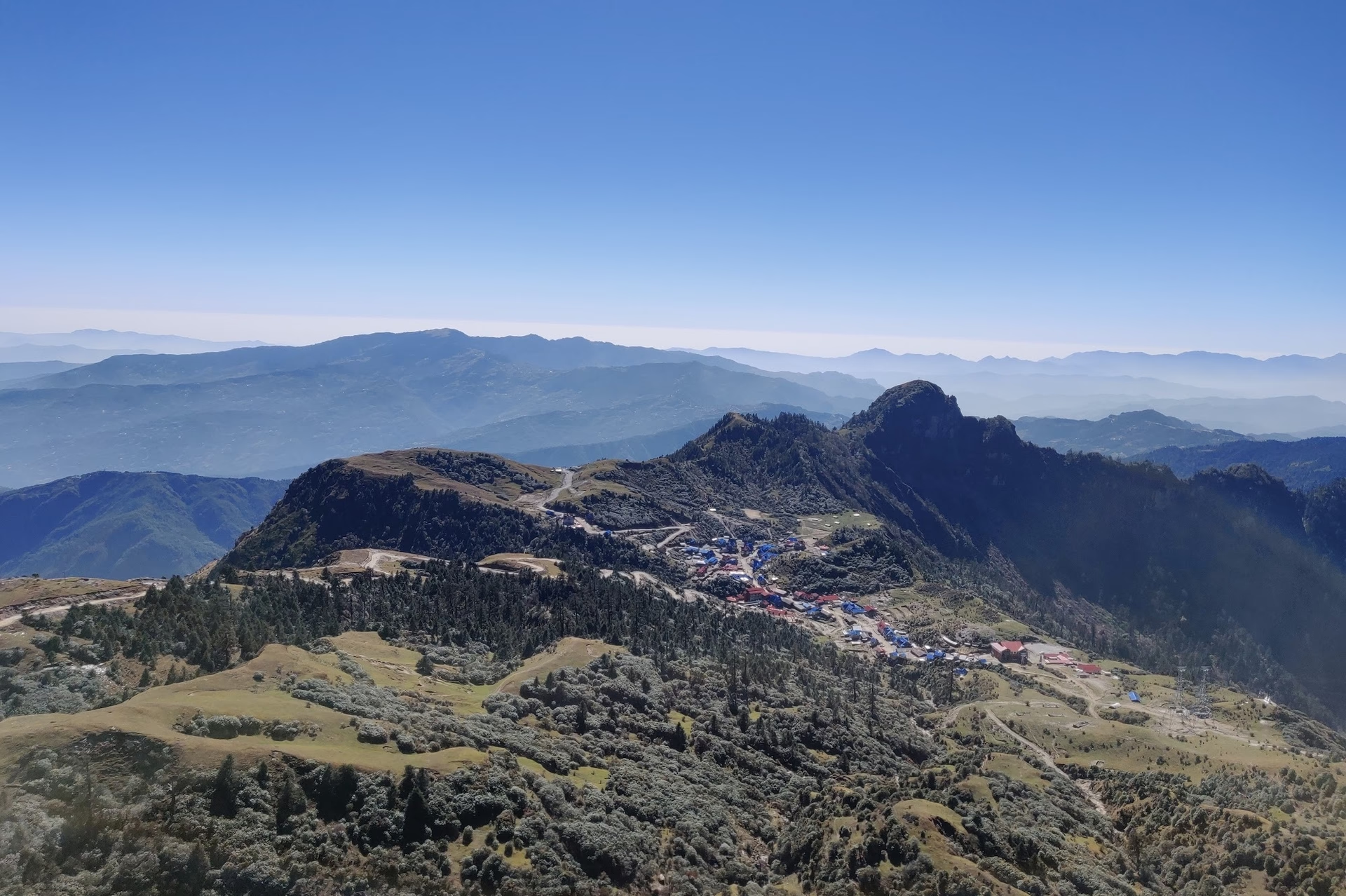
Kalinchowk Bhagwati Temple sits at 3,842 m in Dolakha District, inside the Gaurishankar Conservation Area, and hikers reach it from Kuri Village (about 3,200 m) by a 1.5-hour walk or a 5-minute cable car ride. The cable car has operated since 2018.
How Difficult Is the Kalinchowk Trek for First-Time Trekkers?
The Kalinchowk trek rates 4 out of 5 for first-timers because of altitude, not distance: the walking is gentle, but the road gains about 1,800 m from Kathmandu to Kuri in a single day. Altitude is the real risk. The cable car adds nearly 400 m of elevation in 5 minutes with no acclimatization. Sleep at Kuri, walk up the 1.5-hour trail instead of riding, drink water often, and descend when a headache or nausea starts. Charikot to Kuri is 18 km off-road, or a 5 to 6 hour walk for those who want a full trek.
What Can Beginners Experience at Kalinchowk?
Beginners experience a high Himalayan temple, snow, and views of Gaurishankar, Jugal Himal, and the Annapurna range from one summit. The temple draws Hindu pilgrims, with big crowds at Janai Purnima in August. In winter, Kuri's hills open for skiing and snowboarding, and snow sledding fills the day. Lodges in Kuri are simple and cold, so pack a warm sleeping layer, insulated gloves, and a down jacket. Heaters are rare, and blankets are thin in January. Dolakha Bhimsen temple on the drive from Kathmandu adds a cultural stop.
When Is the Best Time to Visit Kalinchowk?
The best time to visit Kalinchowk for snow is late December to February, and the best time for clear views is October to November and March to April. Roads climb through landslide-prone slopes, so monsoon travel from June to August carries real delays. Winter nights drop well below freezing at Kuri. Book transport and lodging early for the Dashain and Tihar festival periods in October and November, when the road to Charikot fills with holiday traffic. Kalinchowk suits snow seekers, pilgrims, and trekkers with a spare acclimatization day.
How Can Beginners Choose the Right Hike in Nepal With Heaven Himalaya?
Beginners choose the right hike in Nepal by matching 4 variables: available days, fitness level, travel month, and altitude tolerance. The picks below follow those variables.
1 day free: Kakani for the easiest walk, Ranikot or Champadevi for a medium day, Shivapuri for a fit beginner
2 to 3 days: Chisapani and Nagarkot for forest and sunrise, Balthali for village culture
4 to 5 days with big mountains: Poon Hill, with a night at Ghandruk for culture
Snow and a short stay: Kalinchowk, from mid-November to January, with a slow ascent
Fitness comes second. Walk 60 minutes uphill with a 5 kg pack, twice a week, for 4 weeks before any 2-day or longer route. Choose the lower altitude when two hikes tie, because a headache at 3,000 m ruins a trip faster than sore legs ruin a day.
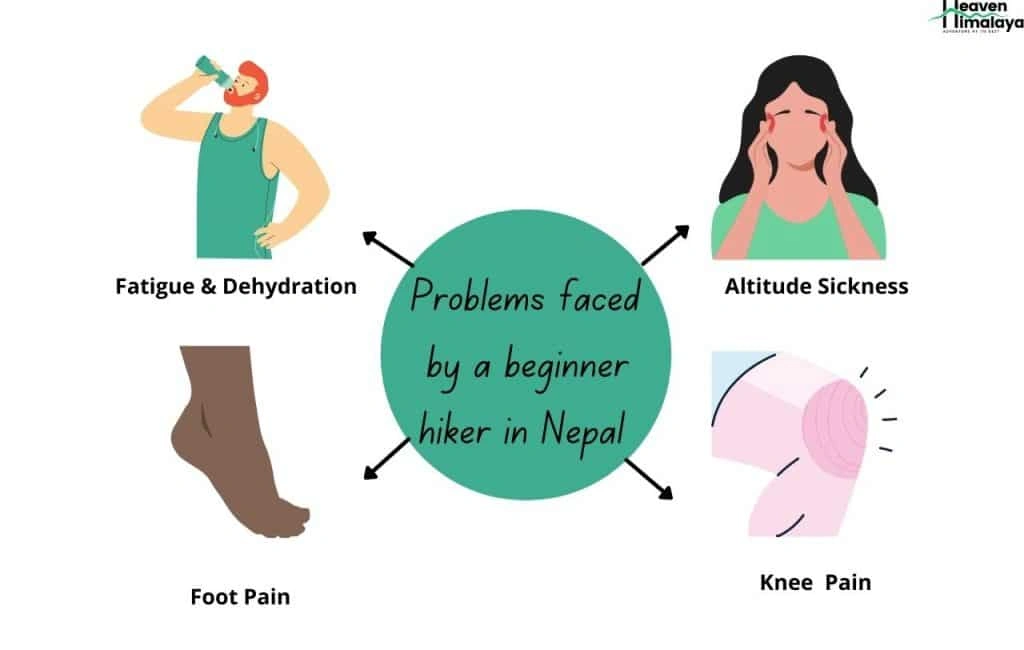
Altitude deserves its own rule. Above 2,500 m, drink water regularly, climb slowly, and treat a headache as a warning. A headache with nausea or dizziness means stop climbing. A headache that worsens overnight means descend at first light. These rules apply on Poon Hill and Kalinchowk, the only two routes here that cross 3,000 m.
Common mistakes we see: booking a trek during Dashain without a transport plan, wearing new boots on day one, skipping travel insurance that covers helicopter evacuation, and climbing too fast above 2,500 m. Each mistake costs more than any permit.
Can Heaven Himalaya Help Beginners Choose and Plan the Right Nepal Hike?
Yes. Heaven Himalaya is a trekking agency in Nepal that helps beginners match a hike to their dates, fitness, and budget, then arranges permits, transport, guides, and lodging.
Plan your first Nepal hike with Heaven Himalaya. Send us your travel month, the number of days you have, and your hiking experience. We recommend 1 route from this list and plan it end to end.
Permits differ by route. Shivapuri hikes cost NPR 1,130 at the park gate, Annapurna routes require a mandatory licensed guide along with an ACAP permit (NPR 3,000) and TIMS card (NPR 2,000), and several lowland hikes need no permit at all." (Note: You must also update the comparison table to reflect TIMS and Guide requirements for Poon Hill and Ghandruk). An agency handles this paperwork in advance, which removes the biggest delay on arrival day in Kathmandu or Pokhara.
What Are the Key Takeaways About the Best Hikes in Nepal for Beginners?
The best hikes in Nepal for beginners are 10 routes with low altitude, short walking days, and easy access from Kathmandu or Pokhara.
Start with Kakani, Ranikot, Champadevi, Balthali, Chisapani, or Nagarkot for a first hike with no altitude risk
Choose Poon Hill or Ghandruk for Himalayan views on a 2-day to 5-day teahouse trek
Treat Kalinchowk with care: sleep at Kuri and walk up instead of riding the cable car
Time every hike for October to November or March to April, when skies are clearest
Budget NPR 1,130 (including 13% VAT) for Shivapuri or Chisapani park fees and NPR 3,000 for ACAP on Annapurna routes
Start early, carry 2 liters of water, and wear broken-in shoes
Match the hike to your days and fitness, not to the most famous name
The best hikes in Nepal for beginners reward patience over speed. Pick one route, leave early, and let the mountains do the rest.