
Buddhist Prayer Flags : Significance and Color Meanings
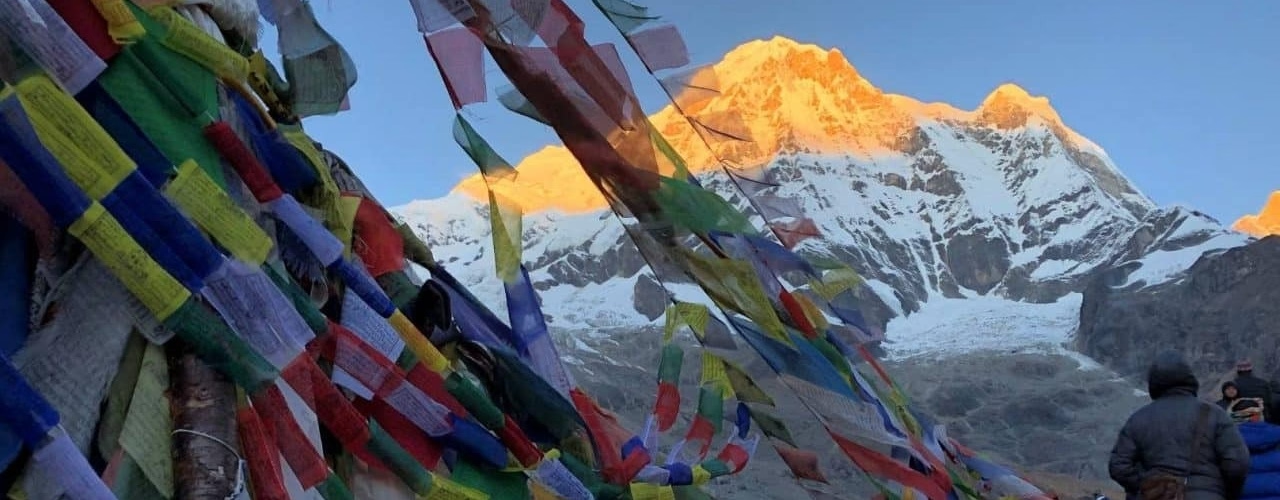
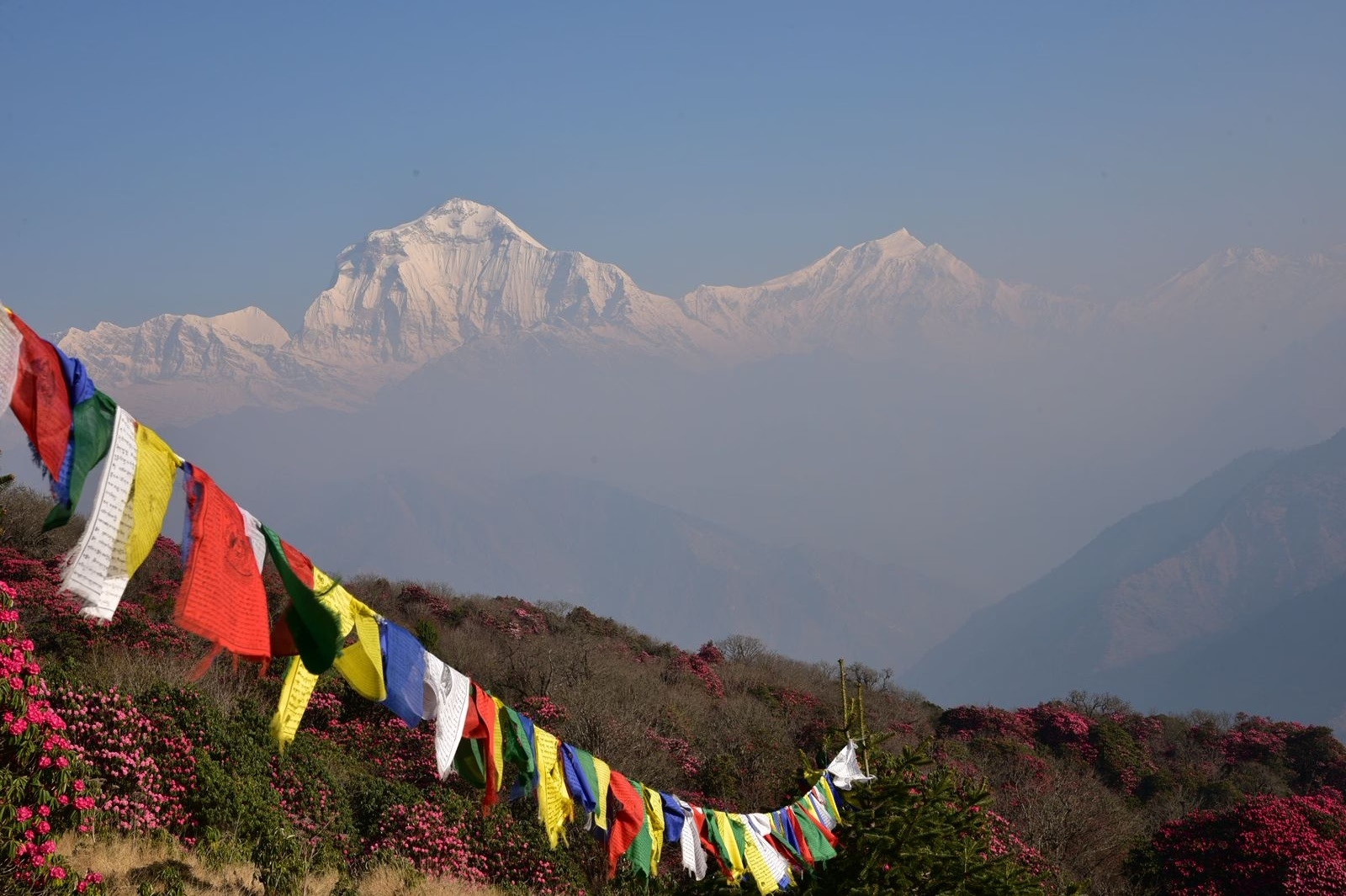
Whether it’s a hilltop in Kathmandu, stupas, monasteries, or the trekking routes in Nepal, there’s one thing in common: the Buddhist prayer flags flapping in rhythm with the wind. But, have you wondered what the flags mean and why they are there for?
Buddhist prayer flags carry significance related to the Lord Buddha and have prayers written on them. People consider these banners to be supposed to carry prayers to the gods. However, there’s a debate. Tibetans and other Buddhists believe that the mantras that are written on the piece of cloth fan out compassion and goodwill to all extended space. It’s all about clearing negative energies. These small, colorful banners manifest the promotion of peace, strength, wisdom, and compassion. Beliefs are that the more the flag wears out due to wind, the more it extends blessings to an abundant number of people.
“Prayer flags” or “Lungta” or “Lungdar” or “Dharchok” are Tibetan prayer flags. “Lungta” in the Tibetan language means “wind horse”. These sacred clothes are believed to be used by the gods against their adversaries. This very mastery was carried into Tibet by 800 CE. Later, actual flags were further changed and introduced in 1040 CE.
Likewise, you might also have seen prayer wheels surrounding monasteries like Tengboche Monastery or other stupas. They do have equal importance in Buddhism. People make offerings and wish in the prayer wheels as they spin from left to right with the mantra on the wheel.
What does the color of flags represent?
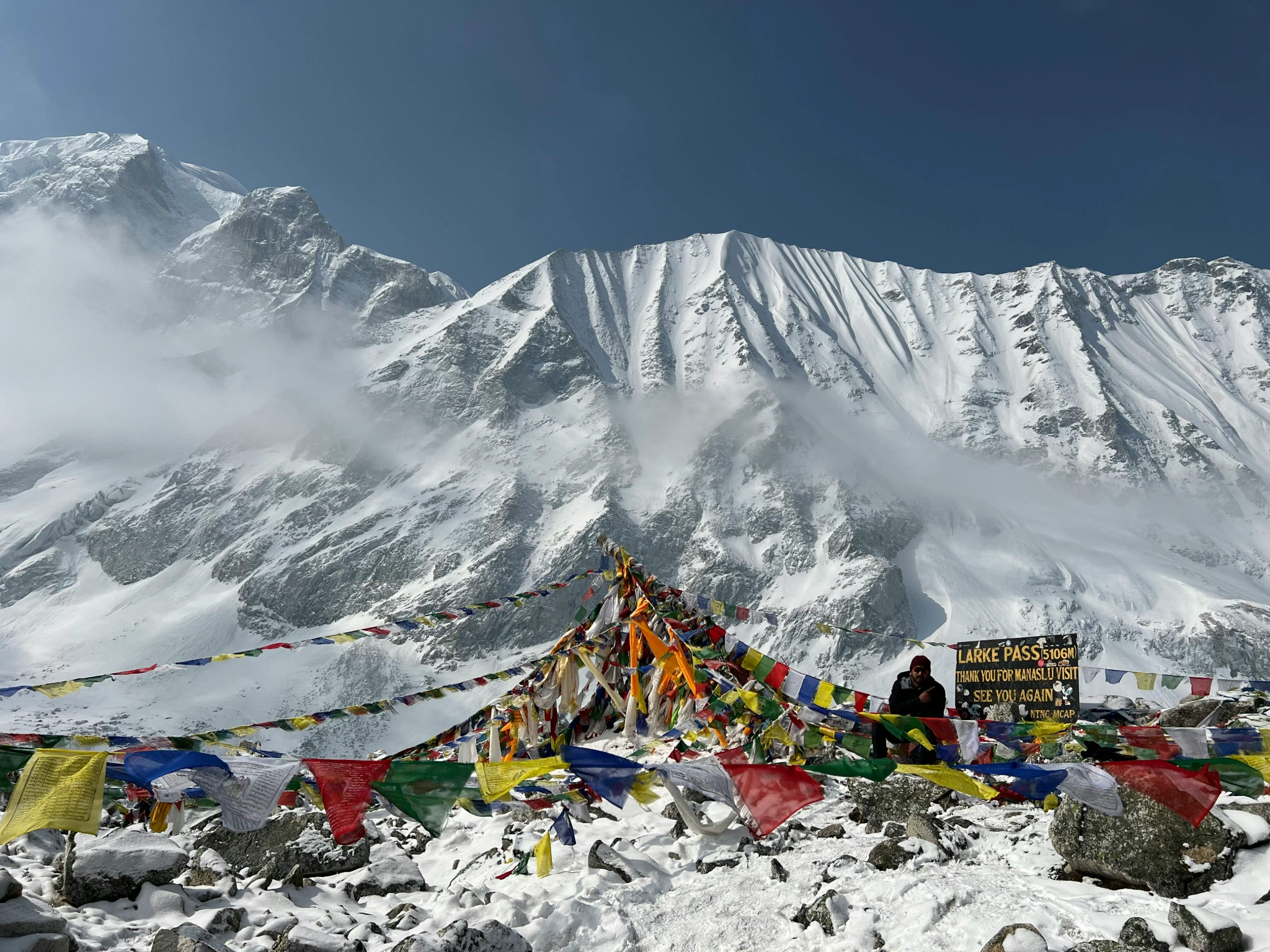
Prayer flags embody five hues arranged specifically to connect to positive energy and spirituality. If it is to be placed, then the correct placement from left to right would be blue, white, red, green, and yellow, along with the mantras written on them. The setup signifies the purification of both nature and balanced life energy. Primary elements of consciousness within these clothes carry a message.
The human body is assumed to comprise 6% of space, 6% of air, 4% fire, 72% of water, and 12% of Earth. And, we are constantly moving in space, which challenges the 3-dimension. The colors on the prayer flags depict the same. On top is blue, followed by white, red, green, and yellow, which denote the five elements: sky, air, fire, water, and earth. The colors blue and white represent the sky, the air, red represents fire, green represents water, and yellow represents earth.
If you see the wooden blocks, remember that the sacred prayers and mantras are engraved on them. The inked cloth is placed on top of the wooden block. When we set up the flag, it purifies both nature and life with balanced energy. Besides, the more the cloth flaps due to wind; the more the people receive blessings.
In Buddhist belief, prayer flags touching the grounds are disrespectful. Hence, they should always be hung at a certain height. In particular, the frame around the doorway is taken as the perfectly fitting place to put the colorful clothes as per the tradition.
How old are the prayer flags?
If you think these flags will remain there for a long time, well, that’s not the case. On the occasion of the Tibetan New Year, specifically on the third day of Lhosar, the new ones replace the old prayer flags. Apart from that, it is also changed on special occasions such as Budhha Jayanti.
Because these flags contain sacred writings, they may not be worn or thrown away. Traditionally, these old prayer flags are burned for the sake of showing Tibetan respect and to convey prayers directed towards the heavens. This might be part of racial entitlement. Primarily, these flags better the world, not only the individuals who hang them.
Some Prayer Flag Quotes.
“Power deities, for all their strength, are very much like humans. They are subject to periods of despair and are not free from the crippling consequences of emotions. For over two decades, Tibetans were forbidden from holding any religious ceremonies or prayers. No prayer flags, incense, or ceremonies were offered to the deities and demi-gods of the region. This neglect broke their hearts, and they became bedraggled and weak.”
– Tsering Wangmo Dhompa
“My flag with prayers rustling in the wind, making sure my prayers reach all of you. The serene atmosphere makes me smile. Come, sit with me, and hear my silence will tell you the story.”
– Suparna Shah
“Prayer flags fluttering in the wind spread spiritual blessings over all sentient beings, cleansing their souls.”
– Tashi Namgyel