Planning your Mera Peak itinerary for 15 to 18 days? Here's what you need to know.
A well-planned itinerary isn't just about reaching the summit. It's about getting there safely.
With climbs typically lasting around 18 days, the extra time is there for one big reason: acclimatisation. As you ascend higher, your body needs time to adjust, and that's what directly affects both your safety and your chances of success.
This guide breaks down a day-by-day plan, so you know exactly what to expect on the trail, from Lukla to the summit push. And if you want a complete overview before diving in, check out our complete Mera Peak climbing guide. It'll give you the full picture, covering everything from difficulty to preparation, before you start planning.
Overview Of Mera Peak Itinerary
Most itineraries for the Mera Peak expedition take around 15 to 18 days, and that isn't random. The timeline is designed to give your body enough time to adjust as you go higher, which is exactly what improves both safety and summit success.
After reaching 3,000 m (9,842.52 ft), the acclimatisation rule should be followed strictly, and it isn't just about resting freely for a day at the same point. It's the reason why longer itineraries consistently perform better than rushed ones.
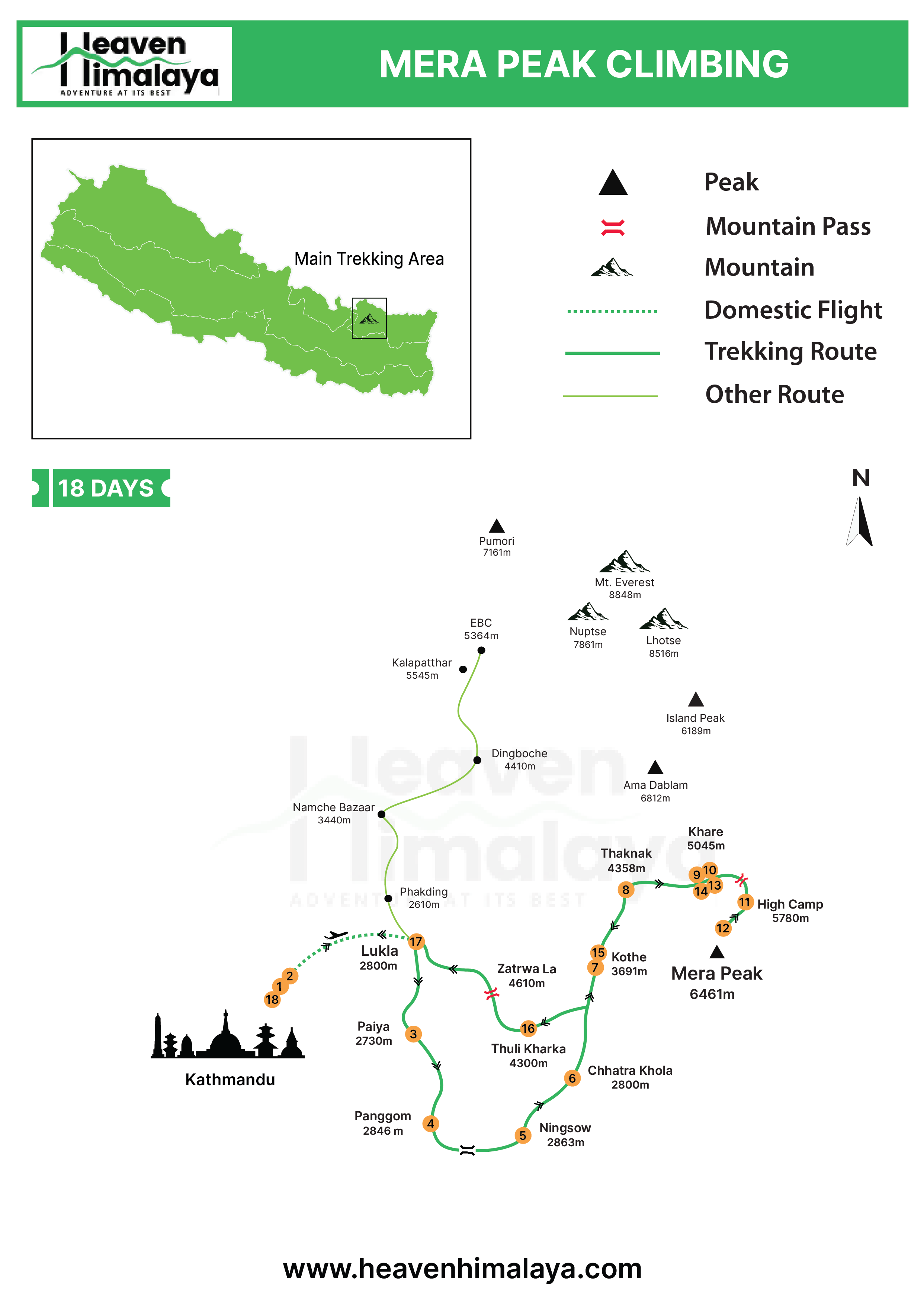
The classic Mera Peak route follows a steady and logical flow: Lukla - Kothe - Khare - High Camp - Summit. You gradually move from lower valleys into the high alpine zone, giving your body time to adapt before the final push.
Here's the key takeaway: longer itineraries mean better acclimatisation, resulting in higher success later. It might feel slower, but on a 6,000 m (19685.04 ft) peak, slow is exactly what gets you to the top.
Why 18 Days Is The Best Itinerary
Not all itineraries are created equal. And when it comes to climbing a mountain of 6,000 m (19685.04 ft), choosing the right one can literally decide whether you summit or turn back.
A shorter trip, such as a 10 to 12-day plan, might look attractive, but it usually cuts down on what matters most: acclimatisation. On the other hand, a proper 18-day itinerary for Mera Peak is designed to give your body enough time to adjust as you gradually gain altitude.
That's exactly why this kind of itinerary for climbing Mera Peak, including an acclimatisation day, works so well; slow ascent means lower risk of altitude sickness and a much higher chance of reaching the top. In fact, most well-structured climbs follow this longer format because acclimatisation is directly linked to success.
Well-paced itineraries significantly improve summit chances, and that's not just theory; it's how high-altitude climbing works. When you move slowly, your body adapts better, your energy stays stable, and summit day feels achievable instead of overwhelming.
Mera Peak Climbing Itinerary (Day-By-Day Breakdown)
- Day 01: Arrival in Kathmandu (1,400 m/4,593 ft)
- Day 02: Sightseeing tour in Kathmandu
- Day 03: Fly to Lukla and trek to Paiya (2,730 m/8,956 ft) Duration: 6 Hours
- Day 04: Trek ta Panggom (2,846 m/9,337 ft) Duration: 5-6 Hours
- Day 05: Trek to Ningsow (2,863 m/9,393 ft) Duration: 7-8 Hours
- Day 06: Trek to Chhatra Khola (2,800 m/9,186 ft) Duration: 7-8 Hours
- Day 07: Trek to Kothe (3,691 m/12,109 ft) Duration: 6-7 Hours
- Day 08: Trek to Thaknak (4,358 m/14,297 ft), Duration: 3-4 Hours
- Day 09: Trek to Khare (5,045 m/16,486 ft) Duration: 2-3 Hours
- Day 10: Acclimatisation in Khare (5,045 m/16,486 ft)
- Day 11: Trek to Mera High Camp (5,780 m/18,958 ft) Duration: 6-7 Hours
- Day 12: Summit the peak (6,461 m/21,1907 ft) and descend down to Khare Duration: 8-9 Hours
- Day 13: Contingency day
- Day 14: Trek to Kothe (3,600 m/11,808 ft) Duration: 4-5 Hours
- Day 15: Trek to Thuli Kharka (4,300 m/14,107 ft) Duration: 5-6 Hours
- Day 16: Trek to Lukla (2,800 m/9,184 ft) via Zatrwa La Pass Duration: 6-7 Hours
- Day 17: Fly to Kathmandu
- Day 18: Departure Day (Farewell)
You can also check out the Detailed Itinerary for Mera Peak Climbing which gives you a clear picture of how your journey is going to be, minute details mentioning the Mountain Passes, teahouse, places etc.
Key Highlights of The Itinerary
Here's what makes the Mera Peak route so special, beyond just ticking off summit day on a checklist:
- Remote Hinku Valley: You'll trek deep into the wilderness far from the busy Everest Base Camp (EBC) crowds, surrounded by pristine forests and alpine landscapes that feel truly untouched.
- Less crowded trail: Because this route is quieter and less commercial than many other Himalayan adventures, you get that remote wilderness vibe, almost like the mountains are yours alone.
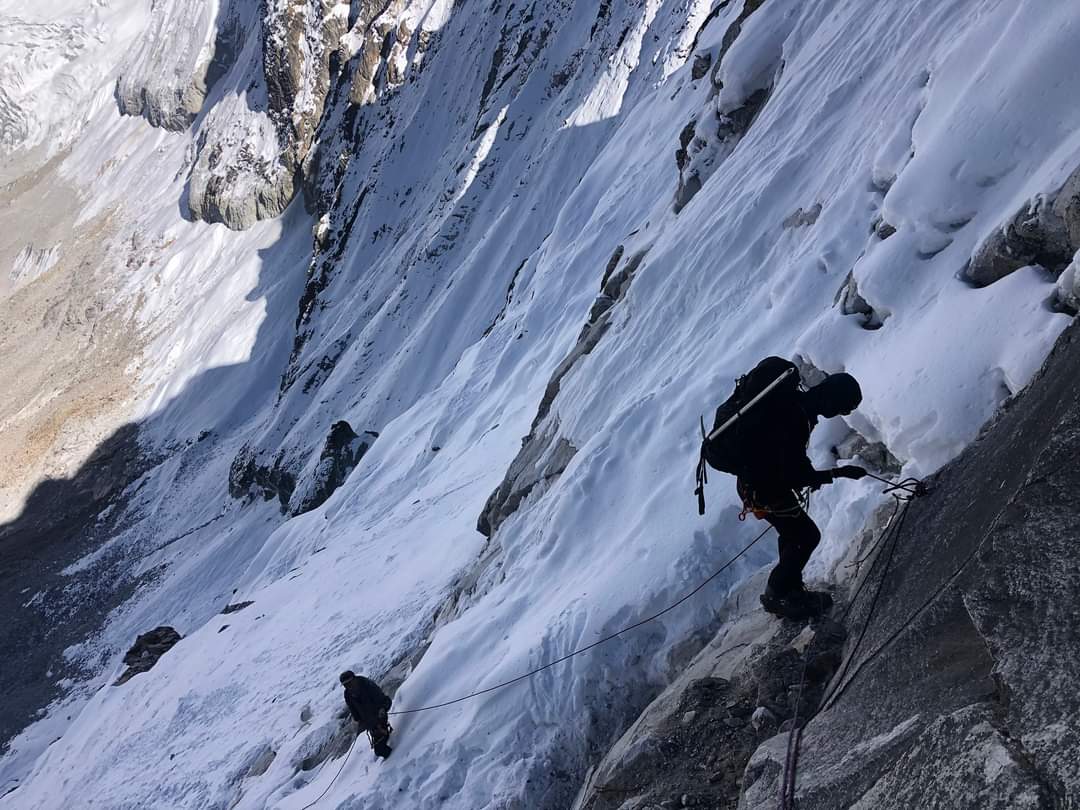
- Glacier experience: As you move higher, the trail shifts onto snow and ice fields where you'll walk with crampons, feeling the crunch beneath your boots and really experiencing what it means to climb a Himalayan peak.
- Panoramic views of five great peaks: At High Camp and especially on summit day, you'll be rewarded with sweeping vistas of Everest (8,848.86 m/29031.69 ft), Lhotse (8,516 m/27,940 ft), Makalu (8,485 m/27,838 ft), Cho Oyu (8,188 m/26,864 ft), and Kanchenjunga (8,586 m/28,169 ft) rising above the clouds, a sight few trekking routes can match.
Whether it's the quiet of the Hinku Valley or the dramatic backdrop of the high Himalayas, this itinerary is packed with moments that feel pure, raw, and unforgettable.
Short Vs Long Itinerary (Which One Is Better)
When it comes to choosing the right itinerary for climbing Mera Peak, it really comes down to one thing: how well your body can adapt to altitude.
| Itinerary Type | Duration | Altitude Sickness | Success Rate |
| Short | 10-12 days | High | Low |
| Standard | 15-18 days | Low | High |
Here's the reality: Fast itineraries might save time, but they significantly increase altitude risk. Your body simply doesn't get enough time to adjust, which is why many climbers struggle or fail on shorter plans. On the other hand, a longer and well-designed itinerary incorporating an acclimatisation day gives you those extra rest and adjustment days that make a huge difference in how you feel on summit day.
If your goal isn't just to try, but to actually summit, going for a slower, well-paced plan is the smarter choice. That's exactly why most experienced climbers prefer a well-structured Mera Peak climbing package built around gradual ascent and proper acclimatisation.
Tips To Choose The Right Itinerary
Choosing the right itinerary for Mera Peak can make or break your climb, so it's worth thinking this through properly. Here are some simple but important tips to guide you:
- Check acclimatisation days: Make sure the itinerary includes proper rest days (especially around Khare). These are crucial for your body to adapt to altitude and reduce risk.
- Avoid rushed plans: Fast itineraries might look convenient, but they often skip gradual ascent, which is one of the main reasons climbers struggle or fail.
- Choose experienced guides: A good guide doesn't just lead the way, they manage your pace, monitor your health, and make critical decisions at high altitude.
- Prefer longer itineraries: 18-day plans are generally safer and more successful because they follow a proper acclimatisation schedule.
In short, don't just choose the fastest option, pick the smartest one.
Conclusion
At the end of the day, your Mera Peak itinerary isn't just a schedule; it's the biggest factor that decides whether you enjoy the climb or struggle through it. A well-planned itinerary gives your body the time it needs to adapt, which directly improves both safety and your chances of reaching the summit.
As experts often point out, proper acclimatisation and gradual ascent are what make high-altitude climbs successful, not speed. Hence, designing an itinerary carefully makes the climb easier and safer.
If you're serious about climbing this beautiful mountain, don't rush the process. Choose a plan that's built for success, not just speed. And if you're ready to take the step now, check our well-paced 18-day Mera Peak Climbing package.