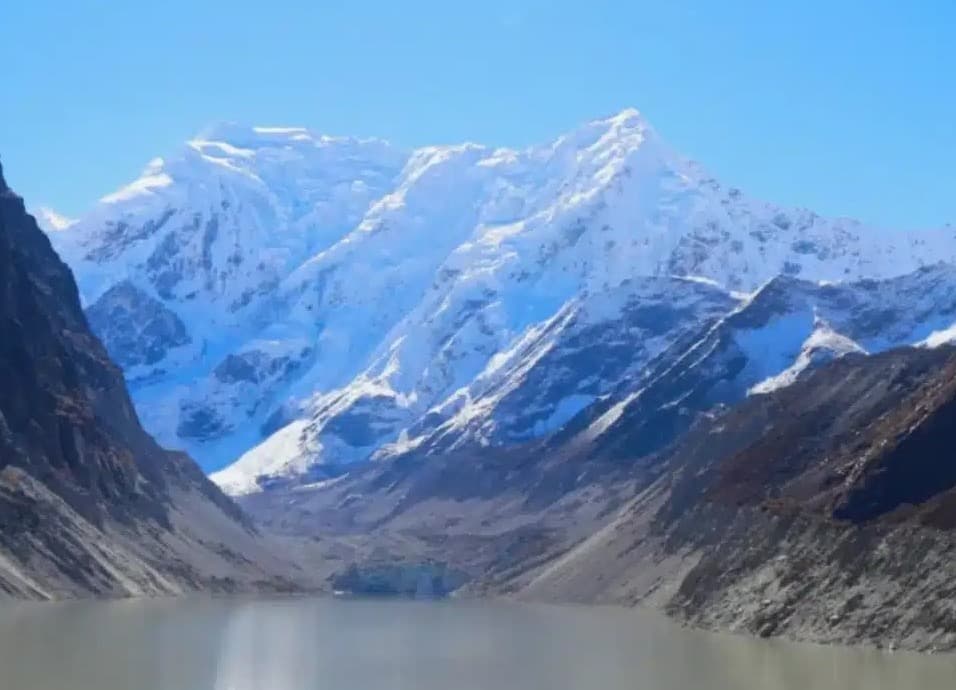
Are you thinking of climbing Island Peak to step into the world of mountaineering, or just for the experience? We say, it'll be an excellent choice for you.
It's a 6,119 m (19,685.04 ft) mountain located in the Khumbu Region and is moderately difficult, making it one of the best trekking peaks in Nepal. By climbing it, you can gain experience in mountaineering without attempting the 8,000 m (26,246.72 ft) high mountains.
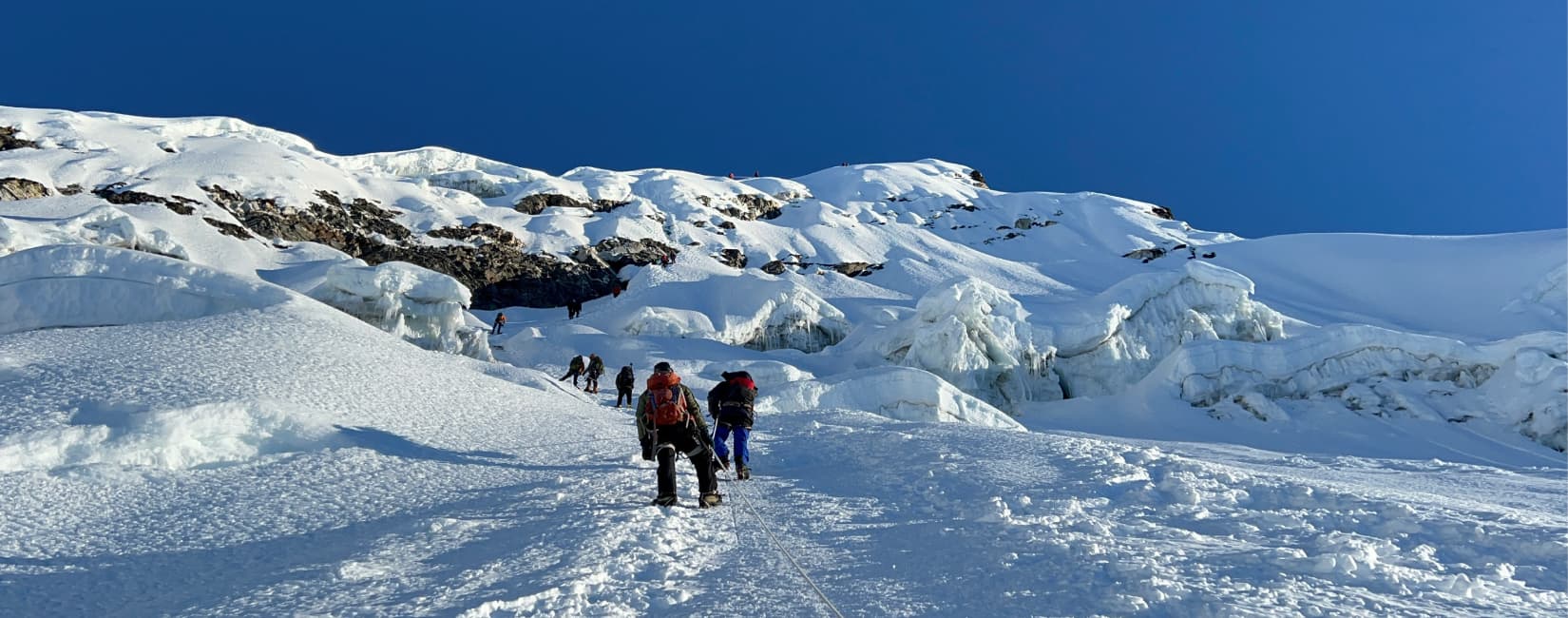
The summit rewards you with stunning views of Mount Everest, Lhotse, Nuptse, and other surrounding peaks in the Mahalangur Range for your daring move in life. During your climb, you'll go through glaciers, cravasses, ridges, and rocky trails. You have a real sense of adventure.
This guide is your true companion; you'll learn everything you need to know about Island Peak to make a plan. From the best time to the itinerary, difficulty, cost, and permits, all are covered here in this blog in simple terms. Just keep reading patiently, and we'll help you prepare for this amazing peak.
Location, Height, & Key Facts
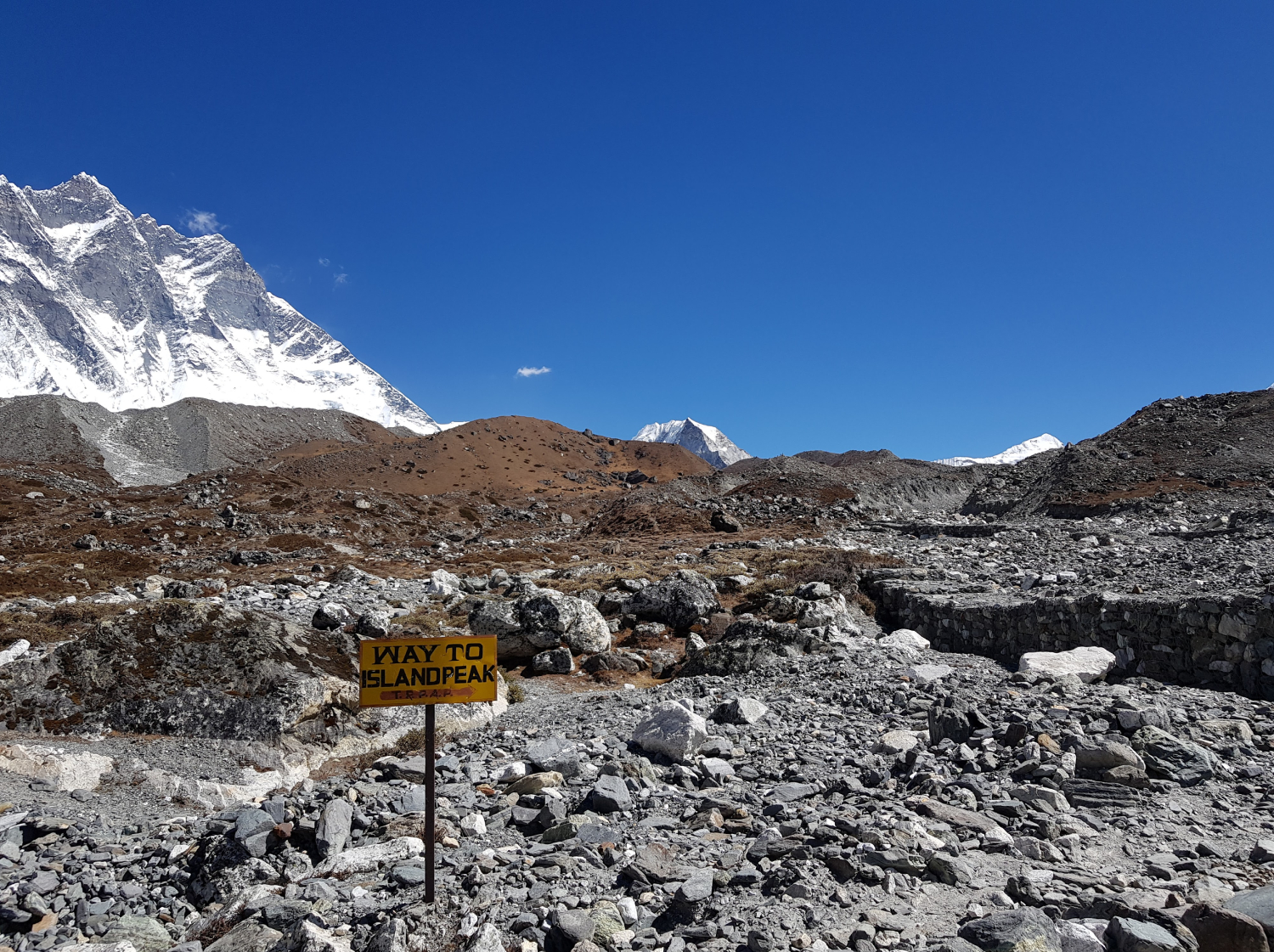
Island Peak, locally known as Imja Tse, is situated in the Solukhumbu District of Koshi Province, in the Everest Region of eastern Nepal. It stands at an elevation of 6,189 m (20,305.12 ft).
From the trailhead, Lukla (2,860 m/9,383 ft), you'll follow the scenic trail that passes through some traditional Sherpa villages by witnessing raw Himalayan vistas to reach the top of Island Peak. The journey is a blend of trekking and high-altitude climbing, making it suitable for both first-time and experienced climbers.
Below are some key facts about Island Peak that you need to know when planning this adventure:
- Local Name: Imja Tse
- Elevation: 6,189 m (20,305.12 ft)
- Grade: Moderate
- Success Rate: High, but proper preparation is required.
- Starting Point: Lukla
Island Peak Climbing Difficulty
Island Peak is considered a moderate in difficulty and classified as a trekking peak. It's an ideal choice for beginners.
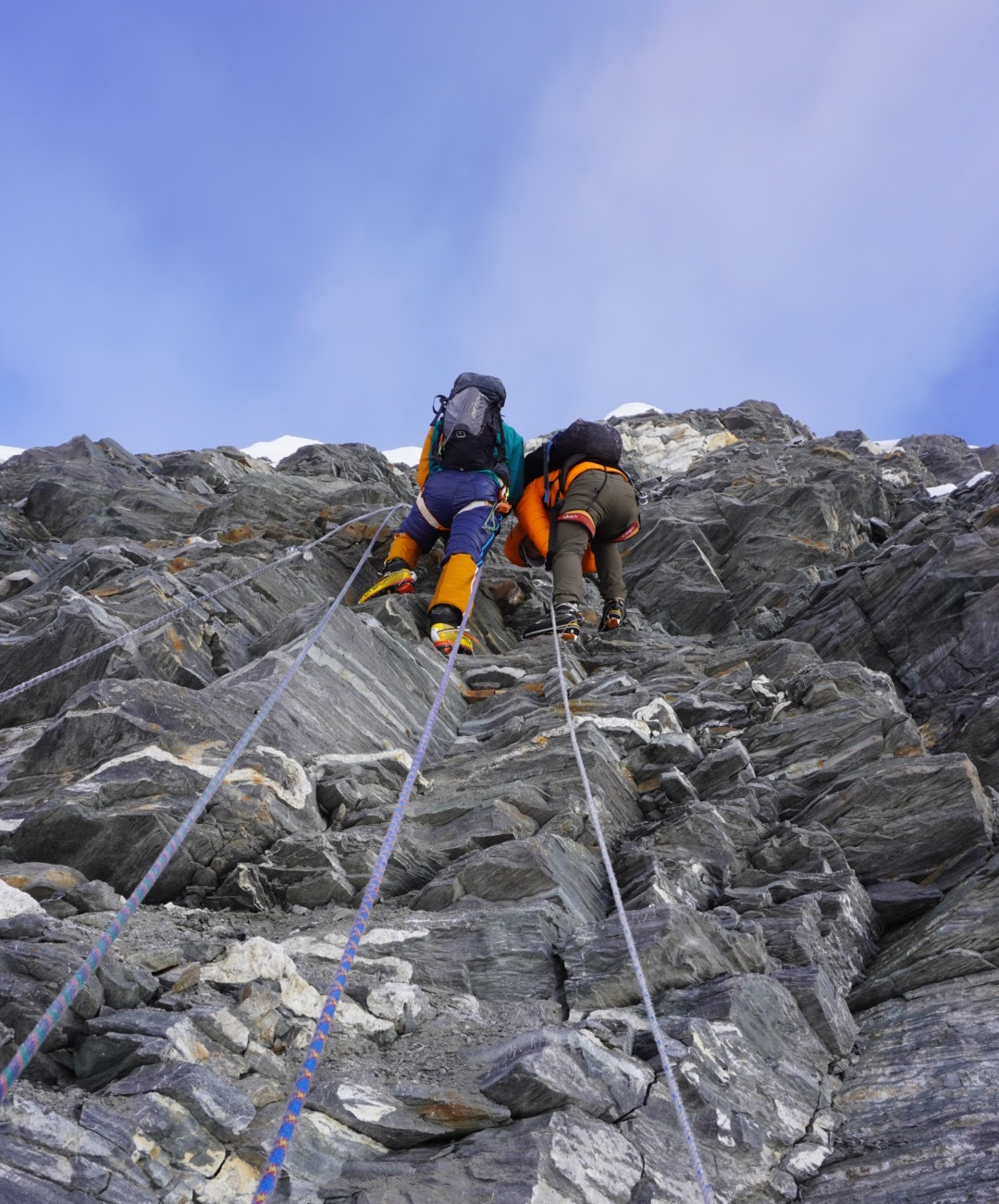
However, it doesn't mean it's very easy to climb. It's just easy compared to other peaks above 7,000 m (22,965.88 ft) in Nepal's Himalaya, but more challenging than trekking and requires basic climbing skills, such as using crampons, an ice axe, and a fixed rope.
Is Island Peak Suitable For Beginners
In case you're wondering, ‘how hard is Island Peak?', its climbing difficulty is moderate. If you're physically fit, well-prepared, comfortable with long hiking days and have basic mountaineering skills, it's one of the best high-altitude peaks for you to try. No matter if you're a first-time climber.
Technical Sections & Challenges
Island Peak is a combination of trekking and mountain climbing. It includes glacier travel, crossing crevasses with a ladder and climbing a steep snowy slope near the summit.
These sections make the journey demanding, but can be manageable with the help of an experienced mountain guide and good preparation. Therefore, you should focus on practising walking with crampons and using an ice axe before the expedition.
Fitness & Preparation Required
Climbing a peak isn't an easy game. You must have a good fitness level.
If you don't have a habit of doing daily exercises, start doing them for an hour daily at least a month prior to your expedition. Doing so enhances your cardiovascular endurance, leg strength, and stamina, allowing you to cover long distances while walking at high elevations.
Proper preparation helps you handle the difficulty of climbing Island Peak safely. You'll be able to enjoy your expedition to the fullest.
Best Time For Island Peak Climbing
The weather plays a critical role in mountaineering. Unstable weather can change suddenly, causing strong winds, heavy snowfall, and poor visibility, which makes your high-altitude climbing more demanding.
There are only two out of four seasons in a year that provide stable weather, clear skies, and good climbing conditions. They are spring and autumn. Regarding months, spring stretches from March to May, and autumn from September to November.
In spring, the temperatures are warmer, and trails look alive with the colour of wildflowers, especially rhododendron. In autumn, on the other hand, the air feels fresh because the monsoon rain washes away dust and pollution, resulting in excellent visibility.
However, both have a little disadvantage. The trails get crowded and busier during these seasons, particularly in autumn, but it can be manageable. Here are quick tips to escape the crowd and any kind of weather-related issues, even during the peak times:
- Plan your Island Peak climbing during the early spring or late autumn.
- Include extra days in your itinerary to ensure a successful summit in case the weather causes delays.
The other two seasons: winter (December to February) and monsoon (June to August) aren't ideal times for climbing Island Peak or even for trekking. During these seasons, the weather is unstable, leading to poor visibility, extremely cold temperatures, and frequent rainfall.
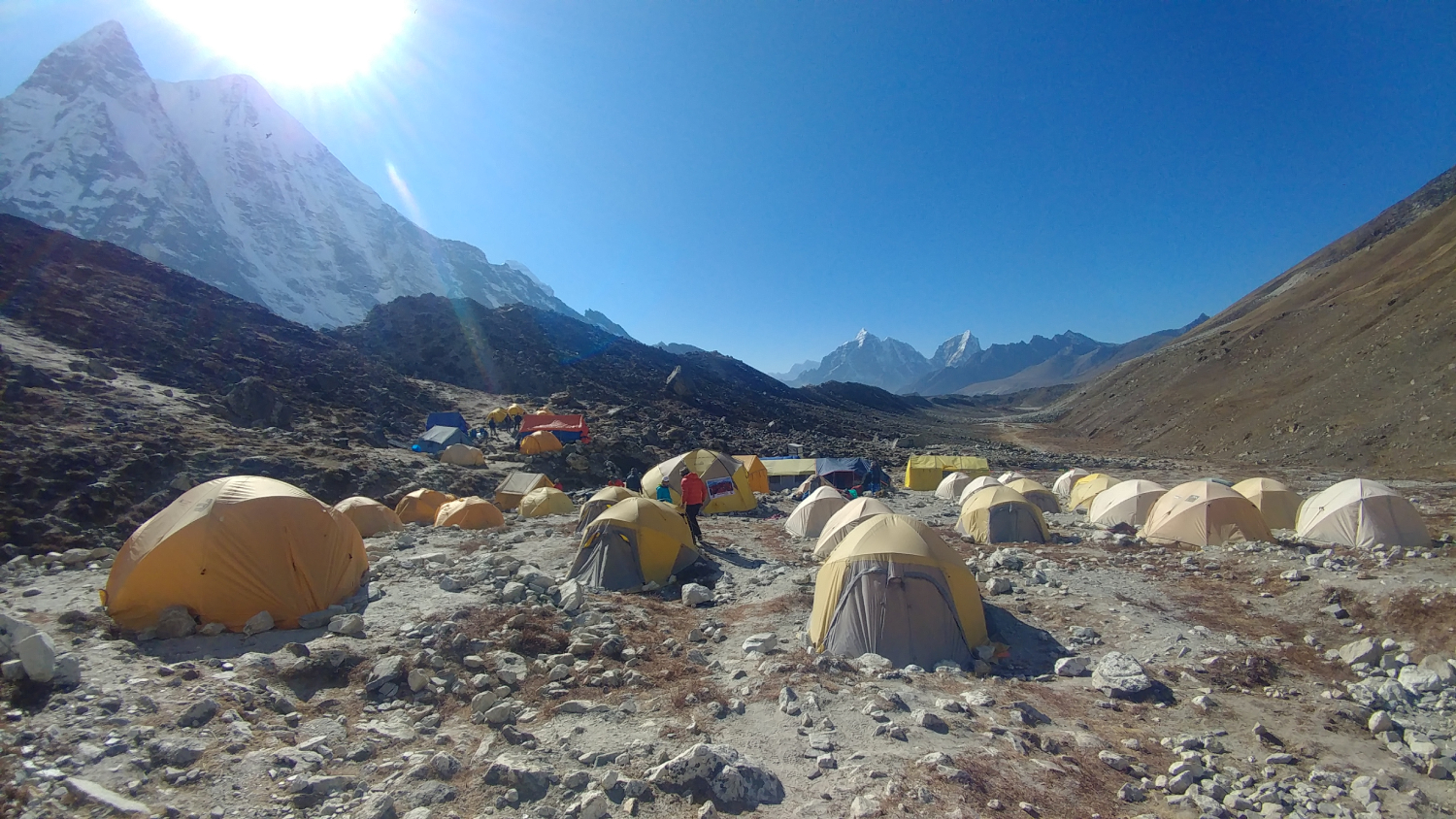
Island Peak Climbing Itinerary
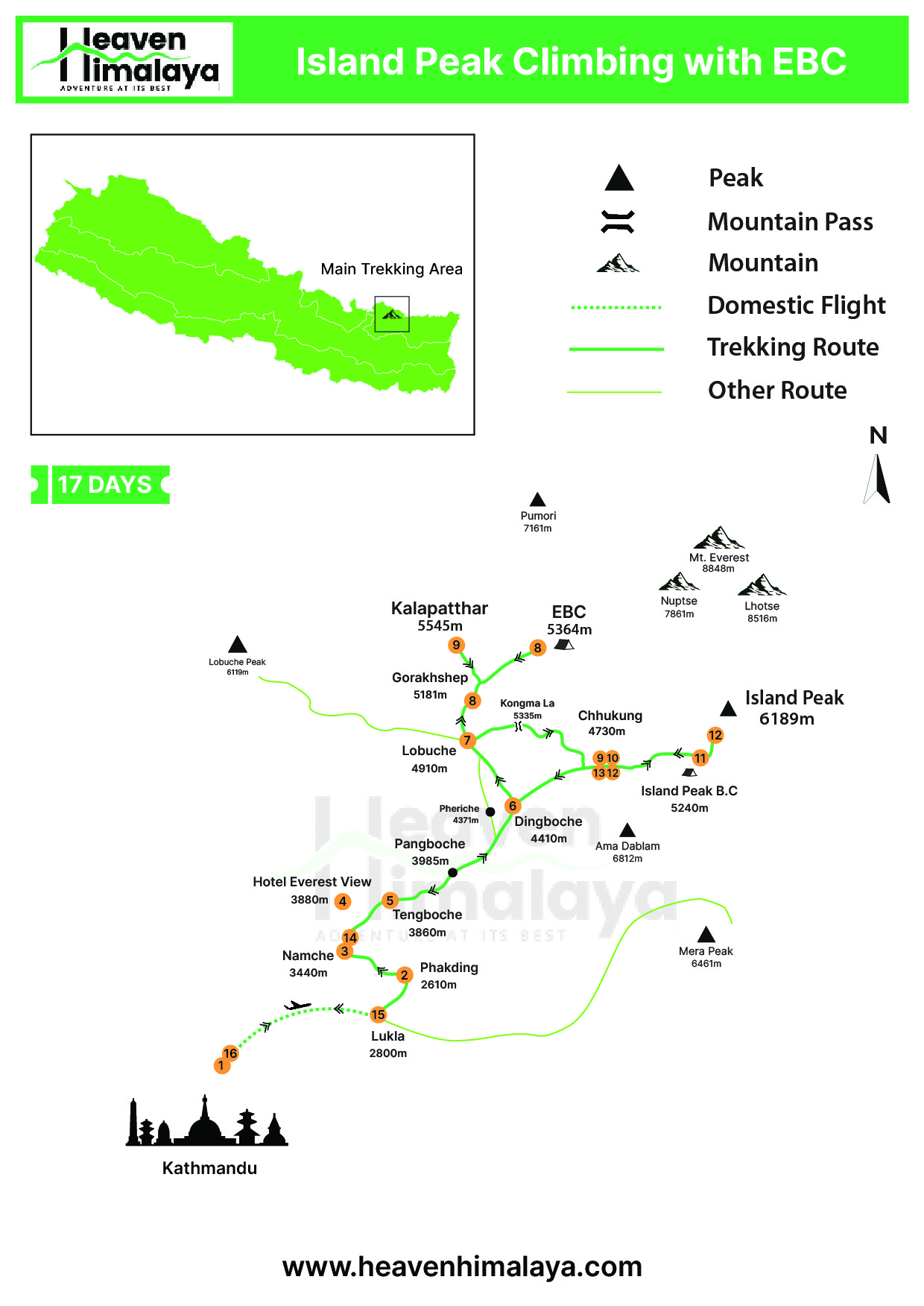
- Day 01: Arrival in Kathmandu (1,400 m / 4,593 ft)
- Day 02: Fly to Lukla (2,860 m / 9,383 ft) and trek to Phakding (2,652 m / 8,699 ft, 3 hrs)
- Day 03: Trek to Namche Bazaar (3,440 m / 11,283 ft, 6 hrs)
- Day 04: Acclimatization hike to Everest View Hotel (3,865 m / 12,680 ft, 3 hrs)
- Day 05: Trek to Tengboche (3,860 m / 12,660 ft, 5–6 hrs)
- Day 06: Trek to Dingboche (4,410 m / 14,464 ft, 5–6 hrs)
- Day 07: Trek to Lobuche (4,910 m / 16,105 ft, 5 hrs)
- Day 08: Trek to Gorekshep (5,181 m / 16,994 ft), visit Everest Base Camp (5,364 m / 17,594 ft), return Gorekshep (7–8 hrs)
- Day 09: Hike to Kalapattar (5,545 m / 18,188 ft) and trek to Chhukung (4,730 m / 15,518 ft, 5–6 hrs)
- Day 10: Rest and acclimatization in Chhukung (4,730 m / 15,518 ft)
- Day 11: Trek to Island Peak Base Camp (5,240 m / 17,187 ft, 6 hrs)
- Day 12: Summit Island Peak (6,189 m / 20,300 ft) and return to Chhukung (9–10 hrs)
- Day 13: Contingency day
- Day 14: Trek back to Namche (3,440 m / 11,283 ft, 7–8 hrs)
- Day 15: Trek back to Lukla (2,800 m / 9,184 ft, 7–8 hrs)
- Day 16: Fly back to Kathmandu (1,400 m / 4,593 ft)
- Day 17: Departure from Kathmandu
Island Peak Climbing Cost
The cost for climbing Island Peak can vary depending on your travel style, group size, and level of support. On average, most climbers spend between USD 2,000 and 4,000 for the complete trip.
This usually includes permits, guides, flights, accommodation, and basic logistics. Choosing a guided package often makes planning easier, while independent trekking may reduce some costs but requires more preparation.
Here is a simple cost breakdown:
- Permits: Climbing permit, national park entry, and local fees
- Guide/Porter: Professional guide and support staff
- Flights: Kathmandu to Lukla round-trip
- Gear: Personal equipment (buying or renting)
The total cost depends on your choices, especially for gear and porter services.
Tip: You can save money by renting gear in Kathmandu and joining a group climb instead of going private. Also, keep a small extra budget for hidden costs like tips, snacks, and unexpected delays.
Permits, Gear, And Preparation
Preparing for an Island Peak climb requires attention to permits, proper gear, and physical training. Taking care of these essentials in advance makes your climb safer, smoother, and more enjoyable.
Permits Required
To climb legally, you need a few papers, a Sagarmatha National Park entry permit, a Khumbu Pasang Lhamu Rural Municipality entry permit, an NMA Island Peak Climbing permit, and a TIMS card. These permits are mandatory for all climbers to climb this peak in Nepal and help support local conservation. Getting them through a licensed trekking agency saves time and avoids last-minute issues.
Essential Gear List
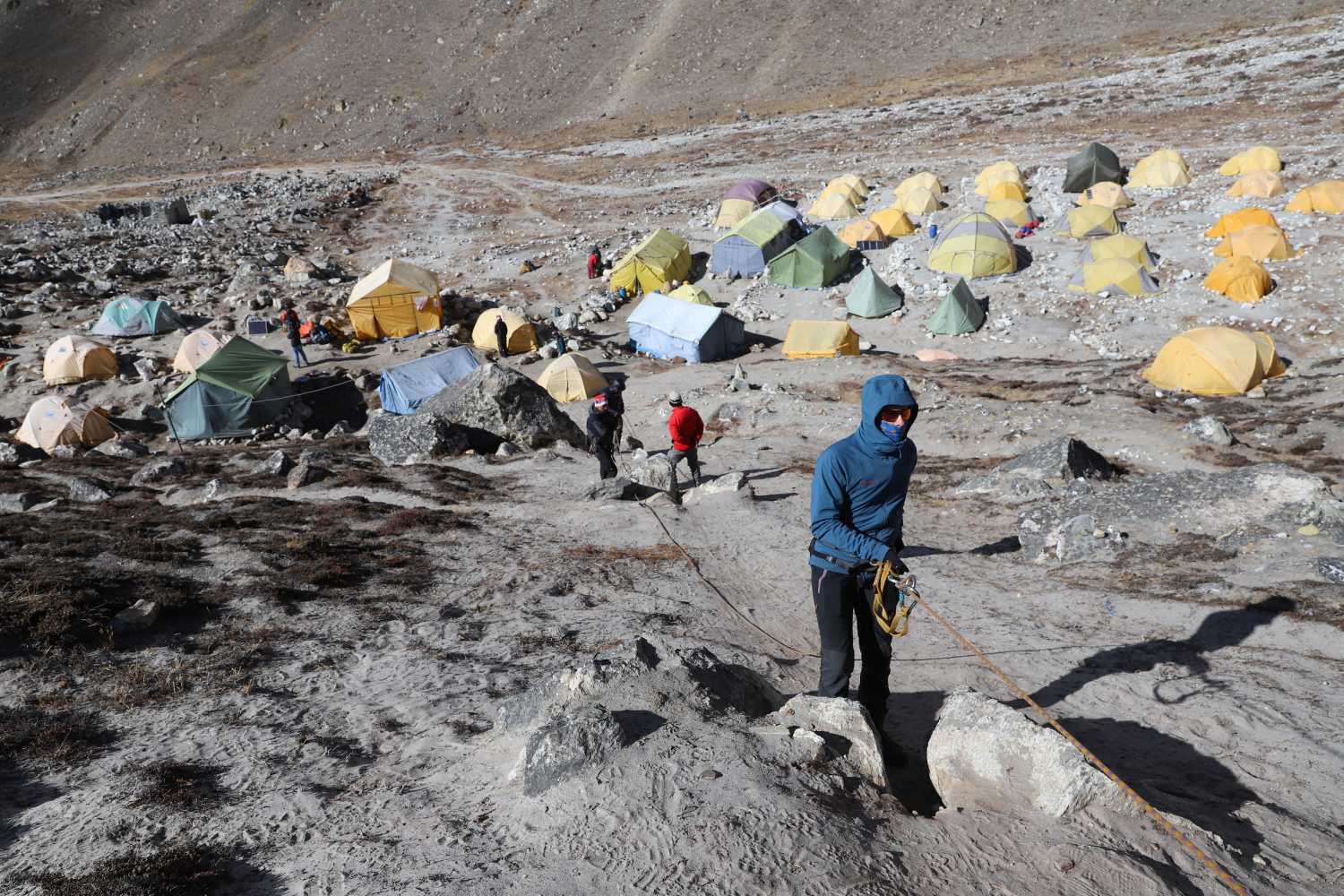
Having the right equipment is key to a safe summit. A complete gear list for climbing Island Peak includes mountaineering boots, crampons, an ice axe, a harness, a helmet, warm layers, and a sturdy backpack. Beginners can save money by renting gear in Kathmandu instead of buying everything up front.
Training Tips
Physical fitness is critical for success. Focus on training for the Island Peak climb with cardio, leg-strength exercises, and endurance hikes. Practising with a weighted backpack and basic climbing techniques will help you handle long trekking days and the summit push more confidently.
Safety Tips, Risks, And Final Advice
Climbing Island Peak comes with some risks, and knowing them helps make your journey safer. Altitude sickness is common at high elevations, and many first-time trekkers underestimate how quickly it can affect energy and focus. So, take time to acclimatise, drink plenty of water, and pay attention to your body.
The weather can change very fast in the Everest region, with sudden snowstorms or strong winds. Hence, always carry the right gear and be ready to adjust your schedule.
Common mistakes include rushing the summit, skipping rest days, or underestimating glacier sections. Moving slowly and carefully reduces these risks and keeps the climb enjoyable.
With proper preparation, training, and guidance, climbers have a good chance of reaching the summit, which contributes to a strong success rate in climbing Island Peak. Even beginners can climb safely if they plan well, follow advice, and respect the mountain.
Confidence, patience, and pacing yourself are key to a successful and unforgettable climb. By staying alert and prepared, you can make the most of the experience while staying safe throughout your Island Peak adventure.