

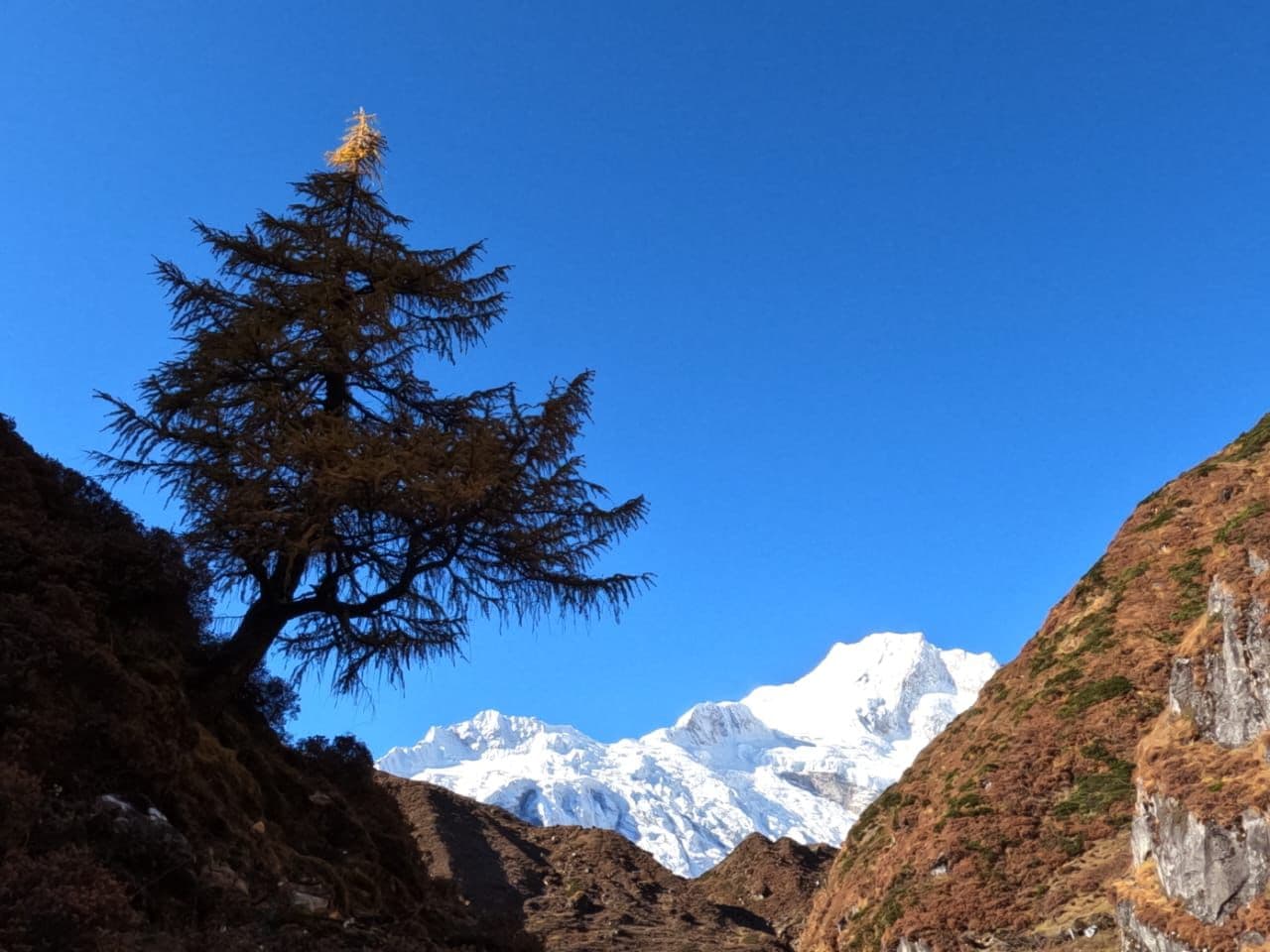
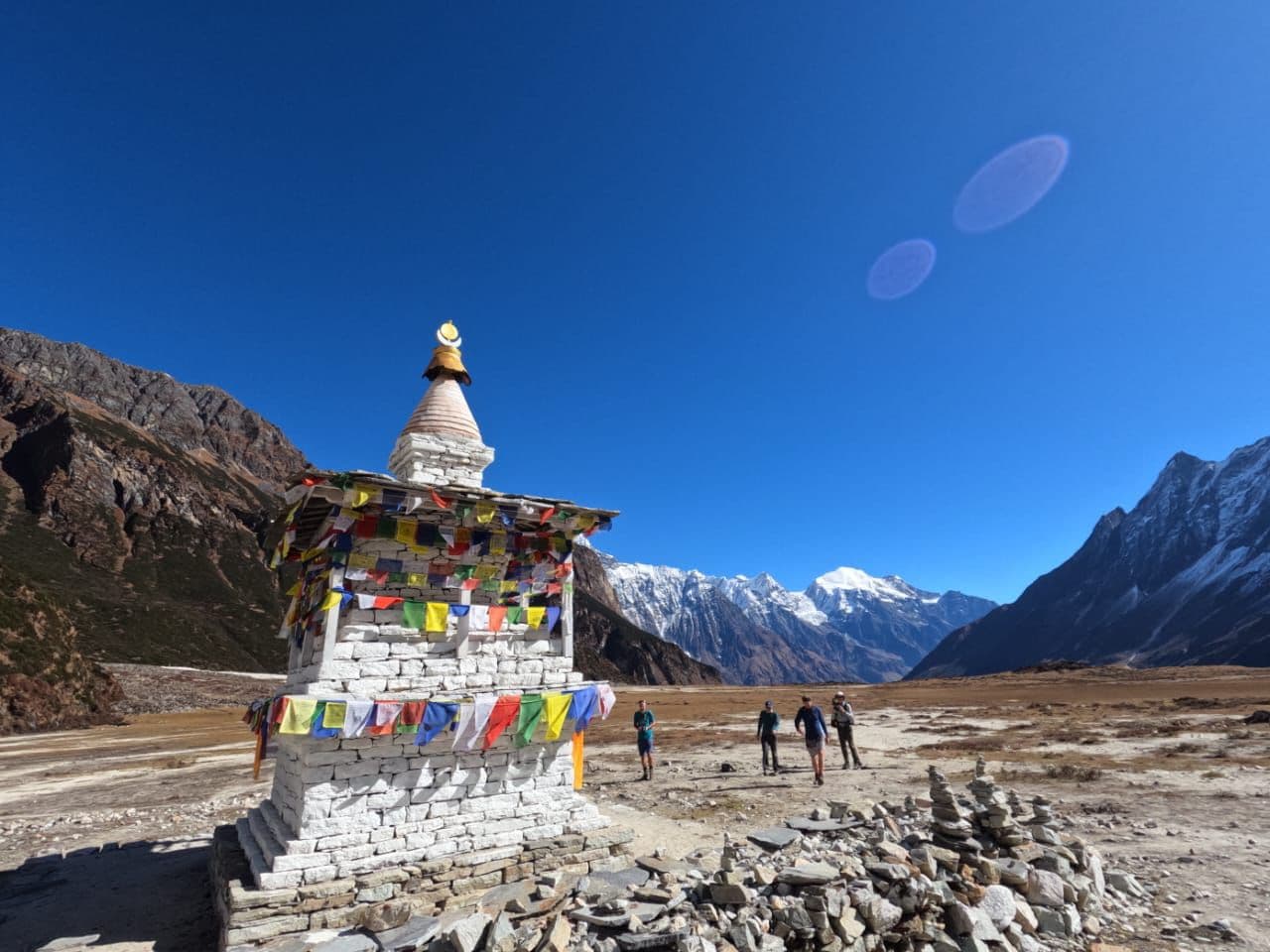
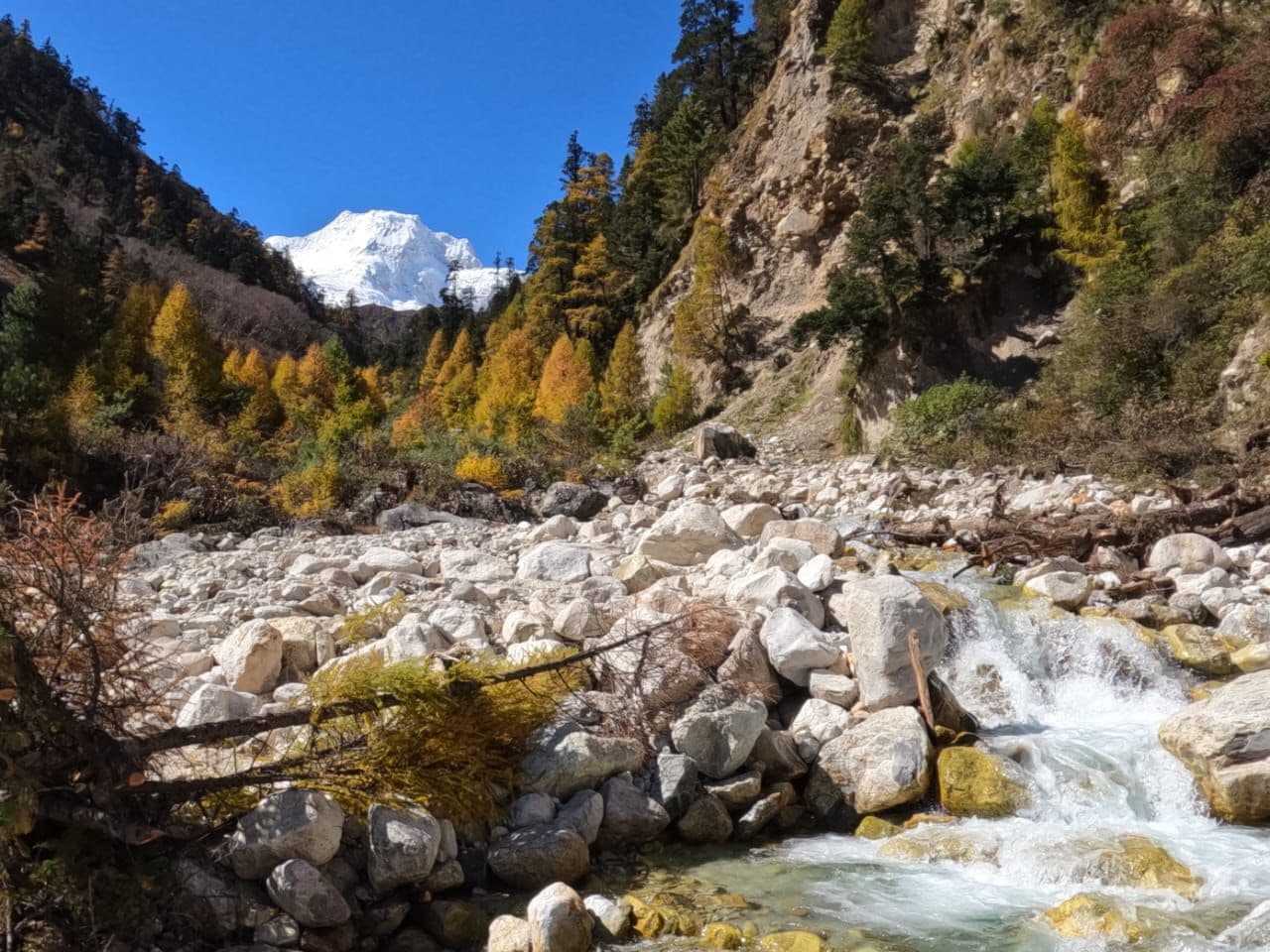
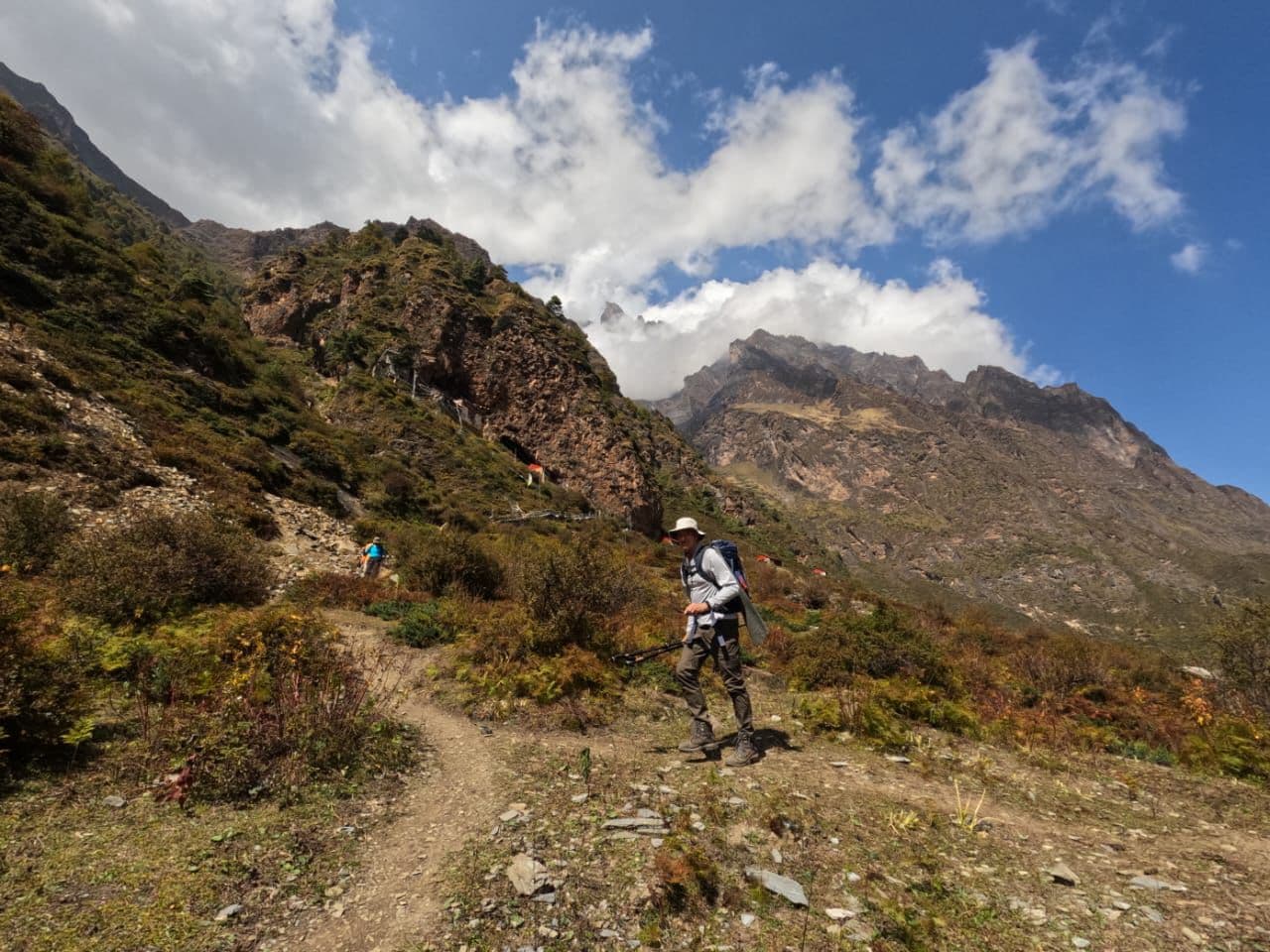
Highlights of The Samdo Village
- Last human settlement on the trek before the Larke Pass.
- Ideal place for an acclimatization day.
- Predominantly by descendants of Tibetan Refugee Settlers.
- Buddhism is the most followed religion.
- Besides the hotel business, agriculture is the local occupation.
Ideal For acclimatization
There are two points on the trek best for acclimatization, Sama Gaun and Samdo. Some hikers choose Samdo to spend an extra day to acclimate their bodies. On the acclimatization day, they hike either Samdo Ri (5,177 m/16,984.91 ft) or the Tibetan Border (Lajyang Bhanjyang, 5,030 m/16,502.62 ft).
Samdo Ri is a peak, and hikers don’t reach its summit. Just up to 4,800 m (15,748.03 ft), taking around 3 hours for a round trip.
The Tibetan Border is a bit far. It takes about 7 to 8 hours to get to the border and back to the hotel.
Local Culture & Lifestyle
Samdo is mainly occupied by Tibetan Buddhists, Bhotia/Khampa. The entire village consists of a small monastery, spinning prayer wheels, the mani walls, prayer flags, and chortens, making it culturally rich. Locals mostly have faith in spirituality.
Since the village is part of the Manaslu Circuit Trail, hotel business is common here. In addition, locals are also highly engaged in agriculture, cultivating barley and potatoes, and herding yaks.
The summer doesn’t last for long in such high-altitude locations. Therefore, cultivation is limited.
In the name of agriculture, yak herding is famous here. They use yaks for dairy, produce wool, and transport supplies.
Accommodation
Plenty of hotels, lodges, and tea houses are available in the village. They all provide basic modern facilities, including electricity, hot showers, and internet. However, it costs a small extra amount to use hot showers and the internet.
All these accommodations have basic rooms. The bathrooms are shared. For food, a variety of options are available on the menu, from local to western cuisines.
Best Time To Visit
Spring (March-May) and Autumn (September-November) are the best times to visit Samdo. Both seasons offer clear skies, resulting in amazing mountain views.
The differences are that spring has mild temperatures, a colourful route with blooming wild flowers (mainly rhododendron), and local festivals (Holi, Nepali New Year, and Buddha Purnima). On the other hand, autumn has stable weather, lush green landscapes, a dust and haze-free environment, and the biggest festivals (Dashain and Tihar)